12 Silent Choking Hazards Hiding in Your Living Room Right Now
Hello, dear parent. Take a deep breath. You’re doing an amazing job. I know that in these early months, your mind is a whirlwind of feeding schedules, sleep routines, and a love so fierce it takes your breath away. But alongside that love often comes a constant, humming anxiety about keeping your precious baby safe. You’ve probably covered the outlets, padded the sharp corners, and anchored the bookshelves. You are on top of it! But as a pediatric nurse who has seen it all, I want to talk about the dangers that are much quieter and easier to miss.
These are the ‘silent’ hazards—the everyday objects that blend into our background but can become a serious choking risk for a baby who explores the world with their hands and mouth. Your living room, the heart of your home, is full of them. This guide isn’t meant to scare you. It’s meant to empower you. By shining a light on these 12 common hazards, we can turn worry into action and create a space where your little one can safely explore, play, and grow. Let’s walk through your living room together.
Tiny Treasures, Big Dangers: Everyday Small Objects
It’s the little things, isn’t it? The items that fall from our pockets or get left on a coffee table without a second thought. For a baby, these small, often shiny objects are fascinating treasures just waiting to be investigated—usually with their mouth.
1. Loose Change
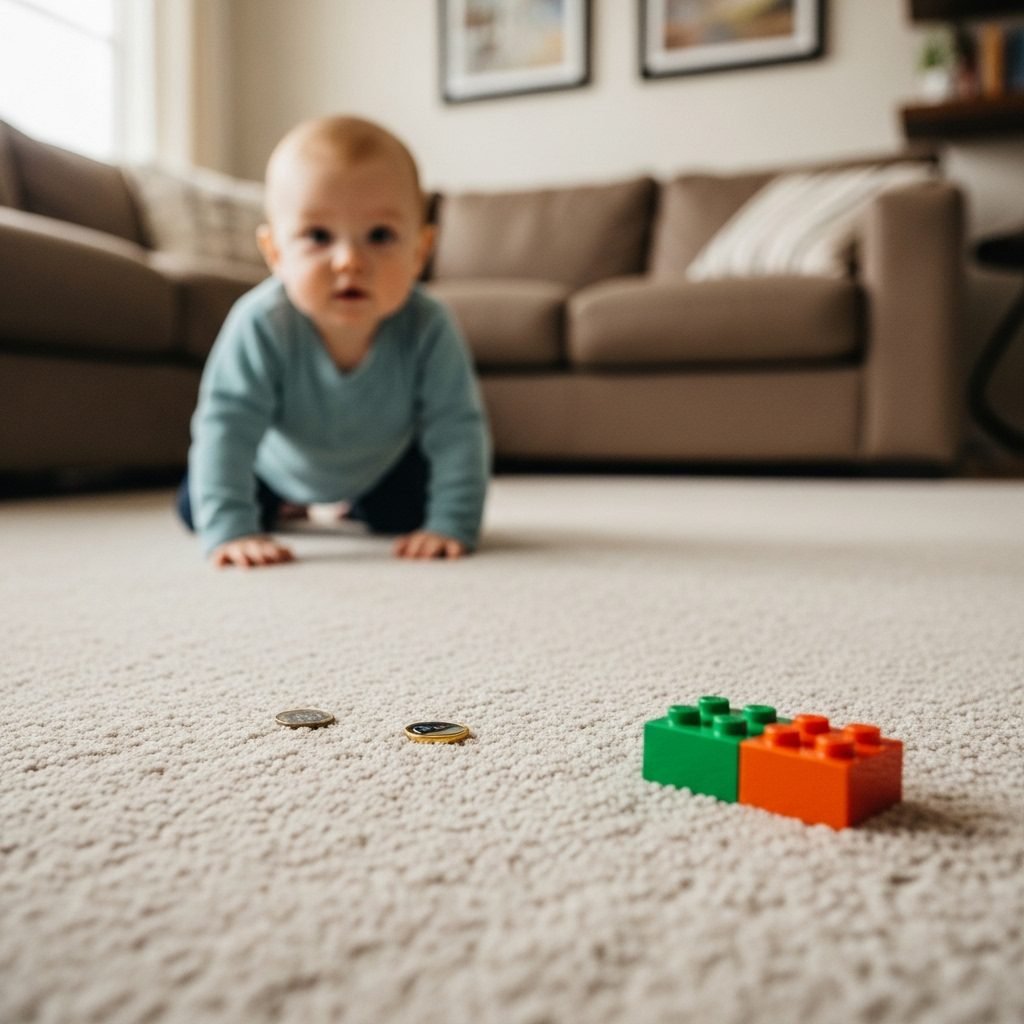
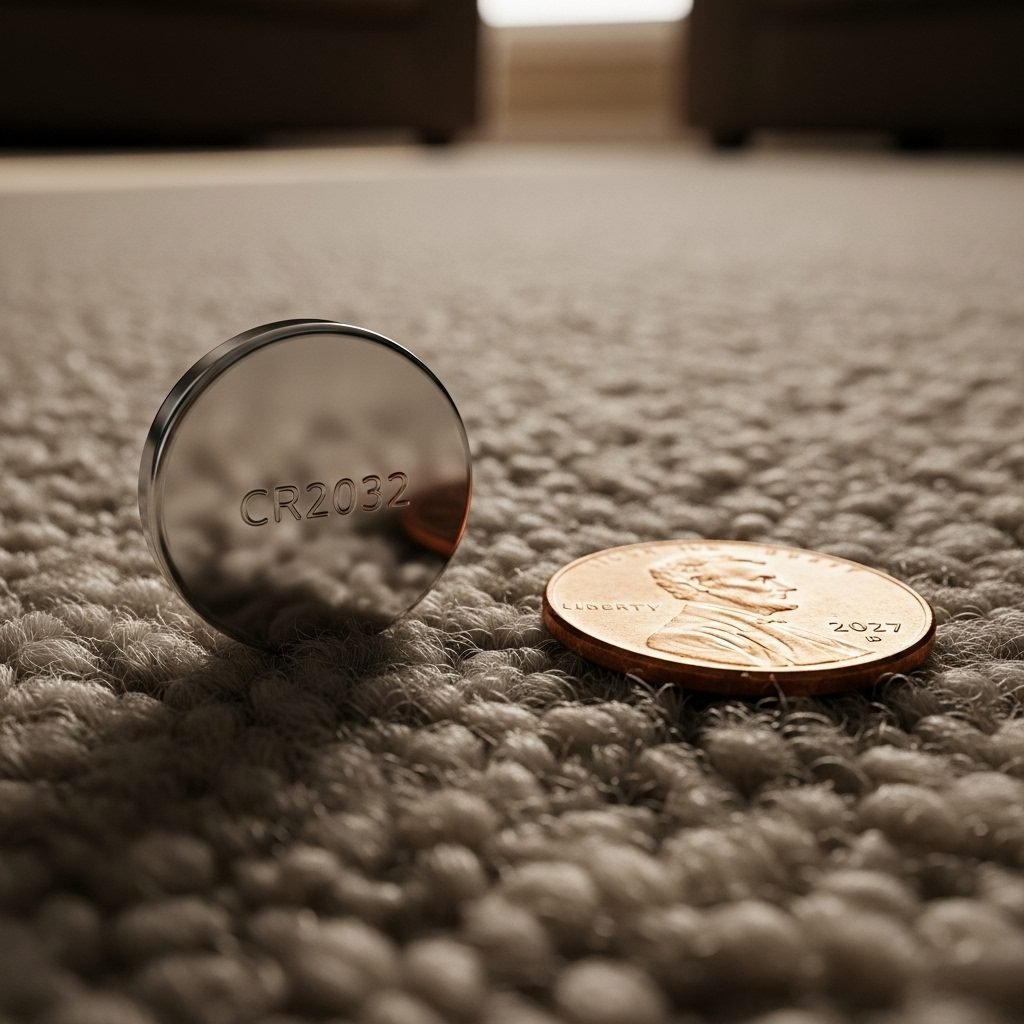
A dime, a penny, a nickel… they seem harmless, but they are the perfect size to block a small child’s airway. They fall out of pockets, get kicked under the sofa, and gleam enticingly on the carpet. A crawling baby can spot a shiny coin from across the room!
- The Risk: Coins are rigid and can completely obstruct the trachea. A quarter is especially dangerous for young children.
- The Simple Fix: Make a family rule: all loose change goes directly into a piggy bank or a jar kept on a high shelf. Do a quick scan of the floor and under sofa cushions at the end of each day.
2. Button Batteries
This is a big one, and it’s a modern danger found everywhere. They power our remote controls, key fobs, greeting cards that play music, and even some children’s toys. They are small, shiny, and incredibly dangerous if swallowed.
Safety Warning: If swallowed, a button battery can get stuck in the esophagus and the saliva triggers an electrical current, causing a chemical reaction that can severely burn through tissue in as little as two hours. This is a true medical emergency.
- The Risk: Beyond choking, the chemical burn potential is life-threatening.
- The Simple Fix: Check every battery-powered device in your living room. Ensure the battery compartments are screwed shut or securely latched. If a device’s cover is loose or broken, remove the battery and store it safely out of reach until you can repair or discard the item. Store spare batteries in a locked container.
3. Pen Caps and Office Supplies
Does your living room double as a home office? A pen cap, a paperclip, or a stray staple can easily fall from a laptop bag or coffee table work-station onto the floor. Their small size and interesting shapes make them prime targets for curious babies.
- The Risk: These items are small enough to be inhaled into the windpipe.
- The Simple Fix: Keep all office supplies in a designated container or drawer that is inaccessible to your child. Get into the habit of doing a quick cleanup of your work area as soon as you are finished.
4. Pet Food Kibble
If you have a four-legged family member, their food bowl might be a constant source of temptation for your crawling baby. A single piece of dry dog or cat food is a significant choking hazard.
- The Risk: Kibble is hard, often round, and can easily get lodged in a baby’s throat.
- The Simple Fix: Feed your pets in a separate room where the baby doesn’t have access, like a laundry room or kitchen behind a baby gate. If that’s not possible, pick up the food bowl as soon as your pet is finished eating. Clean up any stray kibble immediately.
Playtime Perils: When Fun Items Become a Threat
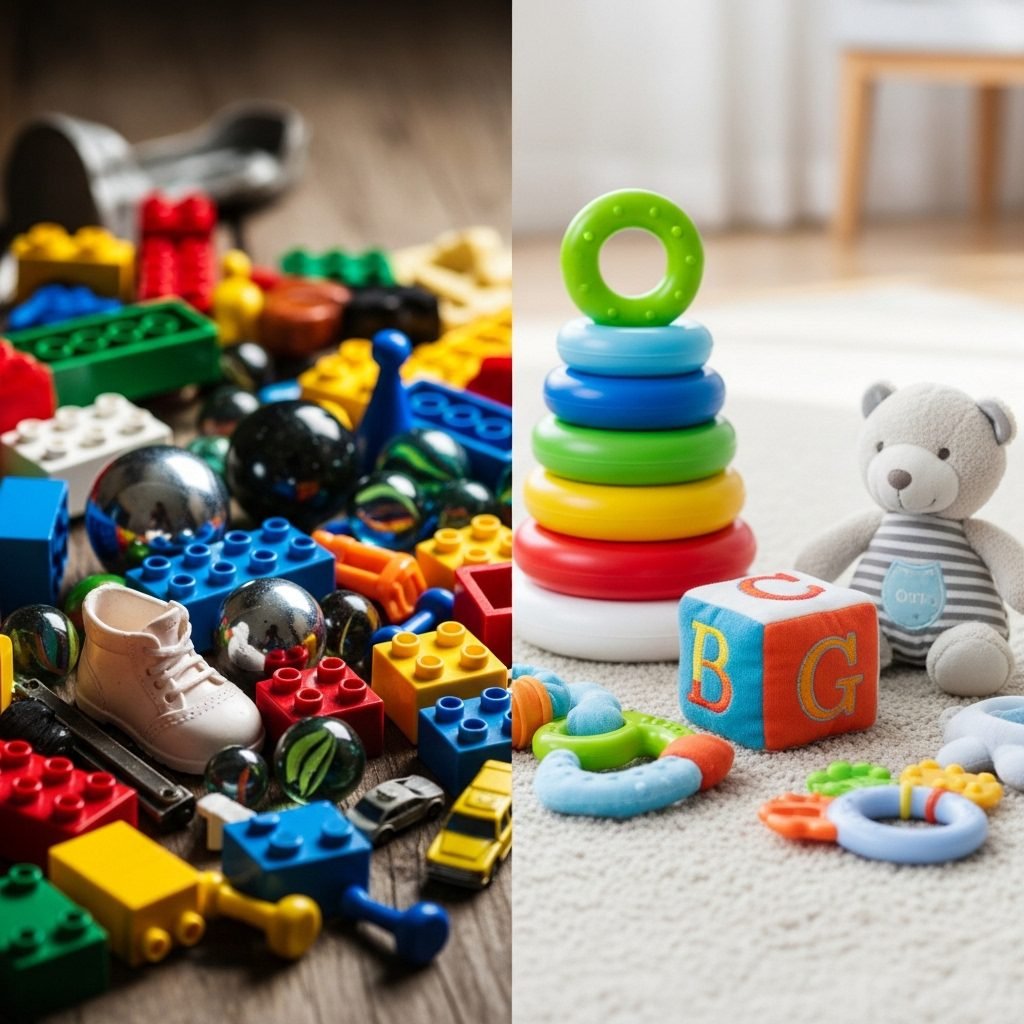
The play area should be a haven of fun and learning, but it can hide choking hazards, especially in homes with children of different ages or when well-meaning visitors bring gifts.
5. Small Parts from an Older Sibling’s Toys
This is one of the most common scenarios I see. A three-year-old’s LEGOs, a five-year-old’s doll shoes, or the tiny accessories from an action figure set are incredibly dangerous for a baby or toddler.
- The Risk: Toys rated for older children often contain parts that are a perfect choking size for children under three.
- The Simple Fix: Create separate play zones. Keep the older child’s toys with small parts in a dedicated room or in sealed bins that are stored on a high shelf. Teach your older child the importance of ‘baby-safe’ cleanup after they play. Supervised, separate playtime is key.
6. Hair Bows, Clips, and Headbands
They are adorable, but the cute accessories we put on our babies can be a serious risk. A bow can be pulled off a headband, or a clip can be pulled from their hair. Once in their hands, it will likely go straight into their mouth.
- The Risk: The decorative parts (like plastic gems or flowers) can detach and be swallowed. Even the clip itself can be a hazard.
- The Simple Fix: Always supervise your baby when they are wearing hair accessories. Remove all bows, clips, and headbands before naps and bedtime. Opt for soft, one-piece headbands without small, glued-on parts for unsupervised moments.
7. Balloons (Latex and Mylar)
Balloons are synonymous with celebration, but they are a notorious choking hazard for young children. The danger isn’t just with a whole, uninflated balloon, but also with the pieces of a popped balloon.
Safety Warning: The American Academy of Pediatrics identifies latex balloons as a leading cause of choking fatalities in children. When a piece is inhaled, it can conform to the shape of the throat, creating a tight seal that is very difficult to dislodge.
- The Risk: Uninflated balloons and popped balloon pieces pose a severe suffocation risk.
- The Simple Fix: Honestly, my best advice is to simply avoid latex balloons altogether until your children are much older. Opt for Mylar (foil) balloons, but still ensure you discard them properly once they deflate. If you must have latex balloons for a party, supervise children vigilantly and collect and discard all pieces immediately if one pops.
Furniture & Decor: The Unsuspecting Hazards

You’ve anchored the big stuff, but what about the little bits and pieces that make up your furniture and decor? A determined baby can work almost anything loose over time.
8. Removable Furniture Feet or Caps
Take a look at your smaller furniture—end tables, chairs, or even baby gear like activity centers. Many have small plastic or rubber caps on the bottom of the legs to protect the floor. With a little effort, a curious baby might be able to pry one off.
- The Risk: These caps are often small, round, and smooth, making them a choking hazard.
- The Simple Fix: Get down on the floor and check the legs of your furniture. If the caps seem loose, use a strong, non-toxic glue to secure them permanently. If they can’t be secured, it might be best to remove them entirely.
9. Potpourri and Decorative Bowl Fillers
A low bowl of potpourri on a coffee table or a vase filled with decorative marbles, stones, or beads might look beautiful, but it’s a candy bowl for a curious toddler. These items are often brightly colored and look deceptively like food.
- The Risk: These items are the perfect size and shape to cause choking. Some potpourri may also be toxic if ingested.
- The Simple Fix: Relocate all decorative bowls and vases with small items to very high shelves or put them away entirely until your child is older. Opt for decor that is large and solid, like a large book or a single, large (and stable) sculpture.
10. Refrigerator Magnets
If you have an open-concept living space, the refrigerator might be part of the general play area. Small, decorative magnets, especially the kind that are just a small magnet glued to a plastic novelty item, can be a huge danger. The small magnet can be pulled off the back.
- The Risk: A single small magnet is a choking hazard. Swallowing two or more high-powered magnets is a life-threatening emergency that can cause the intestines to connect and tear tissue.
- The Simple Fix: Keep all magnets high up on the fridge, well out of your child’s reach. Better yet, clear the bottom two-thirds of your fridge door entirely. Avoid small, novelty magnets and opt for larger, one-piece magnetic clips if you need them.
Your Proactive Safety Checklist: Putting Knowledge into Action
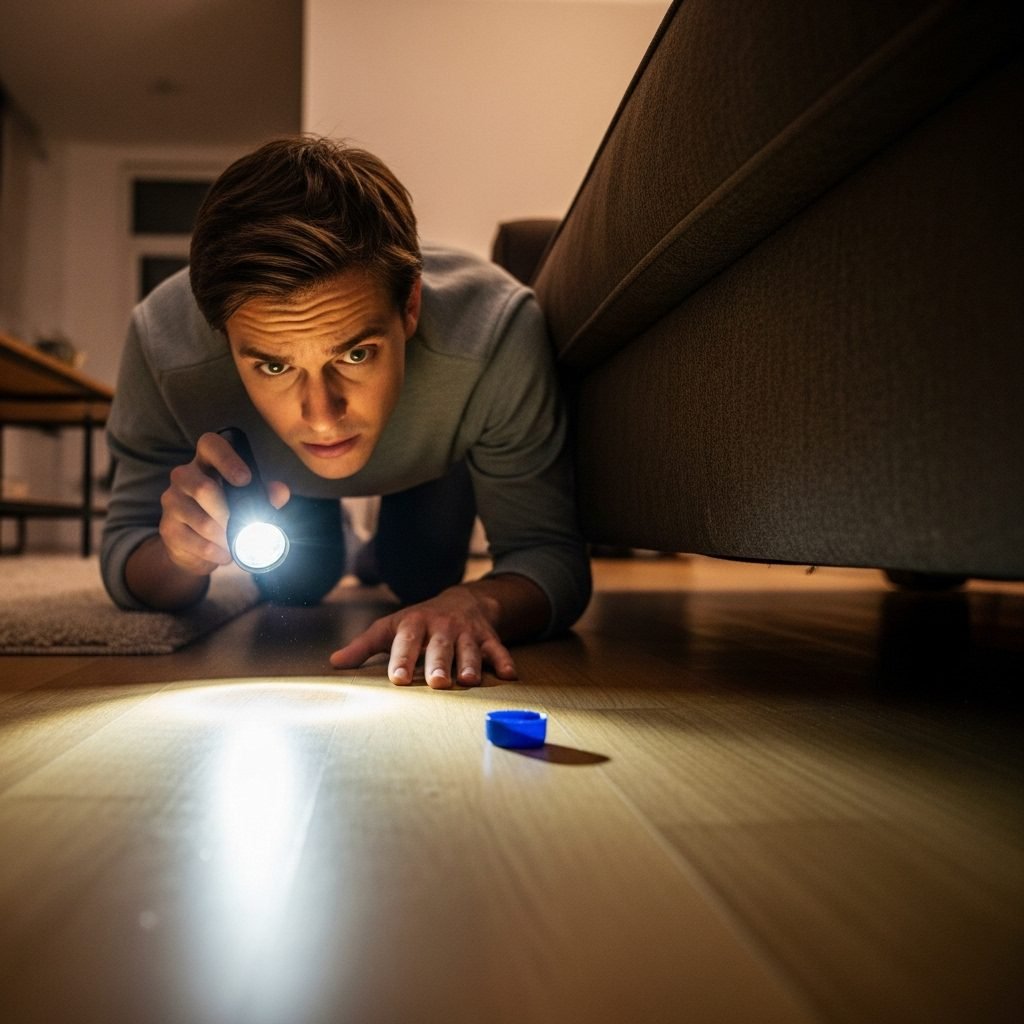
Feeling a little overwhelmed? Don’t be! Awareness is the first and most important step. Now, let’s turn that awareness into a simple, repeatable safety routine. This isn’t about being perfect; it’s about being prepared and proactive.
Get a Baby’s-Eye View
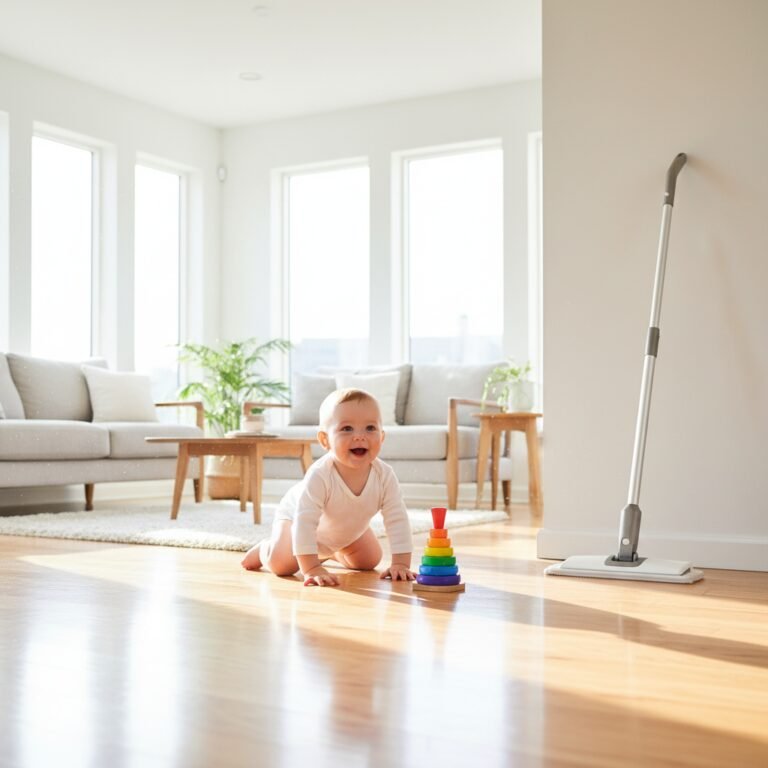
This is the single most effective thing you can do. Once a week, get down on your hands and knees and crawl through your living room. You will be absolutely shocked at what you find. You’ll see the dust bunny under the sofa, but you might also see a dropped earring back, a stray piece of pet kibble, or a coin you never knew was missing. This perspective changes everything.
Master the Toilet Paper Roll Test
This is a classic for a reason. Take an empty cardboard toilet paper tube. Anything that can fit completely inside this tube is a potential choking hazard for a child under three. It’s a simple, tangible way to check toys, objects, and even food pieces. If it fits, keep it out of reach.
| Safety Action | Frequency | Why It Matters |
|---|---|---|
| The ‘Baby’s-Eye View’ Crawl | Once a week | Helps you find hazards you’d never see from a standing position. |
| The ‘End-of-Day Sweep’ | Daily | A quick 2-minute scan of the floor and furniture for items dropped during the day. |
| Check Battery Compartments | Monthly | Ensures screws haven’t loosened and compartments remain secure on remotes and toys. |
| Learn Infant CPR and First Aid | Once, with refreshers | This is your ultimate tool. Knowing what to do in an emergency is the most empowering feeling of all. |
Have a ‘What If’ Plan
Despite our best efforts, accidents can happen. Knowing what to do in a choking emergency is critical. I strongly urge all parents and caregivers to take an infant and child CPR and first-aid class. You can find them through local hospitals, community centers, or the American Red Cross. Knowing the steps to take can save a life.
Conclusion
There you have it. Twelve hazards that were likely hiding in plain sight. My hope is that you don’t look at your living room with fear now, but with fresh, informed eyes. You are your child’s loving protector, and creating a safe environment is one of the most important ways you show that love. It’s not about wrapping your child in bubble wrap or sanitizing every surface. It’s about thoughtful, proactive steps that reduce risks and allow for the joyful, messy, beautiful business of growing up.
You are building a safe and loving home, one small, smart decision at a time. So take a moment today. Get down on the floor, see the world from their amazing perspective, and do a quick sweep. You’ve got this.