

Solo Parenting: How to Survive Your First Full Day Alone with Baby
The front door clicks shut. You hear your partner’s car pull away. And then… silence. It’s just you and this tiny, precious, and completely dependent human. For the first time, all day. If your heart is doing a tap dance of love, excitement, and sheer terror, take a deep breath. That is completely and totally normal.
Hi, I’m a pediatric nurse and lactation consultant, and I’ve spent decades helping new parents just like you navigate these daunting firsts. I’ve seen the worry in their eyes, and I’ve seen the triumphant smiles at the end of the day. That first day alone with your baby feels like climbing a mountain, but I promise you, it’s more like a series of small, manageable hills. You just need a map.
This guide is your map. We’re going to walk through it together, step-by-step, from prepping the night before to celebrating your victory lap in the evening. Forget about having a perfect day. Our only goals are a safe, fed baby and a sane, surviving parent. Ready? Let’s begin.
The Night Before: Setting Up Your ‘Mission Control’
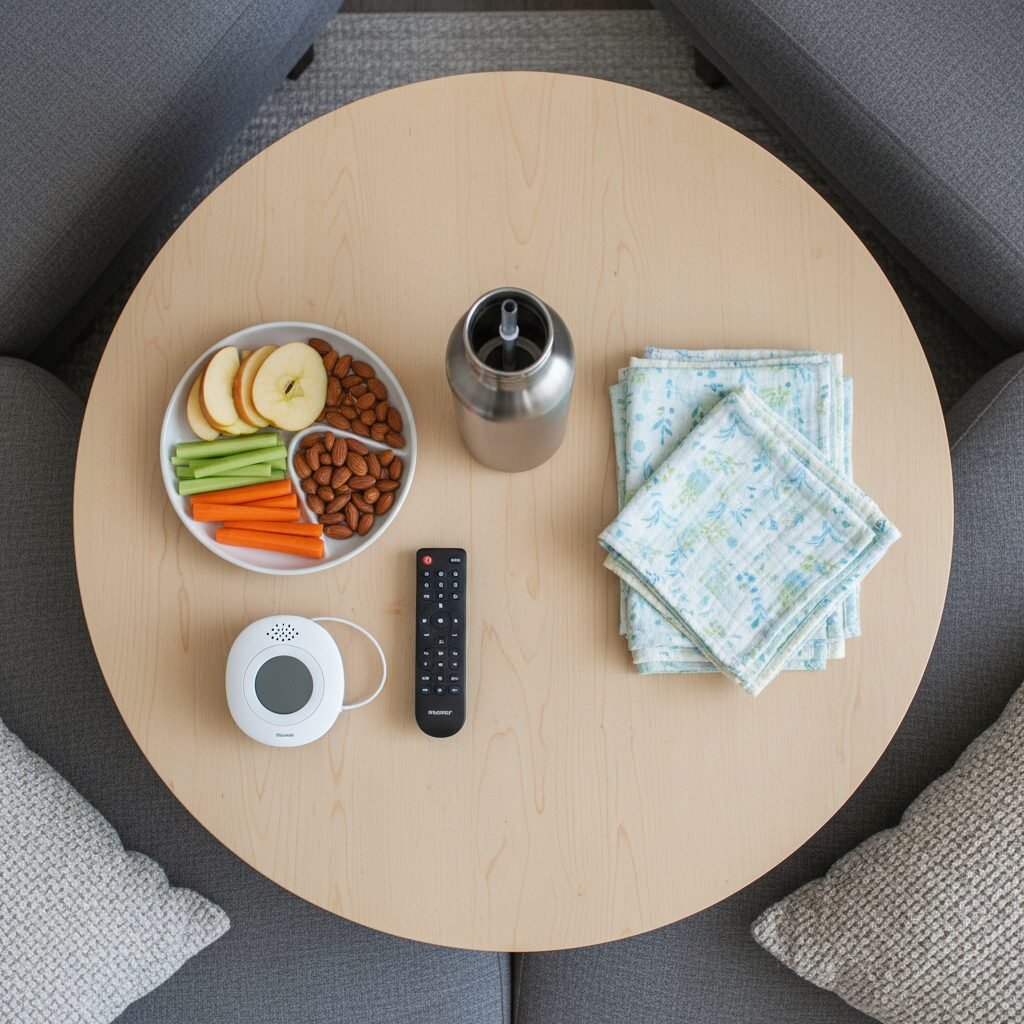
The secret to a smoother day tomorrow starts tonight. Think of yourself as preparing for a very important, very cute mission. A little prep work now will save you a world of stress when you’re sleep-deprived and have a fussy baby in your arms.
Create Your Stations
You don’t want to be scrambling for supplies when you need them most. Set up a few key stations around your main living area:
- The Diaper Station: This doesn’t have to be a formal changing table. A simple caddy or basket will do. Stock it with at least 10-12 diapers, a full pack of wipes, diaper cream, a changing pad, and one or two backup outfits for baby (because blowouts are a fact of life).
- The Feeding Station: Whether you’re breastfeeding or bottle-feeding, create a cozy corner. Have your nursing pillow, burp cloths, a big water bottle for you, and some one-handed snacks (like granola bars or trail mix) within arm’s reach. If you’re pumping or bottle-feeding, have clean bottles, pump parts, and pre-measured formula ready to go.
- The Safe Zone: You will need to put the baby down. Repeat that: You will need to put the baby down. To use the bathroom, to make a sandwich, to simply unclench your hands. Designate a few safe spots: a bassinet, a crib, a bouncer, or a play mat on the floor. Make sure they are always free of loose blankets or pillows.
Fuel Yourself
Your needs are not secondary; they are essential to the mission. You cannot pour from an empty cup. Tonight, take 15 minutes to prep your own food and drinks for tomorrow.
- Fill a few water bottles and place them where you’ll be spending most of your time.
- Make a simple sandwich or a salad and put it in the fridge.
- Portion out snacks like nuts, fruit, cheese sticks, or yogurt. The easier it is to grab and eat, the more likely you are to actually do it.
A Gentle Reminder: Your only job tomorrow is to care for your baby and yourself. The laundry can wait. The dishes can wait. The thank-you cards can wait. Release the pressure to be productive. Survival and snuggles are the only things on the to-do list.
The Morning Shift: Conquering Feeds, Naps, and Your Own Needs

Okay, the sun is up, your partner is gone, and the day has officially begun. Let’s do this. Don’t think about the whole day at once. Just focus on the next few hours. Many parents find it helpful to think in terms of a gentle rhythm rather than a strict schedule.
Embrace the ‘Eat, Play, Sleep’ Rhythm
This isn’t a rigid rule, but a flexible guide for your day. When baby wakes up, the first thing they’ll likely want to do is eat. After their tummy is full, you’ll have a short window of ‘alert time,’ which is when you can play. For a newborn, ‘play’ is very simple: a few minutes of tummy time on your chest, looking at your face while you talk or sing, or gazing at a high-contrast book. Soon, you’ll see sleepy cues, and it’s time to help them get to sleep. Then, the cycle repeats.
Decoding Sleepy Cues
Learning your baby’s unique signals for tiredness is a superpower. Catching them before they become overtired can save you from a major meltdown. Look for:
- Yawning (the most obvious one!)
- Staring off into space or a ‘glazed over’ look
- Rubbing their eyes or ears
- Making jerky arm and leg movements
- Becoming fussy or irritable for no clear reason
When you see these signs, it’s time to start your wind-down routine for a nap (a quick swaddle, a dark room, some shushing).
Safety First, Always: It is always, always okay to put your baby down in a safe place, like their crib or bassinet, if you feel overwhelmed or just need a moment. Your mental health is a critical safety feature. Step away, take a few deep breaths, and return when you feel more centered.
And what about you? When the baby finally naps, resist the urge to immediately start cleaning. First, meet your own needs. Use the bathroom. Drink a glass of water. Eat that sandwich you made. Sit down for five minutes of silence. This is your refueling time. You need it and you deserve it.
The Midday Maze: Navigating Crying Spells and the ‘Witching Hour’

The afternoon can often be the trickiest part of the day. Your own energy is waning, and babies often have a period of intense fussiness, commonly known as the ‘witching hour’ (which can ironically last for several hours). When your baby is crying and you can’t figure out why, it can feel incredibly stressful. Let’s arm you with a checklist and some soothing techniques.
The Crying Checklist
Before you panic, run through the basics. Is my baby crying because they need…
- Food? Check when they last ate. Are they showing hunger cues like rooting or sucking on their fists?
- A Diaper Change? A wet or dirty diaper is a common culprit for discomfort.
- To Burp? Trapped gas is painful. Try burping them in a few different positions.
- A Change of Scenery? Sometimes, just moving to a different room or stepping outside for a minute of fresh air can work wonders.
- Relief from Pain? Check for anything obvious, like clothing that’s too tight or a hair wrapped around a tiny toe.
Mastering the 5 S’s
When basic needs are met and baby is still crying, you can try Dr. Harvey Karp’s ‘5 S’s’ to activate their calming reflex. This mimics the environment of the womb.
- Swaddle: Wrap your baby up snugly in a blanket. This provides a sense of security and prevents their startle reflex from waking them.
- Side/Stomach Position: Hold your baby on their side or stomach across your forearm (always place them on their back for sleep).
- Shush: Make a loud, continuous ‘shushing’ sound close to their ear. It should be as loud as their cries to get their attention.
- Swing: Use a gentle, rhythmic, jiggly motion. Think more ‘jello’ and less ‘rocking chair.’ Support their head and neck and make tiny movements.
- Suck: Offer a pacifier, your clean finger, or help them find their own hand to suck on.
You may not need all five, but often a combination does the trick. Be patient and persistent.
| Possible Reason for Crying | What to Look For | Quick Solution |
|---|---|---|
| Hunger | Crying starts low and builds; baby roots, sucks on hands. | Offer a feed. |
| Tiredness | Whiny, fussy cry; baby rubs eyes, yawns. | Swaddle and begin nap routine in a quiet, dark space. |
| Discomfort (Gas/Diaper) | Sudden, loud cries; baby pulls legs up to chest. | Check diaper, try burping or bicycle legs. |
| Overstimulation | Cries while turning head away from lights or sounds. | Move to a quiet, dimly lit room. |
The Finish Line: Creating a Calm Evening Routine

You’ve made it through the toughest part of the day. The sun is starting to set, and the finish line is in sight. The goal now is to gently transition from the chaos of the day to the calm of the night. A predictable bedtime routine is a powerful signal to your baby’s brain that it’s time to prepare for a long sleep.
Keep It Simple and Consistent
Your routine doesn’t need to be an hour-long, elaborate production. A simple 20-30 minute sequence of events is perfect. The key is to do the same things in the same order every night.
A great evening routine might include a few of these elements:
- A Warm Bath: This can be very calming for some babies (though others get stimulated by it, so watch your baby’s cues!). It’s a clear signal that the day is ending.
- A Gentle Massage: After the bath, use some baby-safe lotion to give your little one a gentle massage. This is a wonderful way to connect and relax them.
- Pajamas and a Fresh Diaper: Change them into their sleep clothes for the night.
- A Quiet Feed: Give the last feed of the evening in the dim, quiet room where they will sleep. Avoid too much talking or eye contact to keep the atmosphere sleepy.
- A Song or a Story: Read a short board book or sing a soft lullaby. Your voice is one of the most soothing sounds to your baby.
Once the routine is done, place your baby in their crib or bassinet while they are drowsy but still awake. This helps them learn to fall asleep independently. It might not work the first time, or the tenth, but it’s a good habit to start building.
As you lay them down, take a moment to appreciate the quiet. You’re at the end of a marathon day. The hardest part is over.
You Did It! Celebrating Your Win and Prepping for Tomorrow

Your baby is asleep. The house is quiet. Before you do anything else, stop and take a moment to acknowledge what you just accomplished. You kept a tiny human alive, fed, and loved, all by yourself. You are a superhero. It might not have been pretty, you might have cried, you might have felt like you were failing a dozen times, but you did it. Celebrate this massive win.
Your ‘After Hours’ Self-Care
Now, it’s your turn. Your needs have been on the back burner all day. For the next hour, do something just for you. This is non-negotiable. Your options are endless, but they should be restorative:
- Take the longest, hottest shower you can manage.
- Eat a real meal with two hands, sitting down. Maybe even something you didn’t have to microwave.
- Call your partner, a friend, or your parent and tell them about your day—the good, the bad, and the messy.
- Watch one episode of a show that has nothing to do with babies.
- Simply sit in the quiet and do absolutely nothing at all.
The 10-Minute Reset
Once you’ve had a moment to decompress, do a quick 10-minute reset for tomorrow. This will make your morning self thank you profusely.
- Gather all the dirty bottles and pump parts and put them in the sink to soak.
- Restock your diaper and feeding stations.
- Lay out a clean outfit for you and the baby.
That’s it. Don’t try to clean the whole house. Just do the bare minimum to set yourself up for an easier start tomorrow. Every day you do this, you’ll get a little more confident. You’ll learn your baby’s cues a little better. It won’t always be easy, but it will get easier.
Conclusion
You survived. You made it through your first full day alone with your baby. Whether it felt like a triumph or a train wreck, the outcome is the same: you faced the challenge head-on. Remember the key lessons from today: preparation is your best friend, flexibility will be your superpower, and giving yourself grace is not optional, it’s required.
There will be more hard days, but there will also be countless moments of incredible joy, laughter, and a love so fierce it takes your breath away. You are learning, your baby is learning, and you are doing this together. You are stronger than you think, you are more capable than you know, and you are everything your baby needs. Welcome to parenthood. You’ve got this.