
Why Your Baby Has a Smelly Rash Behind Their Ears (And How to Fix It)
Finding anything unexpected on your perfect little one can send a new parent’s heart into overdrive. You’re getting to know every tiny roll, every sweet smell, and then one day, you notice it: a red, sometimes crusty, and definitely smelly rash tucked away in the crease behind their ear. Before you dive down a rabbit hole of late-night internet searches, please take a deep breath. I’m here to tell you, as a pediatric nurse who has seen this countless times, that this is incredibly common and usually very simple to solve.
That little space behind the ear is a perfect trap for moisture, milk, and skin cells. It’s warm, it’s cozy, and it can quickly become irritated. This guide will walk you through exactly what you’re seeing, the most likely culprits, and a gentle, step-by-step plan to clear it up and bring back that sweet baby smell you love. Let’s figure this out together.
Decoding the Rash: What Am I Actually Looking At?
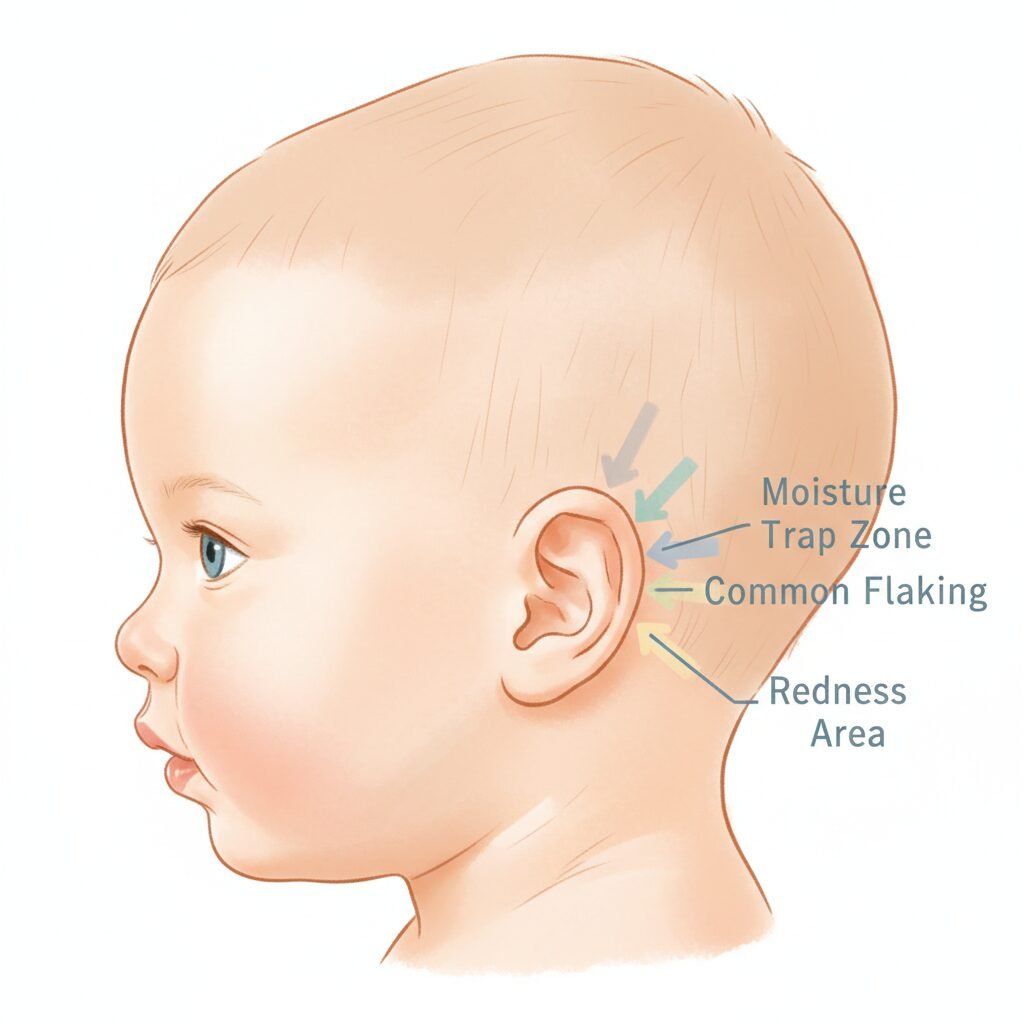
First things first, let’s get a clear picture of what’s happening in that tiny crease. When parents describe this rash, they often use a few key words. Does any of this sound familiar?
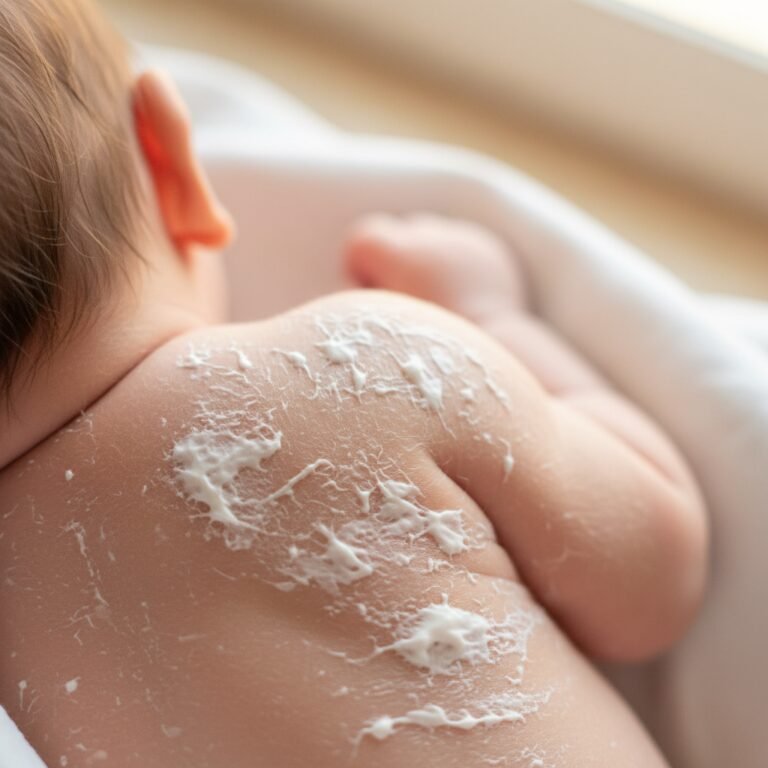
- Appearance: You might see redness, dry and flaky skin, or even thick, crusty patches that can be yellowish or white. Sometimes, the skin might look wet, weepy, or cracked, especially right in the fold.
- Texture: It can feel greasy or oily to the touch, or it might feel rough and scaly like fine sandpaper.
- The Smell: This is often the most alarming part for parents. The odor is typically described as being like sour milk, old cheese, or just generally musty. This smell doesn’t mean your baby is unclean! It’s simply the result of skin oils, dead skin cells, and moisture mixing, which can allow harmless skin bacteria to multiply a bit more than usual, creating that distinct scent.
Identifying these characteristics is the first step. It helps us narrow down the cause from a scary unknown to a manageable, common baby issue. It’s rarely as serious as it looks or smells, and just knowing what it is can bring a huge sense of relief.
The Usual Suspects: Common Causes of That Smelly Rash
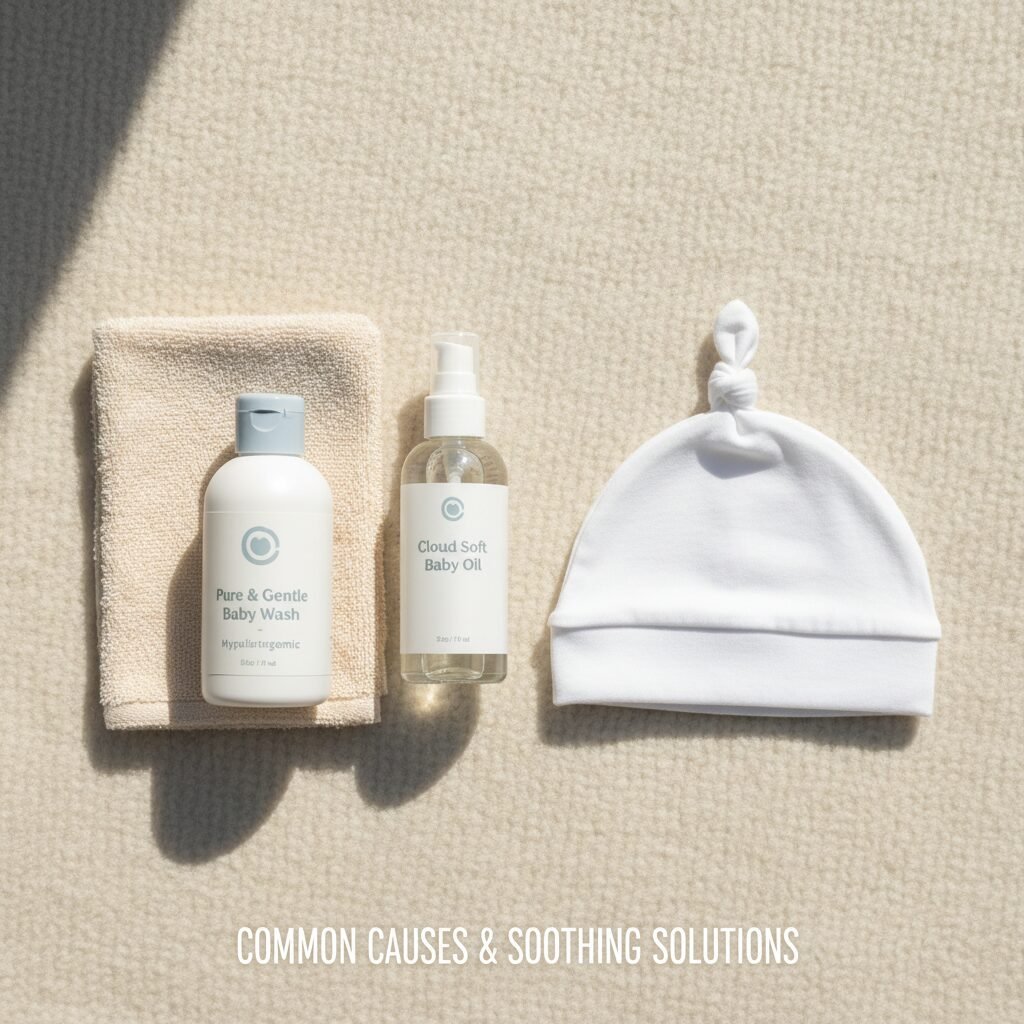
Now that you know what to look for, let’s explore the ‘why.’ There are a handful of very common, non-scary reasons for this rash to appear. More often than not, it’s one of the culprits below.
Seborrheic Dermatitis (A.K.A. Cradle Cap)
This is probably the number one cause. While we call it ‘cradle cap’ when it’s on the scalp, seborrheic dermatitis can appear in many of baby’s oily spots, including behind the ears, on the eyebrows, and in the diaper area. It’s caused by an overproduction of sebum (skin oil), which makes dead skin cells stick together instead of shedding normally. It looks like thick, oily, yellowish or white scales or crusts. It isn’t contagious or caused by poor hygiene—it’s just one of those quirky baby things, possibly linked to hormones from mom that are still circulating in baby’s system.
Milk Dribbles and Spit-Up
Think about a feeding session. Whether breast or bottle-feeding, it’s easy for a little milk to dribble down the side of your baby’s face and pool in that little crevice behind the ear. The same goes for spit-up, especially if your baby is lying on their side. The skin there stays warm and moist, creating the perfect environment for irritation and that sour-milk smell. It’s a simple case of trapped moisture.
Intertrigo
This is a fancy medical term for a rash that occurs in skin folds. Chubby babies are famous for their adorable rolls—on their neck, in their armpits, and behind their ears! When skin rubs against skin, combined with moisture and a lack of air circulation, it can become red, raw, and sore. This is intertrigo, and it’s purely a result of that cute baby chubbiness.
Eczema (Atopic Dermatitis)
If the rash seems less greasy and more dry, itchy, and intensely red, it could be eczema. Eczema often appears in the crooks of elbows and knees but can certainly show up behind the ears. It tends to run in families with a history of allergies or asthma. Unlike cradle cap, eczema is typically very itchy and can make your baby uncomfortable.
Contact Dermatitis
Sometimes, the rash is a simple reaction to something that touched your baby’s skin. This could be a new soap, lotion, or shampoo. It might even be the detergent used to wash their hat or bedding, or a reaction to the fabric itself. The skin becomes irritated and red in the specific area that came into contact with the irritant.
Your Gentle Home Care Toolkit: Soothing the Rash Step-by-Step
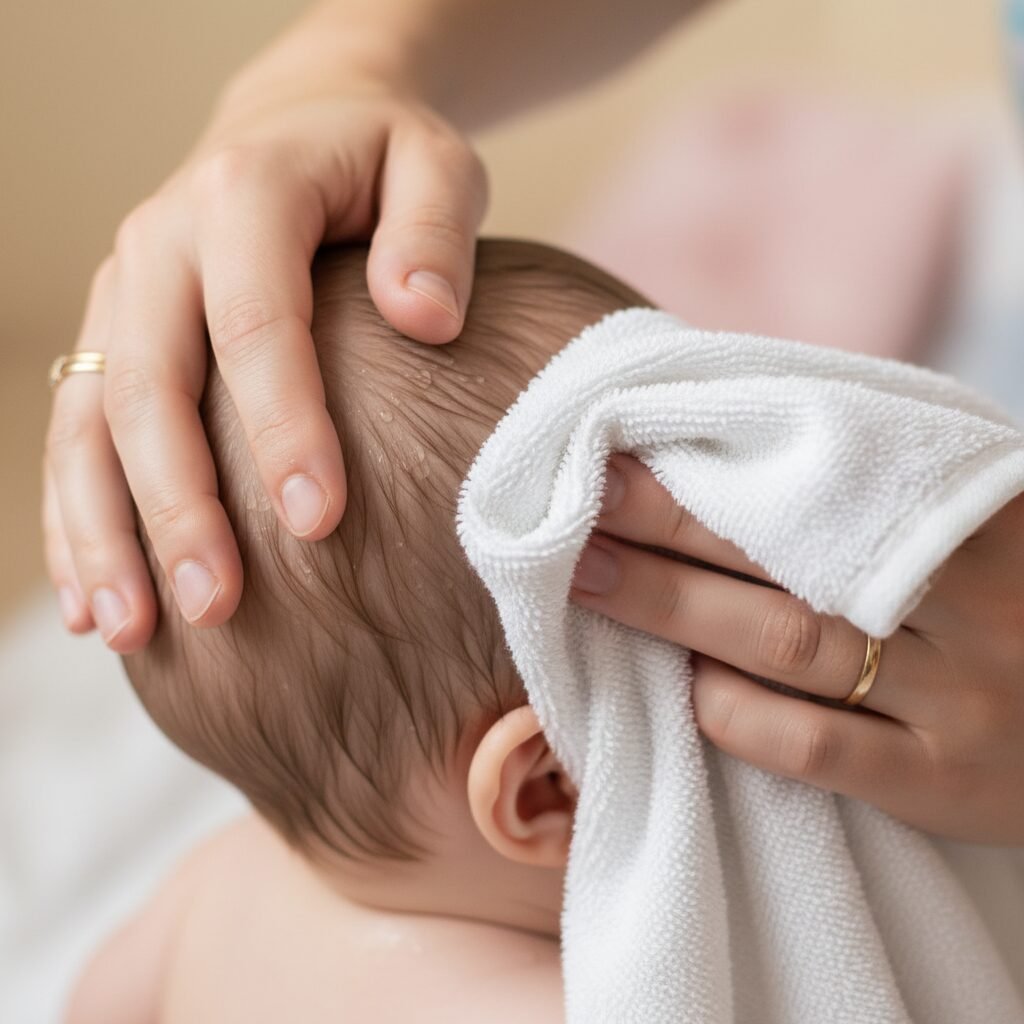
Ready for the good news? Most of the time, you can clear this rash up with some simple, gentle care at home. The motto here is: keep it clean and keep it dry.
- Gentle Cleansing: At least once a day (bathtime is perfect), use a super-soft washcloth and warm water to gently wipe the area. You can use a tiny drop of a mild, fragrance-free baby soap if it seems particularly greasy, but rinse it thoroughly. The goal is to remove any trapped milk, sweat, or oils.
- Pat, Don’t Rub: After cleaning, drying is the most critical step. Use a clean, dry, soft towel to pat the area completely dry. Don’t rub, as this can cause more irritation. Make sure you get right into the deepest part of the crease.
- Let It Breathe: After patting it dry, let the area air out for a few minutes before getting your baby dressed. Good air circulation is one of the best remedies.
- Tackling Cradle Cap Flakes: If you’re dealing with thick, crusty scales from cradle cap, you can apply a small amount of baby oil, coconut oil, or olive oil to the area about 15-30 minutes before their bath. This will soften the crusts. Then, during the bath, you can gently massage the area with a soft washcloth to help lift the loose flakes away.
Safety First: Never, ever pick or scrape at the crusts or flakes, no matter how tempting it is! Your baby’s skin is delicate, and this can break the skin, cause pain, and open the door for infection. Be patient and gentle.
For very raw or cracked skin from intertrigo, after making sure the area is 100% dry, you can apply a very thin layer of a barrier cream, like a zinc-oxide diaper rash cream or pure petroleum jelly. This protects the skin from moisture while it heals. However, only apply this to perfectly dry skin, otherwise you’ll trap moisture underneath.
When to Call the Doctor: Red Flags to Watch For

Your parental intuition is a powerful tool. While these rashes are usually no big deal, there are times when it’s best to get a professional opinion from your pediatrician or family doctor. Peace of mind is priceless.
Please make an appointment if you notice any of the following:
- It’s Getting Worse: You’ve been diligently keeping the area clean and dry for a few days, but the rash is spreading, getting redder, or looks more irritated.
- Signs of Infection: This is the most important one. Look for significant swelling, skin that feels hot to the touch, bright red streaks, or any yellow/greenish pus or fluid weeping from the area. These are signs that a bacterial infection has set in and may require a prescription cream.
- Your Baby is in Pain: If your little one cries or fusses when you touch the area, it’s a sign that it’s more than just mild irritation.
- There’s a Fever: A rash combined with a fever (100.4°F or 38°C or higher) always warrants a call to the doctor.
- It Might Be Eczema: If the rash is very itchy, dry, and persistent, and especially if you have a family history of allergies or asthma, your doctor can help confirm if it’s eczema and recommend the best moisturizers or treatments.
- You’re Just Worried: Honestly, there is no reason too small to call your pediatrician. You are your baby’s best advocate. If you’re concerned, just make the call. We are here to help and would much rather you call and have it be nothing than have you worry at home.
Conclusion
Seeing a rash on your baby can be unsettling, but that smelly little rash behind the ears is a true rite of passage for many new parents and their little ones. In almost every case, it’s a simple fix rooted in a gentle routine of keeping that tiny skin fold clean and, most importantly, dry. Whether it’s a touch of cradle cap or a stray milk dribble, a little extra attention during bath time and feedings is usually all it takes to resolve it.
Remember to trust your instincts. You know your baby better than anyone. If something feels off or the rash isn’t improving, your pediatrician is your partner in this journey. You’re doing an amazing job navigating the world of newborn care, and being observant enough to notice and care for a tiny rash is just one more sign of what a loving and attentive parent you are.