

Is Your Baby Safe? The T.I.C.K.S. Rule for Babywearing You Need to Memorize
Oh, the magic of babywearing! That incredible feeling of having your baby snuggled up against your chest, hearing their soft breaths, and still having your hands free to make a cup of tea or reply to a text. It’s a beautiful way to bond, soothe a fussy newborn, and navigate the world together. As a pediatric nurse and lactation consultant, I’ve seen firsthand how beneficial babywearing can be for both parents and babies.
But with that closeness comes a big responsibility: ensuring your precious cargo is safe and secure. It can feel a little intimidating at first, can’t it? You’ve got this carrier with all its straps and fabric, and a tiny, delicate human. It’s completely normal to wonder, ‘Am I doing this right?’
That’s where a wonderfully simple, life-saving acronym comes in: T.I.C.K.S. Think of it as your five-step safety check before you take on the day. It’s a set of guidelines endorsed by babywearing experts worldwide to help you position your baby correctly and safely every single time. Memorizing this rule will replace any uncertainty with confidence, allowing you to relax and truly enjoy all the cuddles. So, let’s walk through it together, step-by-step. You’ve got this!
What is the T.I.C.K.S. Rule for Safe Babywearing?
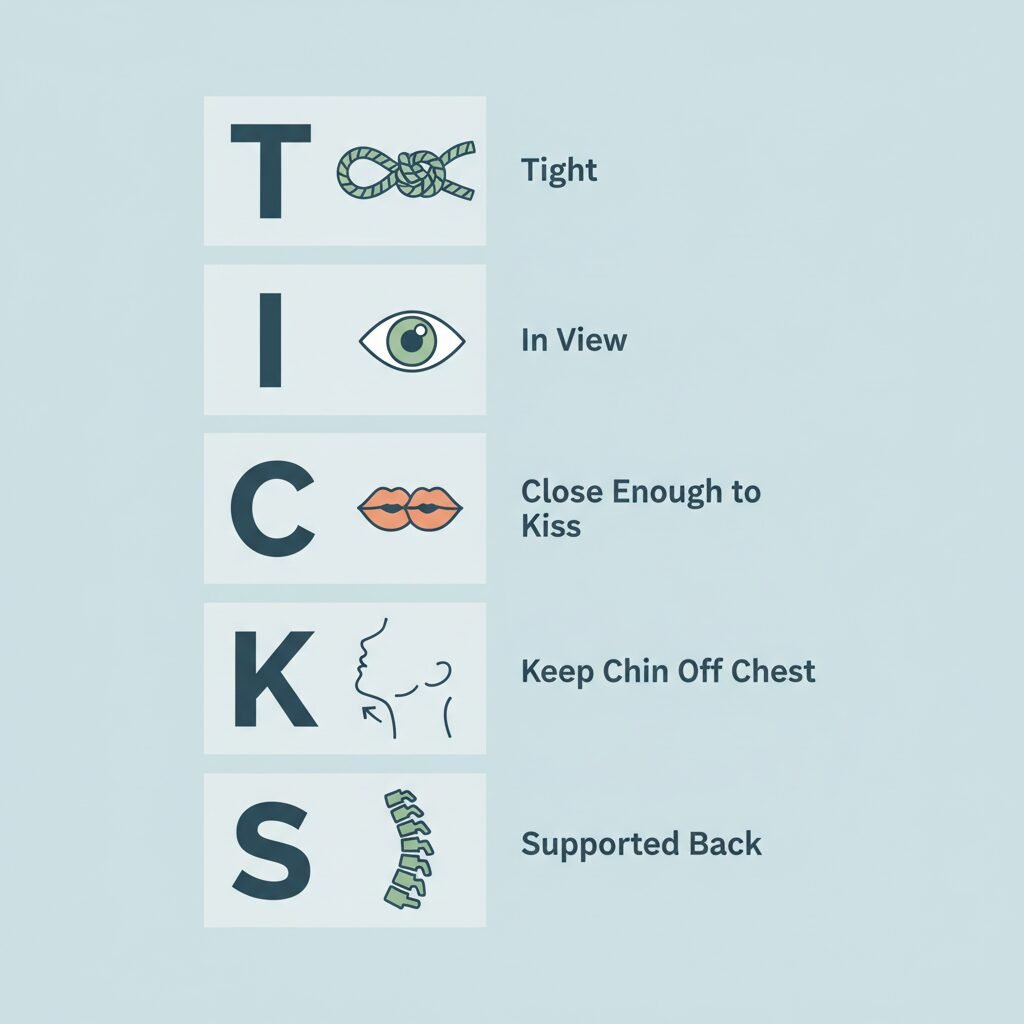
Before we dive into the details, let’s get a clear picture of what T.I.C.K.S. is all about. It’s not a brand or a specific type of carrier; it’s a universal safety checklist. It was developed by the UK Sling Consortium to give parents and caregivers a memorable way to check for the key signs of a safe carry, regardless of whether you’re using a stretchy wrap, a ring sling, or a buckled carrier.
The primary goal of these guidelines is to prevent a serious risk known as positional asphyxiation. This happens when a baby’s position prevents them from breathing properly. Newborns are particularly vulnerable because they have heavy heads and very little neck control. If their chin slumps onto their chest, it can cut off their tiny airway. The T.I.C.K.S. rule is designed to keep your baby’s airway open and protected at all times.
So, what does it stand for? Here’s the quick overview:
- T – Tight
- I – In View at All Times
- C – Close Enough to Kiss
- K – Keep Chin Off Chest
- S – Supported Back
Committing these five points to memory is one of the most important things you can do as a babywearing parent. It’s your internal safety expert, ready to go whenever you are.
Breaking Down T.I.C.K.S.: A Letter-by-Letter Guide
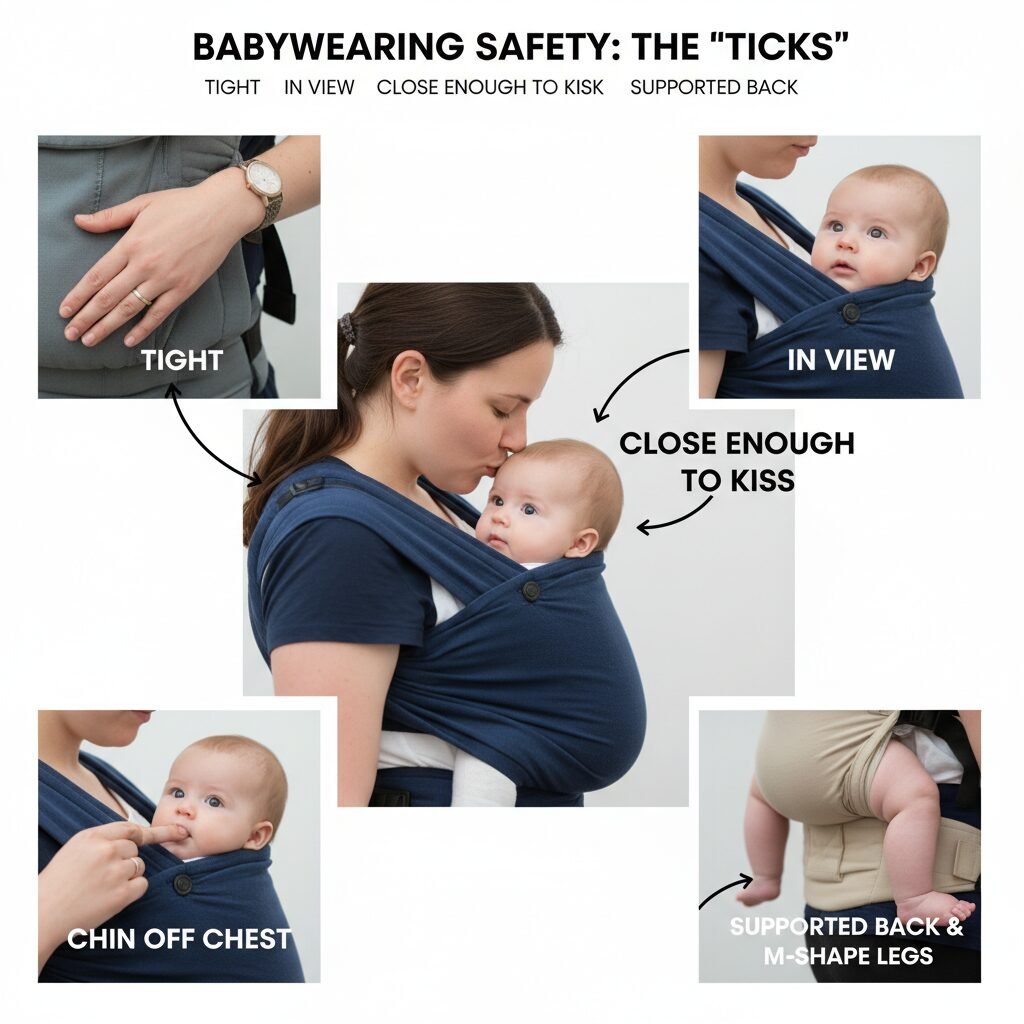
Alright, let’s get into the nitty-gritty. Understanding not just what each letter means, but why it’s so important, will make all the difference. We’ll go through each one, and I’ll share the little tips I give to new parents in my practice.
T is for Tight
Your baby carrier should be tight and snug, hugging your baby close to your body. Think of it as a firm, secure hug with fabric. A loose carrier can allow your baby to slump down, which is a major safety risk as it can compromise their airway. A tight carrier is also much more comfortable for you! It distributes the baby’s weight evenly and prevents back strain.
How to check: Once your baby is in the carrier, lean forward gently (while supporting your baby’s head, of course). If the baby’s body pulls away from yours, the carrier is too loose. It should be snug enough that they remain securely held against your chest.
I is for In View at All Times
This one is simple but non-negotiable. You should be able to glance down and see your baby’s face at all times. Their face should not be turned in towards your body or covered by the fabric of the carrier or any blankets. This is your way of constantly monitoring them. Is their breathing normal? Are they happy and comfortable? Are their lips a healthy color? Being able to see them gives you all this information at a glance.
Never allow the carrier’s fabric to cover your baby’s nose and mouth. Ensure there is always a clear flow of air.
C is for Close Enough to Kiss
This is my favorite checkpoint because it’s so sweet and easy to remember. Your baby should be positioned high up on your chest. How high? So high that you can easily tip your head down and kiss the top of their sweet little head. If you have to dip your chin way down or crane your neck, they are too low. Positioning them this high ensures they haven’t slumped into a dangerous position and helps you monitor them easily. It also happens to be a lovely place for them to listen to your heartbeat!
K is for Keep Chin Off Chest
This is the most critical safety rule in babywearing. A baby’s airway is incredibly fragile. When their chin is forced down onto their chest, it can pinch their windpipe and block their breathing. Because they lack the strength to lift their head, this can become dangerous very quickly and silently. You must always ensure there is a space of at least one to two adult fingers between your baby’s chin and their chest. Gently lift their chin to check. This ensures their airway is always open and clear.
S is for Supported Back
A newborn’s spine is naturally curved in a ‘C’ shape. Your carrier should support this natural posture, not force their back to be straight. The fabric should be snug across their back, preventing them from slumping. Additionally, their legs should be supported in an ergonomic ‘M’ or ‘froggy’ position. This means their bottom is lower than their knees, with their hips spread naturally. The base of the carrier should support them from one knee-pit to the other. This position is crucial for healthy hip development and is recognized by the International Hip Dysplasia Institute as the best way to carry your baby.
Choosing the Right Carrier for Your Family

With so many carriers on the market, it’s easy to feel overwhelmed. The good news is that the T.I.C.K.S. rule applies to all of them! The ‘best’ carrier is the one that fits you and your baby comfortably and allows you to follow all the safety rules. Here’s a quick look at the most common types:
| Carrier Type | Best For | Key Considerations |
|---|---|---|
| Stretchy Wraps | Newborns and the ‘fourth trimester’ | Provides a very snug, womb-like fit. Can have a learning curve to tie correctly. Make sure the fabric is strong and not over-stretched. |
| Ring Slings | Quick trips and easy ups-and-downs | Excellent for newborns and toddlers. Easy to adjust. It’s crucial to ensure the fabric is spread wide across your back and the baby’s bottom for proper support. |
| Soft-Structured Carriers (SSCs) | Simplicity and long-term use | Easy to use with buckles and straps. Many require a newborn insert for the first few months to ensure proper positioning. Check that the base is adjustable to support the ‘M’ shape at all ages. |
| Meh Dais (or Bei Dais) | A blend of wrap and SSC | Features a body panel with long straps you tie. Highly adjustable and can offer a very customized fit. |
When you’re trying on a carrier, either in a store or from a local babywearing library, run through the T.I.C.K.S. checklist. Can you achieve all five points easily? If so, you’re on the right track!
Common Babywearing Mistakes (And How to Easily Fix Them)
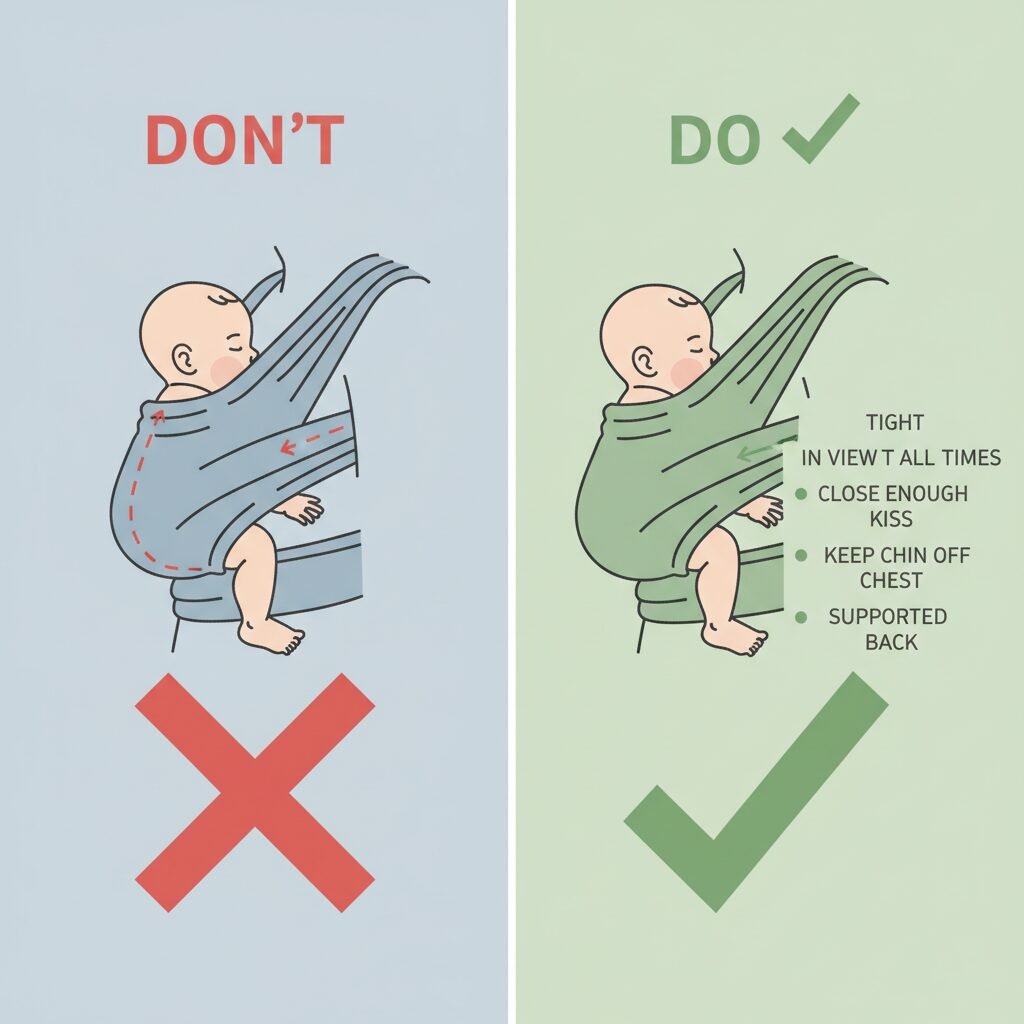
Everyone has a bit of a learning curve with babywearing, and that’s okay! Seeing a babywearing consultant or even watching trusted videos online can be a huge help. Here are some of the most common little hiccups I see and how to correct them:
- Mistake: The carrier feels loose and baby is slumping.
The Fix: Go back to the ‘T’ for Tight. For a wrap, re-tie it, making sure each ‘pass’ of fabric is pulled snug before you put the baby in. For an SSC, tighten the shoulder and waist straps incrementally until the baby’s body is held securely against yours. You should be able to move and bend without them shifting around. - Mistake: Baby is too low on my torso.
The Fix: This is a ‘C’ for Close Enough to Kiss issue. For a wrap or sling, you likely need to tie it higher to begin with. The ‘X’ on a wrap should be around your sternum, not your belly button. For an SSC, start with the waistband higher up on your natural waist, not low on your hips. This will automatically position the baby higher. - Mistake: I can’t see my baby’s face.
The Fix: An ‘I’ for In View problem. Gently turn your baby’s head to the side so their cheek rests on your chest, ensuring their nose and mouth are clear. If the carrier fabric is too high, you can often fold down the top panel or adjust the shoulder straps to lower it away from their face. - Mistake: My back hurts after a short time.
The Fix: This often goes back to ‘T’ for Tight and ‘S’ for Supported. A loose carrier puts all the strain on your shoulders. A tight carrier distributes weight through your torso and hips. For slings and wraps, make sure the fabric is spread as wide as possible across your back. For SSCs, ensure the chest clip is at a comfortable spot between your shoulder blades and that the shoulder straps are snug.
Beyond T.I.C.K.S.: Other Essential Safety Considerations

Once you’ve mastered T.I.C.K.S., you’re 99% of the way there! But as your friendly pediatric nurse, I want you to have the full picture. Here are a few more things to keep in mind for a safe and happy babywearing journey:
- Dress for Two: Remember that the carrier counts as a layer of clothing for your baby, and your body heat adds warmth, too. Be careful not to overdress your little one, especially in warmer weather. In the cold, it’s often better to dress the baby in regular clothes and wear a large coat over both of you.
- Mind Your Surroundings: Your balance and center of gravity are different when you’re wearing your baby. Be mindful of tripping hazards like curbs, stairs, and toys on the floor. Hold onto handrails when possible.
- Practice Makes Perfect: Before you put your baby in a new carrier for the first time, practice with a teddy bear or a bag of flour. Get comfortable with the tying or buckling process. When you do it with your baby, have a spotter nearby or practice while sitting on a soft surface like a bed.
- Avoid Risky Activities: Babywearing is for gentle activities. It’s not safe to cook over a hot stove, drink hot coffee or soup, jog, ride a bike, or do anything that involves jarring movements or a risk of falling.
Safety Warning: Always inspect your carrier before each use. Check for any worn stitching, frayed fabric, or broken buckles. A well-maintained carrier is a safe carrier.
Conclusion
You did it! You now have the knowledge and tools to be a confident babywearing parent. The T.I.C.K.S. rule—Tight, In View, Close Enough to Kiss, Keep Chin Off Chest, Supported Back—is your simple, powerful mantra for safety.
Please don’t let the safety rules intimidate you. They are here to empower you. Every time you snuggle your baby into their carrier and run through that mental checklist, you are doing an amazing job of protecting them. Babywearing is one of the most special experiences of early parenthood, and by keeping safety at the forefront, you are free to soak in every precious moment of closeness. Happy wearing!