
Blue Hands and Feet? Why Acrocyanosis is Scary But Normal
You’re gazing at your perfect, tiny newborn, counting every finger and toe, marveling at this new life you’ve created. Then, your heart leaps into your throat. You notice their little hands and feet have a distinct bluish tinge. Panic sets in. Is something wrong? Are they not getting enough oxygen? As a pediatric nurse who has reassured countless new parents, I want you to take a deep breath with me. What you’re likely seeing is a very common and completely normal newborn condition called acrocyanosis.
It’s one of those scary-looking things that is almost always harmless. Your baby’s body is going through incredible changes as it adjusts to life outside the womb, and their brand-new circulatory system is still getting up to speed. In this guide, we’ll talk like friends over a cup of tea. We’ll break down exactly what acrocyanosis is, explore the fascinating reason it happens, learn the critical difference between this harmless blueness and a true emergency, and give you simple, comforting ways to help those little extremities pink up. You’ve got this, and I’m here to help you understand your baby’s amazing new body.
Unpacking the Big Word: What is Acrocyanosis?
Let’s start by demystifying that clinical-sounding term: acrocyanosis. ‘Acro’ means extremity (like hands and feet), and ‘cyanosis’ means a bluish discoloration of the skin. So, it literally means ‘blue extremities.’ It’s not a disease, but rather a temporary, harmless physiological state that affects many newborns in their first 24 to 48 hours of life, and sometimes intermittently for a few weeks after.
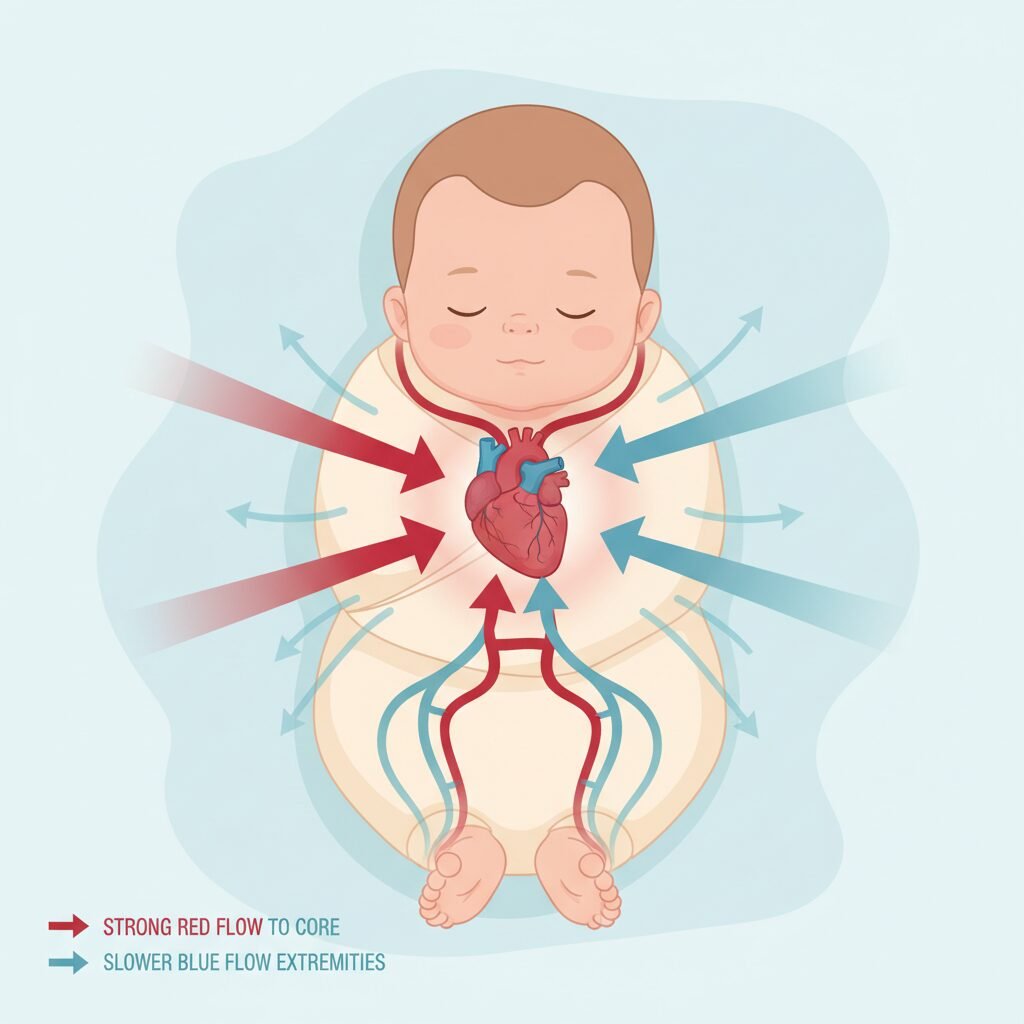
Think of your baby’s circulatory system like a brand-new, high-tech plumbing system that’s just been turned on. The main pumps—the heart and major arteries—are working hard to send warm, oxygen-rich blood to the most important parts of the house first: the brain, lungs, kidneys, and all the other vital organs in the torso. The pipes leading to the furthest rooms, like the hands and feet, are smaller and take a little longer to get full, consistent flow. This is essentially what’s happening in your baby. Their body is brilliantly prioritizing blood flow to their core to keep everything running smoothly. The tiny blood vessels (capillaries) in their hands and feet haven’t fully matured yet and can be a bit sluggish, causing the blood to slow down. When blood slows, it releases more of its oxygen to the surrounding tissues, and this deoxygenated blood has a bluish appearance when viewed through the skin. It’s a sign that your baby’s body is smart, not that it’s in trouble.
Acrocyanosis vs. Central Cyanosis: The Key Difference Every Parent Should Know
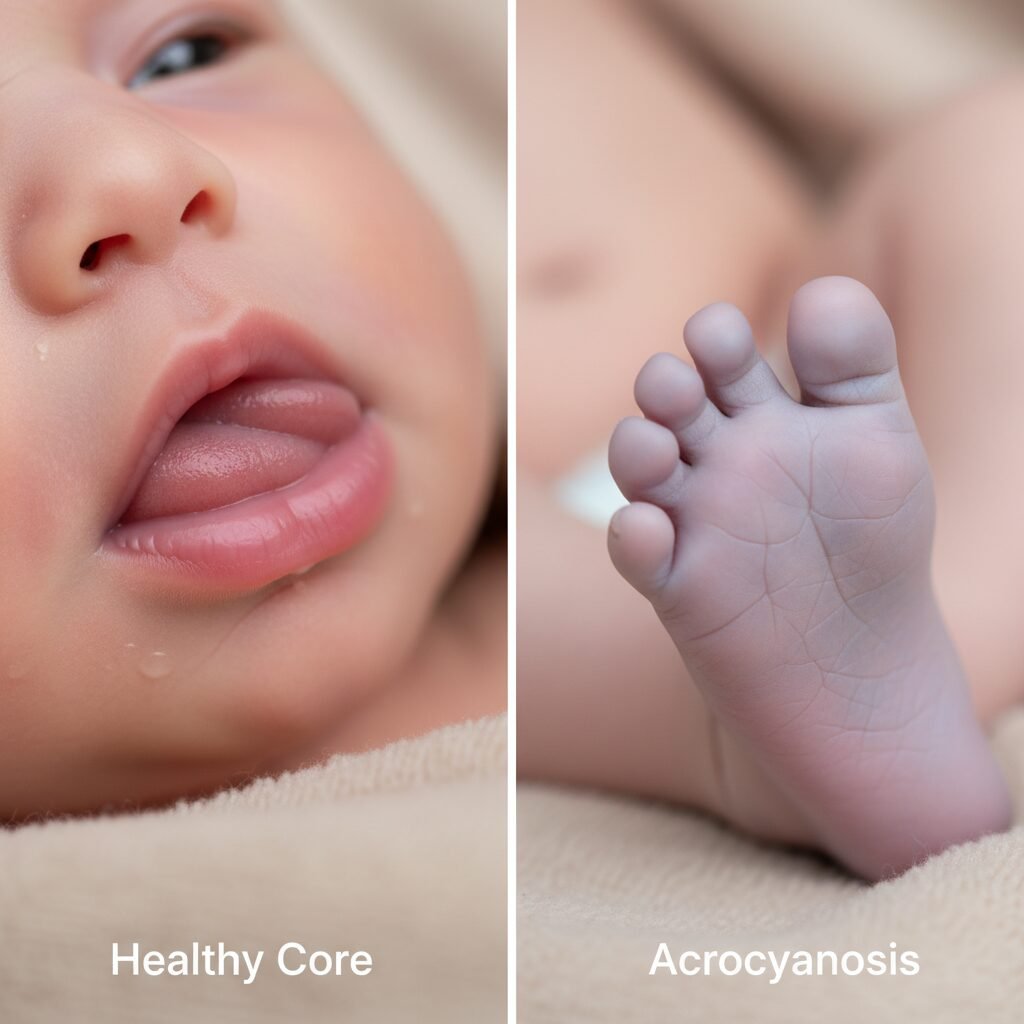
This is, without a doubt, the most important section of our chat. Understanding the difference between harmless acrocyanosis and a true medical emergency called central cyanosis will empower you and give you peace of mind. While acrocyanosis is peripheral (on the edges), central cyanosis affects the core of the body and indicates a serious problem with oxygenation that requires immediate medical attention.
The key is to look at your baby’s whole body, not just their hands and feet. With acrocyanosis, you will see blue hands and feet, but the baby’s trunk, lips, and tongue will be a healthy, warm pink. They will be breathing comfortably and acting like a typical newborn—eating, sleeping, and being alert. Central cyanosis is different. This is when the lips, tongue, and the skin on their chest or back turn a bluish or grayish color. This signals that the vital organs are not getting enough oxygenated blood.
Safety First: If you ever see a bluish discoloration on your baby’s lips, tongue, or the central part of their body, or if they are struggling to breathe, are extremely lethargic, or won’t eat, treat it as an emergency. Call 911 or go to the nearest emergency room immediately.
Here is a simple table to help you quickly spot the difference:
| Feature | Harmless Acrocyanosis (Peripheral) | Concerning Central Cyanosis (Emergency) |
|---|---|---|
| Location of Blueness | Hands and feet only. | Lips, tongue, face, and torso (the ‘core’). |
| Color of Lips & Tongue | Warm and pink. | Bluish or gray. |
| Baby’s Behavior | Behaving normally: alert, sleeping, or feeding well. | Lethargic, unresponsive, very fussy, or struggling to breathe/feed. |
| Response to Warming | Color improves when baby is warmed up. | Color does not improve; may worsen. |
| What to Do | Provide warmth and comfort. Mention it at your next pediatrician visit. | Call 911 or go to the ER immediately. This is a medical emergency. |
Simple Comfort Measures: How to Warm Up Those Little Toes and Fingers

So you’ve checked your baby over, their lips and torso are perfectly pink, and you’ve correctly identified harmless acrocyanosis. Phew! While it’s nothing to worry about, seeing those blue digits can still be a little unsettling. The good news is there are several simple and wonderfully cuddly ways to help improve circulation and bring that pink glow back to their hands and feet.
Remember, the cause is often a combination of an immature circulatory system and a response to a cooler environment. Your baby just spent nine months in a perfectly temperature-controlled environment, so the outside world can be a bit chilly for them! Here are some effective and nurturing ways to help:
- Skin-to-Skin Contact: This is my absolute favorite solution. Undress your baby down to their diaper and place them directly on your bare chest. Cover both of you with a warm blanket. Your body heat is the perfect, self-regulating radiator for your baby. It not only warms them efficiently but also regulates their heart rate, breathing, and promotes incredible bonding.
- Add a Layer: A simple rule of thumb for dressing a newborn is to give them one more light layer than you are comfortably wearing. If their hands and feet feel cool and look blue, add a pair of soft socks or baby mittens.
- Swaddle Snuggles: A cozy swaddle with a lightweight, breathable blanket can help your baby conserve their body heat, making them feel secure and warm, just like they were in the womb.
- Check the Room Temperature: Ensure the room isn’t too cold or drafty. A comfortable room temperature for a newborn is typically between 68-72°F (20-22°C).
- A Warm Bath: A short, warm bath can be a lovely way to warm your baby from head to toe and improve circulation. Just be sure to dry them thoroughly and dress them warmly right after to prevent them from getting a chill.
Often, you’ll see those hands and feet start to pink up within minutes of trying one of these simple measures. It’s a wonderful visual confirmation that you’re giving your baby exactly what they need.
When to Pick Up the Phone: Your Peace-of-Mind Checklist

Trusting your parental instincts is a superpower you are developing every single day. While we’ve established that acrocyanosis is normal, it’s also completely okay to need reassurance from a healthcare professional. You are your baby’s biggest advocate, and no question is ever silly or too small.
My personal advice to every new parent is this: When in doubt, always call your pediatrician’s office. Their job is to partner with you and support you, especially in these early, uncertain weeks. A quick phone call can provide immense peace of mind.
To help you feel confident, here is a clear checklist for when a phone call is a good idea versus when you need to seek immediate medical care.
When to Call Your Pediatrician for a Non-Emergency Chat:
- The blueness in the hands and feet seems to be happening very frequently or isn’t improving with warming measures.
- The acrocyanosis persists consistently beyond the first few weeks of life.
- Your baby seems unusually cool to the touch despite being dressed appropriately.
- You simply feel worried and want a professional to reassure you that what you’re seeing is normal.
When to Seek Immediate Medical Attention (Call 911 or Go to the ER):
- The blueness is on the lips, tongue, head, or torso (central cyanosis).
- Your baby is having any difficulty breathing. Look for fast breathing, grunting noises, or the skin sucking in around their ribs or neck with each breath (retractions).
- Your baby is extremely sleepy, difficult to wake up, or seems floppy and lethargic.
- Your baby is refusing to eat or is feeding very poorly.
Keeping this distinction in mind will help you navigate these little worries with confidence, knowing you are fully prepared to act if a true concern ever arises.
Conclusion
Navigating the world of newborn care is a journey filled with incredible joy and, let’s be honest, a few moments of sheer panic. Seeing blue hands and feet on your baby is definitely one of those heart-stopping moments. But now, you know the name for it—acrocyanosis—and you understand that it’s just a temporary quirk of your baby’s amazing, developing circulatory system. It’s a sign of their body working hard to adjust to this big new world, not a sign of distress.
By learning to spot the crucial difference between harmless acrocyanosis and serious central cyanosis, you’ve equipped yourself with knowledge that replaces fear with confidence. You know how to provide simple comfort and warmth, and you have a clear guide for when to relax and when to reach out for help. Remember to be gentle with yourself during this postpartum period. You are learning a whole new person, and they are learning you. Trust your instincts, snuggle that baby close, and enjoy watching those tiny hands and feet grow stronger and pinker every day. You’re doing a fantastic job.