Is Your Car Seat Fake? How to Spot Counterfeit Baby Gear on Amazon
Hey there, new parent! Welcome to the incredible, beautiful, and sometimes overwhelming world of baby gear. You’ve probably spent hours researching, reading reviews, and adding things to your cart. And when you’re trying to get everything you need for your little one, the convenience and deals on Amazon can feel like a lifesaver. I get it completely.
But I want to have a gentle, honest chat about something that’s becoming a serious safety concern: counterfeit baby products, especially car seats. It’s a scary thought, but some third-party sellers on massive online marketplaces are selling fakes that look almost identical to the real thing but offer none of the life-saving protection. Finding out the car seat you trust is a counterfeit is a nightmare no parent should face.
Please don’t feel panicked or judged. This isn’t about scaring you; it’s about empowering you. As a pediatric nurse who has seen it all, my goal is to give you the tools and confidence to be a savvy shopper. Think of me as your personal safety detective. Together, we’re going to walk through a simple checklist to help you spot the red flags, verify your purchases, and ensure that every piece of gear you buy is safe and sound for your precious cargo. Let’s get started!
Why a ‘Good Deal’ Can Be a Deadly Deal: The Real Risks of Fake Car Seats
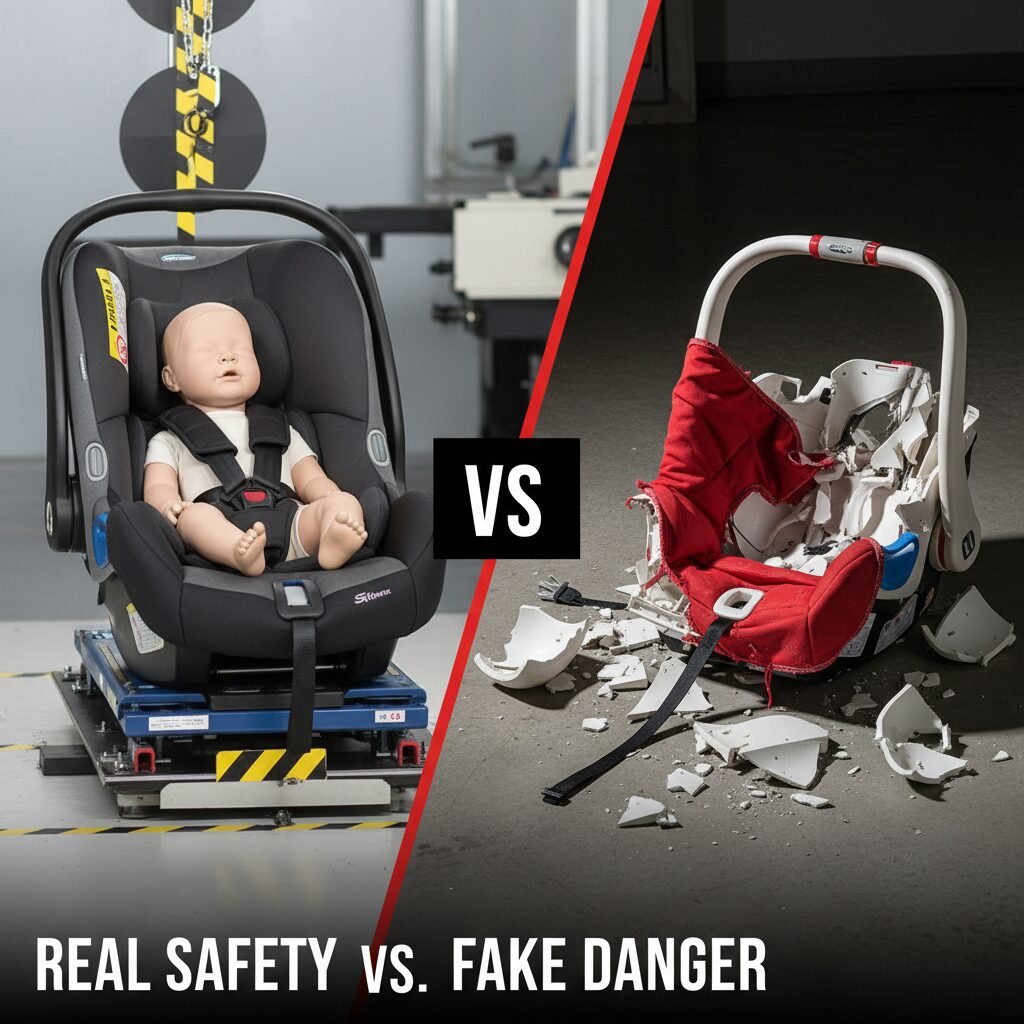
We all love a good bargain, especially with how quickly baby expenses add up. But when it comes to a car seat, the most important piece of safety equipment you will ever buy for your child, a ‘deal’ from an untrustworthy source can have devastating consequences. It’s not just about a knock-off brand; it’s about a complete failure of safety.
Legitimate car seat manufacturers invest millions of dollars in research, engineering, and rigorous crash testing to meet strict federal safety standards. Every component—from the type of plastic used in the shell to the tensile strength of the harness webbing and the flame-retardant chemicals in the fabric—is chosen and tested for one reason: to protect your child in a crash.
Counterfeit car seats have none of that. They are built to look like a real car seat, not to function like one. Here’s what that really means:
- Untested, Brittle Materials: Fake seats often use cheap, recycled plastic that can shatter into sharp pieces on impact, rather than absorbing and distributing the force of a crash.
- Faulty Harnesses and Buckles: The harness is your child’s lifeline. On fakes, the webbing can be thin and tear easily, and the buckle may fail to hold or release unexpectedly during a collision.
- No Flame Retardants: Regulated car seats must use materials that meet flammability standards. Counterfeit products often skip this, posing a serious fire risk.
- Lack of Proper Energy Absorption: Real car seats have engineered foam (like EPS foam, similar to what’s in a bicycle helmet) to cushion your baby’s head and body. Fakes might have simple packing foam or nothing at all.
A Critical Safety Warning: A counterfeit car seat provides a false sense of security. In an accident, it is not just likely to fail; it is expected to. It offers no more protection than holding your child in your arms and can potentially cause more harm due to shattering parts.
The bottom line is that you are not just paying for a brand name with a real car seat; you are paying for the science, the testing, and the peace of mind that it will perform its one critical job when you need it most.
Before You Click ‘Buy’: Your 5-Point Amazon Investigation Checklist
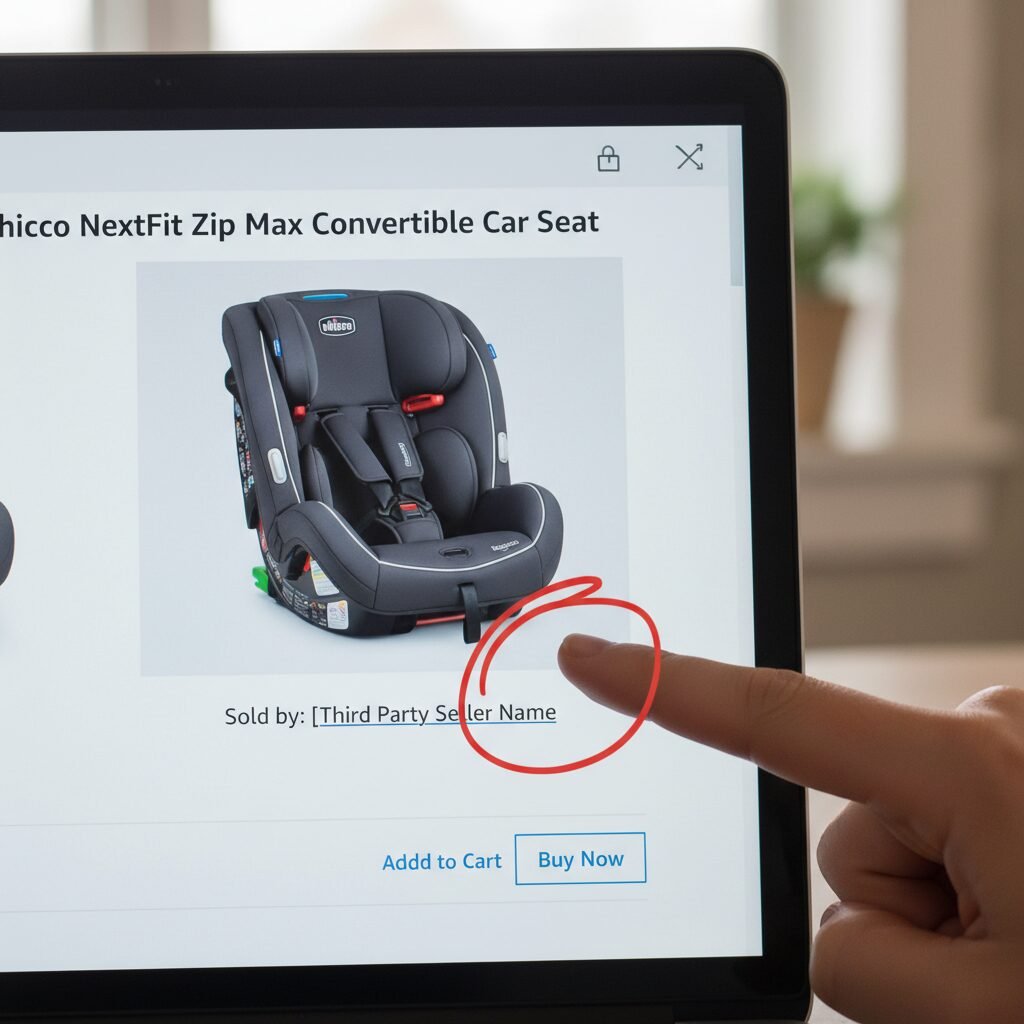
The best way to avoid a fake is to spot the red flags before you ever spend a dime. Becoming a skeptical shopper on Amazon is your first line of defense. Before a car seat even makes it into your virtual cart, run through this quick investigation.
1. Check the Seller Information
This is the single most important step. On any Amazon listing, look for the ‘Sold by’ and ‘Ships from’ information. Here’s how to decode it:
- Best: ‘Ships from and sold by Amazon.com’. This means you are buying inventory directly from Amazon, which has a more direct relationship with the manufacturer. The risk of counterfeits is significantly lower.
- Good: ‘Sold by [Official Brand Name] and Fulfilled by Amazon’. This means the brand itself is the seller, but they are using Amazon’s warehouse and shipping. This is also a very safe option. For example, ‘Sold by Graco and Fulfilled by Amazon’.
- High Risk: ‘Sold by [Random Store Name] and Fulfilled by Amazon’. Be very cautious here. This is a third-party seller. While many are legitimate, this is where counterfeiters thrive. They can send their fake goods to an Amazon warehouse to be shipped, making them look more official.
- Highest Risk: ‘Ships from and sold by [Random Store Name]’. This is a third-party seller who handles their own inventory and shipping. You have the least amount of oversight here. Avoid this for critical safety items like car seats.
2. Scrutinize the Product Listing Page
Counterfeiters are often lazy. Look for signs of a rushed or unprofessional listing:
- Typos and Bad Grammar: Official brand listings are professionally written and edited. Multiple spelling or grammatical errors in the product title or description are a huge red flag.
- Generic or Stolen Images: Does the listing use blurry, low-quality photos? Or does it only have the same generic stock photos you see everywhere? Legitimate sellers often have multiple high-resolution images, lifestyle shots, and even videos.
- Vague or Missing Information: A real listing will be packed with details about safety features, weight/height limits, and materials. A fake listing might be sparse on these critical details.
3. Read the Reviews Like a Detective
Don’t just look at the star rating. Dig into the reviews themselves.
- Filter for 1-Star Reviews: This is the fastest way to see if other customers have raised concerns about the product being fake, arriving in a damaged box, or missing key parts.
- Look for ‘Verified Purchase’: This tag means Amazon can confirm the person actually bought the item. Give these reviews more weight.
- Spot Fake Positive Reviews: Beware of a flood of 5-star reviews that are all posted around the same time, are very short (‘Great product!’), or use unnatural, keyword-stuffed language.
4. Compare the Price
If a deal on a premium car seat seems too good to be true, it almost certainly is. Go to the manufacturer’s official website (e.g., Graco.com, Britax.com) and check the Manufacturer’s Suggested Retail Price (MSRP). If the Amazon listing from a third-party seller is 40-50% lower than the MSRP, be extremely suspicious. Brands tightly control their pricing, and massive, unexplained discounts are a major warning sign.
The Moment of Truth: Your Hands-On Inspection Guide
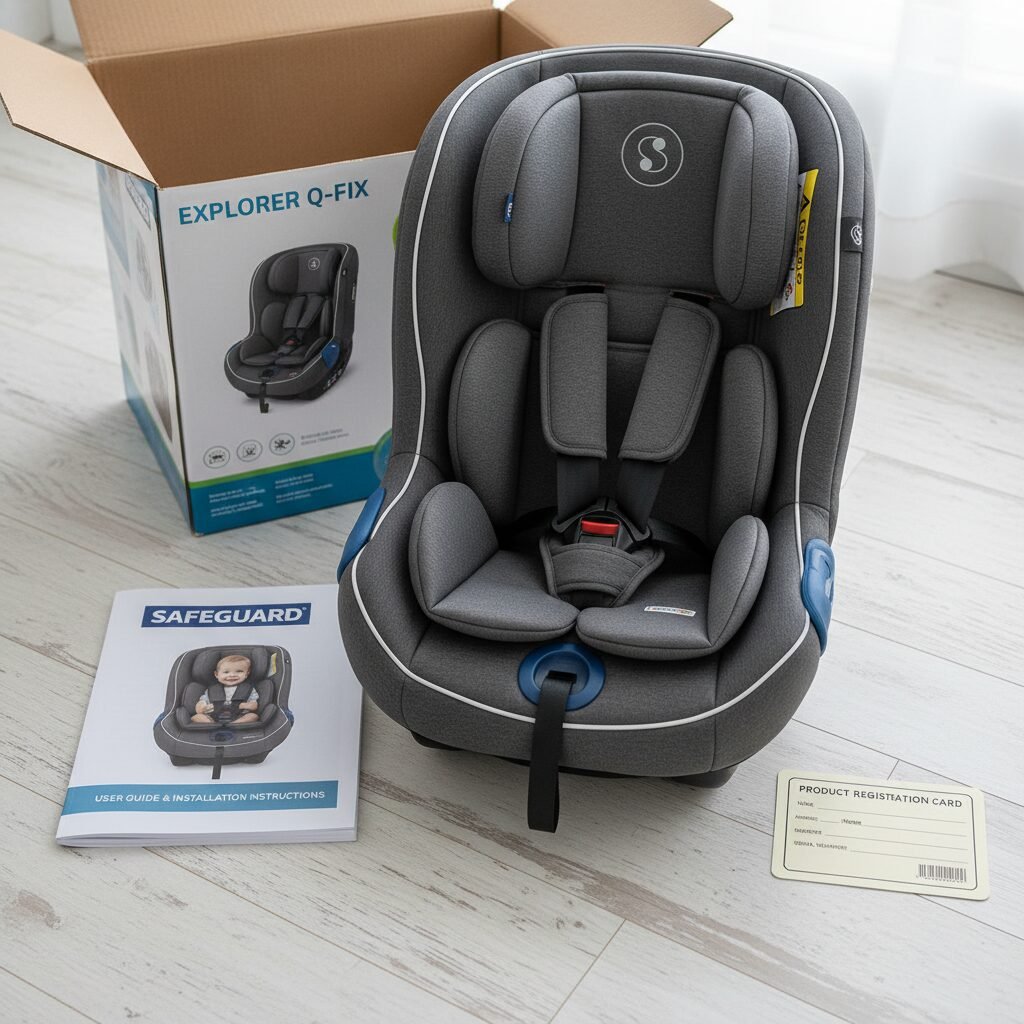
Okay, so you’ve done your research and the box has arrived. Your job isn’t over yet! The final check happens right in your living room. Before you even think about installing it in your car, perform this thorough unboxing inspection.
What to Look For Immediately
- The Packaging: Did it arrive in a plain, unmarked brown box? Or a box that looks flimsy and damaged? Legitimate manufacturers use sturdy, custom-designed, and branded retail packaging to protect the seat during shipping.
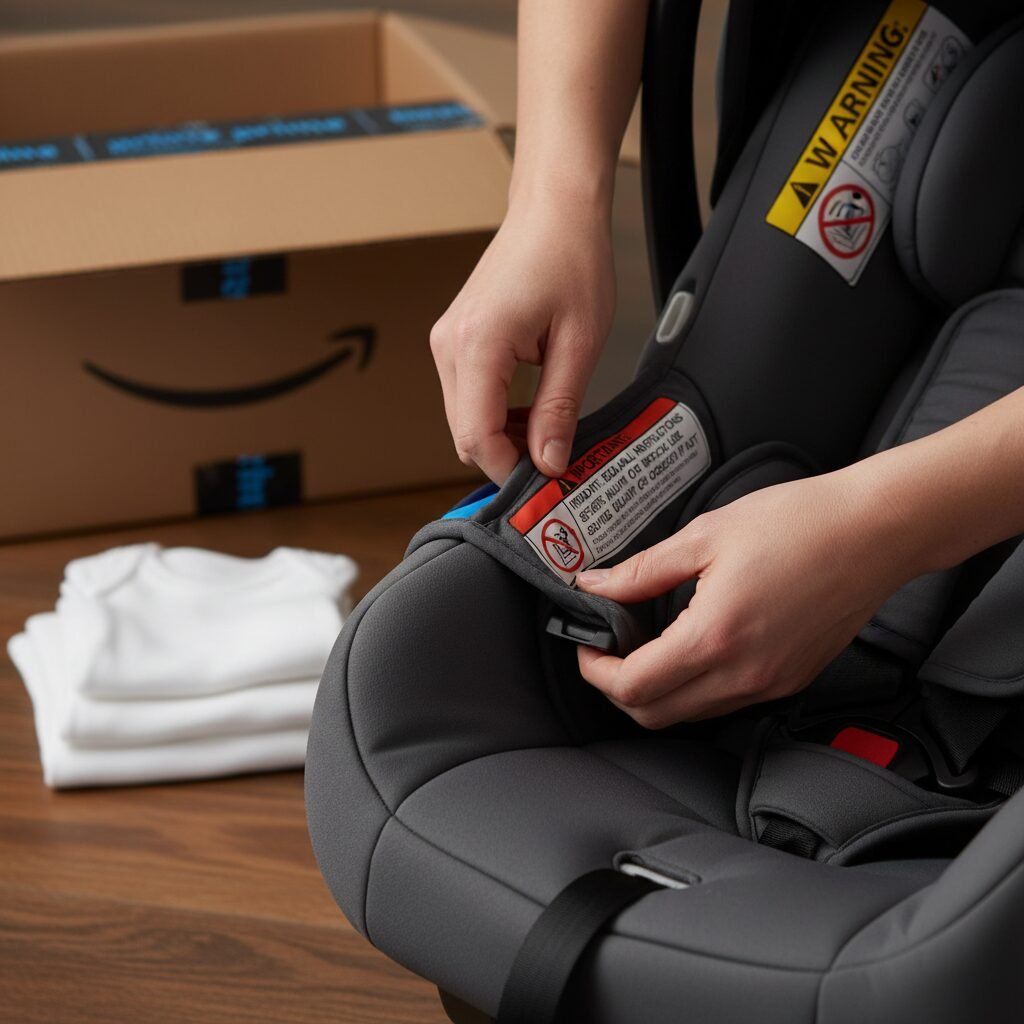
- The Official Labels: This is non-negotiable. Your car seat MUST have several specific stickers and labels. If any of these are missing, crooked, or look like cheap printouts, stop immediately. Look for:
- A sticker with the Model Number, Manufacturing Date, and Expiration Date. Car seats expire!
- The statement: ‘This Restraint is Certified for Use in Motor Vehicles and Aircraft.’
- A sticker from the manufacturer showing it conforms to all applicable Federal Motor Vehicle Safety Standards (FMVSS 213).
- The Manual and Registration Card: Every single new, legitimate car seat will come with a professionally printed instruction manual and a postage-paid product registration card. The registration card is critically important for the manufacturer to be able to contact you in case of a safety recall. Fakes almost never include a real registration card.
- Overall Quality and Feel: Trust your instincts. Does the plastic feel thin or flimsy? Squeeze it. Does it bend easily? Check the fabric and harness straps. Is the stitching neat and tight, or is it sloppy and uneven? Feel the padding—does it feel substantial, or is it just a thin piece of cloth over hard plastic?
To make it even clearer, here’s a side-by-side comparison of what to expect:
| Feature | ✅ Legitimate Car Seat | ❌ Counterfeit Car Seat |
|---|---|---|
| Packaging | Sturdy, branded retail box with high-quality printing. | Plain brown box, damaged packaging, or plastic wrap only. |
| Safety Labels | Multiple, professionally printed, straight labels with clear text, model number, and manufacture/expiration dates. | Missing labels, stickers with typos, crooked application, or blurry printing. |
| Manual | A thick, professionally printed instruction booklet. | A single sheet of paper with poor instructions, or no manual at all. |
| Registration Card | A separate, postage-paid postcard to mail in for recall notifications. | No registration card included. |
| Build Quality | Solid, heavy plastic. Smooth edges. Tight stitching. Thick, smooth harness webbing. | Flimsy, lightweight plastic. Rough or sharp edges. Sloppy stitching. Thin, coarse harness webbing. |
Uh-Oh, I Think It’s a Fake. Now What?
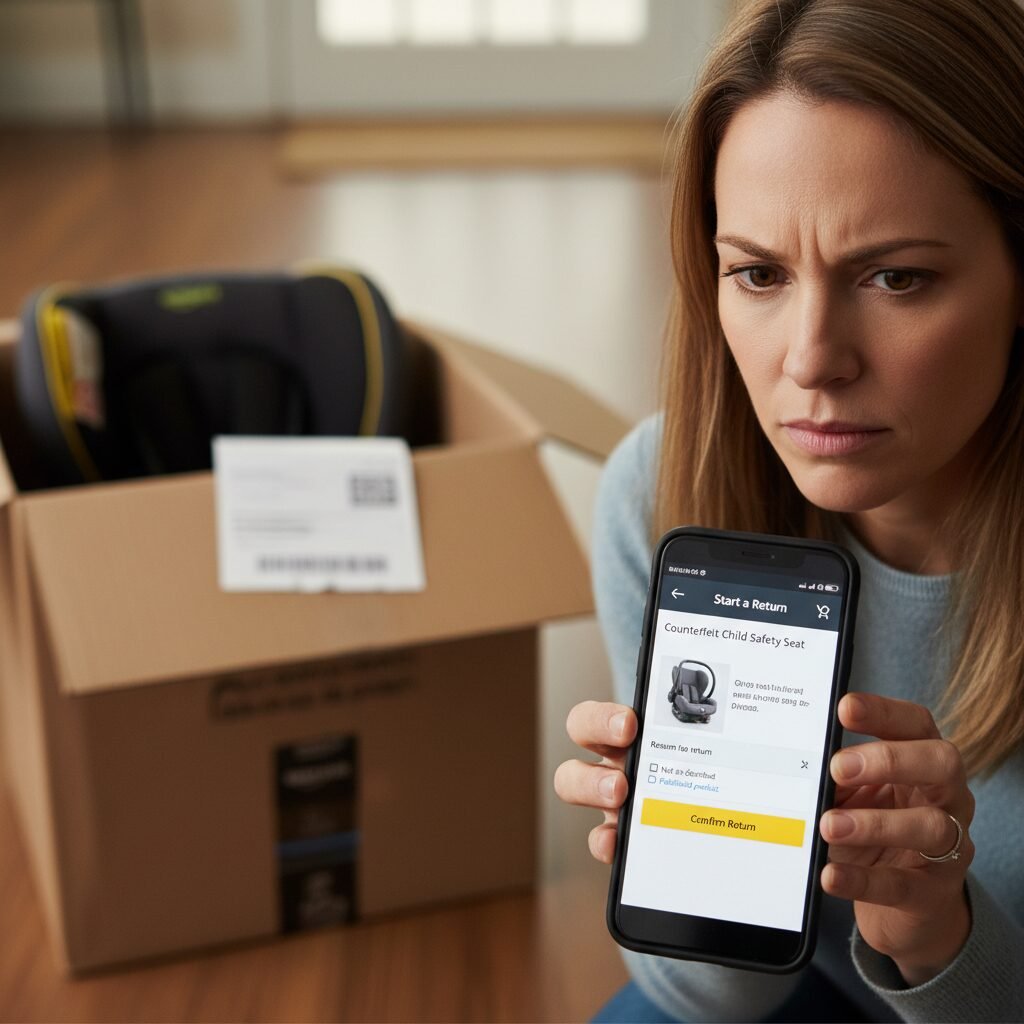
First of all, if you suspect you have a fake, take a deep breath. You caught it. That’s what matters. You have protected your child. Now, let’s take clear, calm steps to handle the situation.
IMMEDIATE ACTION: Do not, under any circumstances, put your child in the suspected counterfeit car seat. Do not try to ‘make it work.’ Its safety is compromised. Set it aside where it cannot be used accidentally.
Step 1: Contact the Manufacturer
Find the customer service number on the official brand website, not on the product’s box or manual (in case those are fake too). Call them and explain your concerns. Have the model number and serial number from the sticker ready. They can often help you verify if the numbers are valid and if the product is authentic.
Step 2: Initiate a Return with Amazon
Go to your Amazon order history and start a return. When you select the reason for the return, be sure to choose ‘counterfeit’ or ‘not as described.’ This is important. You are entitled to a full refund under Amazon’s A-to-z Guarantee for counterfeit products. In your explanation, clearly and concisely state why you believe the item is a fake, mentioning things like ‘missing safety labels,’ ‘no registration card,’ and ‘flimsy construction.’ Take photos to document your claims.
Step 3: Report the Product and Seller
This is a crucial step to protect other parents. On the Amazon product page, there is an option to ‘Report incorrect product information.’ You should also report the seller directly to Amazon for selling counterfeit goods. This helps Amazon’s teams investigate and potentially remove the seller and their dangerous products from the site.
Step 4: File a Public Safety Report
You can and should report the counterfeit car seat to the National Highway Traffic Safety Administration (NHTSA). They are the governing body for car seat safety and track these issues. Filing a report with them helps build a larger case against counterfeiters and can lead to broader public warnings. You are not just solving your problem; you are helping to solve a dangerous public safety issue.
Dealing with this is stressful, but by taking these steps, you are holding the seller accountable and making the marketplace safer for everyone.
Conclusion
Navigating the world of baby gear can feel like a full-time job, but you’re already doing the most important part: caring enough to learn how to keep your baby safe. The threat of counterfeit products is real, but it’s not something you have to be afraid of. With a little bit of knowledge and a healthy dose of skepticism, you can confidently spot the fakes and protect your family.
Always remember your checklist: investigate the seller, scrutinize the listing, compare the price, and most importantly, perform a thorough hands-on inspection when your package arrives. Trust your gut. If something feels off, it probably is.
You are your child’s best and most powerful advocate. By being a smart, informed consumer, you’re ensuring that every car ride is as safe as possible. You’ve got this!