

Is That an Outie or a Hernia? Signs Your Newborn Needs a Doctor
Welcome to parenthood! It’s a world filled with incredible joy, overwhelming love, and… a whole lot of questions. You’re likely spending hours just gazing at your perfect little baby, memorizing every coo, every stretch, and every tiny feature. And in that detailed inspection, you might have noticed their belly button. Does it stick out a little? Is it a puffy little button? And then the worry creeps in: Is that just a cute ‘outie,’ or is it something more serious, like a hernia?
First, take a deep breath. You are not alone in this worry. As a pediatric nurse, this is one of the most common concerns I hear from new parents. It’s completely normal to scrutinize every inch of your baby and want to ensure everything is okay. The great news is that in the vast majority of cases, that little protruding belly button is perfectly normal and harmless. But knowledge is power, and understanding the difference can bring you immense peace of mind. In this guide, we’ll walk through it all together, step-by-step, so you can feel confident and know exactly what to look for.
The Journey of the Belly Button: From Stump to ‘Outie’

Before we dive into hernias, let’s talk about how that adorable belly button came to be. For nine months, the umbilical cord was your baby’s lifeline. After birth, it’s clamped and cut, leaving behind a small stump. This stump typically dries up and falls off within one to three weeks. It’s a fascinating healing process!
Once the stump is gone, the skin and underlying tissue continue to heal. Sometimes, as this area heals, a little extra scar tissue forms, or the skin puckers in a way that creates what we call an ‘outie.’ Think of it as a unique little feature, just like their dad’s nose or their grandma’s smile. An outie is purely cosmetic; it’s just the way your baby’s skin healed. It doesn’t cause any pain or discomfort and is simply a variation of normal.
- It’s All About Healing: The final shape of the belly button is determined by how the skin and scar tissue settle after the cord falls off.
- No Pain, No Problem: A simple outie is soft, painless, and doesn’t change much in size or shape, regardless of whether your baby is calm or crying.
- A Mark of Individuality: Just like some people have attached earlobes and others have detached ones, some babies have ‘innies’ and others have ‘outies.’
Decoding the Umbilical Hernia: What Is It, Really?
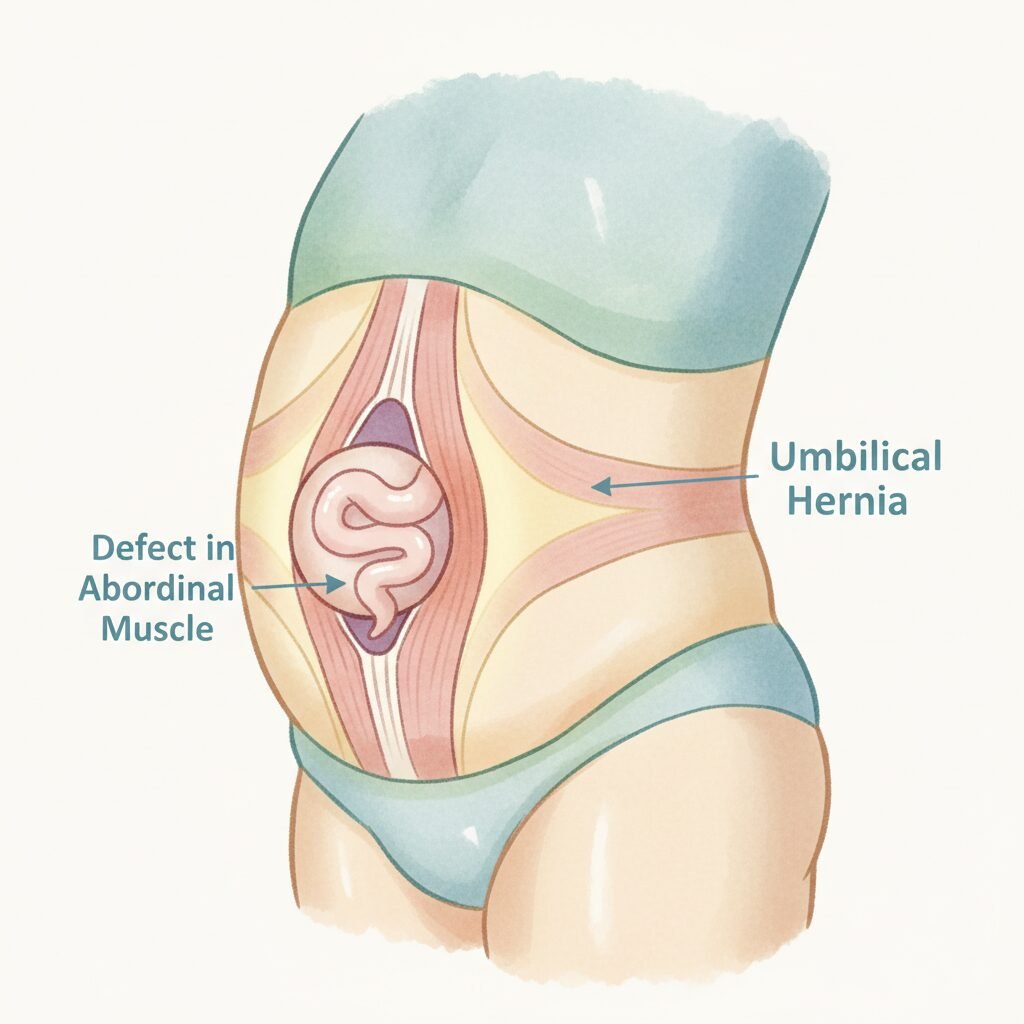
Now, let’s talk about the term that can sound a little scary: an umbilical hernia. Let me reassure you right away—umbilical hernias in newborns are very common and almost always harmless. They occur in about 20% of all babies, and the number is even higher in premature infants and babies of African descent.
So, what is it? Remember the umbilical cord? It passed through a small opening in your baby’s abdominal muscles. Usually, this opening closes up shortly after birth. An umbilical hernia happens when this opening doesn’t close completely, allowing a little bit of intestine or fatty tissue to bulge through. It might sound alarming, but it’s typically not a cause for panic.
Why Does it Bulge More Sometimes?
You might notice the bulge seems bigger when your baby is straining, crying, or coughing. This is because these actions increase the pressure inside their abdomen, which pushes the tissue out through the small opening. When your baby relaxes, the bulge usually gets smaller or disappears completely. This is a key characteristic of a simple, uncomplicated umbilical hernia.
The important thing to remember is that this tissue is not ‘stuck.’ In most cases, it can be gently and easily pushed back in. We call this a reducible hernia, and it’s the most common type we see in infants.
Outie vs. Hernia: A Side-by-Side Comparison
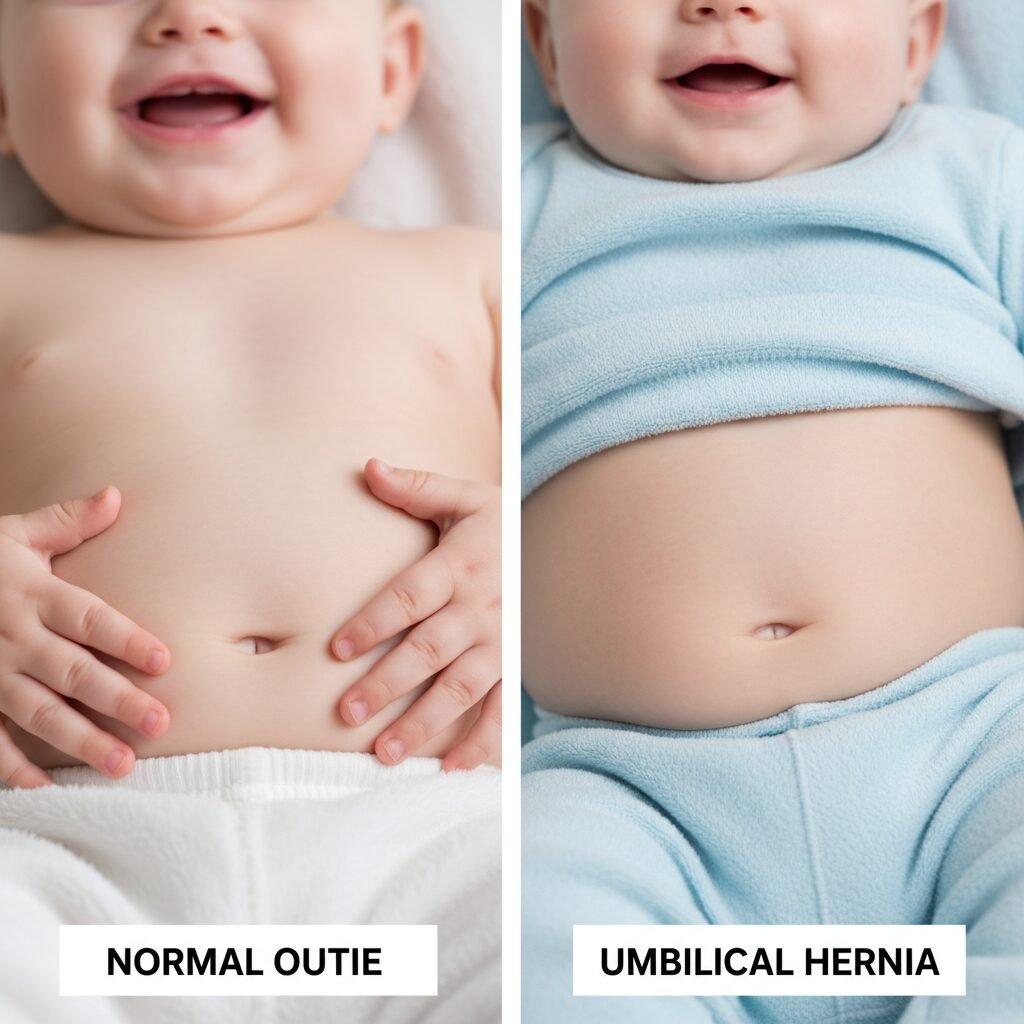
Okay, this is the big question! How can you tell the difference? While your pediatrician is the only one who can make a definitive diagnosis, this chart can help you understand what you’re seeing. It’s all about how the bulge looks, feels, and behaves.
| Feature | Simple ‘Outie’ | Umbilical Hernia |
|---|---|---|
| What it is | A formation of skin and scar tissue. It’s purely on the surface. | A bulge caused by abdominal tissue pushing through a small opening in the muscle wall. |
| Feel | Soft, like the rest of the skin on their tummy. | Often feels soft and squishy. You might be able to gently push it back in (it’s ‘reducible’). |
| Size & Shape | Stays the same size and shape, regardless of crying or straining. | May get bigger or more firm when baby cries, coughs, or strains. Shrinks or disappears when baby is calm. |
| Color | Normal skin color. | Normal skin color. A change in color is a warning sign (more on that below!). |
| Pain | Painless. | Typically painless. Pain is a major red flag. |
The key takeaway is change. A simple outie is static. A hernia changes with pressure. If you can gently press on the bulge when your baby is calm and it goes back in or feels soft and squishy, you’re likely dealing with a common, reducible umbilical hernia.
The ‘Watch and Wait’ Game: Why Patience is Key

So, your pediatrician has confirmed it’s an umbilical hernia. What now? In the vast majority of cases, the treatment plan is simple: we wait. It’s called ‘watchful waiting’ for a reason. That little opening in the abdominal muscle that didn’t close at birth usually will, all on its own, as your baby’s muscles get stronger.
Most umbilical hernias close by the time a child is 12 to 18 months old. Many disappear even sooner! It can be hard to play the waiting game, but it’s truly the best and safest approach. Your pediatrician will keep an eye on it during your regular well-child visits, measuring it and making sure it remains soft and reducible.
Old Wives’ Tales to Avoid
You might hear well-meaning advice from family or friends about taping a coin over the hernia or using a belly band to ‘keep it in.’ Please, do not do this! These methods are not effective and can actually cause harm. Taping can lead to skin irritation and infection, and it doesn’t help the underlying muscle close any faster. Trust in your baby’s natural development and your doctor’s guidance.
The muscle wall needs to strengthen from the inside out, and nothing placed on the outside can speed up that process. Just keep the area clean and dry, as you would normally, and let nature take its course.
Red Flags: When to Call the Doctor Immediately
While almost all umbilical hernias are harmless, it’s crucial to know the very rare signs of a complication. A complication occurs if the tissue that’s bulging through the opening becomes trapped (incarcerated) and can’t be pushed back in. This can cut off the blood supply (strangulation), which is a medical emergency.
Again, this is extremely rare, but you should be empowered to know what to look for. Trust your parental instincts—if something feels wrong, it’s always better to be safe and call.
Call your pediatrician or seek immediate medical care if you notice any of the following:
- Sudden, significant swelling or firmness at the hernia site.
- Discoloration: The bulge appears red, purple, bruised, or darker than the surrounding skin.
- Pain: Your baby seems to be in severe pain, cries inconsolably when you touch the area, or pulls their legs up to their chest.
- Vomiting: Especially if the vomit is greenish (bilious).
- Fever without another obvious cause.
- Changes in behavior: Your baby is suddenly extremely fussy, lethargic, or won’t eat.
- The hernia is no longer reducible: You can no longer gently push the bulge back in when your baby is calm.
A Note on Safety: These symptoms together can indicate a serious problem. Do not wait to see if they get better. This is a situation that requires an immediate professional medical evaluation.
If surgery is ever needed (usually only considered if the hernia is very large and hasn’t closed by age 4-5), it is a very common and safe procedure. But for now, your job is simply to know these warning signs while confidently resting in the knowledge that you will almost certainly never see them.
Conclusion
Navigating the world of newborn health can feel like a rollercoaster, and a little protruding belly button is just one of the many small things that can send a new parent’s mind racing. Remember, whether it’s a simple ‘outie’ or a common umbilical hernia, what you’re seeing is almost always a normal part of your baby’s development. Most hernias are painless, harmless, and resolve on their own with time, patience, and the strengthening of those tiny tummy muscles.
Your most important tools are observation and communication. You know your baby best. By understanding the key differences and knowing the rare but critical warning signs, you are beautifully equipped to care for your little one. Never hesitate to reach out to your pediatrician with any question, big or small. That’s what we’re here for! You’re doing an amazing job, and that little belly button is just one part of the wonderful person you’re getting to know.