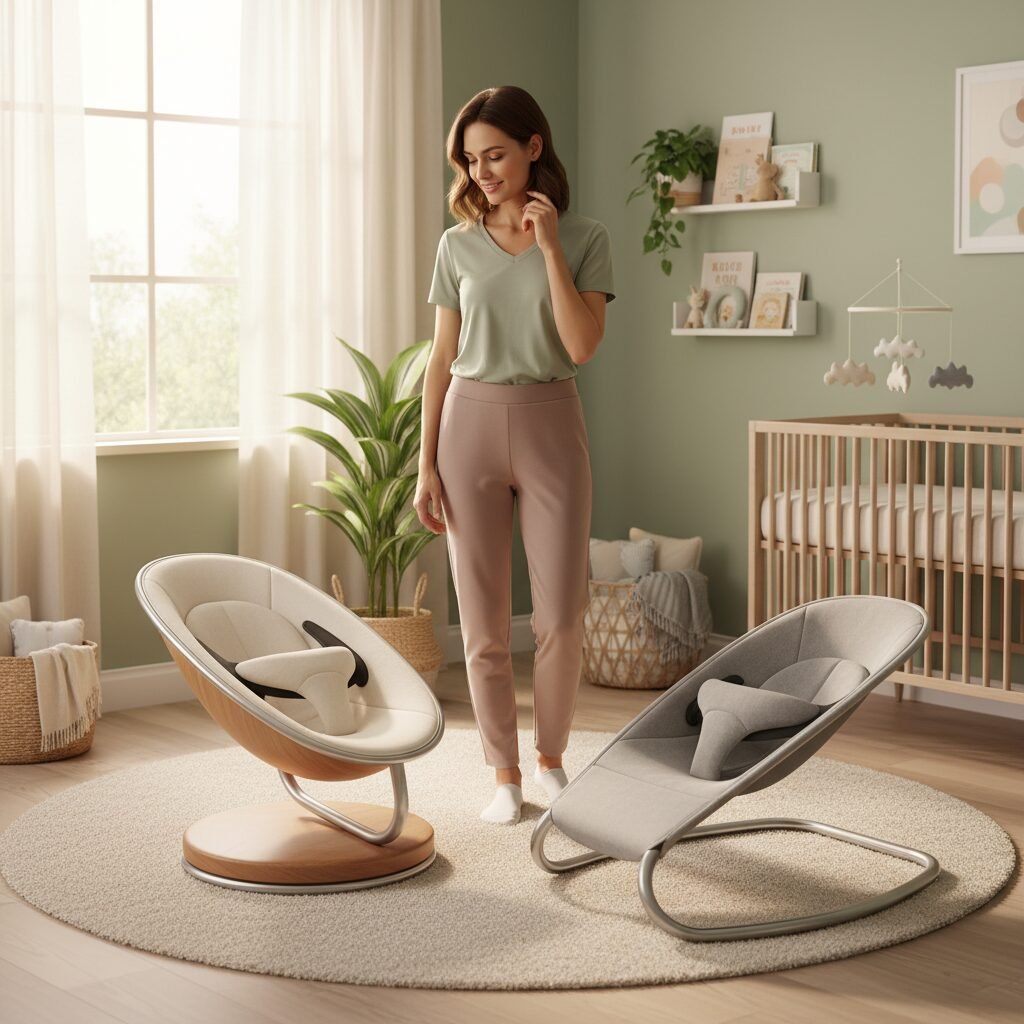
Swing vs. Bouncer: Which One Will Actually Soothe Your Newborn?
Welcome to parenthood! If your living room is starting to look like a baby gear showroom, and you’re staring at two of the most popular items—the swing and the bouncer—wondering which one is the magic ticket to a few hands-free moments, you are in exactly the right place. I’m a pediatric nurse and lactation consultant, and I’ve spent decades helping new parents navigate these very questions. It’s easy to think they’re interchangeable, but these two soothing gadgets are surprisingly different.
A baby swing offers a continuous, motorized motion, while a bouncer relies on your baby’s own wiggles or a gentle nudge from you. One isn’t universally ‘better’ than the other, but one might be significantly better for your baby and your family. In this guide, we’ll break it all down—the motion, the safety rules, the space they take up, and which baby temperaments tend to prefer which. Let’s find the perfect soothing sidekick for your little one, so you can finally sip that coffee while it’s still warm!
What’s the Real Difference? Swing vs. Bouncer Basics
What’s the Real Difference? Swing vs. Bouncer Basics
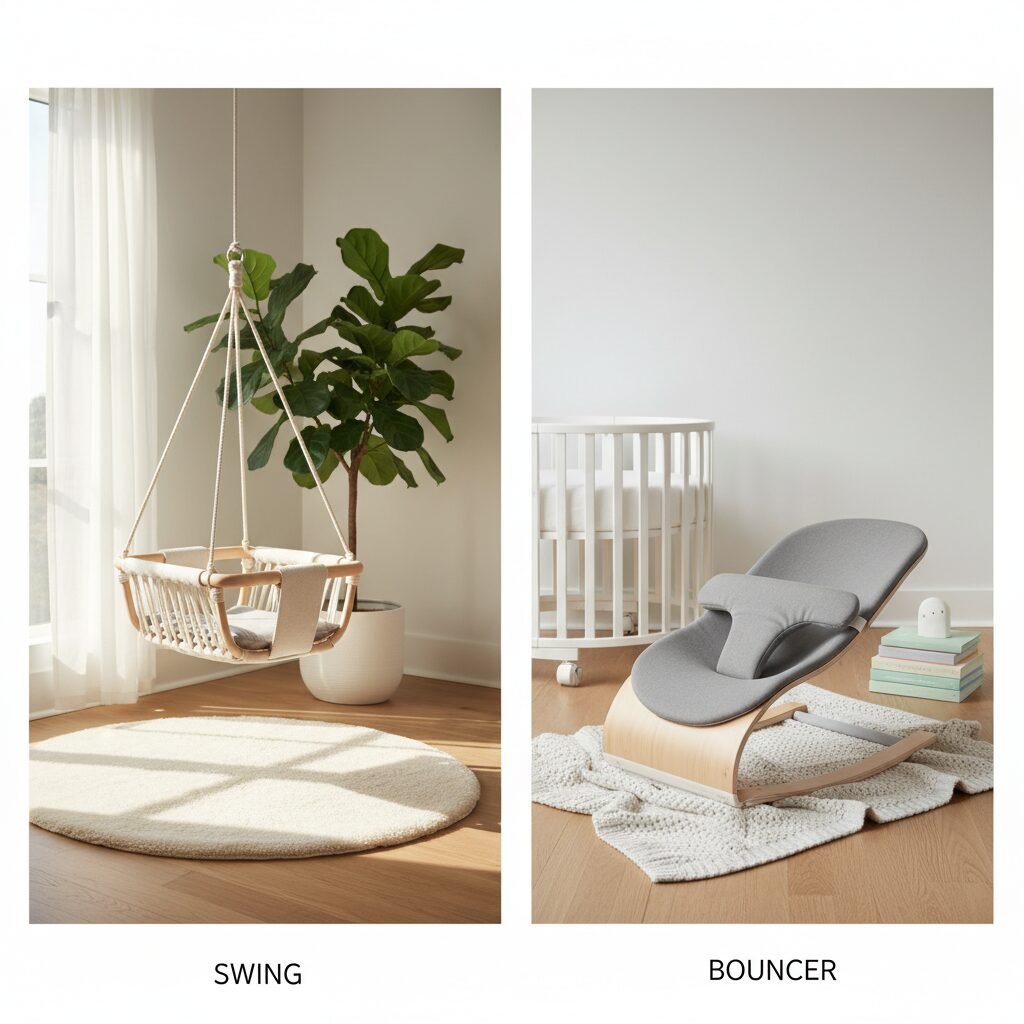
At first glance, they both look like cozy little seats for your baby. But the core difference lies in how they move and the experience they provide. Understanding this is the first step to making the right choice.
The Baby Swing: Your Automated Soother
Think of a baby swing as the ultimate motion machine. It’s designed to mimic the rhythmic, calming movements a baby experiences in the womb or in your arms as you sway back and forth. Most swings are powered by batteries or an AC adapter, offering various speeds and sometimes different motion patterns, like front-to-back rocking or side-to-side swaying. Because of their motors and larger frames, they are generally heavier and take up more floor space.
The Baby Bouncer: The Interactive Seat
A bouncer, on the other hand, is a much simpler device. It’s a lightweight, angled seat on a flexible frame that creates a gentle bouncing motion. This motion is typically generated by your baby’s own kicks and wiggles or by you giving it a little push with your hand or foot. They are incredibly portable, making them perfect for moving from the living room to the kitchen to the bathroom (we’ve all been there!). They often come with a toy bar to provide a bit of entertainment as your baby gets older.
| Feature | Baby Swing | Baby Bouncer |
|---|---|---|
| Motion | Motorized, continuous (front-to-back or side-to-side) | Baby-powered or parent-powered, gentle bouncing |
| Power Source | AC adapter or batteries | None (relies on movement) |
| Footprint | Larger, takes up more space | Smaller, more compact |
| Portability | Generally stationary, heavy | Lightweight, very easy to move |
| Features | Multiple speeds, music, white noise, mobiles | Often simpler, may include a toy bar or vibration |
The Great Soothing Debate: Which Motion Works Best?

The Great Soothing Debate: Which Motion Works Best?
Now for the million-dollar question: which motion will actually soothe your fussy newborn? The truth is, it completely depends on your baby’s unique personality and preferences. Some babies are motion junkies, while others prefer a more subtle jiggle.
Why Babies Love Swings
The continuous, rhythmic motion of a swing is a powerful soother because it closely replicates the environment of the womb. For nine months, your baby was constantly in motion as you walked, moved, and went about your day. That deep, vestibular input is hardwired into their system as ‘safe and calm.’ This is why a swing can be a lifesaver for babies who are colicky, struggle with witching hour fussiness, or simply need that constant movement to drift off. The consistent hum of the motor can also act as a form of white noise, further blocking out stimulating sounds and promoting relaxation.
Why Babies Love Bouncers
A bouncer offers a different kind of soothing. The gentle, springy motion is less intense than a swing’s. It’s often just enough to calm a slightly fussy baby without being overly stimulating. Because the bouncer responds to their own movements, it provides a subtle cause-and-effect lesson, which can be engaging for a baby who is starting to become more aware of their body. It’s the perfect spot to place your baby when you need to take a quick shower or make a meal, as it keeps them safely contained, semi-upright (which can be great for reflux babies), and contentedly bouncing with their own little kicks.
Safety First! The Non-Negotiable Rules for Swings and Bouncers
Safety First! The Non-Negotiable Rules for Swings and Bouncers
As a pediatric nurse, this is the part I want to shout from the rooftops. While swings and bouncers are fantastic tools, they must be used correctly to be safe. Your baby’s safety is paramount, so please commit these rules to memory.
Important Safety Warning: Swings and bouncers are for awake time only. They are not safe for sleep. The inclined position can cause a baby’s head to slump forward, potentially obstructing their airway. If your baby falls asleep in the swing or bouncer, the American Academy of Pediatrics (AAP) advises moving them immediately to a firm, flat surface like a crib or bassinet.
Key Safety Guidelines:
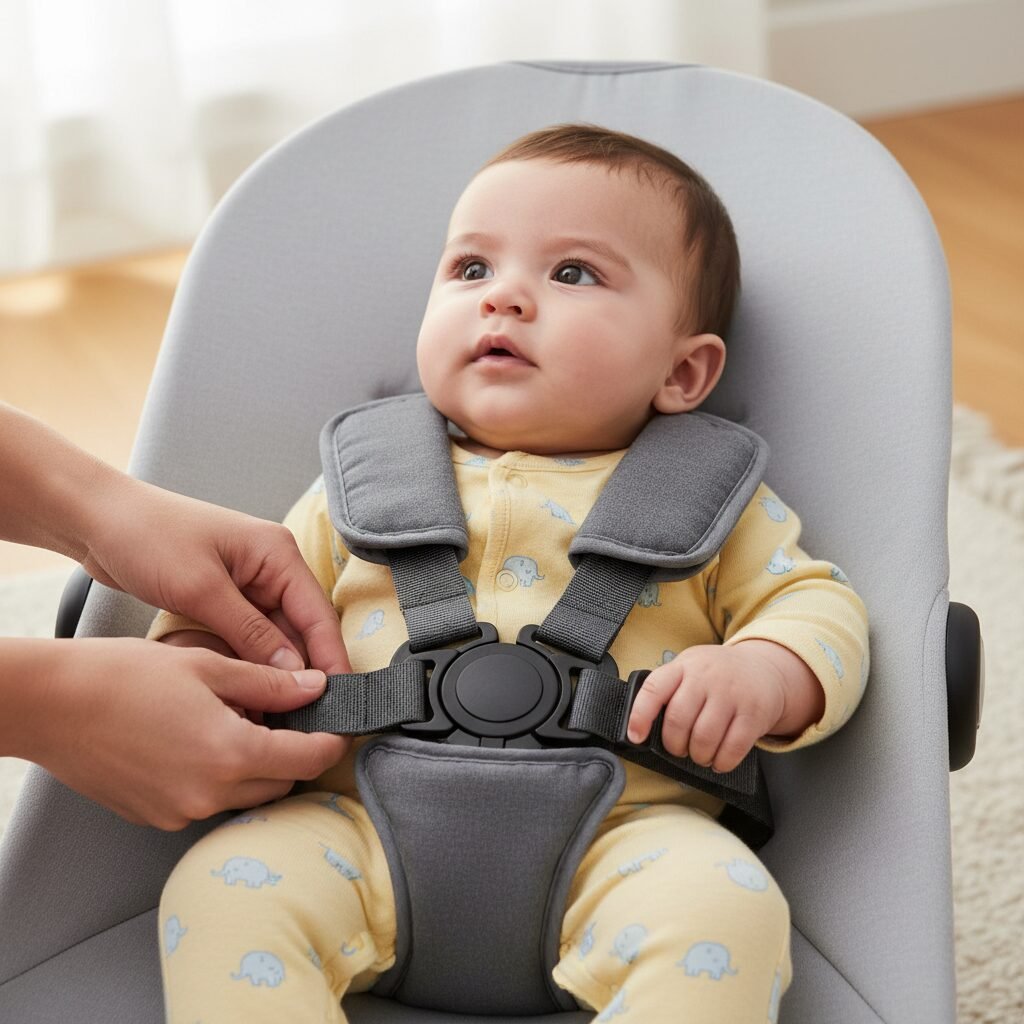
- Always Use the Harness: Fasten the safety straps every single time, even if you’re just stepping away for a second. Make sure the straps are snug enough that you can fit only one or two fingers between the strap and your baby’s chest.
- Place it on the Floor: Never, ever place a bouncer or swing on an elevated surface like a counter, table, or sofa. A baby’s wiggles can be surprisingly powerful and could cause the entire unit to fall.
- Respect the Weight Limits: Check the manufacturer’s instructions for the maximum weight and stop using the product once your baby reaches it. Also, stop using it once your baby can sit up unassisted or tries to climb out.
- Stay Within Sight: These are not babysitters. Always keep the swing or bouncer in the same room as you so you can supervise your baby.
- Limit ‘Container’ Time: To prevent flat head syndrome (plagiocephaly) and encourage healthy development, limit the total time your baby spends in ‘containers’ like swings, bouncers, and car seats. Plenty of supervised tummy time and time in your arms is essential.
The Lifestyle Fit: Which One Matches Your Family’s Vibe?
The Lifestyle Fit: Which One Matches Your Family’s Vibe?
Beyond your baby’s preference, the right choice also depends on your home and lifestyle. A fantastic swing that you have no room for isn’t very helpful! Let’s look at the practical side of things.
Consider Your Space
Baby swings, especially the full-size models with all the bells and whistles, can have a surprisingly large footprint. Get out the measuring tape before you buy! If you live in a smaller apartment or home, a bulky swing might dominate your living space. Bouncers, on the other hand, are compact and have a much smaller profile, making them an easy fit for almost any room.
Think About Portability
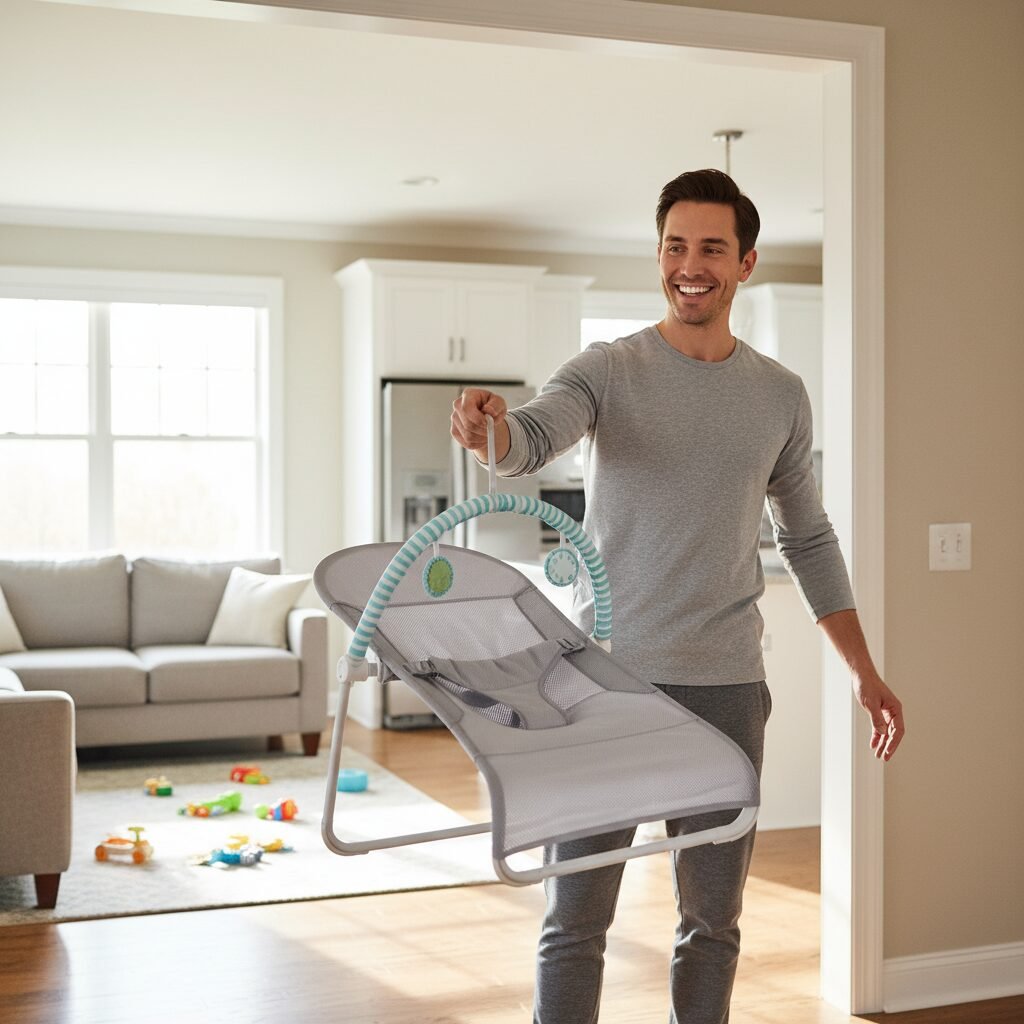
Do you want a soothing spot that can follow you around the house? If you dream of being able to cook dinner while your baby happily watches from a safe spot on the kitchen floor, a bouncer is your best friend. They are lightweight and designed to be moved easily. Most swings are built to stay in one place.
Budget and Bells & Whistles
Generally, bouncers are less expensive than swings. A simple, effective bouncer can be one of the most affordable pieces of baby gear you buy. Swings, with their motors, music players, and multiple settings, tend to have a higher price tag. Decide what features are truly important to you. Does your baby really need eight swing speeds and a nature sound machine, or will a simple, cozy seat do the trick?
| Lifestyle Factor | Choose a Swing if… | Choose a Bouncer if… |
|---|---|---|
| Home Size | You have a dedicated spot with ample floor space. | You are tight on space or live in a smaller home. |
| Portability Needs | You’re happy with a stationary soothing station in one room. | You want to easily move baby from room to room with you. |
| Budget | You have a more flexible budget for a higher-tech item. | You are looking for a more affordable, simple solution. |
| Desired Use | You need a powerful tool for serious, long-lasting soothing. | You need a convenient, safe spot for baby during short tasks. |
The Verdict: A Quick-Glance Guide to Help You Choose
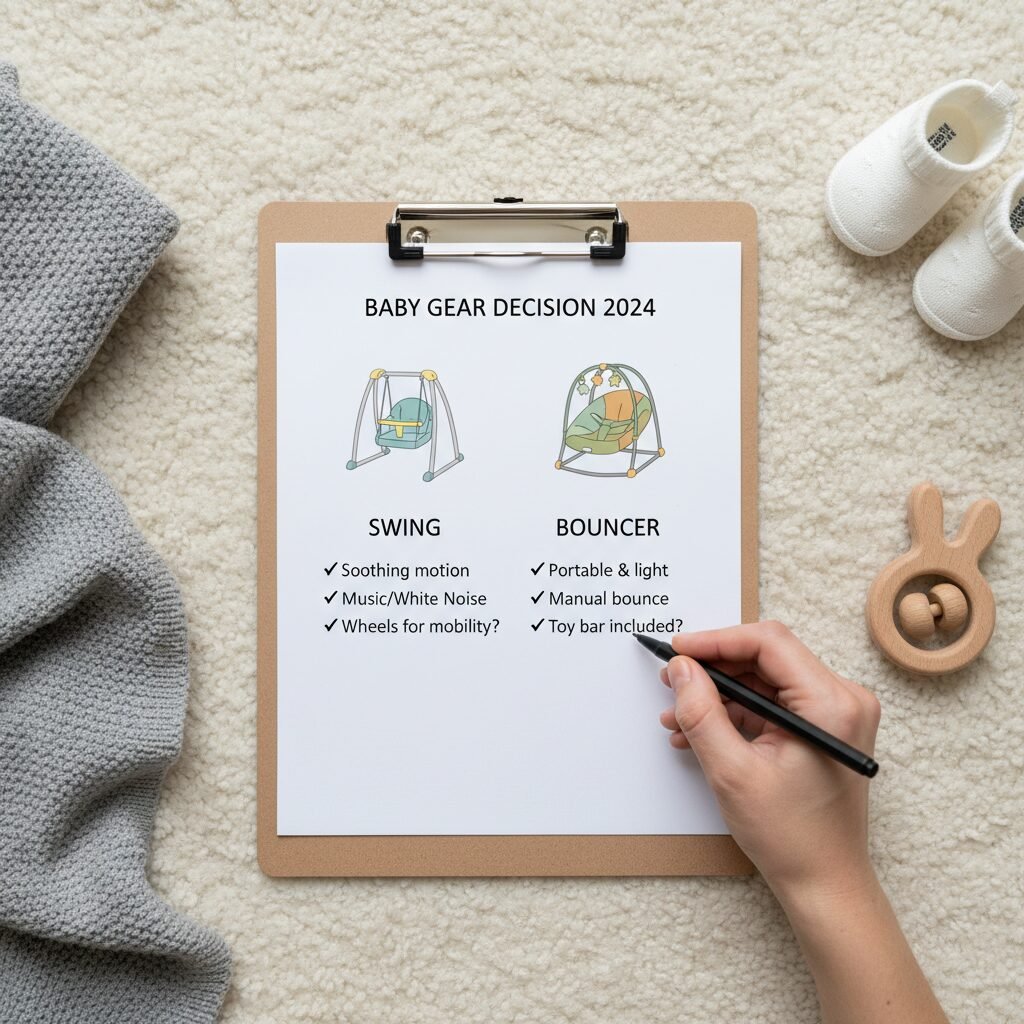
The Verdict: A Quick-Glance Guide to Help You Choose
Okay, let’s boil it all down. By now, you probably have a gut feeling about which one might be the winner for your family. This final checklist is designed to make that decision crystal clear.
A Swing Might Be Your Perfect Match If…
- Your baby is only calmed by constant, rhythmic motion (like car rides or being walked around the room).
- You’re dealing with a particularly fussy or colicky baby who needs intense soothing.
- You have enough space for a larger piece of gear and plan to keep it in one primary location, like the living room.
- You love tech features like different motion types, speeds, white noise, and music.
A Bouncer Could Be Your Best Bet If…
- You need a lightweight, portable seat to easily move around the house.
- You’re short on space and need something with a small footprint.
- Your baby is generally content and just needs a cozy spot to hang out in while you get things done.
- You prefer a simpler, more affordable, and interactive option that responds to your baby’s movements.
- You want a comfy, semi-upright spot for your baby to sit after feedings (always supervised!).
Ultimately, some parents find they benefit from having both! But if you’re choosing just one, let your baby’s suspected temperament and your family’s lifestyle be your guide.
Conclusion
Choosing between a swing and a bouncer feels like a huge decision when you’re in the thick of newborn life, but please let me reassure you: you can’t make a ‘wrong’ choice. The most important thing is that you’re choosing a product that you will use safely. Both can offer a much-needed break for your arms and a calming space for your baby.
Don’t be afraid to ask friends if you can borrow one to test it out before you buy—babies are notorious for having strong opinions! Remember that this is a short phase. Before you know it, your baby will be sitting up, crawling, and leaving the swing or bouncer days behind. Trust your instincts, choose the gear that feels right for your family, and soak up these precious, fleeting moments. You’re doing a great job.