
Emergency Checklist: Subtle Signs Your Newborn Is Dehydrated (Check The Fontanelle)
Hello, new parent. Take a deep breath. I know that in these first few weeks and months, every little coo, cry, and twitch can send your mind racing. You’re navigating a brand new world, and it’s completely normal to feel a mix of overwhelming love and overwhelming worry. My name is [Nurse’s Name], and as a pediatric nurse and lactation consultant for over 20 years, I’ve sat with thousands of parents just like you. One of the most common anxieties I hear about is dehydration.
It’s a scary word, especially when it comes to someone so tiny and precious. Newborns are more susceptible to dehydration than older children and adults, and they can’t tell us when they’re thirsty. The good news is that your baby gives you clues, and you are the expert in spotting them. This isn’t just another article to add to your worry list. This is your practical, reassuring, and clear-cut checklist. We’re going to walk through everything from the most obvious signs (hello, diapers!) to the very subtle ones, like the one on the top of your baby’s head—the fontanelle. Let’s empower you with the knowledge to confidently care for your little one.
First, A Deep Breath: Understanding Dehydration in Newborns

Before we dive into checklists, let’s talk about what dehydration actually is and why your tiny baby is more at risk. In the simplest terms, dehydration happens when your baby loses more fluid than they take in. For a newborn, fluids are everything—they are exclusively drinking breast milk or formula, which provides both hydration and all their nutrition.
Think of your baby like a tiny, perfect little fruit—a grape, for example. A plump, juicy grape is full of water. If it loses that water, it starts to shrivel and become a raisin. While a bit of a silly analogy, it illustrates how vital proper fluid balance is for your baby’s tiny body to function correctly. Their bodies are made up of about 75% water!
Why Are Newborns So Vulnerable?
- Tiny Tummies, Big Needs: Newborns have very small stomachs and need to feed frequently (every 2-3 hours) to stay hydrated and nourished. A missed feeding or two can have a bigger impact on them than on an older child.
- High Metabolism: Babies have a faster metabolism, meaning they use up energy and water more quickly.
- Inability to Communicate: They can’t say, “Mom, I’m thirsty!” Crying is their main form of communication, and it can mean many different things.
- Illness Hits Harder: A simple illness that might be a minor inconvenience for an adult, like a bout of diarrhea or vomiting, can lead to significant fluid loss for a baby very quickly.
Understanding these factors isn’t meant to scare you, but to frame why being observant is so important. You are already doing the most important job: watching, cuddling, and caring for your baby. Now, let’s sharpen those observation skills.
Your Dehydration Checklist: The Subtle and Not-So-Subtle Signs
Alright, let’s get practical. This is your checklist. You can even screenshot this part on your phone. We’ll start with the most reliable indicator you have—diapers—and move on to other physical clues your baby will give you.
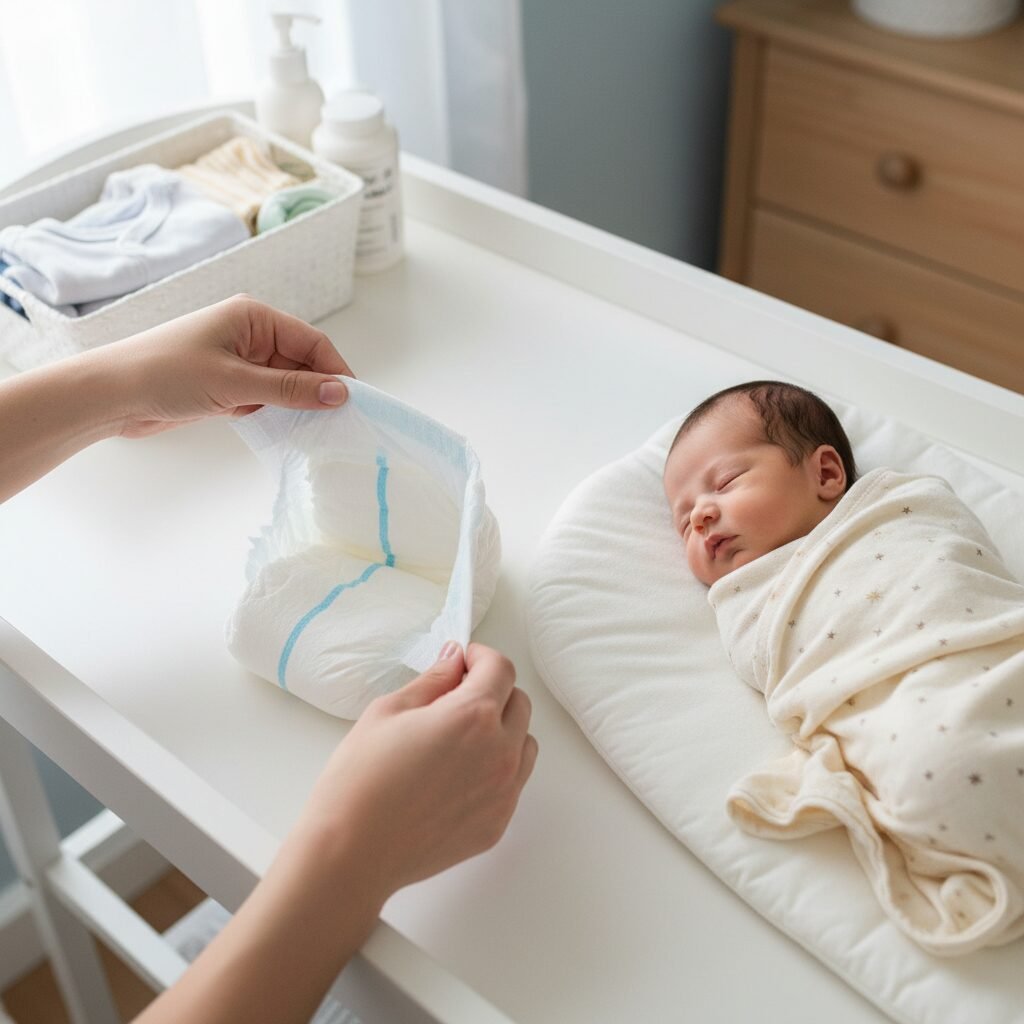
The Diaper Diary: Your Best Clue
Your baby’s diaper is like a daily report on their hydration status. In the first few days of life, diaper output is low as your milk comes in, but after about day 5, you should be seeing a consistent pattern.
A well-hydrated newborn (after the first week) should have at least 6 to 8 soaking wet diapers in a 24-hour period.
Fewer than six is a signal to pay closer attention and offer more frequent feedings. Also, check the urine itself. It should be pale yellow or nearly clear. Dark yellow, strong-smelling urine is a sign that your baby’s body is conserving water.
Physical Signs to Watch For
Beyond diapers, your baby’s body will give you other clues. Here is a table to help you distinguish between early signs that require you to be watchful and more serious signs that require a call to the doctor.
| Sign Category | What to Look For |
|---|---|
| Early / Mild Signs |
|
| Moderate / Serious Signs |
|
Trust your gut. You know your baby’s normal temperament better than anyone. If they seem ‘off’—either way more sleepy or way more fussy than usual—it’s a sign to start running through this mental checklist.
The Fontanelle Check: Your Baby’s Built-In Hydration Gauge

This is the sign that is specifically mentioned in our title, and for good reason. It can be a very clear indicator of a problem, but many new parents are nervous to even touch this area. Let’s demystify the ‘soft spot’.
What is a Fontanelle?
Fontanelles are the soft, membrane-covered gaps between the bony plates of your baby’s skull. They allow the head to mold during birth and accommodate your baby’s rapidly growing brain. The most prominent one is the anterior fontanelle, a diamond-shaped spot on the top of the head towards the front.
How to Check It Safely
When your baby is calm and sitting in an upright position (not lying down, as this can affect its appearance), gently and lightly run your fingers over this spot. A normal, well-hydrated fontanelle should feel soft and relatively flat against the skull. You might even feel a slight pulsation, which is totally normal—it’s just the pulse of the arteries in the brain.
The Warning Sign: A Sunken Fontanelle
A sunken fontanelle is a sign of moderate to severe dehydration. Instead of feeling flat, it will feel noticeably dipped or indented, like a small valley on their head. It’s a sign that there isn’t enough fluid within the body to ‘plump up’ this space.
Important Safety Warning: A sunken fontanelle is considered a late and serious sign of dehydration. If you notice your baby’s fontanelle is sunken, this is not a ‘wait and see’ situation. You should call your pediatrician or seek medical care immediately.
Don’t be afraid to get to know what your baby’s fontanelle feels like when they are happy and healthy. This will give you a baseline, making it much easier to notice if something changes.
What’s Causing It? Common Culprits Behind Newborn Dehydration

Understanding what can lead to dehydration is key to preventing it. It almost always boils down to two things: not enough fluid going in, or too much fluid coming out.
Inadequate Fluid Intake
This is especially common in the early days. Please hear me when I say this: feeding challenges are normal and not a reflection of your ability as a parent.
- Breastfeeding Challenges: A poor latch, sleepy baby, or issues with milk supply can mean the baby isn’t transferring enough milk. If you’re concerned, please reach out to a lactation consultant (like me!) or a support group. We can help with a weighted feed to see exactly how much baby is getting.
- Formula Feeding Issues: Sometimes it’s about frequency—a baby might need to be offered the bottle more often. It can also be due to improper mixing of formula. Always follow the manufacturer’s instructions exactly, as adding too much water can be dangerous and adding too little can contribute to dehydration.
Increased Fluid Loss
This is when your baby is losing fluids faster than they can take them in.
- Illness: Fever, vomiting, and diarrhea are the most common culprits. A fever increases their body’s need for fluids, while vomiting and diarrhea cause direct fluid loss. Any time your newborn is sick, hydration should be your number one priority.
- Overheating: We love to bundle our babies up, but it’s possible to overdo it! A baby who is too warm will sweat to cool down, causing fluid loss. Dress your baby in one more light layer than you are wearing, and check for signs of overheating like a sweaty neck or back.
Your Action Plan: What to Do and When to Call for Help

Okay, you’ve gone through the checklist and you’re concerned. What now? Here is your clear, step-by-step action plan.
First Steps at Home (For Early/Mild Signs)
If you’re noticing fewer diapers than normal or some fussiness, but your baby is otherwise alert and responsive, the first step is to increase fluids.
- Offer the breast or bottle more frequently. Don’t wait for your baby to cry. Offer a feed at least every two hours during the day until you see an increase in wet diapers.
- Check the environment. Is your baby overdressed? Is the room too warm? Remove a layer of clothing and ensure the room is at a comfortable temperature.
- Focus on you (if breastfeeding). Make sure you are drinking plenty of water and are well-hydrated yourself!
CRITICAL SAFETY NOTE: Never, ever give a newborn plain water. Their kidneys are too immature to handle it, and it can lead to a dangerous condition called water intoxication. Your baby’s hydration needs must be met with breast milk or properly prepared formula only.
When to Call Your Pediatrician Immediately
Do not hesitate to call your doctor’s office or their after-hours nurse line if you see any of these signs. It is always better to be safe.
- You have tried offering more frequent feeds, and your baby is refusing to eat or is too lethargic to wake for feedings.
- You see fewer than 4 wet diapers in 24 hours.
- Your baby has had repeated episodes of vomiting (not just spit-up) or diarrhea.
- Your baby has a sunken fontanelle.
- You have any concern about your baby’s activity level or responsiveness.
When to Go to the Emergency Room
Go directly to the nearest emergency room or call 911 if your baby:
- Is extremely lethargic and you cannot wake them.
- Is limp or unresponsive.
- Is having difficulty breathing.
- Shows any other signs that feel like a true medical emergency to you. Trust your parental instincts.
Conclusion
Being a new parent is a journey of learning to trust yourself. You are with your baby day in and day out, and you have the most powerful tool of all: your intuition. This checklist isn’t meant to make you anxious; it’s meant to be a tool in your back pocket, giving you the vocabulary and confidence to know what you’re looking for.
Remember the key takeaways: monitor those diapers like a detective, get to know the feel of your baby’s soft spot, and never, ever hesitate to call your pediatrician. You are not bothering them—this is what they are there for. You are your baby’s greatest advocate and protector. You’re doing an amazing job.