Newborn Screams in the Car? 7 Hacks to Stop Car Seat Crying Instantly
Take a deep breath, mama or papa. That ear-splitting scream that starts the second your sweet newborn’s back touches the car seat? It’s enough to fray the calmest nerves. You’re not alone in this, not by a long shot. I’ve talked to countless parents in my career who feel defeated, stressed, and even a little scared by the intensity of their baby’s car seat hatred. You might be thinking, ‘Am I doing something wrong? Is my baby okay?’
Let me reassure you: this is incredibly common. For a tiny person who just spent nine months in a warm, dark, constantly moving environment, being strapped into a stationary seat in a bright, loud world can be a huge shock. Their crying is their only way of saying, ‘Hey, this is weird and I’m not sure I like it!’
But here’s the good news: it’s almost always a solvable problem. We just need to play detective. In this guide, we’ll first uncover the common reasons behind the tears. Then, I’ll walk you through my 7 favorite nurse-approved hacks to transform car rides from traumatic to tranquil. Ready to reclaim your peace on the road? Let’s dive in.
First, Let’s Understand: Why the Car Seat Drama?

Before we jump into the solutions, it helps to understand what your baby might be experiencing. Putting on our ‘baby detective’ hats helps us respond with empathy and find the right fix. It’s rarely just one thing, but often a combination of these common culprits:
- Separation and Isolation: For a newborn, you are their entire world. When you place them in a rear-facing car seat, they can’t see you, smell you, or feel your touch. In their primal little brain, being alone is being unsafe. That’s a terrifying feeling, and they will use their most powerful tool—their lungs—to call you back.
- The Restraint Factor: Think about it. They’ve gone from the free-floating comfort of the womb to being snugly (and safely!) strapped down. This loss of freedom can be jarring and frustrating for some babies, especially those with a strong startle reflex.
- An Uncomfortable Ride: We often forget to check the little things. Is the sun shining directly in their eyes? Is the air vent blasting cold air on their face? Is the fabric of the car seat itchy or is a strap digging in? Their sensory world is brand new, and they are highly sensitive to these small discomforts.
- Tummy Troubles: For babies with reflux or gas, the semi-reclined position of a car seat can be really uncomfortable. It can put pressure on their little tummies, making acid reflux worse or trapping gas bubbles. The crying might be less about the car and more about physical pain.
- Overstimulation or Under-stimulation: The world outside the car window can be a whirlwind of lights, shadows, and noises, which can be overwhelming. On the other hand, for some babies, staring at the back of a seat is just plain boring, leading to fussy protests.
By keeping these potential causes in mind, you can better target which of the following hacks will work best for your little one.
Hacks #1 & #2: The Ultimate Car Seat Comfort Audit
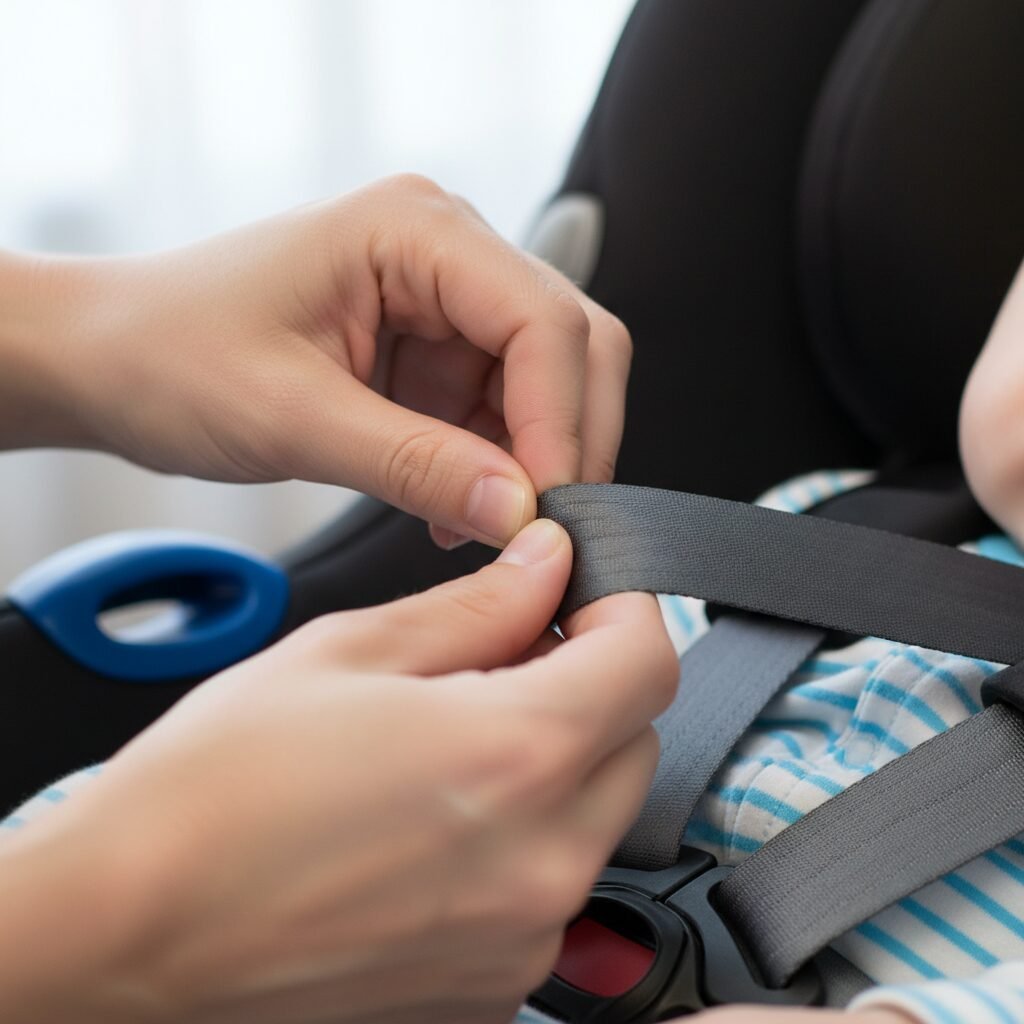
Our first mission is to rule out any physical discomfort. An uncomfortable baby is a crying baby. This two-part audit ensures the seat itself isn’t the enemy. Safety is paramount, so always follow your car seat’s manual, but these checks can make a world of difference.
Hack #1: Perfect the Fit and Straps
An incorrectly fitted car seat is not only unsafe, but it’s also uncomfortable. Let’s get it right.
- The Pinch Test: After you buckle your baby in, try to pinch the strap webbing horizontally at their collarbone. If you can grab a pinch of the strap, it’s too loose. Tighten until the webbing is snug and you can’t pinch any excess.
- Chest Clip Placement: The chest clip should be at armpit level. Too low, and your baby could slump or even come out of the straps in a crash. Too high, and it can press uncomfortably on their neck.
- No Bulky Clothes: This is a huge one! Puffy coats, snowsuits, or even thick sweaters should never be worn under car seat straps. They create a gap between the straps and your baby’s body, which is dangerous and can cause overheating. Instead, dress your baby in thin layers and place a blanket or a car-seat-safe poncho over them once they are buckled in.
Hack #2: Master the Micro-Climate
Your baby can’t tell you if they’re too hot or too cold, so you have to be their personal thermostat.
- Check Their Neck: Don’t judge their temperature by their hands or feet, which are often naturally cooler. Instead, slip a finger onto the back of their neck. If it’s sweaty, they’re too hot. If it’s cold, they need another layer.
- Use Window Shades: A simple, mesh window shade can block direct sunlight, preventing both overheating and the discomfort of a bright light in their sensitive eyes.
- Smart Airflow: Be mindful of the car’s vents. Point them away from your baby’s face. In the summer, you can use a small, clip-on, baby-safe fan (secured safely) to circulate air in the backseat.
A Quick Note on Inserts: Only use the infant inserts that came with your car seat. Products sold separately are not crash-tested with your seat and can interfere with its safety performance. Once your baby outgrows the manufacturer’s insert, remove it.
Hacks #3 & #4: Create a Traveling Sensory Sanctuary
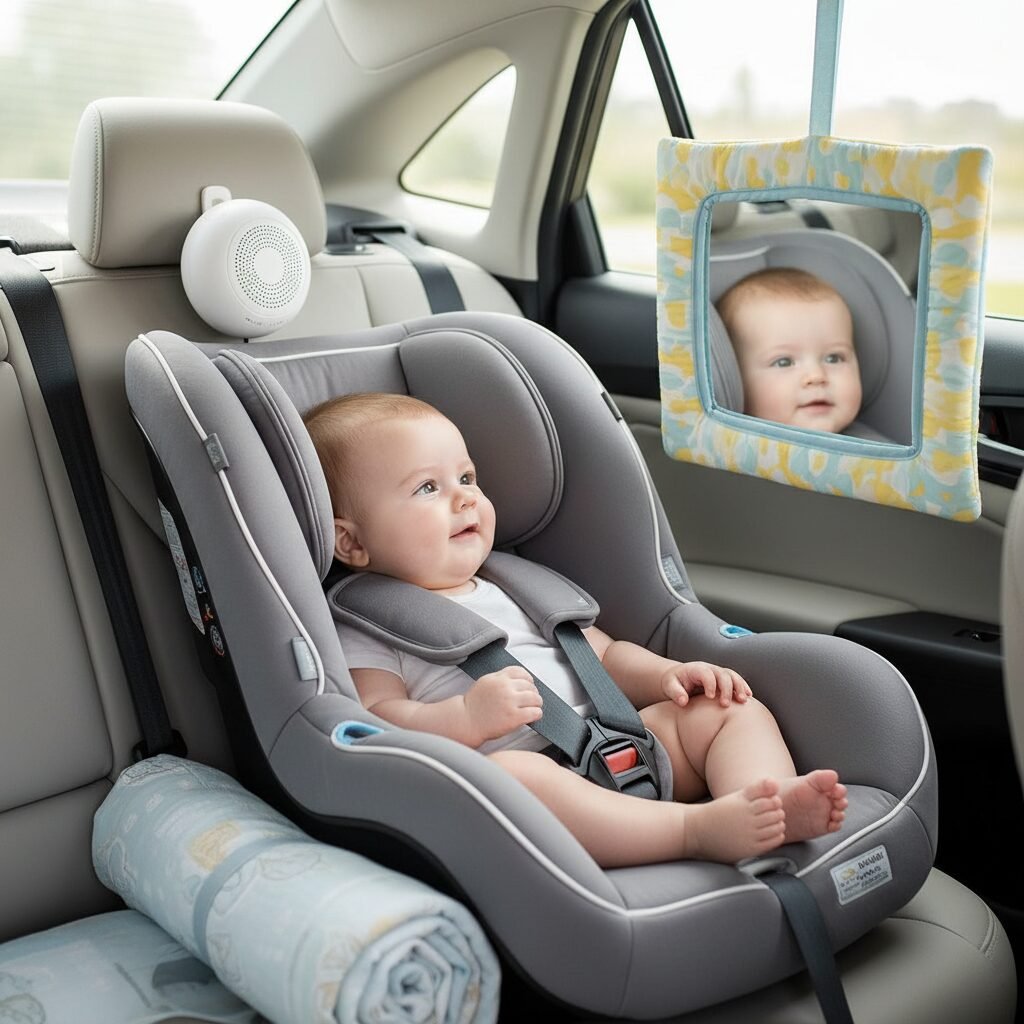
Now that we’ve ensured your baby is physically comfortable, let’s work on their emotional comfort. The goal is to replicate the soothing, familiar environment of the womb and your arms as much as possible.
Hack #3: Harness the Power of Sound
The car is loud, but the right kind of noise can be incredibly calming.
- Portable White Noise: The womb is not a quiet place! It’s full of the whooshing sounds of blood flow and your heartbeat. A portable white noise machine that plays a constant, low ‘shushing’ sound can be magical. It blocks out jarring traffic noises and soothes their nervous system.
- Your Voice: Don’t underestimate the power of your own voice. Sing to them, talk to them about what you see out the window, or even just narrate your drive. The familiar cadence and tone of your voice is a powerful anchor for them.
Hack #4: Engage Their Sense of Sight and Smell
What your baby sees and smells can instantly change their mood.
- A High-Contrast View: Newborns can’t see colors well yet, but they are fascinated by high-contrast black and white images. Hang a few soft, baby-safe black-and-white picture cards from the car seat handle (making sure they can’t fall on the baby’s face). A baby-safe mirror that allows you to see them (and them to see themselves) can also be a great distraction.
- The Scent of ‘Home’: Your baby’s sense of smell is powerful and deeply linked to their feeling of security. Before you leave, tuck a t-shirt you’ve worn or a burp cloth with a little leaked breastmilk on it next to them in the seat (but away from their face). Your familiar scent can be incredibly reassuring.
Hacks #5 & #6: Master the Art of Timing and Distraction
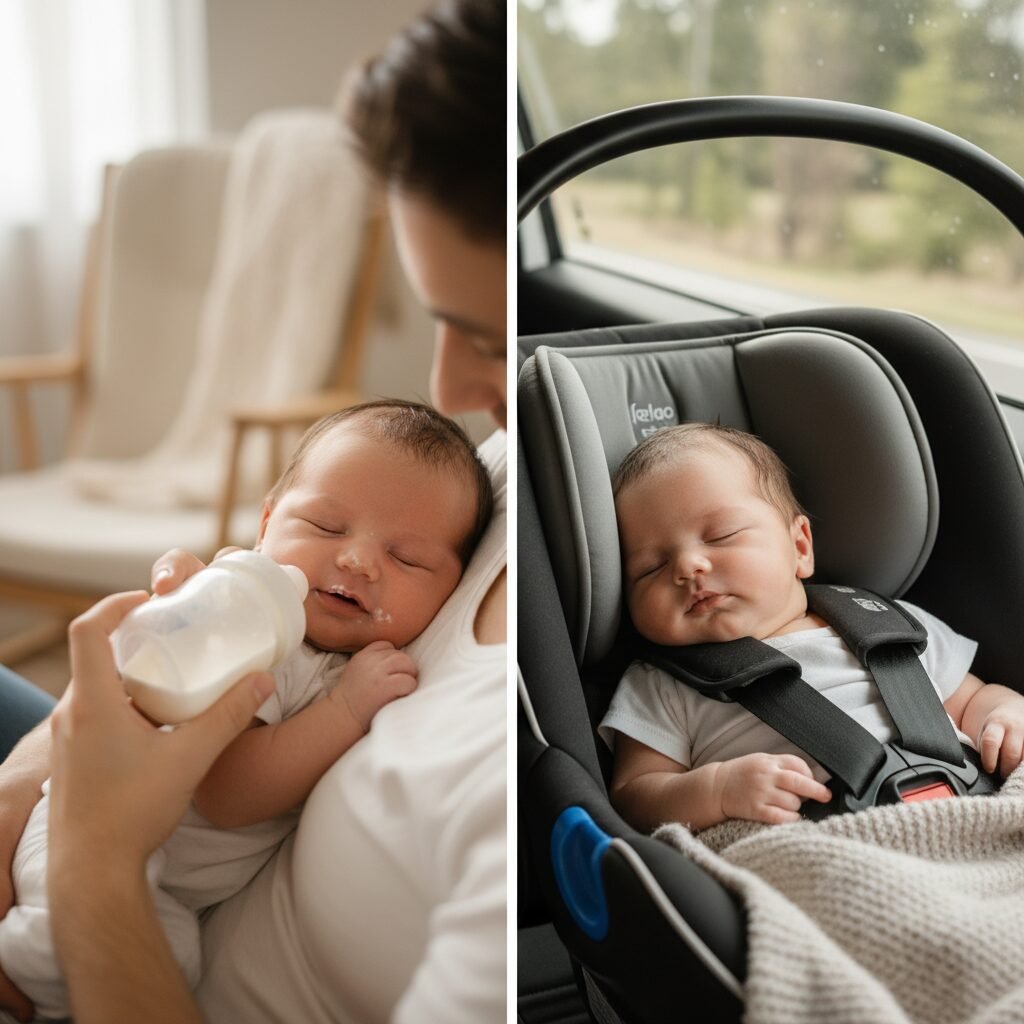
Sometimes, the secret to a peaceful car ride has less to do with the car itself and more to do with your strategy for leaving the house. A little planning can prevent a full-blown meltdown.
Hack #5: Time Your Departures Wisely
Working with your baby’s natural rhythms is a game-changer.
- The ‘Milk Drunk’ Drive: A baby with a full tummy is often a sleepy, happy baby. Try to time your trips for right after a feeding. Let them get a good burp out, then buckle them in while they are in that blissful, ‘milk drunk’ state. They may just drift off to sleep before you even leave the driveway.
- Become a Naptime Nomad: Observe your baby’s sleep cues. When you see them starting to get drowsy (yawning, rubbing eyes), that’s your cue! The gentle motion and hum of the car can be the perfect final ingredient to lull them to sleep. Many parents find this is the golden ticket for running errands.
Hack #6: Become a Master of Distraction
For a baby who is alert and ready to protest, a good distraction can be your best friend.
- Special Car-Only Toys: Have a small stash of soft, engaging toys that they *only* get to play with in the car. The novelty will make them more interesting. Think soft crinkle books, a rattle they can easily hold, or a plush toy to snuggle.
- The Pacifier Plan: If your baby takes a pacifier, have several clean ones ready to go. The sucking motion is naturally soothing. Consider using a pacifier clip (ensure it has a short cord for safety) to attach it to their clothing so it doesn’t get lost under the seat.
It can also help to start small. Don’t make your first outing a two-hour drive. Take short, 5-10 minute trips around the neighborhood that end on a positive note, helping your baby build a more positive association with the car seat.
Hack #7: The Backseat Buddy System
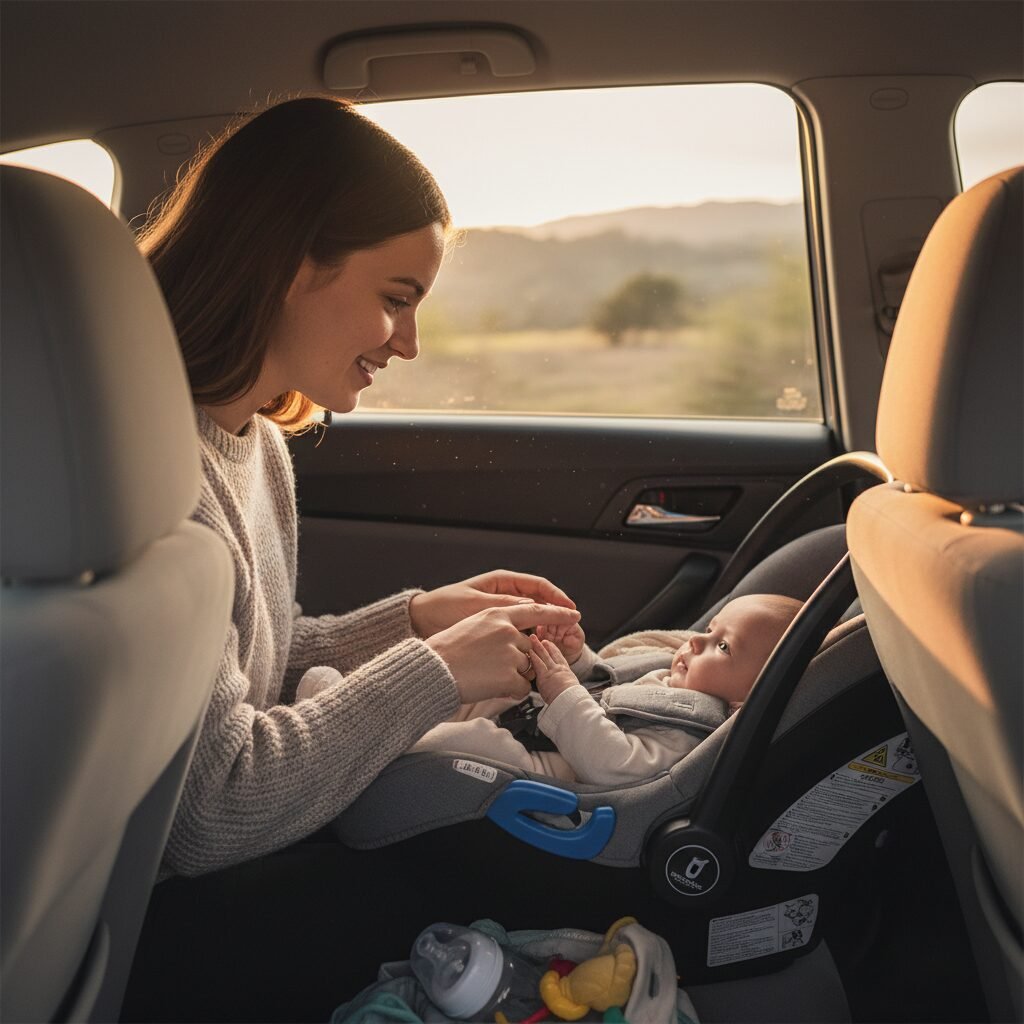
This hack isn’t always possible, especially if you’re driving alone, but when you can use it, it is often the most effective solution of all.
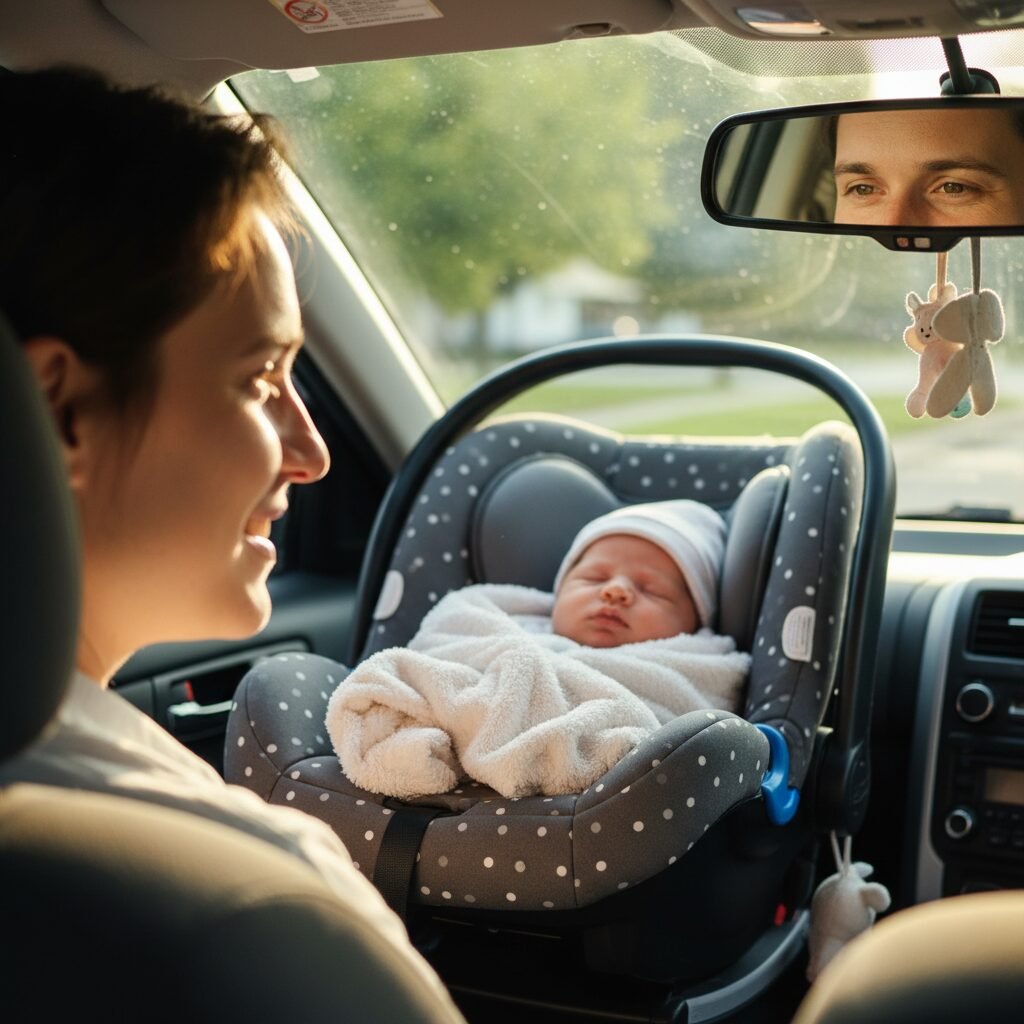
If you are traveling with another adult, have them sit in the back with the baby. The simple presence of a loved one can solve the isolation issue that is often the root cause of the crying. The backseat buddy can:
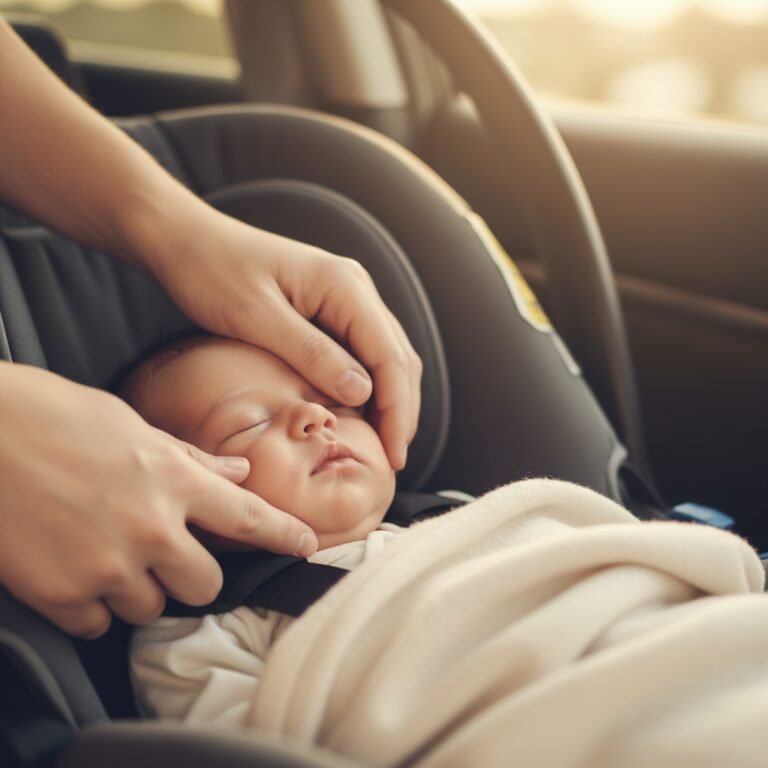
- Offer a Hand: Gently rest a hand on the baby’s chest or tummy to provide reassuring touch.
- Play and Engage: Make funny faces, sing songs, or play peek-a-boo. This direct interaction is the ultimate distraction.
- Pacifier Patrol: Be on standby to re-insert the pacifier whenever it falls out.
- Troubleshoot in Real-Time: They can quickly spot if the sun is in the baby’s eyes or if a blanket has fallen off.
Even just having someone there to talk to the baby can make them feel connected and safe. It turns the backseat from a lonely island into a cozy, interactive space. If you often travel alone, try this strategy on weekends or evenings when your partner or a friend can join you to help build your baby’s tolerance for the car.
The Crucial Safety Stop: When Crying Might Mean More

While most car seat crying is behavioral, it’s vital to know when it might be a sign of something more. Your parental intuition is powerful—trust it. If the crying sounds different, more like a pain cry than a protest cry, it’s time to pay close attention.
First and Foremost: A Critical Safety Warning. No matter how intense the crying gets, never, ever take your baby out of their car seat while the vehicle is moving. It is not safe. Find a safe place to pull over completely before you unbuckle them. Your baby’s safety is the number one priority.
When to Call Your Pediatrician
Sometimes, the car seat isn’t the problem, but it’s aggravating an underlying medical issue. Schedule a visit with your pediatrician if you notice:
- Consistent Crying with Back Arching: If your baby frequently arches their back, spits up a lot (not just a little dribble), and seems to be in pain, it could be a sign of significant acid reflux (GERD). The car seat position can make this worse.
- Crying that Seems Unrelated to the Car: If your baby is generally inconsolable, has trouble feeding, or seems to be in pain at other times of the day, there could be another issue at play, like a food intolerance or colic.
- Changes in Breathing: If your baby ever seems to have difficulty breathing, is wheezing, or their skin color changes, seek medical attention immediately. This is rare but important to watch for, especially with premature infants.
Your doctor can help diagnose and treat any underlying conditions, which might just solve your car seat woes as a wonderful side effect. Don’t hesitate to reach out for help; that’s what we are here for!
Conclusion
My dear new parent, if you’ve made it this far, you’re already doing an amazing job. Dealing with a screaming baby in the car is one of the most stressful challenges of early parenthood, but it is almost always a phase. Be patient and kind—with your baby and, just as importantly, with yourself.
Start by trying one or two of these hacks at a time. See what resonates with your little one. Maybe it’s the white noise, or perhaps it’s the simple act of warming the seat before you put them in. Every baby is different, and you are the world’s leading expert on your baby. You will find what works.
Remember, this too shall pass. Before you know it, you’ll be looking in the rearview mirror at a curious toddler pointing out buses and dogs. For now, take it one trip at a time. You’ve got this.