

Breastfed Babies Need This: Ranking The Best Vitamin D Drops For Infants
Hello, new parent, and welcome to this incredible, wild, beautiful journey! As a pediatric nurse and lactation consultant, I’ve shared in the joys and worries of thousands of parents just like you. You’re doing an amazing job, and one of the best things you’re doing is breastfeeding. It’s truly liquid gold, packed with everything your baby needs to thrive… with one tiny exception.
There’s a little secret that we in the pediatric world want to make sure every new parent knows: breastfed babies need a little extra help with their Vitamin D. Think of it as the one essential accessory to your baby’s perfect nutritional wardrobe. But navigating the world of supplements can feel overwhelming. What’s in these drops? Which brand is best? How do I even get this tiny drop into my wiggly baby? Relax, take a deep breath. I’m here to walk you through it all. We’ll break down why this ‘sunshine vitamin’ is so important, what to look for on the label, and I’ll even share my professional ranking of the best, cleanest, and easiest-to-use Vitamin D drops on the market. Let’s make this one less thing for you to worry about.
The ‘Sunshine Vitamin’: Why Your Breastfed Baby Needs a Boost

The ‘Sunshine Vitamin’: Why Your Breastfed Baby Needs a Boost
First things first, let’s clear something up: the fact that your breast milk is low in Vitamin D is not a deficiency on your part or a flaw in your milk. Your body is making the perfect food for your baby! The reality is, humans are designed to make Vitamin D from direct sunlight on our skin. But our modern lives—and very sensible sun safety practices for delicate baby skin—mean that most of us, including our infants, don’t get enough sun exposure to produce the amount we need.
So, what does Vitamin D actually do? It’s a superstar nutrient! Its main job is to help the body absorb calcium and phosphorus, two minerals that are the primary building blocks for strong, healthy bones. Without enough Vitamin D, babies are at risk for a condition called rickets, which causes bones to become soft and weak. But its benefits don’t stop there. Emerging research shows Vitamin D also plays a vital role in developing a robust immune system, which is your little one’s first line of defense against germs.
The Official Recommendation
Because of its critical role in development, the American Academy of Pediatrics (AAP) has a clear and simple recommendation: all breastfed and partially breastfed infants should be supplemented with 400 International Units (IU) of Vitamin D per day, beginning in the first few days of life. This recommendation stands until your baby is weaned to at least 32 ounces (about 1 liter) of Vitamin D-fortified formula or, after their first birthday, whole milk.
Think of it this way: You’re providing the perfect nutrition through breastfeeding, and the Vitamin D drop is just a tiny, daily insurance policy for your baby’s strong bones and healthy future.
It’s a standard, safe, and incredibly important part of newborn care today. So, let’s embrace this simple step and find the perfect product to make it an easy part of your daily routine.
Not All Drops Are Created Equal: Your Checklist for Choosing the Best

Not All Drops Are Created Equal: Your Checklist for Choosing the Best
When you walk down the baby aisle or search online, the number of options for Vitamin D drops can be dizzying. They all provide 400 IU, so what’s the difference? A lot, actually! The carrier oils, dispenser types, and extra ingredients can make a big difference in purity, ease of use, and your baby’s tolerance. Here’s your official nurse-approved checklist to help you decode the labels and choose with confidence.
What to Look For:
- Single-Drop Dosage: This is non-negotiable for convenience. The best brands concentrate the full 400 IU dose into a single drop. This means no measuring with a syringe and no struggling to get a full milliliter of liquid into a tiny mouth. One drop on the nipple, a pacifier, or your clean finger, and you’re done.
- A Clean Carrier Oil: Vitamin D is a fat-soluble vitamin, so it needs to be suspended in an oil to be absorbed. Look for products that use a simple, high-quality oil. The most common are:
- Fractionated Coconut Oil (MCT Oil): This is a very popular choice because it’s clear, odorless, and tasteless.
- Organic Olive Oil: Another excellent, heart-healthy option.
- Organic Sunflower Oil: Also a great choice, just be mindful if your family has a history of seed allergies.
- Minimalist Ingredients List: The fewer ingredients, the better. The ideal product contains just two things: Vitamin D3 (cholecalciferol) and the carrier oil. That’s it.
- What to AVOID: Be a detective! Steer clear of drops that contain:
- Sugars (sucrose, fructose, etc.)
- Artificial flavors or colors
- Preservatives (like potassium sorbate)
- Common allergens like soy, gluten, dairy, or nuts.
- Dispenser Design: Look at the bottle itself. A ‘Euro dropper’ is built into the bottle’s opening and is designed to dispense one perfect drop when the bottle is turned completely upside down. It’s precise and prevents spills. Avoid bottles that require a separate, flimsy rubber-bulb dropper, as they can be inaccurate, messy, and a potential choking hazard if left unattended.
- Third-Party Certifications: While not mandatory, certifications can provide peace of mind. Look for seals like USDA Organic or Non-GMO Project Verified. This ensures the ingredients are sourced and produced to a high standard of quality and purity.
By keeping these key points in mind, you can easily filter out the mediocre products and focus on the ones that are truly the best for your baby.
The Nurse Is In: Ranking the Best Vitamin D Drops for Your Baby
The Nurse Is In: Ranking the Best Vitamin D Drops for Your Baby
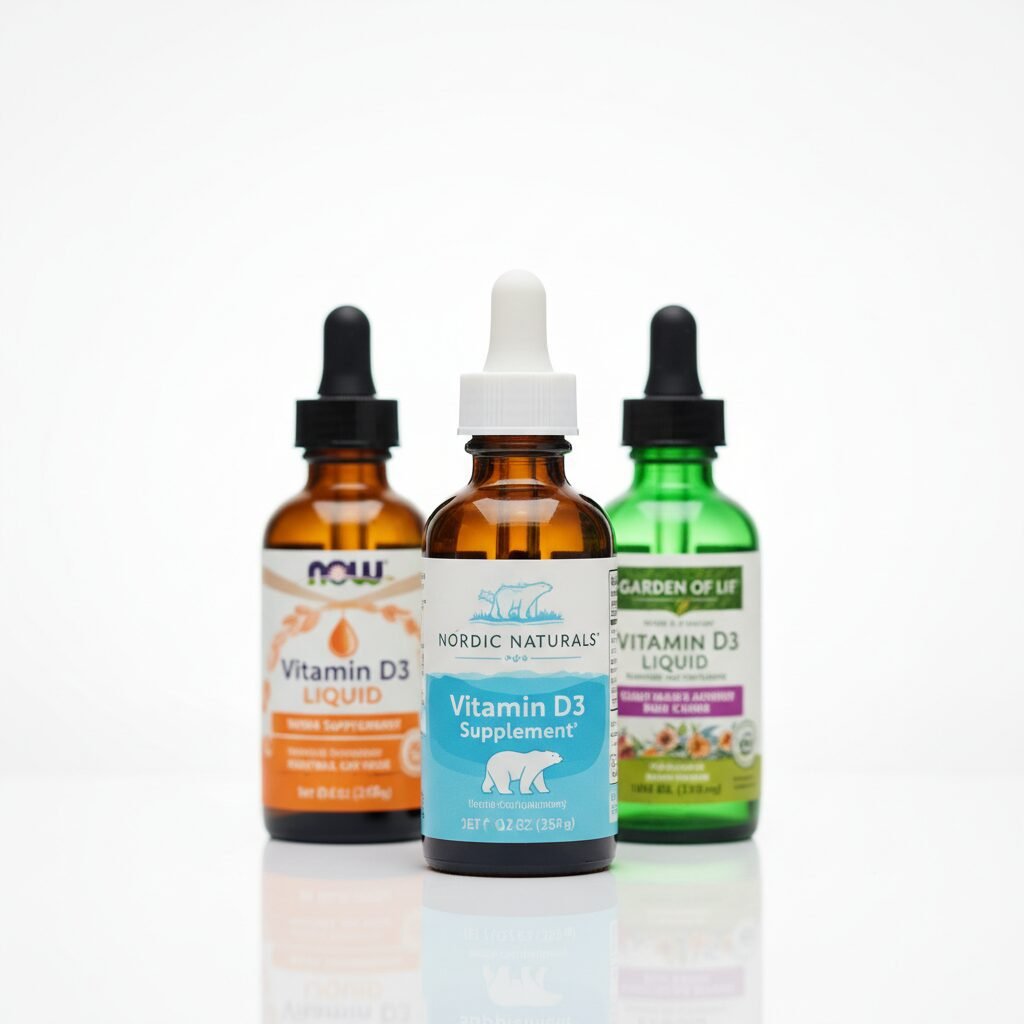
Alright, it’s time for the main event! I’ve reviewed countless products over the years, talked with pediatricians, and listened to feedback from thousands of parents. Based on the strict criteria we just discussed—purity, ease of use, and overall quality—these are my top recommendations for infant Vitamin D drops. I’ve broken them down to help you find the perfect fit for your family and budget.
#1 Overall Best: Nordic Naturals Baby’s Vitamin D3
This is the gold standard and the one I recommend most often. Nordic Naturals has a stellar reputation for purity and quality. Their baby D3 is sourced from lanolin (from sheep’s wool, mimicking the body’s natural production) and suspended in certified organic extra virgin olive oil. It checks every single box: a single-drop 400 IU dose, an excellent built-in dropper for accuracy, and absolutely no artificial ingredients. It’s tasteless and exceptionally well-tolerated by even the most sensitive babies.
#2 Best Organic (MCT Oil): Carlson Kid’s Super Daily D3
Carlson is another powerhouse in the supplement world. Their baby D3 drops are fantastic. The key difference here is the carrier oil—they use coconut oil (MCT oil), which is a great choice if you prefer it over olive oil. It’s also a single-drop 400 IU dose, non-GMO, and unflavored. The bottle has a precise Euro dropper, and parents consistently report how easy it is to administer. It’s often slightly more budget-friendly than Nordic Naturals, making it an excellent value.
#3 Best Allergen-Free Option: Baby Ddrops
The original single-drop vitamin D! Baby Ddrops are famous for their simplicity. Their formula contains just two ingredients: Vitamin D3 and fractionated coconut oil. What sets them apart is their commitment to being free from most common allergens—they are wheat-free, gluten-free, soy-free, corn-free, and sugar-free. The bottle design is unique; you just tip it over, and one perfect drop comes out. It’s incredibly easy and a trusted choice for parents concerned about potential allergens.
Comparison at a Glance
To make it even easier, here’s a side-by-side comparison of my top three picks:
| Feature | Nordic Naturals Baby’s D3 | Carlson Kid’s Super Daily D3 | Baby Ddrops |
|---|---|---|---|
| Dosage | 400 IU in 1 drop | 400 IU in 1 drop | 400 IU in 1 drop |
| Carrier Oil | Organic Extra Virgin Olive Oil | Coconut Oil (MCT) | Fractionated Coconut Oil |
| USDA Organic? | Yes (the olive oil is) | No, but Non-GMO Verified | No, but Non-GMO Verified |
| Servings Per Bottle | ~365 | ~365 | ~90 |
| Key Highlight | Top-tier purity & quality | Excellent value & MCT oil base | Minimalist & allergen-friendly |
Ultimately, you can’t go wrong with any of these three choices. They are all safe, effective, and designed with your baby’s health as the top priority. The choice often comes down to a simple preference for the carrier oil or brand trust.
Tips and Tricks for a Tear-Free Vitamin D Routine

Tips and Tricks for a Tear-Free Vitamin D Routine
Okay, so you’ve chosen the perfect drops. Now for the practical part: how do you get them into your baby? The goal is to make this a quick, calm, and positive part of your day. The good news is, with a single-drop dose, it’s incredibly simple! Here are a few tried-and-true methods from the newborn trenches:
- The Nipple Drop: This is by far the easiest method for breastfeeding moms. Right before you latch your baby, simply place the single drop directly onto your nipple. Your baby will nurse as usual and won’t even notice they’re getting their supplement. Easy peasy!
- The Pacifier Trick: If your baby uses a pacifier, this works like a charm. Place one drop onto the pacifier and pop it into your baby’s mouth. They will suck it right off.
- The Clean Finger Method: Wash your hands thoroughly, then place one drop onto the tip of your clean pinky finger. Gently insert your finger into your baby’s mouth and let them suck on it for a few seconds. This also helps them get used to things in their mouth, which can be helpful later for teething.
- The Cheek Pouch Drop: For a slightly older or calmer baby, you can gently pull their bottom lip out to create a little pocket and quickly drop it inside their cheek. Avoid dropping it directly onto their tongue or the back of their throat, as this can make them gag. The cheek pouch is the safest spot.
A Gentle Reminder: Don’t stress! If you forget a day, it’s okay. The goal is consistency over perfection. Do not give two drops the next day to ‘catch up.’ Just resume your normal routine of one drop per day. You’re doing great!
Find the method that works best for you and your baby and try to do it around the same time each day, like during the first morning feed. Before you know it, this tiny task will become a seamless part of your daily rhythm.
Your Vitamin D Questions, Answered!

Your Vitamin D Questions, Answered!
As a nurse, I get asked these questions all the time. Let’s tackle some of the most common curiosities and concerns parents have about Vitamin D supplementation. This will help you feel even more confident in this important part of your baby’s care.
Do formula-fed babies need Vitamin D drops?
Generally, no. Infant formula sold in the United States is required by the FDA to be fortified with Vitamin D. If your baby is drinking at least 32 ounces of formula per day, they are getting a sufficient amount. If your baby is combo-fed (getting both breast milk and formula), talk to your pediatrician. They will likely recommend continuing the drops until the baby is consistently taking a large enough volume of formula.
What if my baby spits up after I give the drop?
This is a common worry! If you give the drop using the nipple or pacifier method just before a feed, it’s usually absorbed very quickly. If your baby spits up more than 15-20 minutes after the feed, the vitamin has likely already been absorbed. Don’t give another dose. If it’s a very large spit-up immediately after giving the drop, you can consider giving another one, but if you’re unsure, it’s always safest to just wait until the next day.
Can my baby get too much Vitamin D?
Vitamin D toxicity is very rare in infants and typically only happens with massive, prolonged dosing errors (for example, giving a full dropper-full instead of a single drop). This is precisely why choosing a product with a single 400 IU drop dispenser is so important for safety. Stick to the recommended dose, and your baby will be perfectly safe.
When can I stop giving Vitamin D drops?
You can typically stop the drops around your baby’s first birthday. At that point, the AAP recommends switching from breast milk or formula to Vitamin D-fortified whole milk. Once your child is drinking about 32 ounces of fortified milk per day, they will be getting enough Vitamin D from their diet.
I take a Vitamin D supplement. Does that pass through my breast milk?
Yes, it does, but the amount that transfers is typically not enough to meet your baby’s needs unless you are taking a very high dose under medical supervision. Recent studies have explored high-dose maternal supplementation (around 6400 IU/day) as an alternative to infant drops. However, you should never start a high-dose regimen without first consulting your doctor and your baby’s pediatrician. The standard, safest, and most recommended approach is to directly supplement the infant with their own 400 IU drops.
Conclusion
There you have it! The complete guide to Vitamin D for your precious breastfed baby. It might seem like one more thing to add to your already full plate, but I hope you now see it as a simple, powerful act of love. By providing this one little drop each day, you are building the foundation for your child’s strong bones, robust immune system, and lifelong health.
Remember to choose a high-quality product with minimal ingredients, find a delivery method that feels effortless for you and your baby, and build it into your daily routine. You’ve got this! Every single thing you do, from the late-night feedings to worrying about these little details, comes from a place of deep love.
One Final Note: Always remember to have a conversation with your pediatrician before starting any new supplement for your baby. They are your best resource and partner in your child’s health.
Keep up the incredible work, you are your baby’s entire world, and you are doing a fantastic job.