

Sudden Sadness While Nursing? The D-MER Symptom Explained
You settle into your favorite chair, get your baby latched perfectly, and wait for that familiar tingle of your milk letting down. It’s supposed to be a moment of connection and nourishment. But then, out of nowhere, a wave of something entirely different washes over you—a pit in your stomach, a surge of anxiety, or a profound, hollow sadness. It lasts for a minute or two, and then, just as quickly as it came, it vanishes, leaving you confused and maybe even a little guilty. If this sounds familiar, please hear this first: You are not alone, and this is not a reflection of your love for your baby.
What you’re likely experiencing is a real, physiological phenomenon known as Dysphoric Milk Ejection Reflex, or D-MER. It’s a confusing and often isolating experience, but it’s more common than you might think. As a pediatric nurse and lactation consultant, I’ve sat with so many parents who whisper about this, afraid they’re the only ones. My goal here is to pull back the curtain on D-MER, explain the simple science behind it, and give you a toolkit of practical, gentle strategies to help you navigate it. Let’s get you the answers and reassurance you deserve.
What Exactly is D-MER? (And How It’s Different from PPD)
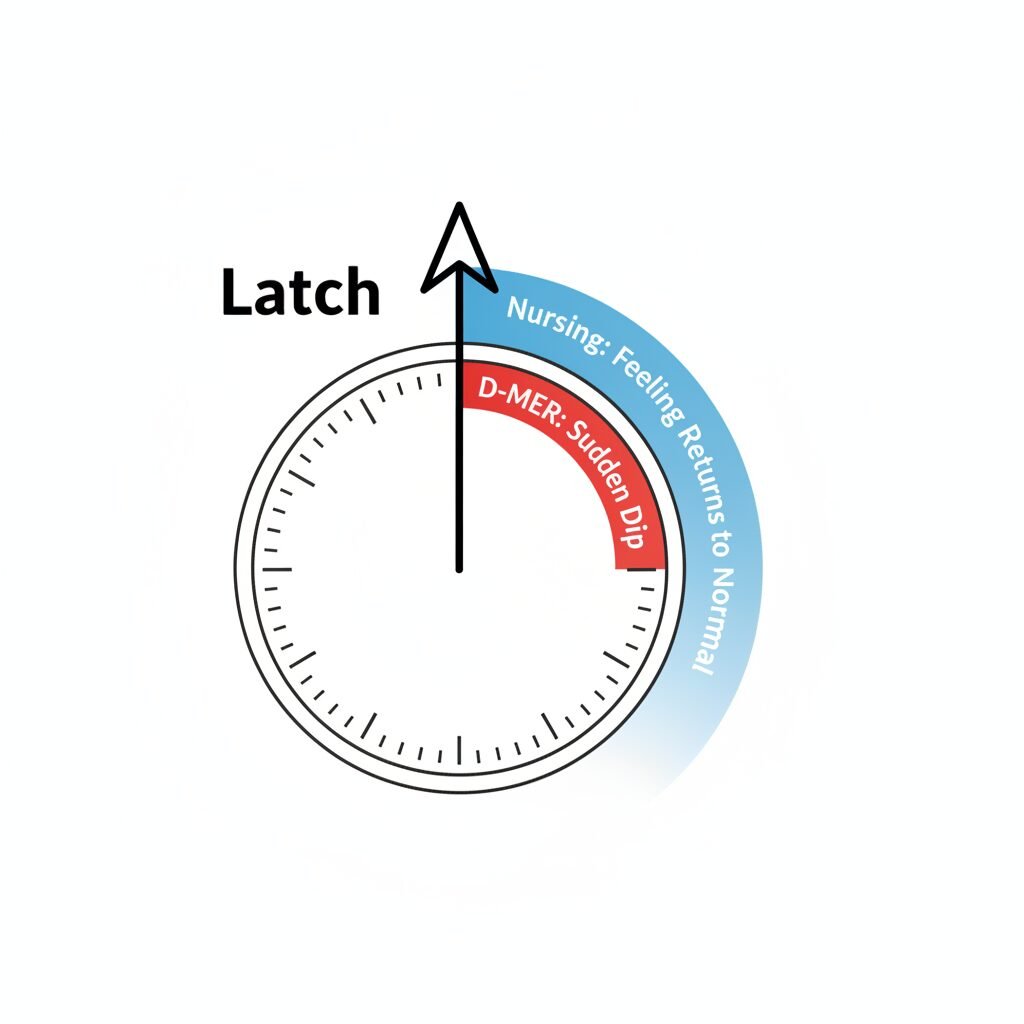
First things first, let’s give this feeling a name and understand what it is. D-MER stands for Dysphoric Milk Ejection Reflex. The key word here is reflex. This is not a psychological disorder or a postpartum mood disorder in the traditional sense. It’s an involuntary, physiological response to the release of milk. The negative emotions are a direct result of a brief hormonal shift in your brain.
The most defining feature of D-MER is its timing. It strikes just before your milk lets down (you might feel it 30-90 seconds beforehand) and typically resolves within a few minutes once the milk is flowing. The feelings don’t linger all day; they are specifically and consistently tied to your milk ejection reflex. This is what makes it so different from other postpartum mental health challenges, like Postpartum Depression (PPD) or the ‘Baby Blues’.
Understanding these differences is crucial for getting the right kind of support. Let’s break it down:
| Condition | Primary Feeling | Timing & Duration | Cause |
|---|---|---|---|
| D-MER | A brief, intense wave of negative emotion (sadness, anxiety, dread, agitation). | Occurs only in the moments before a milk let-down and lasts 30 seconds to 2 minutes. | Physiological reflex tied to a sudden drop in dopamine. |
| Baby Blues | General weepiness, mood swings, anxiety, and sadness. | Starts 2-3 days after birth and resolves on its own within 2 weeks. | Hormonal shifts after delivery, sleep deprivation, and the stress of new parenthood. |
| Postpartum Depression (PPD) / Anxiety (PPA) | Persistent and pervasive feelings of sadness, hopelessness, guilt, rage, or anxiety. | Can begin anytime in the first year and lasts for weeks or months without treatment. It is not tied to feeding times. | A combination of hormonal, environmental, emotional, and genetic factors. Requires medical support. |
A key takeaway: If your negative feelings are fleeting and only happen when you’re about to nurse or pump, it’s very likely D-MER. If your sadness or anxiety is a constant companion throughout your day, it’s essential to talk to your healthcare provider about PPD or PPA.
The Science Behind the Sigh: Why Does This Happen?
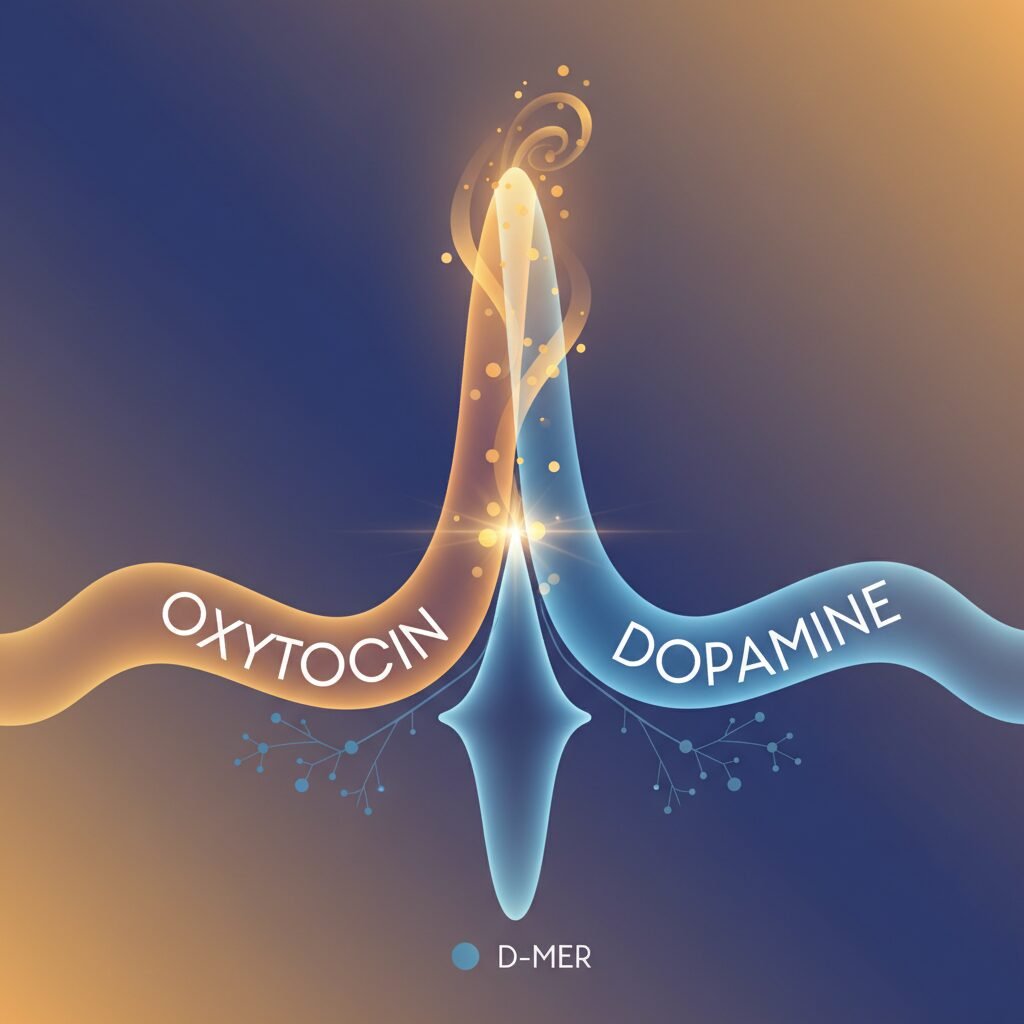
Okay, so we know it’s a reflex, but what’s actually happening in your brain to cause such a strange and unpleasant sensation? It all comes down to a delicate dance between two important hormones: oxytocin and dopamine.
- Oxytocin: This is often called the ‘love hormone’. When your baby latches or you begin to pump, your body releases oxytocin. This hormone is responsible for telling the milk glands in your breasts to contract and release milk. It’s the hero of milk ejection!
- Dopamine: This is a neurotransmitter associated with feelings of pleasure, motivation, and reward. Interestingly, dopamine has an inhibitory effect on prolactin (the hormone that produces milk). For your milk to be released effectively, your dopamine levels need to briefly and quickly drop out of the way to let oxytocin do its job.
Think of it like a stage crew preparing for a show. Dopamine is like the house lights. For the main star, Oxytocin, to shine and start the show (milk let-down), the house lights have to dim for a moment. In most women, this dip is so smooth and quick that it goes completely unnoticed.
However, for parents with D-MER, that drop in dopamine is more like someone flicked a switch off too abruptly. It’s a sharper, more significant plunge. This sudden ‘dopamine dive’ is what triggers the brief but intense feelings of dysphoria—the sadness, dread, or anxiety. Once the oxytocin has taken over and milk is flowing, your dopamine levels quickly return to normal, and the negative feeling vanishes. It’s a fascinating, albeit frustrating, piece of human biology.
Reassurance Reminder: This is a chemical reaction in your brain. It has absolutely nothing to do with your baby, your bond, or your abilities as a mother. It’s simply a misfiring of the dopamine ‘dimmer switch’.
Your D-MER Toolkit: Practical Ways to Cope and Find Relief

While you can’t just ‘will’ D-MER away, you can absolutely build a toolkit of strategies to make it more manageable. The goal is to lessen the impact of that dopamine dip and support your body and mind through those brief, tough moments. Here are some things that have helped countless parents I’ve worked with:
1. Knowledge and Reframing
Honestly, the most powerful tool is the one you have right now: understanding what’s happening. When you feel that familiar wave coming, instead of spiraling into ‘What’s wrong with me?’, you can say to yourself, ‘Ah, there’s my dopamine dipping. It’s a reflex. It will be over in a minute.’ This mental shift from fear to recognition can strip D-MER of its power over you.
2. Master the Art of Distraction
Since D-MER is so brief, a well-timed distraction can be your best friend. The key is to have your distraction ready to go before you latch. The moment you feel the sensation starting, engage your brain with something else.
- Snack & Sip: Have a handful of nuts, a piece of chocolate, or a big glass of ice-cold water ready. The physical sensation can be a great distraction.
- Digital Distraction: Cue up a funny 2-minute video on your phone, scroll through a favorite photo album, or play a quick, engaging game.
- Engage Your Partner: Ask your partner to tell you a joke or a quick, interesting story about their day right as you’re starting to feed.
3. Focus on Physical Comfort and Wellness
Sometimes, external stressors can make D-MER feel more intense. Tending to your basic needs can help soften the edges.
- Stay Hydrated: Dehydration can put stress on your whole system. Keep a water bottle with you at all times.
- Manage Stress: I know, ‘reduce stress’ is easier said than done with a new baby! But even small things help. Try a few deep belly breaths before you nurse. Put on a calming playlist.
- Consider Caffeine: Some parents find that high caffeine intake can make their D-MER feel more ‘agitated’ or ‘anxious.’ You might experiment with reducing your intake to see if it helps.
4. Build Your Support System
Don’t carry this alone. Talk about it. Explain to your partner what’s happening so they can be a source of support instead of confusion. Find online communities for parents with D-MER—knowing you aren’t the only one is incredibly validating. And of course, a lactation consultant (IBCLC) can be a phenomenal resource for both information and emotional support.
When to Reach Out for More Support

For many, D-MER is a manageable, though annoying, part of their breastfeeding journey that often lessens in intensity over time. However, it’s vital to know when what you’re experiencing might be more than D-MER, or when the D-MER itself is so severe that it’s impacting your well-being.
Please reach out to a healthcare professional, such as your OB-GYN, midwife, or a therapist, if you experience any of the following:
- The feelings don’t stop: If the sadness, anxiety, or dread continues long after your milk has let down and persists throughout the day.
- It’s getting worse, not better: While D-MER can fluctuate, if you find the intensity is consistently increasing over weeks, it’s worth discussing.
- It’s impacting your bond: If the feelings are so severe that you start to dread feeding your baby or feel it’s negatively affecting your ability to bond.
- You have thoughts of harming yourself or your baby: This is a sign of a serious mental health crisis, and you need immediate support. Please call a crisis hotline or go to the nearest emergency room.
Your mental health is just as important as your physical health. There is no shame in asking for help. A supportive provider can help you distinguish between D-MER and PPD/PPA and get you on the right path to feeling like yourself again.
Helpful resources include:
- An International Board Certified Lactation Consultant (IBCLC): They are often highly knowledgeable about D-MER and can be a great first point of contact.
- Your OB-GYN or Primary Care Physician: They can screen you for postpartum mood disorders and discuss treatment options.
- Postpartum Support International (PSI): They have a helpline (1-800-944-4773) and can connect you with local resources and support groups.
Conclusion
Navigating the world of new parenthood is filled with learning curves, and D-MER can feel like one of the most bewildering. But now you have a name for it, an understanding of why it happens, and a set of tools to help you through it. Remember, this strange, fleeting feeling is a physiological quirk, not a personal failing. It says nothing about the incredible love you have for your little one.
Be gentle with yourself. Celebrate the small victories. If a funny cat video gets you through a let-down, that’s a win. If telling your partner, ‘My dopamine is dipping!’ helps you both laugh, that’s a win. You are resilient, you are capable, and you are doing an amazing job. This is just one small, and often temporary, piece of your unique and beautiful feeding journey.