

Flat Nipples? 5 Secrets To Successful Breastfeeding No One Tells You
Hey there, new parent. Take a deep breath. If you’ve just been told you have flat or inverted nipples, your mind is probably racing with a million questions and a big dose of worry. Will my baby be able to latch? Will I be able to breastfeed at all? I hear this concern all the time, and I want to tell you right now: it is absolutely possible to have a wonderful, successful breastfeeding journey with flat nipples.
First, let’s clear up what this even means. A ‘typical’ nipple protrudes, becoming more erect when stimulated or cold. A flat nipple doesn’t protrude much, staying relatively level with the areola (the darker skin around the nipple). An inverted nipple actually retracts or pulls inward when stimulated. Many parents have them, and it’s simply a variation of normal anatomy—not a flaw!
The challenge isn’t about your body being ‘wrong’; it’s about learning different techniques. The standard advice often doesn’t cover these nuances. That’s where I come in. After decades of helping parents just like you, I’ve gathered the ‘insider secrets’ that can make all the difference. Forget the panic and let’s dive into five powerful strategies that will empower you to feed your baby with confidence.
Secret #1: Aim for the Areola, Not Just the Nipple

This is the single most important mindset shift you can make. We’re so conditioned to think that the baby latches onto the nipple, but that’s not the whole story. A successful latch involves the baby taking in a large mouthful of breast tissue, including a good portion of your areola.
Think of it like this: your nipple is the straw, but the areola is the area the baby needs to compress with their gums and tongue to get the milk flowing effectively. When a baby has a deep, asymmetric latch (more areola in their mouth on the bottom than the top), the shape of your nipple becomes far less important. Your nipple will be drawn out and positioned comfortably against the soft palate at the back of their mouth, preventing pain for you and ensuring efficient milk transfer for them.
Why a Shallow Latch Doesn’t Work
When a baby only latches onto the nipple tip, a few problems arise:
- Pain for You: It’s incredibly painful! Your nipple gets compressed against the baby’s hard palate, leading to cracks, blisters, and bleeding.
- Inefficiency for Baby: They can’t effectively remove milk, which can lead to frustration, slow weight gain, and a drop in your milk supply over time.
So, stop fixating on the nipple itself. Your new goal is to help your baby get the biggest mouthful of breast possible. The rest of our secrets will show you exactly how to do that.
Secret #2: The Pre-Latch Warm-Up Routine

Just like an athlete warms up before a game, a little pre-feed preparation can set you up for a winning latch. The goal here is to encourage your nipple to be as prominent as possible right before your baby comes to the breast. This gives them a clearer, firmer ‘target’ to latch onto. Try incorporating these into your routine a minute or two before you plan to feed:
Your 3-Step Pre-Latch Prep:
- Stimulate the Nipple: Gently roll your nipple between your thumb and forefinger for about 30 seconds. You can also try dabbing it with a cool, damp cloth. The cold sensation often causes the nipple to become more erect.
- Hand Express a Little Milk: Squeezing out a few drops of colostrum or milk does two wonderful things. First, the process itself can help draw the nipple out. Second, the taste of milk on your nipple will entice your baby to open wide and latch on eagerly.
- Try Reverse Pressure Softening: If your breasts are very full or engorged, the areola can become firm and taut, making it even harder for your flat nipple to protrude. Reverse pressure softening is a lifesaver! Use your fingers to press gently but firmly on the areola, right around the base of the nipple. Hold for 60 seconds. This moves swelling away from the nipple, softening the area and allowing the nipple to pop forward. You can use your fingers in different patterns—try two fingers on each side, or a flower-petal formation around the nipple.
A Quick Tip: A manual pump or even an electric pump on a low setting for just a minute can also be a fantastic tool to draw the nipple out right before latching. Don’t pump for a full session, just enough to get things started!
Secret #3: Master the ‘Flipple’ and Other Latching Positions

How you hold your baby and bring them to the breast can make or break a latch, especially with flat nipples. It’s time to move beyond the standard cradle hold and explore positions that give you more control and use gravity to your advantage.
The ‘Flipple’ Technique (Nipple Flip)
This technique is a total game-changer! Here’s how it works:
- Hold your breast in a ‘U’ or ‘C’ hold, compressing it slightly like you’re making a sandwich.
- Line up your baby so your nipple is pointing at their nose, not their mouth. This forces them to tilt their head back to latch.
- Wait for your baby to open their mouth REALLY wide, like a big yawn.
- As they open wide, quickly bring them to your breast, aiming to ‘flip’ your nipple into their mouth so it lands on the roof of their mouth. Their chin should touch your breast first, with their bottom lip far from the base of the nipple.
Positions That Promote a Deep Latch
Certain positions are naturally better for encouraging a deep latch. Don’t be afraid to experiment to find what works for you and your baby.
| Position | Why It Works for Flat Nipples | Best For… |
|---|---|---|
| Laid-Back (Biological Nurturing) | You recline comfortably and place your baby tummy-to-tummy on your chest. Gravity helps them press into the breast and use their instincts to root and find a deep latch on their own. | Relaxing, promoting bonding, and taking pressure off C-section incisions. |
| Football / Clutch Hold | You tuck your baby under your arm like a football, supporting their neck and shoulders with your hand. This gives you a great view of the latch and excellent control over their head. | Parents who’ve had a C-section, have large breasts, or are feeding twins. |
| Cross-Cradle Hold | If you’re feeding on the left breast, you hold the baby with your right arm and support the breast with your left hand (or vice-versa). This offers more control than the traditional cradle hold. | Newborns who need a little extra head and neck support to stay latched. |
Secret #4: Your Toolkit: Nipple Shields and Breast Shells
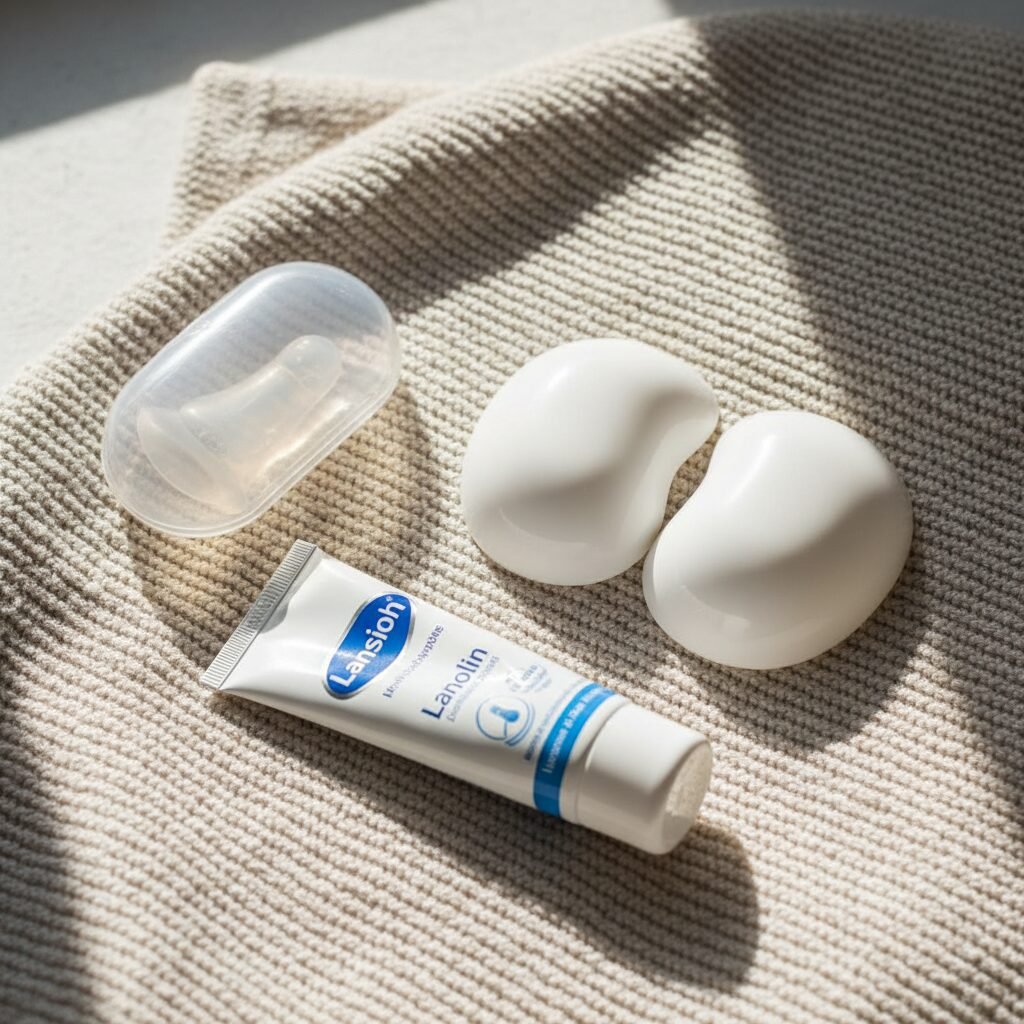
Sometimes, a little temporary help from a well-chosen tool can bridge the gap while you and your baby are still learning. But it’s crucial to use them correctly and know when to seek guidance.
Nipple Shields: A Temporary Helper
A nipple shield is a thin, flexible piece of silicone with holes in the tip that you place over your nipple before feeding. For a baby struggling to latch onto a flat nipple, the shield provides a firmer, more prominent shape to latch onto, helping them draw the nipple into the shield and get the milk flowing.
However, shields are not a permanent solution. They can sometimes lead to decreased milk transfer if not used properly, which can impact your baby’s weight gain and your milk supply.
Safety First: Always use a nipple shield under the guidance of an International Board Certified Lactation Consultant (IBCLC). They will ensure you have the correct size, show you how to apply it for the best results, and create a plan for eventually weaning your baby off the shield and back to the bare breast.
Breast Shells: The Between-Feed Trainer
Don’t confuse these with shields! Breast shells (also called breast cups) are not used during feeding. They are hard plastic, dome-shaped devices that you wear inside your bra between feedings. They apply gentle, steady pressure to the base of the nipple, which can help encourage flat or inverted nipples to protrude more over time. They also have the added benefit of collecting any leaking milk!
Think of them as a gentle, passive training tool for your nipples. They can be a great, low-effort addition to your routine.
Secret #5: You Don’t Have to Do This Alone

If I can leave you with one final, crucial secret, it’s this: ask for help. Breastfeeding is a learned skill for both you and your baby, and navigating challenges like flat nipples can feel overwhelming. You were never meant to figure this out in isolation.
Your Professional Support System: The IBCLC
An International Board Certified Lactation Consultant (IBCLC) is the gold standard for breastfeeding support. These professionals have extensive training and clinical experience in all things lactation. An IBCLC can:
- Watch you feed your baby and assess their latch in real-time.
- Check for other potential issues, like a tongue or lip tie, that might be making latching difficult.
- Help you properly size and use tools like a nipple shield.
- Create a personalized, step-by-step feeding plan that builds your confidence.
- Provide evidence-based information and emotional support.
Many insurance plans now cover lactation visits, so check with your provider. A single visit can completely change the trajectory of your breastfeeding journey.
Finding Your Village
Beyond professional help, connecting with other parents is invaluable. Look for local La Leche League meetings, hospital-run breastfeeding support groups, or trusted online communities. Hearing from others who have faced similar struggles and come out the other side is incredibly reassuring. It reminds you that you’re not alone and that your feelings are valid.
Conclusion
There you have it—five secrets that can transform your breastfeeding experience with flat nipples. Let’s quickly recap: shift your focus from the nipple to a deep areolar latch, use a pre-feed warm-up to your advantage, master positions that give you control, use tools wisely and temporarily, and most importantly, build your support system.
Please remember, your body is incredible, and it is not ‘flawed.’ You and your baby are a team, and like any new team, you just need a little time and the right strategies to find your rhythm. Be patient, be kind to yourself, and celebrate every small success. You are doing an amazing job, and with these secrets in your back pocket, a successful breastfeeding journey is well within your reach. You’ve got this, mama.