
The Softest Non Toxic Nursery Rugs Perfect For Tummy Time
Hello, wonderful new parents! Welcome to one of the most exciting parts of preparing for your little one: creating their nursery. It’s a space you’ll fill with love, dreams, and countless precious moments. As you pick out the crib and choose the perfect wall color, there’s one foundational piece that often gets overlooked but is so incredibly important: the nursery rug.
You see, this rug is more than just a decorative item. It’s the stage for some of your baby’s biggest developmental milestones, especially tummy time! This is where your baby will strengthen their neck and shoulder muscles, discover their hands, and eventually learn to roll, sit, and crawl. They’ll be spending a lot of time on this surface, breathing close to its fibers, touching it with their sensitive skin, and yes, probably even trying to taste it at some point!
That’s why choosing a rug that is not only soft and comfy but also non-toxic is one of the best decisions you can make for your baby’s health and well-being. The world of “non-toxic” products can feel overwhelming, but don’t you worry. As a pediatric nurse who has guided thousands of families, I’m here to hold your hand through it. Together, we’ll break down exactly what to look for, what to avoid, and how to find that perfect, cozy, and safe rug for your baby’s first adventures.
Why Your Nursery Rug Choice Matters More Than You Think
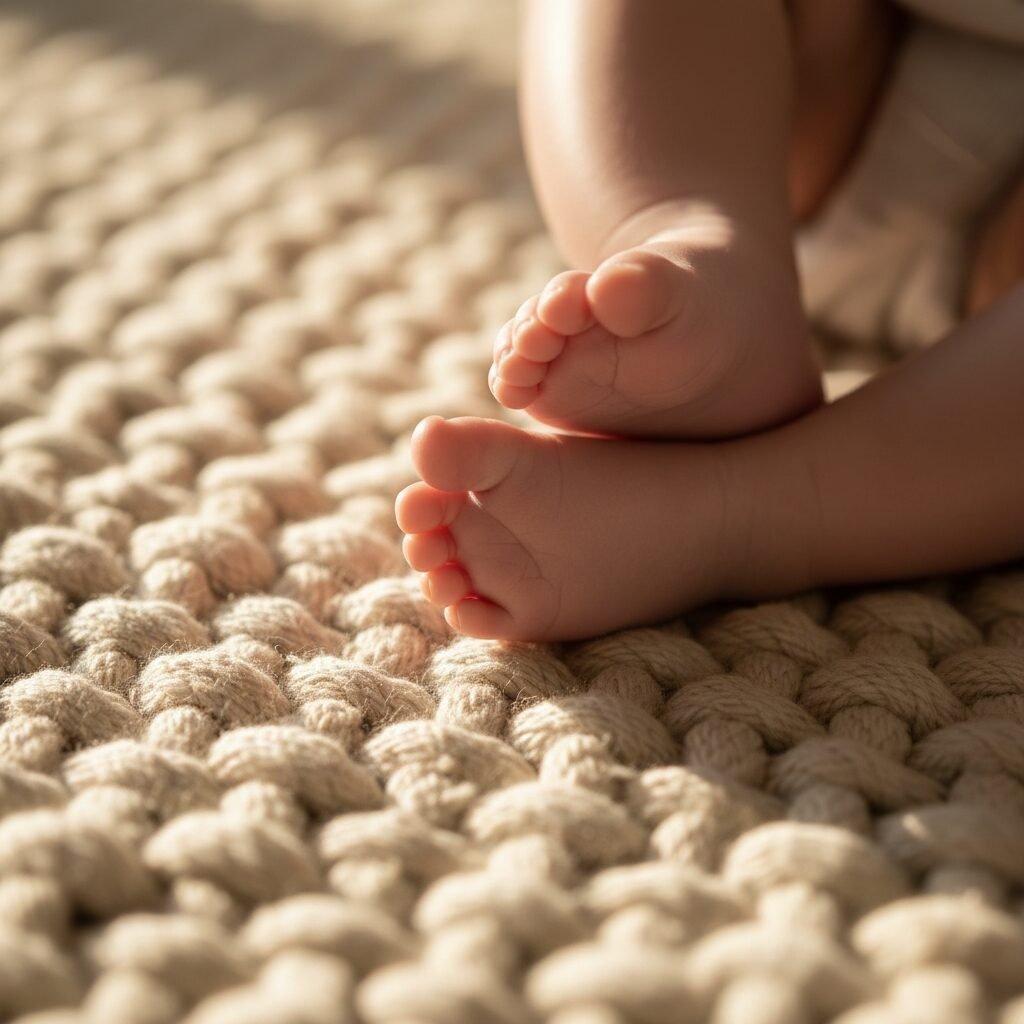
Let’s chat for a moment about your baby’s world. For the first year of life, their primary environment is the floor. It’s their playground, their gym, and their classroom. Because they are so low to the ground, they are more exposed to anything the floor covering might be releasing into the air. This is where the conversation about toxins becomes so critical.
Many conventional rugs, especially those made from synthetic materials, can release invisible chemicals into your home through a process called “off-gassing.” These chemicals are known as Volatile Organic Compounds (VOCs). Think of that “new carpet smell” – that’s often a cocktail of VOCs like formaldehyde and benzene, which can irritate a baby’s delicate respiratory system and have been linked to other long-term health concerns.
Beyond what’s in the air, there are chemicals within the rug fibers themselves. Common culprits include:
- Phthalates: Often used to make plastic backings (like PVC) more flexible, these are known endocrine disruptors.
- Flame Retardants: While they sound like a safety feature, many chemical flame retardants are toxic and can build up in the body over time.
- PFAS: These “forever chemicals” are used for stain and water resistance, but they come with significant health warnings.
A baby’s skin is also thinner and more absorbent than ours, making them more susceptible to irritation from harsh dyes or chemicals. And since everything eventually goes in their mouth, you want to be sure the fibers they’re gumming are safe and natural. Choosing a non-toxic rug isn’t about being fearful; it’s about being wonderfully proactive. You are creating a healthier environment by thoughtfully controlling what you bring into your home. It’s a powerful act of love that provides a safe foundation for your baby to thrive.
Decoding the Labels: What to Look For in a Non-Toxic Rug

Navigating product labels can feel like learning a new language. But when it comes to nursery rugs, a few key terms and certifications are your best friends. They are your shortcut to peace of mind, letting you know that a third party has already done the safety testing for you. Here’s your cheat sheet:
Safe Materials to Seek Out
- GOTS Certified Organic Cotton: This is a fantastic choice. It’s soft, often machine-washable, and the GOTS certification ensures it was grown without pesticides and processed without harsh chemicals from farm to finished product.
- Natural Wool: Wool is a true workhorse. It’s naturally flame-retardant (so no added chemicals are needed), anti-microbial, and repels dirt and moisture. It’s also incredibly durable and provides wonderful cushioning. Look for untreated, natural wool.
- Jute or Sisal: These plant-based fibers offer a beautiful, natural aesthetic. While generally less plush than wool or cotton, they are very durable and naturally non-toxic. They can be a great option for layering with a smaller, softer play mat on top.
- Natural Latex or Rubber: For the rug’s backing, look for natural latex or rubber instead of synthetic PVC or vinyl. This prevents slipping without introducing harmful phthalates.
Key Certifications Explained
- GOTS (Global Organic Textile Standard): This is the gold standard for organic textiles. It covers the entire production process, from the harvesting of raw materials through environmentally and socially responsible manufacturing. If you see this label, you can trust the product is truly organic and free from the most common harmful chemicals.
- OEKO-TEX Standard 100: This is another excellent certification. It tests the final product for a long list of harmful substances. If a rug has this label, it means every single component—from the fibers to the dye to the backing—has been tested and found harmless for human health.
- GREENGUARD Gold: This certification focuses specifically on low chemical emissions. A GREENGUARD Gold certified rug has been tested and proven to have negligible VOC emissions, which directly contributes to healthier indoor air quality in your nursery. This is a huge plus for your baby’s developing lungs.
When you’re shopping, keep an eye out for these logos. They are powerful indicators that a company has invested in making a product that is truly safe for the most precious members of your family.
Tummy Time Champions: Features of the Perfect Play Rug

Now that we’ve covered the safety aspect, let’s talk about function! The perfect tummy time rug is a careful balance of several key features that support your baby’s comfort and development.
- Softness & Pile Height: You want a rug that’s soft enough to cushion tumbles but not so plush that your baby can’t get a good push-up. A low-pile rug is often ideal. Think of a dense, soft wool rug or a padded cotton play mat. High-pile or shaggy rugs can be frustrating for little ones trying to push up, and their long fibers can even shed and become a choking hazard.
- Easy to Clean: Let’s be real—spit-up, drool, and diaper leaks happen! A rug that is easy to clean is non-negotiable. Many organic cotton rugs are conveniently machine washable, which is a game-changer for parents. Wool is naturally stain-resistant and can often be spot-cleaned with just a little water and mild soap. Always check the care instructions before you buy!
- Durability: This rug will see a lot of action. From tummy time to crawling, to first steps and toddler playdates, it needs to hold up. Natural fibers like wool and jute are known for their incredible durability and will last you for years to come.
- Grip and Stability: Safety first! A rug that slips and slides on a hardwood floor is a hazard, especially as your baby starts pulling up and walking. Look for a rug with a built-in non-slip backing made from natural rubber or plan to purchase a separate non-slip rug pad made from safe materials like felt and natural rubber.
A Quick Note on Design: While it’s tempting to get a super busy, brightly colored rug, some research suggests that a more neutral, calming environment can be better for a baby’s developing nervous system. A rug with a simple pattern or a beautiful texture can provide sensory interest without being overstimulating.
The Usual Suspects: Materials and Chemicals to Avoid

Knowledge is power, and knowing what to steer clear of is just as important as knowing what to look for. When you’re rug shopping, here are the red flags to watch out for. I’ve put them in a simple table to make it easy to reference on your phone while you’re shopping!
| Chemical or Material to Avoid | Why It’s a Concern for Your Nursery |
|---|---|
| Synthetic Fibers (Polyester, Nylon, Polypropylene) | These are petroleum-based plastics. They can off-gas VOCs and are often treated with a host of chemicals for stain resistance and fire retardancy. |
| PVC (Vinyl) or Styrene Butadiene (SBR) Backing | Commonly used for non-slip backing, these materials can contain phthalates and other VOCs. Opt for natural rubber or felt instead. |
| Formaldehyde | Used as an adhesive in some rug backings, formaldehyde is a known carcinogen and a major source of off-gassing. |
| Chemical Flame Retardants (PBDEs) | These toxic chemicals do not stay locked in the product; they escape into the air and settle in dust that your baby can inhale or ingest. |
| PFAS or PFCs (Stain-Repellent Treatments) | Often marketed as “Stain-Resistant” or “Water-Proof,” these “forever chemicals” are linked to numerous health issues and should be avoided in the nursery. |
| Harmful Dyes | Dyes containing heavy metals or other toxic components can be an issue. This is where certifications like OEKO-TEX and GOTS are so helpful, as they screen for these. |
A Gentle Safety Reminder: Always inspect a new rug for any loose fibers, tassels, or small, detachable parts that could pose a choking hazard. Give it a good vacuum before placing it in the nursery to remove any loose particles from the manufacturing process.
Caring For Your Natural Fiber Rug
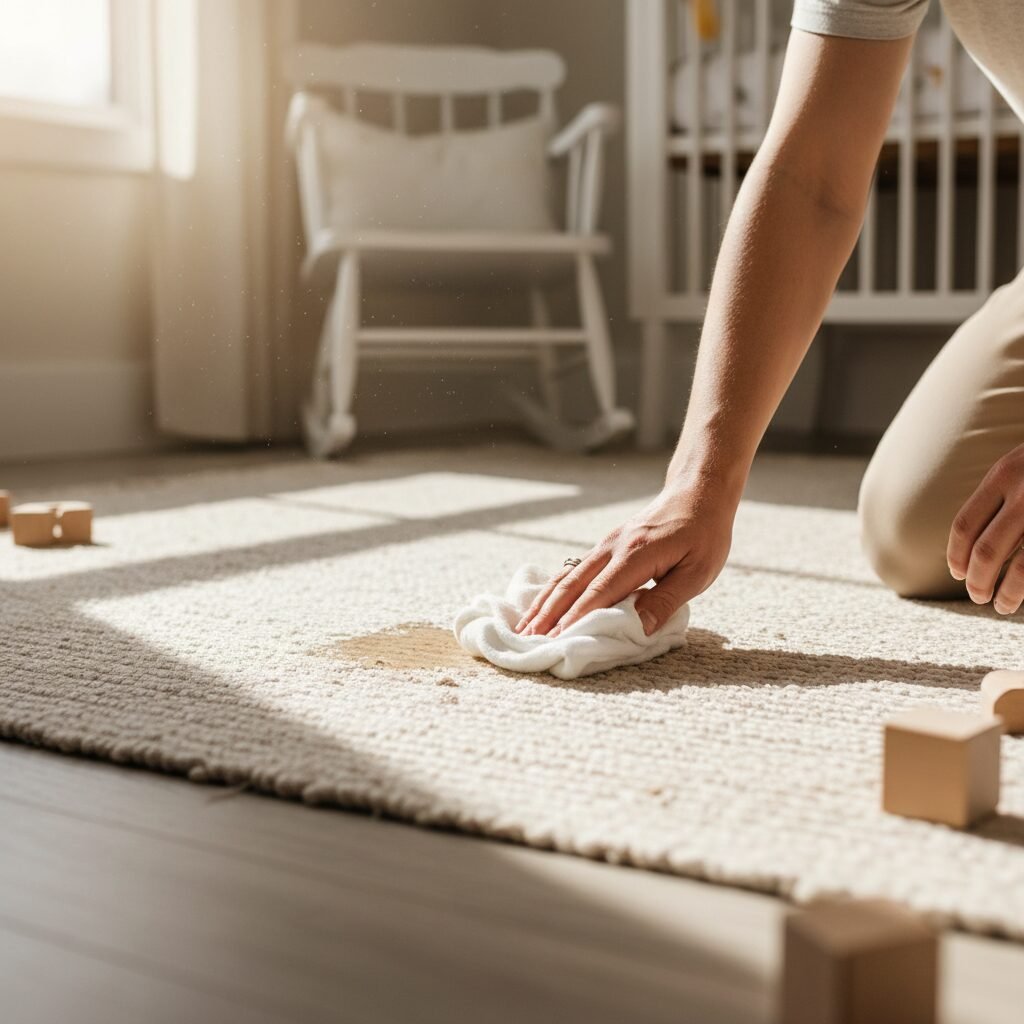
You’ve invested in a beautiful, healthy rug for your baby—hooray! Now, let’s make sure it lasts. Caring for natural fiber rugs is often simpler than you might think.
For Wool Rugs:
- Vacuum Regularly: Use a suction-only vacuum or disable the beater bar, as the harsh bristles can damage the wool fibers over time.
- Blot Spills Immediately: Wool is amazing at repelling liquids initially. Use a clean, dry cloth to blot—don’t rub!—the spill, working from the outside in. For tougher spots, a little water and a drop of clear, gentle soap often does the trick.
- Rotate Annually: To ensure even wear, rotate your rug 180 degrees once a year.
For Organic Cotton Rugs:
- Check for Machine Washability: This is the biggest perk of many cotton rugs! Follow the label’s instructions, typically using a gentle cycle with cold water and a mild detergent. Tumble dry on low or, even better, air dry.
- Spot Treat as Needed: For small messes, the same blotting method used for wool works well here.
For Jute and Sisal Rugs:
- Keep them Dry: These natural fibers are very absorbent, so it’s crucial to blot up any spills immediately to prevent staining and potential damage to the fibers.
- Vacuuming is Key: Regular vacuuming with a suction attachment will keep dirt and dust from getting embedded in the weave.
By following these simple steps, you can keep your nursery rug looking beautiful and feeling fresh for all the milestones to come, from tummy time wiggles to toddler tea parties.
Conclusion
My dear new parents, creating a safe, nurturing, and beautiful space for your baby is such a profound expression of love. As you’ve seen, that cozy rug in the middle of the nursery is so much more than just a soft spot to land. It’s the foundation of your baby’s first explorations and a key component of their healthy environment.
Remember the key takeaways: prioritize natural, breathable materials like GOTS-certified organic cotton and wool. Look for trusted certifications like OEKO-TEX and GREENGUARD Gold to have confidence in your choice. And don’t forget the practical side—a low pile and easy-to-clean surface will make your life so much easier.
Please don’t feel overwhelmed by the information. Every small, thoughtful choice you make adds up to create a wonderful, healthy home for your family. Choosing a non-toxic rug is a fantastic step on that journey. Now, get ready for all the precious wiggles, rolls, and giggles that will happen on that perfect, cozy spot you’ve chosen just for them.