
10 Life-Saving Tips To Stop Falling Asleep While Breastfeeding
Hello, you amazing, exhausted new parent. I see you. It’s the middle of the night, the world is asleep, and it’s just you and your precious baby. The rhythmic sucking, the warmth of their tiny body against yours, the profound quiet… it’s a perfect recipe for dozing off. And while it feels like the most natural thing in the world, nodding off while holding your baby, especially in a bed or on a sofa, is one of the biggest safety risks for newborns.
As a pediatric nurse and lactation consultant, I’ve sat with countless parents who have shared this fear. They feel guilty for being so tired and terrified of making a mistake. Please, let’s get one thing straight: feeling sleepy is not a moral failing. It’s a biological reality of caring for a newborn. You are not a bad parent for being exhausted. However, we must have a plan in place to manage that exhaustion and keep our little ones safe.
A Gentle Reminder: The goal isn’t to fight your body’s need for sleep, but to create a safe environment where you can meet your baby’s needs without putting them at risk.
This guide isn’t about scare tactics; it’s about empowerment. We’re going to walk through 10 simple, practical, and truly life-saving strategies to help you stay awake and alert during those marathon night-feeding sessions. Let’s create a safety net so you can cherish these quiet moments without fear.
Part 1: Setting the Scene for Safety First

Before your baby even wakes for a feed, your most important work is already done. Preparing your environment is the single most effective way to prevent accidents. When you’re awakened from a deep sleep, you won’t be thinking clearly. Your pre-planned safe space will be your best friend.
Tip 1: Ditch the Bed (and the Comfy Couch)
I cannot stress this enough: your bed and your plush, deep sofa are the most dangerous places to breastfeed when you’re tired. They are filled with pillows, soft bedding, duvets, and crevices. These soft surfaces pose a significant risk of accidental suffocation if you fall asleep and your baby’s face becomes pressed against them. The American Academy of Pediatrics (AAP) strongly advises against bed-sharing, especially for infants under four months old, due to the increased risk of SIDS (Sudden Infant Death Syndrome) and other sleep-related deaths.
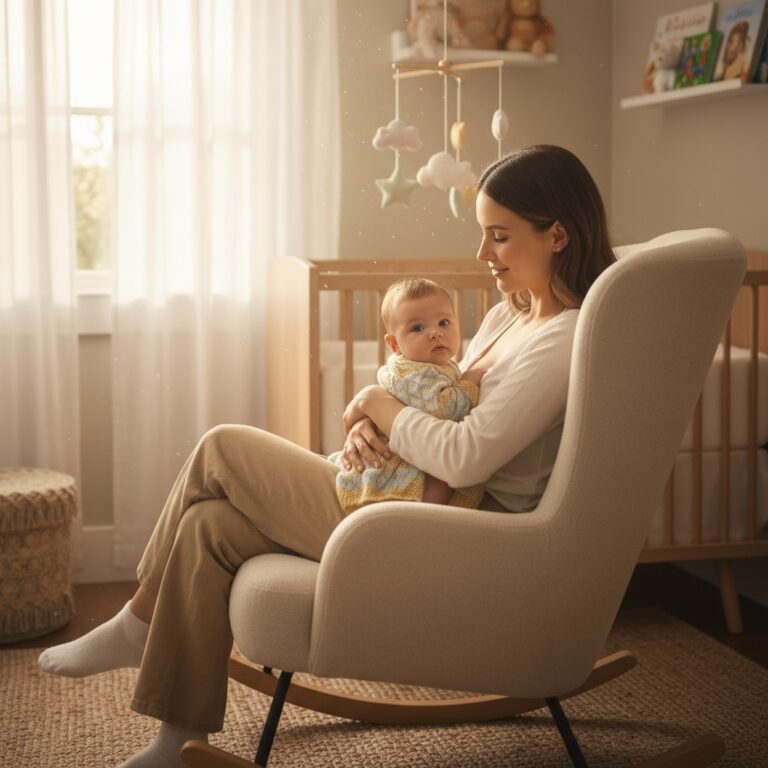
Instead: Your go-to spot should be a firm, supportive chair with armrests, like a nursery glider or a straight-backed armchair. The upright position makes it harder to fall into a deep sleep. If you do nod off for a second, the structure of the chair and your position make it much less likely for the baby to fall or get into a dangerous position.
Tip 2: Create a “Safe Feeding Station”
Once you’ve chosen your chair, build a command center around it. The goal is to have everything you could possibly need within arm’s reach so you don’t have to get up or be tempted to move to a less-safe spot. This little bit of prep work can make all the difference at 3 AM.
Your station should include:
- A small table: Place this right next to your chair.
- Hydration: A large, insulated water bottle, preferably with a straw so you can drink easily with one hand.
- Snacks: A small container of easy-to-eat, non-messy snacks (more on this later!).
- Your phone & charger: For entertainment and in case of emergency.
- Burp cloths: At least two!
- A dimmable lamp: For just enough light to see without fully waking you and the baby.
- Entertainment: Headphones for a podcast or audiobook.
Most importantly, place your baby’s bassinet or crib directly next to your feeding station. This makes the transfer from your arms back to their own safe sleep space as short and simple as possible. The moment you feel your eyes closing, the baby goes back into their bassinet. No exceptions.
Part 2: Engaging Your Senses to Stay Alert

Your body is programmed to sleep when it’s dark, quiet, and comfortable. To stay awake, you need to send your brain some gentle “wake up” signals by engaging your senses. This doesn’t mean you need to blast music or turn on stadium lights, but small sensory inputs can work wonders.
Tip 3: Light It Up (Just Enough)
While a pitch-black room is great for sleep, it’s your enemy during a night feed. Fumbling in the dark is not only impractical but also encourages your brain to stay in sleep mode. Light exposure, even dim light, helps suppress melatonin production, the hormone that makes you feel sleepy.
Instead: Use a small lamp with a low-wattage, warm-toned bulb. A salt lamp or a dimmable touch lamp is perfect. It should be bright enough for you to see your baby’s latch and expressions clearly, but not so bright that it startles them or makes it hard for both of you to fall back asleep after the feed.
Tip 4: Tune In to Something Engaging
Silence can be deafeningly sleep-inducing. Passively watching TV can also be risky, as the flickering screen can easily lull you to sleep. You need something that requires a bit of active listening.
Instead: Pop in one earbud and listen to an engaging podcast or a gripping audiobook. The narrative structure requires you to pay attention, which keeps your mind active. Choose a genre you love—a thrilling mystery, a fascinating history podcast, or a laugh-out-loud comedy show. This not only keeps you awake but can also make night feeds something you almost look forward to.
Tip 5: Get a Little Uncomfortable (On Purpose!)
Comfort is the enemy of alertness. Your cozy fleece robe and fuzzy slippers are telling your body it’s time for bed. We need to introduce a minor element of discomfort to keep you on your toes.
Instead: Try these little tricks:
- Expose your feet: Take off your socks and slippers and place your bare feet on a cool floor (like hardwood or tile).
- A cool cloth: Keep a damp washcloth in a bowl nearby. If you feel yourself drifting, a quick wipe on your forehead or the back of your neck is a fantastic jolt.
- Sit on a firmer cushion: If your chair is super plush, try adding a firmer, thinner cushion to make it slightly less sleep-friendly.
- Un-swaddle yourself: Remove that cozy blanket from your own lap. You want the baby to be warm and swaddled, but you should be just cool enough to stay awake.
Part 3: Fueling Your Body and Mind

Think of yourself as an endurance athlete, because that’s exactly what you are. Getting through the newborn phase requires strategic fueling and mental fortitude. What you eat, drink, and think about can have a huge impact on your ability to stay awake.
Tip 6: Hydrate, Hydrate, Hydrate with Cold Water
Breastfeeding is thirsty work, and dehydration can cause fatigue and fogginess. A warm, milky drink might sound soothing, but it can also make you sleepy. Cold is your friend here.
Instead: Keep a large, insulated bottle filled with ice water at your feeding station. The cold temperature provides a small shock to your system, and the act of sipping through a straw keeps you engaged. Make it a rule to drink a good amount of water during every single feeding session, day or night.
Tip 7: Prep a Midnight Snack Box
Low blood sugar can make you feel incredibly drowsy and weak. Having a one-handed, easy-to-eat, and relatively healthy snack ready to go can give you the energy boost you need to get through the feed.
Instead: Create a small box or basket with snacks that don’t require preparation or make a mess. Think protein and complex carbs for sustained energy.
| Snack Category | Easy, One-Handed Ideas |
|---|---|
| Protein Power | Almonds, walnuts, string cheese, a hard-boiled egg (peeled beforehand). |
| Complex Carbs | Whole-grain crackers, a granola bar (low in sugar), oatmeal bites. |
| Healthy Fats & Fruits | Dried apricots, a banana, single-serving packs of nut butter. |
Tip 8: Play Mind Games with Yourself
Sometimes, the best way to stay awake is to force your brain to do a little work. Simple mental exercises can pull you out of a sleepy fog and force your mind to focus.
Instead: Try one of these simple games:
- Count backward: Start at 300 and count backward by 3s.
- Name game: Pick a category (like animals, countries, or fruits) and try to name one for every letter of the alphabet.
- Plan your day: Mentally walk through your to-do list for the next day. What do you need from the grocery store? Who do you need to call?
- Browse your phone with intent: Don’t just mindlessly scroll, which can be hypnotic. Actively read a news article, organize your photos, or make a shopping list online.
Part 4: Leveraging Your Support System and Tools

You do not have to do this alone. Even in the dead of night, you have resources available to you. Leaning on your partner and using simple technology can be a game-changer for safety and sanity.
Tip 9: Tag-Team with Your Partner
Even if you are exclusively breastfeeding, your partner is not powerless to help. Their role in night feeds is crucial for safety. Sleep deprivation is a shared challenge, and tackling it as a team is essential.
How they can help:
- The “Wake-Up Crew”: When the baby cries, your partner gets up, does the diaper change, and brings the baby to you in your safe feeding station. This allows you a few extra minutes of rest and ensures you don’t grab the baby while you’re still half-asleep.
- The “First 15”: Ask your partner to stay with you for the first 15 minutes of the feed. This is often when you’re at your sleepiest. They can chat with you, rub your back, or just provide a reassuring presence until you feel more alert.
- The “Transfer Specialist”: After the feed, your partner can take the baby, burp them, and settle them back into their bassinet, allowing you to go right back to sleep.
Tip 10: Set a “Check-In” Alarm
This is a wonderfully simple but effective safety net. Use your phone or a smartwatch to set a gentle alarm or vibration alert.
Instead of a jarring alarm to wake you up from sleep, think of this as a gentle nudge to keep you from falling too deeply into it. Set a timer for 15 or 20 minutes at the start of the feed. When it goes off, it will be just enough to rouse you if you’ve started to drift. You can simply reset it if the feed is still going. This small interruption can be just the check-in you need to confirm you’re still in a safe position and fully aware of the baby.
Safety First, Always: If you try all these tips and still feel that you absolutely cannot keep your eyes open, the safest thing you can do is stop the feed, place your baby securely in their bassinet or crib, and set an alarm for 10-15 minutes. A crying baby is safe in their crib. A sleeping baby in the arms of a sleeping parent is not. It is always better to let the baby cry for a few minutes while you reset than to risk an accident.
Conclusion
My dear new parent, please know that these sleepy struggles are a rite of passage. They are a sign of your incredible dedication, not a reflection of your ability as a parent. The exhaustion of the newborn phase is real and profound, but it is also temporary. By putting these safety strategies in place, you are giving yourself and your baby an incredible gift.
Create your safe station, engage your senses, fuel your body, and lean on your people. And above all, give yourself so much grace. You are learning, your baby is learning, and you are doing an amazing job at the hardest and most important job in the world. These quiet, middle-of-the-night moments will one day be a hazy, cherished memory. Let’s make sure they are safe ones. You’ve got this.