
5 Genius Hacks To Keep The Pacifier In Your Baby’s Mouth All Night
Hey there, weary parent. Is it 3 AM? Are you on your hands and knees, phone flashlight clenched between your teeth, searching for that tiny little soother that has once again vanished into the dark abyss of the crib? Welcome to the club! The midnight ‘paci-hunt’ is a rite of passage for so many of us. You finally get your little one settled, they drift off to dreamland, and then… *pop*. The pacifier falls out, and the fussing begins. It can feel like a never-ending game of pacifier pong, and you, my friend, are the paddle, the net, and the ball boy all at once.
But before you consider gluing it to their chin (please don’t!), I want you to take a deep breath. As a pediatric nurse and lactation consultant, I’ve seen this exact scenario play out hundreds of times. It’s completely normal! Pacifiers are wonderful tools. They can satisfy a baby’s natural sucking reflex, provide comfort, and have even been shown to reduce the risk of Sudden Infant Death Syndrome (SIDS). The only problem is they don’t come with a built-in ‘stay-put’ feature. The good news? There are gentle, safe, and surprisingly effective ways to help your baby learn to keep it in. Forget the sleepless nights and get ready to reclaim your rest. We’re about to dive into five genius hacks that will help that precious pacifier stay put, so everyone can get a little more sleep.
Hack #1: Master the Art of the Gentle Tug (The Reverse Psychology Trick)

This first trick sounds a little counterintuitive, but trust me, it’s a game-changer. I call it the ‘reverse psychology’ method. Instead of just pushing the pacifier back in every time it starts to slip, you’re going to teach your baby’s mouth to work a little harder to keep it there. It’s all about strengthening that sucking reflex.
How It Works:
When your baby is calm and drowsy with the pacifier in their mouth, gently start to pull it out, ever so slightly. Don’t yank it out completely! Just apply a little bit of gentle resistance. You’ll notice their natural instinct is to suck harder to keep it from being taken away. It becomes a little game that builds the muscle memory and strength in their jaw and tongue.
- Wait until your baby is relaxed and sucking contentedly. This works best during those wind-down periods before a nap or bedtime.
- Gently hold the outer part of the pacifier and give it a very light tug, as if you’re about to remove it.
- As soon as your baby starts sucking harder to hold on, release the pressure.
- Repeat this little game a few times a day for just a minute or two.
This isn’t about frustrating your baby; it’s a gentle exercise. Over time, this simple action trains them to maintain a stronger, more effective seal on the pacifier, making it much less likely to fall out accidentally once they’re in a deep sleep. Think of it as taking their sucking skills from amateur to pro level!
Hack #2: Not All Pacifiers Are Created Equal
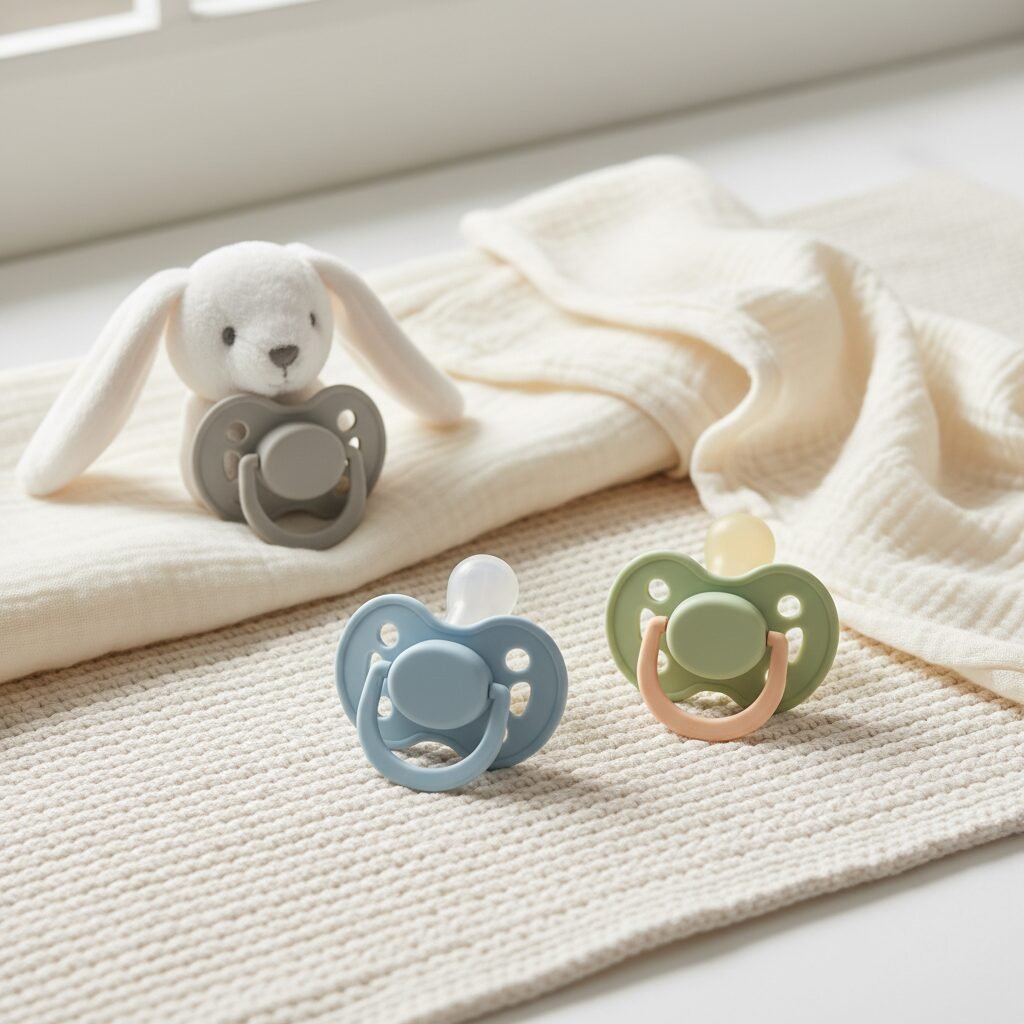
You might be surprised to learn that the pacifier itself could be the culprit. Babies can be surprisingly particular! The shape, weight, and material can make a huge difference in how well they can keep it in their mouth. If you’re constantly dealing with a rogue paci, it might be time to play the field and try a few different options.
Finding ‘The One’:
Think about it like finding the perfect pair of shoes—what works for one person might not work for another. The same goes for babies and their binkies.
- Shape: Pacifiers generally come in two shapes: orthodontic (flattened on the bottom, rounded on top) and symmetrical (like a traditional cherry nipple). Some babies, especially breastfed ones, may prefer a rounded shape that feels more like mom. Others might get a better seal with an orthodontic design that fits the natural contour of their palate.
- Weight: This is a big one for newborns! Some pacifiers, especially those with fancy designs, can be surprisingly heavy. A lighter, one-piece silicone pacifier is often easier for a tiny baby to hold onto without the help of gravity pulling it down and out.
- Material: Most pacifiers are made of either silicone or latex. Silicone is firmer and more durable, while latex is softer and more flexible. There’s no right or wrong answer here; it’s all about your baby’s preference.
Don’t be afraid to buy a few different single pacifiers to test out. You’ll know you’ve found a winner when your baby takes to it easily and it stays in for longer stretches. Here’s a quick comparison to help you navigate the options:
| Pacifier Type | Best For | Key Feature |
|---|---|---|
| Orthodontic | Supporting natural palate and jaw development. | Asymmetrical shape with a flat bottom and a rounded top. |
| Symmetrical/Rounded | Breastfed babies, as it can mimic nipple shape. | Bulbous, cherry-like shape that can be used upside down. |
| Lightweight Silicone | Newborns and babies who lose the pacifier easily. | Minimalist, one-piece design that is less likely to fall out from its own weight. |
| Latex | Babies who prefer a softer, more flexible feel. | Softer and more pliable material than silicone. |
Hack #3: The ‘Paci-Scatter’ Method for Easy Midnight Access

This hack is less about keeping the one pacifier in and more about making it incredibly easy for you (or your baby!) to find a replacement in seconds, minimizing nighttime disruptions. This is a lifesaver once your baby is a bit older and developing their fine motor skills.
How to Set Up a Pacifier Paradise:
Once your baby is around 6-8 months old and has the ability to purposefully reach for and grab objects, it’s time to implement the ‘Paci-Scatter.’ The idea is simple: turn the crib into a treasure chest where the treasure is always a pacifier.
Simply place 4-5 pacifiers in the corners of the crib before you put your baby down for the night. When they wake up looking for their soother, their searching hands are almost guaranteed to find one nearby. They’ll eventually learn to find one and pop it back in their mouth all by themselves—a huge milestone for independent sleep!
Pro-Tip: Use glow-in-the-dark pacifiers! They are a total game-changer. Just ‘charge’ them under a lamp for a few minutes before bed, and they will cast a soft, gentle glow that makes them easy for both you and your baby to spot in the dark.
A Critical Safety Note: Please, please, please only use the pacifiers themselves in the crib. Never use pacifier clips, cords, ribbons, or any other attachments during sleep. These are a serious strangulation and suffocation hazard. The ‘Paci-Scatter’ method is only safe when it involves just the pacifiers.
Hack #4: The Swaddle Assist: Using Your Baby’s Own Hands (Safely!)

For younger babies who still have a strong Moro (startle) reflex, a good swaddle is already your best friend for promoting sleep. But it can also do double duty as a pacifier-propping assistant, in the safest way possible.
The Technique:
When you swaddle your baby, instead of tucking their arms straight down by their sides, bring their hands up to rest gently on their chest or near their cheeks. A ‘hands-up’ or ‘hands-to-heart’ swaddling position is fantastic for this. When you place the pacifier in their mouth, their little hands can act as a soft, natural barrier, preventing the pacifier from easily falling out. It also mimics the position many babies love in the womb and allows them to self-soothe by bringing their hands to their mouth.
Their hands, contained within the swaddle, won’t be flailing around and accidentally knocking the pacifier out. Instead, they provide a gentle, secure boundary. It’s a simple adjustment to your swaddling technique that can make a world of difference.
Important Swaddling Safety: Always ensure the swaddle is snug but not tight. You should be able to fit two to three fingers between the swaddle and your baby’s chest. Most importantly, you must stop swaddling as soon as your baby shows any signs of attempting to roll over. This is a critical safety milestone to watch for.
Hack #5: The Stuffed Animal Sidekick (For Older Babies)

You’ve probably seen them—those cute little pacifiers attached to a small, lightweight stuffed animal. These aren’t just for looks; they are a brilliantly designed tool for this exact problem, but they come with a very important age restriction.
How They Help:
For an older baby, these ‘WubbaNub’ or ‘Dr. Brown’s Lovey’ style pacifiers are fantastic. The small plush toy attached to the end has a few key benefits:
- Gentle Weight: The animal rests gently on your baby’s chest, and its slight weight is often just enough to keep the pacifier from popping out.
- Easy to Find: It’s much easier for a baby (and you!) to find and grasp a small giraffe or elephant in the dark than a tiny, elusive pacifier.
- Easy to Manipulate: As your baby develops their motor skills, they can learn to grab the stuffed animal and guide the pacifier back into their own mouth.
This Hack is for OLDER BABIES ONLY: This is my most important safety warning. These types of pacifiers should only be introduced once your baby has excellent head and neck control and can easily move objects away from their face. The American Academy of Pediatrics (AAP) recommends a bare crib for sleep to reduce the risk of SIDS and suffocation. For this reason, many experts recommend waiting until a baby is closer to 12 months old for any kind of lovey, but at a minimum, your baby must be strong enough to push the item away. This is not a tool for a newborn. Always prioritize safe sleep guidelines.
Conclusion
There you have it—five simple, effective, and nurse-approved hacks to end the nightly pacifier hunt. From playing the gentle tug-of-war game to strategically scattering soothers like hidden treasure, there’s a solution that can work for your family. Remember to be patient with your little one and with yourself. This is often just a phase, and like all the other challenging phases of babyhood, it will pass. The goal is to find what works best for your baby’s unique preferences and developmental stage, always keeping safety as your number one priority. Here’s to more peaceful nights and fewer frantic, half-asleep searches. You’ve got this!