

Curdled Spit-Up: Why It Happens and When to Call the Doctor
You’ve just finished a feeding session. Your baby is calm, milk-drunk, and snuggled peacefully against you. You move to burp them, and a little bit of wetness comes up. But when you look, it’s not just milky liquid—it’s thicker, lumpy, and looks a lot like tiny bits of cottage cheese. Your heart does a little flip. Is that normal? Did I do something wrong?
Hey there, new parent. Take a deep breath. As a pediatric nurse and lactation consultant, I can tell you that this is one of the most common questions I get from worried parents. And the good news is, in almost every case, curdled spit-up is a completely normal—and even expected—part of being a baby. It’s a sign that their tiny digestive system is doing exactly what it’s supposed to do.
In this guide, we’re going to walk through the ‘why’ behind that cottage cheese consistency, learn how to tell the difference between a normal spit-up and something more concerning like vomiting, and give you practical, laundry-saving tips to help manage it. Most importantly, we’ll give you a clear, confidence-boosting checklist of when it’s actually time to call the doctor. Let’s get you the peace of mind you deserve.
The ‘Cottage Cheese’ Conundrum: What is Curdled Spit-Up?
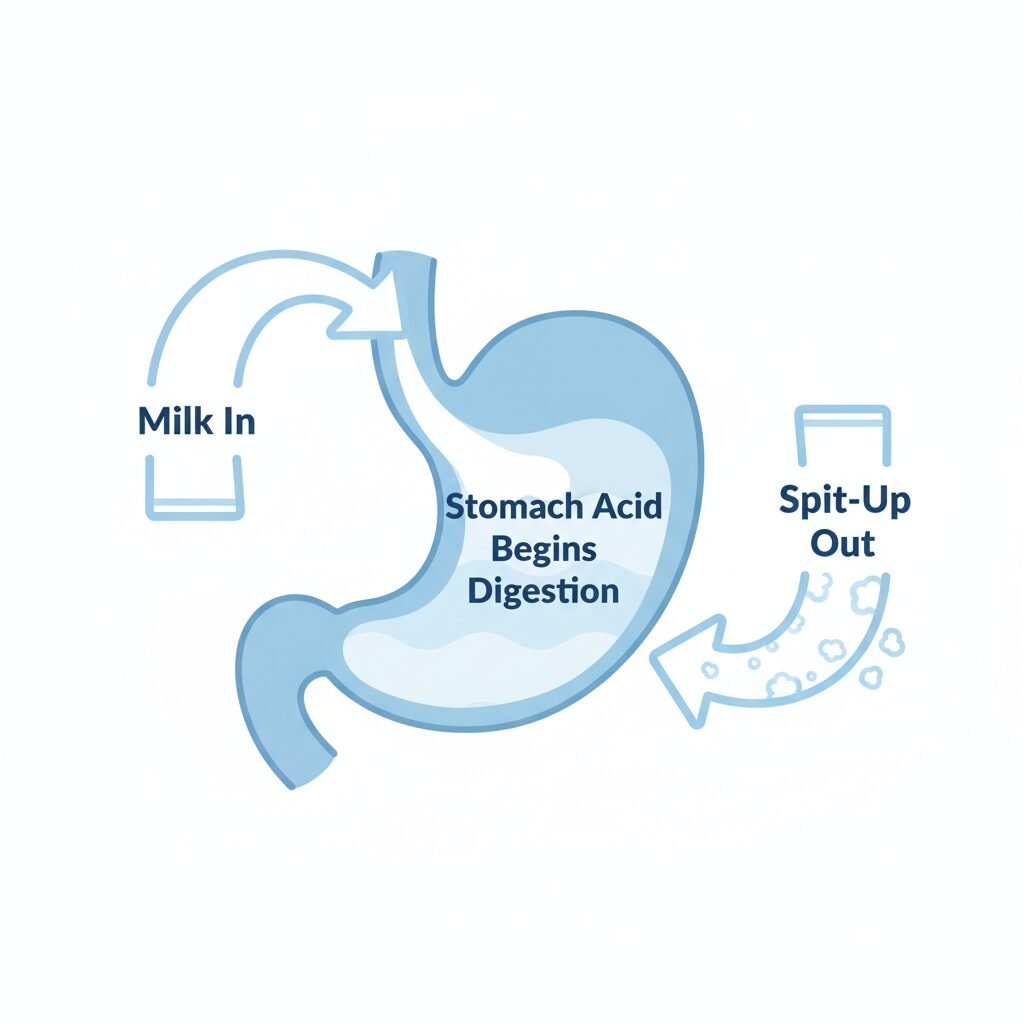
So, what’s the science behind this strange-looking spit-up? It’s actually quite simple and fascinating. Think of your baby’s stomach as a tiny little mixing bowl. When your baby drinks breast milk or formula, it lands in that bowl and immediately mixes with their natural stomach acids.
These acids are the first step in digestion. Their job is to start breaking down the milk proteins. This process is called curdling—it separates the milk into a solid part (the curds) and a liquid part (the whey). It’s the very same process used to make cheese!
If your baby spits up shortly after a feed, the milk might look pretty much the same as it did going in. However, if the milk has been sitting in their stomach for a little while (say, 30-60 minutes), the digestive acids have had time to work their magic. When that partially digested milk comes back up, it looks thick, lumpy, and curdled. The longer the milk has been in the stomach, the more ‘curdled’ it will appear.
So, far from being a sign of trouble, curdled spit-up is actually evidence that your baby’s digestive system is working correctly. It’s simply partially digested milk making a reappearance.
Spit-Up, Curds, or Vomit? Telling the Difference

Okay, so we know curdled spit-up is normal. But how do you know if it’s just spit-up or something more serious, like vomiting? This is a key distinction, because while spit-up is common, frequent vomiting can be a sign of a problem. The biggest clues are your baby’s behavior and the forcefulness of the event.
Many babies who spit up frequently are known as ‘happy spitters.’ They might spit up a little (or a lot!), but they are generally content, comfortable, and gaining weight well. For them, spit-up is more of a laundry issue than a medical one. Let’s break down the differences in a simple table:
| Characteristic | Spit-Up (Reflux) | Vomiting |
|---|---|---|
| Effort & Force | Effortless, easy flow. Often comes up with a burp or a hiccup. It just seems to dribble out. | Forceful and projectile. You’ll see their stomach muscles contract. It comes out with power. |
| Baby’s Demeanor | Baby is happy and content before, during, and after. They are unbothered. A classic ‘happy spitter.’ | Baby is distressed. They may cry, look uncomfortable, or seem sick before and after the event. |
| Volume | Usually a small amount, maybe a tablespoon or two, though it can look like much more on clothing. | Often a much larger volume, sometimes seeming like the entire feed. |
| Frequency | Can happen frequently after feeds, but the baby is otherwise thriving. | If it happens repeatedly and is forceful, it’s a reason to call the doctor. |
A Gentle Reminder: A ‘happy spitter’ is a thriving baby. As long as they are gaining weight, meeting milestones, and seem content overall, spit-up (curdled or not) is typically just a messy phase that they will outgrow.
Why is My Little One Spitting Up So Much?

If you feel like you’re constantly covered in spit-up, you’re not alone. The reason so many infants are prone to it lies in their brand-new anatomy. There are a few key factors at play:
An Immature Digestive Valve
Between the esophagus (the tube from the mouth to the stomach) and the stomach itself, there’s a muscular ring called the lower esophageal sphincter (LES). In adults, this valve is strong and stays tightly closed to keep food down. In babies, this muscle is still developing and can be a bit floppy. This makes it easy for stomach contents to flow back up, especially when their tummy is full.
A Teeny-Tiny Tummy
A newborn’s stomach is incredibly small. At birth, it’s about the size of a cherry, and by two weeks, it’s only about the size of a large egg. It’s very easy to accidentally overfill such a small space. When the stomach gets too full, the only place for the extra milk to go is back up.
Swallowing Air
Babies, especially when they are very hungry, can be enthusiastic eaters! Whether at the breast or bottle, they can swallow a surprising amount of air along with their milk. These air bubbles take up precious space in their small stomach and often bring milk up with them when they come out as a burp.
A Liquid Diet and Lots of Time on Their Back
Your baby’s diet is entirely liquid, which comes back up more easily than solid food. Combine that with the fact that they spend most of their time lying down, and you have the perfect recipe for reflux. Gravity isn’t on their side just yet!
Your Laundry-Saving Guide: Tips to Reduce Spit-Up

While you can’t always eliminate spit-up, there are definitely some simple strategies you can use to minimize the frequency and volume. Think of this as your action plan for happier feedings and less laundry!
- Keep Feedings Calm: Try to feed your baby before they become frantically hungry. When they’re crying desperately, they’re more likely to gulp air. Watch for early hunger cues like rooting, lip-smacking, or bringing hands to their mouth.
- Position Them Upright: During feedings, try to keep your baby’s head higher than their stomach. A more upright position uses gravity to help keep the milk down. Avoid feeding them while they’re slouched or lying flat.
- Burp More Often: You don’t have to wait until the end of the feeding to burp. If you’re bottle-feeding, try burping after every 1-2 ounces. If you’re breastfeeding, burp them when you switch sides. This helps release trapped air bubbles before they build up.
- Try Paced Bottle Feeding: If you’re using a bottle, look into the ‘paced feeding’ method. This involves holding the baby upright and the bottle horizontally, so the baby actively has to suck to get milk, just like at the breast. This slows them down and reduces air intake. Also, ensure the bottle nipple isn’t too fast for your baby.
- Avoid Overfeeding: Tune into your baby’s fullness cues. They’ll turn their head away, lose interest, or relax their body when they’re done. It’s better to offer smaller, more frequent feedings than to push them to finish a large bottle.
- Hold Upright After Feeds: This is a big one! After a feeding, hold your baby in an upright position (on your shoulder or sitting on your lap) for at least 20-30 minutes. This gives gravity time to help the milk settle in their stomach. Avoid bouncing or active play right after a meal.
- Check Diaper and Clothing Fit: A diaper that’s too tight or a waistband pressing on your baby’s full tummy can put pressure on their stomach and worsen spit-up. Make sure clothing is comfortably loose.
Peace of Mind Check: When to Call the Doctor

You are the expert on your baby, and your intuition is your most powerful tool. While most spit-up is harmless, there are definite red flags that warrant a call to your pediatrician. Don’t ever hesitate to reach out if you’re concerned. Here are the specific signs to watch for:
- Poor Weight Gain: Your baby isn’t gaining weight appropriately or is losing weight. This is the number one sign that spit-up might be more than just a laundry problem.
- Forceful or Projectile Vomiting: As we discussed, consistent, forceful vomiting (not just a gentle spit-up) is a concern.
- Unusual Spit-Up Color: While milky or curdled is normal, you should call the doctor if the spit-up is green or yellow (which could indicate a blockage), or if it contains red or brown streaks (which could look like blood or coffee grounds).
- Signs of Pain or Extreme Discomfort: Your baby seems to be in pain during or after feedings. This can look like inconsolable crying, screaming, or significant arching of their back.
- Refusing to Eat: Your baby is consistently refusing the breast or bottle or seems to be gagging or choking during feeds.
- Signs of Dehydration: This is a crucial one. Call your doctor if you notice fewer than six wet diapers in a 24-hour period, a sunken soft spot (fontanelle) on their head, crying without tears, or extreme sleepiness or lethargy.
- Breathing Problems: Any signs of wheezing, chronic coughing, or difficulty breathing should be addressed immediately.
Trust Your Gut: If you feel in your heart that something is wrong, please call your healthcare provider. It is their job to help you. There is no such thing as a ‘silly question’ when it comes to your baby’s health and your peace of mind.
Conclusion
Navigating the world of newborn care is filled with questions, and spit-up is one of the messiest and most common puzzles you’ll face. The key takeaway is this: curdled spit-up is simply a sign of normal digestion at work. By learning to distinguish between a ‘happy spitter’ and a baby showing signs of distress, you can trade worry for confidence.
Remember the simple tips—keep feedings calm, burp often, and enjoy those upright snuggles for 20-30 minutes after a meal. These small adjustments can make a big difference for both you and your baby.
Most of all, be gentle with yourself. You are learning and growing right alongside your little one. This phase of endless burp cloths and extra laundry is temporary. Trust your instincts, don’t hesitate to reach out for support, and know that you are doing a fantastic job. You’ve got this.