

Why Your Newborn Has Hiccups After Every Feed (And When To Worry)
You’ve just finished a successful feeding session. Your little one is milk-drunk, content, and snuggled peacefully in your arms. You’re basking in the quiet moment when, suddenly… hic! …hic! …hic! The familiar, rhythmic chirps begin. If you find yourself wondering why your newborn seems to get hiccups after nearly every meal, take a deep breath and know that you are in very good company. This is one of the most common quirks of being a brand-new human!
As a pediatric nurse and lactation consultant, I’ve reassured thousands of new parents about these tiny spasms. In almost every case, hiccups are a completely normal and harmless reflex. They are caused by the immaturity of a baby’s internal systems, particularly the diaphragm muscle. This article is your friendly, evidence-based guide to understanding the hiccup phenomenon. We’ll dive into the simple science behind them, explore the common feeding-related triggers, share gentle and effective ways to provide relief, and—most importantly—clarify the very rare signs that might suggest it’s time to give your doctor a call. Let’s soothe those hics, and your worries, together.
What’s Really Happening During a Hiccup? The Science Made Simple
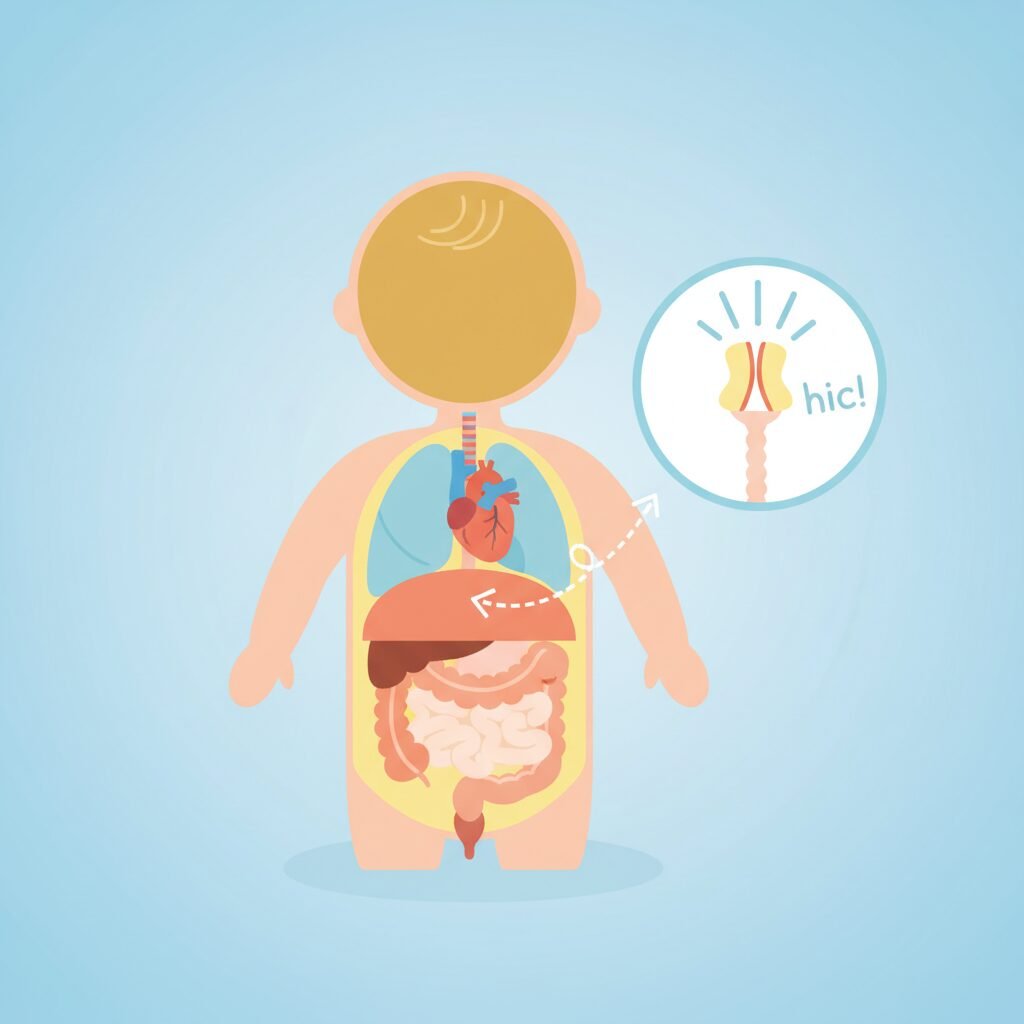
It might seem like a big mystery, but the mechanism behind a hiccup is actually quite straightforward. Think of it as a tiny, temporary glitch in your baby’s developing nervous system. It all comes down to a large, dome-shaped muscle at the base of the lungs called the diaphragm.
Here’s the step-by-step breakdown:
- The Diaphragm’s Day Job: Normally, the diaphragm contracts and pulls down smoothly to help your baby breathe in, and then relaxes to help them breathe out. It’s a steady, reliable rhythm.
- An Irritation Occurs: Sometimes, this muscle gets irritated or stimulated. For newborns, the most common irritant is a full stomach from feeding, which physically pushes up on the diaphragm from below. Swallowing too much air can also be a culprit.
- The Spasm: In response to this irritation, the diaphragm contracts suddenly and involuntarily. It’s a quick, jerky spasm instead of its usual smooth movement.
- The ‘Hic’ Sound: This sudden contraction forces air into the lungs. As a defense mechanism, the opening between the vocal cords (the glottis) snaps shut to stop the rush of air. It’s this abrupt closure that produces the characteristic “hic!” sound.
So, why are newborns so prone to this? Their entire system, including the phrenic nerve that controls the diaphragm, is still maturing. The signals aren’t as refined as an adult’s, making the diaphragm more susceptible to these little spasms. It’s not a sign of a breathing problem; it’s just a sign of a brand-new system getting its bearings. In fact, some researchers believe that hiccups in the womb and in newborns may even play a role in strengthening the breathing muscles for life outside. So, in a way, those little hics are a productive, albeit noisy, part of your baby’s development.
Common Culprits: Why Feeding Time Often Triggers Hiccups
It’s no coincidence that hiccups frequently start up right after a good meal. The very act of feeding involves a lot of complex coordination for a baby, and several factors can irritate that sensitive diaphragm. Let’s look at the most common triggers.
Swallowing Too Much Air
This is probably the number one cause of post-feeding hiccups. When babies swallow excess air along with their milk, it can create air pockets in the stomach. This not only contributes to gas and fussiness but also causes the stomach to expand more than it needs to, putting pressure on the diaphragm.
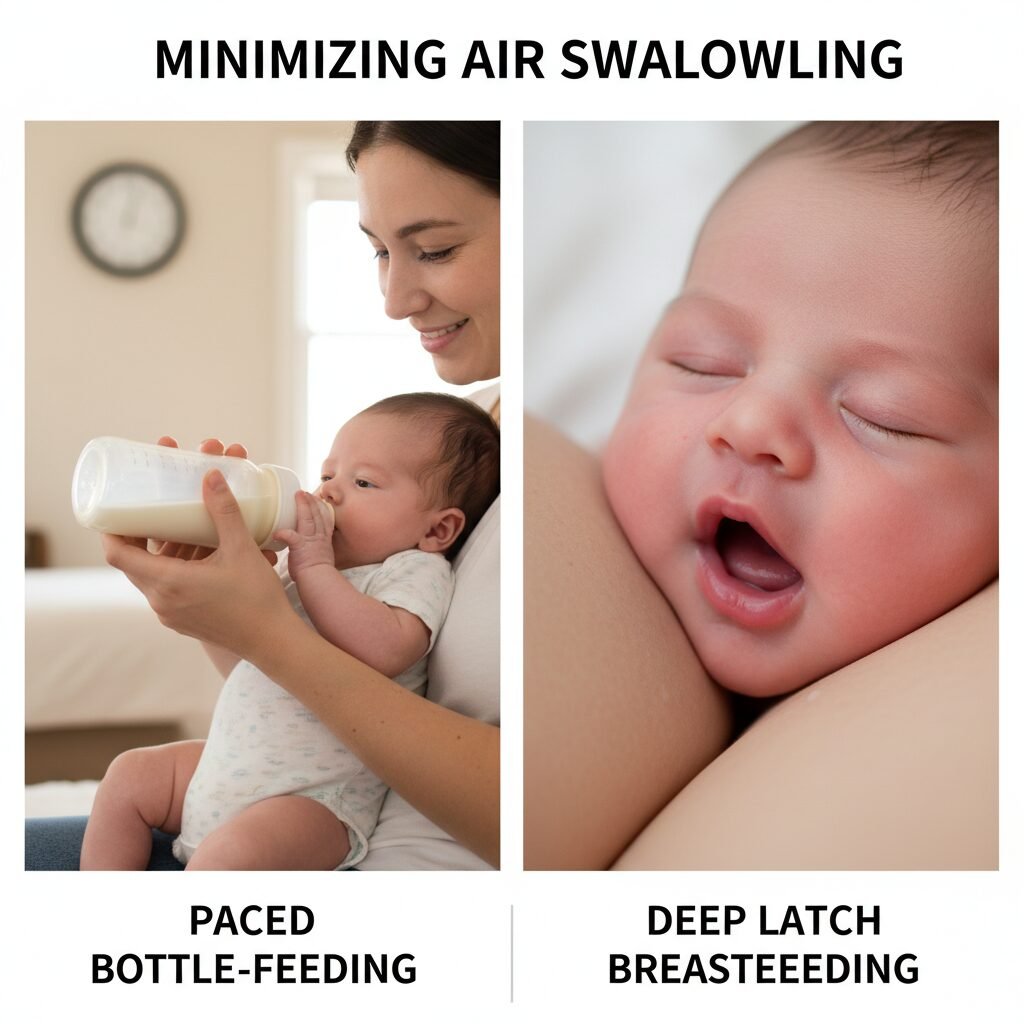
- For Bottle-Fed Babies: This can happen if the nipple flow is too fast, forcing them to gulp. It can also occur if the bottle is held at an angle that allows air to enter the nipple. Using bottles designed to reduce air intake (like those with vents or angled tops) can be a game-changer.
- For Breastfed Babies: A shallow latch is often the culprit. If the baby isn’t taking in a large mouthful of breast tissue, they may slurp in air around the edges of their mouth. You might hear a clicking sound, which is a tell-tale sign of air swallowing.
Eating Too Quickly or Too Much
A baby’s tummy is tiny—about the size of a cherry at birth, growing to the size of an egg by day 10. When they feed very quickly or take in a large volume of milk, their stomach distends rapidly. This sudden expansion can easily irritate the diaphragm sitting right above it, triggering a bout of hiccups.
Gastroesophageal Reflux (GER)
This sounds serious, but it’s incredibly common. GER is simply the medical term for when stomach contents (milk and stomach acid) flow back up into the esophagus. The valve between the esophagus and the stomach is still developing and isn’t always strong enough to keep everything down. When this acidic mixture flows back, it can irritate the nerve endings in the esophagus, which in turn can trigger spasms in the nearby diaphragm.
A Quick Note: It’s important to distinguish between simple GER (spitting up, hiccups) and Gastroesophageal Reflux Disease (GERD). GER is a laundry problem; GERD is a medical problem that involves pain, poor weight gain, or breathing issues. We’ll cover this more in the ‘When to Worry’ section.
Soothing the Hics: Gentle and Safe Techniques That Actually Work

While hiccups usually don’t bother your baby one bit, they can sometimes be disruptive. If you want to help them settle, there are several gentle and safe methods you can try. The goal is to help relax the diaphragm or release trapped air.
- Take Burping Breaks: Don’t wait until the entire feed is over to burp your baby. If you’re bottle-feeding, try pausing to burp after every 1-2 ounces. If you’re breastfeeding, burp them when you switch from one breast to the other. This prevents a large buildup of air in their tummy. Try different positions—over your shoulder, sitting upright on your lap while you support their head, or lying tummy-down across your knees.
- Adjust Their Position: Gravity is your friend! Keeping your baby in a more upright position during feeds can help milk travel down more smoothly and make it harder for air to get trapped. After the feed, continue to hold them upright for at least 20-30 minutes. This can also help reduce spitting up. Avoid bouncing them or engaging in vigorous play right after a meal.
- Focus on a Good Latch or Bottle Technique: For breastfeeding, work on achieving a deep, comfortable latch. If you’re unsure, a lactation consultant can be an invaluable resource. For bottle-feeding, look into ‘paced bottle feeding.’ This involves holding the bottle horizontally to the floor, which requires the baby to actively suck to get milk, mimicking breastfeeding and giving them more control over the flow. This slows them down and reduces air intake.
- Offer a Pacifier: The rhythmic sucking motion required for a pacifier can have a wonderfully calming effect on the diaphragm. The act of sucking can help to reset its spasming rhythm. This is a simple trick that often works wonders.
- Wait It Out: Honestly, sometimes the best course of action is to do nothing at all. If the hiccups aren’t bothering your baby, it’s perfectly fine to let them run their course. They will stop on their own.
Important Safety Warning: Please ignore any old wives’ tales you might hear about curing hiccups. Never try to scare your baby, press on their eyeballs, pull their tongue, or make them drink water. These methods are ineffective and potentially dangerous for a newborn. Stick to the gentle, proven techniques above.
When to Worry: Red Flags to Discuss with Your Pediatrician

For the vast majority of newborns, hiccups are just a noisy, harmless part of their daily life. But as a new parent, it’s natural to worry. Your intuition is powerful, and it’s always better to be safe and informed. While rare, persistent or severe hiccups can sometimes be a sign of an underlying issue, most often significant Gastroesophageal Reflux Disease (GERD).
It’s time to schedule a visit with your pediatrician if you notice hiccups happening alongside any of the following symptoms:
- Significant Distress: The hiccups seem forceful and make your baby cry, scream, or seem to be in pain. Normal hiccups don’t bother babies, but painful ones are a red flag.
- Frequent, Forceful Spitting Up or Vomiting: We’re not talking about a little dribble of milk. This refers to large-volume spit-ups after most feeds, or projectile vomiting that shoots out with force.
- Arching the Back During or After Feeds: This is a classic sign of pain from reflux. The baby may stiffen their body and arch their back as if trying to get away from the discomfort in their esophagus.
- Poor Weight Gain: If your baby isn’t gaining weight appropriately, it could mean they are spitting up too much of their food or that feeding is too uncomfortable for them to eat enough. Your pediatrician tracks weight closely at every well-child visit for this very reason.
- Chronic Coughing, Gagging, or Wheezing: If your baby is frequently coughing, choking, or sounds congested during or after feeds, it could be a sign that some of the refluxed milk is irritating their airway.
- Hiccups Interfering with Life: If the hiccups are so constant and prolonged that they regularly interrupt your baby’s sleep or make them too fussy to feed properly, it’s worth discussing.
Remember, you are your baby’s best advocate. Calling your doctor’s office is never an overreaction. They are there to answer your questions and provide reassurance or, if needed, a treatment plan. Most often, they’ll be able to tell you that everything is perfectly normal, giving you valuable peace of mind.
Conclusion
So, the next time your little one starts that familiar hic… hic… hic… after a feed, you can smile. In all likelihood, it’s just a sign of their brand-new, developing body at work—a quirky, temporary, and completely normal part of the newborn package. Most of the time, a good burp, some upright cuddle time, or simply a little patience is all that’s needed.
The journey of new parenthood is filled with questions and learning curves. By understanding the simple mechanics behind hiccups and knowing the handful of signs that warrant a doctor’s visit, you are empowered with knowledge and confidence. Trust your instincts. If something ever feels off, you should never hesitate to reach out for professional advice. You are doing an incredible job navigating these precious early days. Cherish the quiet moments, the milky smiles, and yes, even the sweet, rhythmic sound of your baby’s hiccups.