

Nipple Confusion Is Real: How to Switch Between Breast and Bottle Flawlessly
Hey there, new parent. Take a deep breath. You’re navigating one of the most beautiful and challenging times of your life, and feeding your baby is right at the top of that list. You’ve probably heard whispers (or worried shouts) about something called ‘nipple confusion.’ It’s a term that can strike fear into the heart of any parent hoping to combine breastfeeding and bottle-feeding. You wonder, ‘If I give a bottle, will my baby reject me?’ or ‘Am I setting myself up for failure?’
Let me reassure you right now: with a little knowledge and the right techniques, you can absolutely have the best of both worlds. As a pediatric nurse and lactation consultant, I’ve helped thousands of families find a feeding rhythm that works for them. Nipple confusion isn’t a myth, but it’s also not an automatic sentence for the end of your breastfeeding relationship. It’s more of a ‘flow preference.’ Babies are smart, and they quickly figure out which method delivers milk faster and with less effort.
This guide is your roadmap. We’re going to walk through what nipple confusion really is, the perfect time to introduce a bottle, and the game-changing techniques that mimic breastfeeding so closely, your baby can switch back and forth like a pro. Let’s get you feeling confident and empowered, shall we?
What Exactly Is ‘Nipple Confusion’? (And Why It’s Really About Flow)

First things first, let’s demystify this scary-sounding term. ‘Nipple confusion’ isn’t about your baby being confused by the shape of a nipple versus a bottle teat. It’s almost always about the difference in milk flow and the mechanics of drinking.
The Breastfeeding Workout
Think about what your baby has to do to get milk from the breast:
- A Wide Latch: They need to open their mouth super wide to take in not just the nipple, but a good portion of the areola.
- Active Sucking: They use their tongue and jaw in a complex, wave-like motion to draw the nipple back, create a vacuum, and actively extract milk.
- Variable Flow: The milk doesn’t just pour out. They have to work for the ‘let-down’ reflex, and then the flow ebbs and flows. They are in complete control of the pace.
The Bottle-Feeding Shortcut
Now, compare that to a traditional bottle:
- A Narrow Latch: They only need to latch onto the tip of the silicone teat.
- Passive Drinking: Gravity does most of the work. Milk drips out with very little effort. They don’t have to use those same complex muscles.
- Constant Flow: The flow is steady and fast. It can feel like trying to drink from a firehose for a tiny baby used to the breast’s rhythm.
See the difference? A baby might develop a preference for the fast, easy flow of the bottle. Why do a full workout when you can get a meal delivered instantly? This preference can lead to frustration at the breast, where they have to work harder. They might fuss, pull away, or have a shallow latch because they’re trying to drink from the breast like it’s a bottle. That, my friends, is what we call nipple confusion or flow preference.
A Word of Reassurance: This is not your fault! It’s simply a matter of physics and baby instincts. Understanding the ‘why’ is the first step to mastering the ‘how’ of combination feeding.
Timing is Everything: When and How to Introduce the Bottle

You’re eager to have a little flexibility, and that’s completely valid! Maybe you’re heading back to work, or you’d just love for your partner to be able to handle a feeding so you can take a much-needed nap. But when it comes to introducing a bottle, timing can make all the difference.
The Golden Window
Most lactation experts, including myself, recommend waiting until your breastfeeding relationship is well-established. What does that mean? It means your milk supply is regulated, and your baby is latching well and gaining weight consistently. For most families, this sweet spot is around 3 to 6 weeks postpartum.
- Introducing too early (before 3 weeks): Can interfere with establishing your milk supply, which is based on your baby’s demand. It can also increase the likelihood of flow preference before your baby has mastered breastfeeding.
- Introducing too late (after 6-8 weeks): Some babies become more set in their ways and may be more likely to refuse a bottle entirely if they’ve never had one.
Of course, every family is different. If you need to introduce a bottle earlier for medical reasons or due to separation, don’t panic! The techniques we’ll discuss next are even more crucial in those situations.
Making the First Introduction a Success
Think of this as a friendly meeting, not a high-pressure performance. Here’s how to set the stage for a positive first experience:
- Choose a Calm Time: Don’t wait until your baby is frantically hungry. A happy, relaxed baby is much more receptive to trying something new. An hour after a good breastfeed is often a great time.
- Let Someone Else Do It: Your baby associates you with the warmth, smell, and comfort of breastfeeding. It can be helpful to have your partner or another caregiver offer the first bottle while you’re in another room.
- Start Small: You don’t need a full feed. Just offer a small amount of pumped breast milk (0.5 to 1 ounce) so there’s no pressure and no wasted ‘liquid gold.’
- Warm it Up: Warm the milk to body temperature by placing the bottle in a bowl of warm water. Test it on your wrist to make sure it’s not too hot.
- Stay Positive: Babies pick up on our stress. Keep the atmosphere light and loving. If they refuse, don’t force it. Just smile, cuddle them, and try again another day.
The Paced Bottle-Feeding Method: Your Secret Weapon
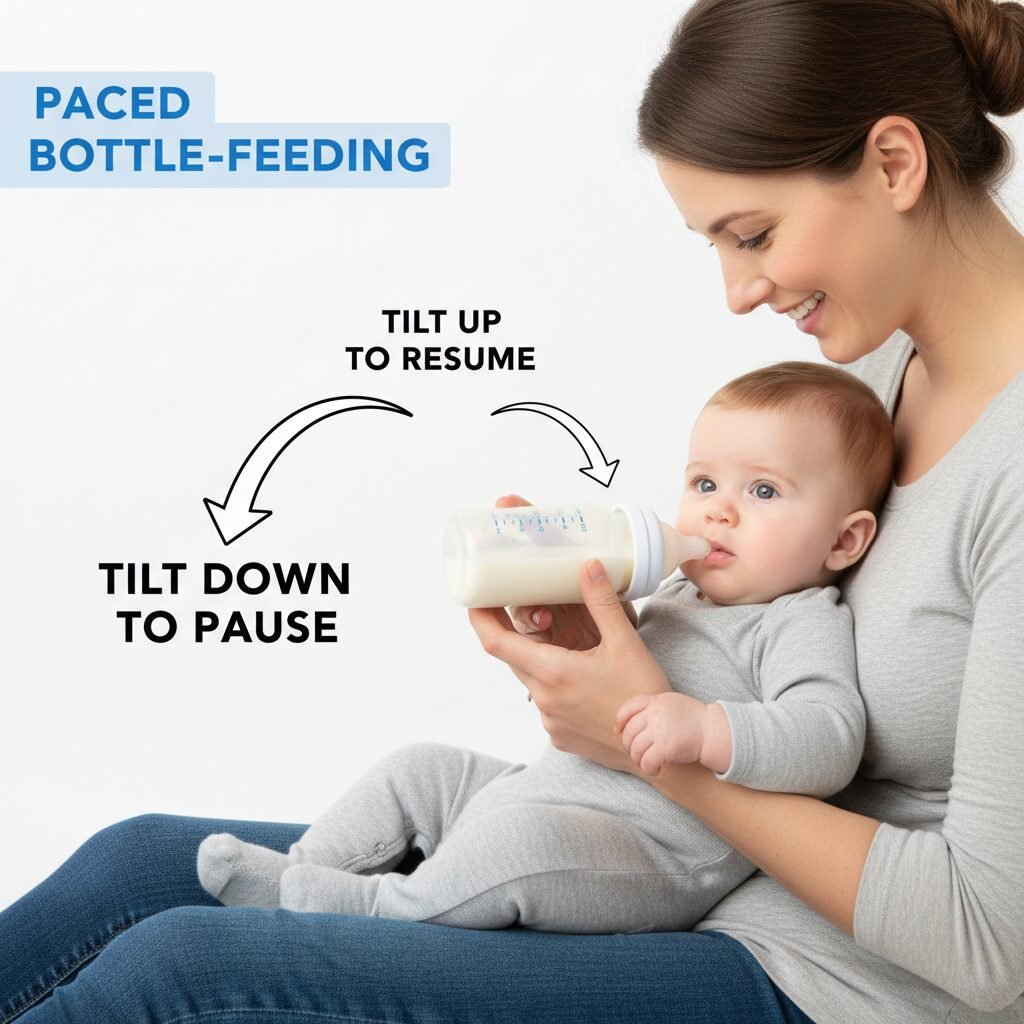
This technique is a complete game-changer. Paced bottle-feeding is a method that mimics the rhythm and effort of breastfeeding. It puts the baby in control, prevents them from guzzling, and makes switching back to the breast a much smoother transition. It is the single most important strategy for successful combination feeding.
Step-by-Step Guide to Paced Bottle-Feeding:
- Positioning is Key: Hold your baby in an upright, seated position on your lap. This is crucial! Laying a baby back with a bottle encourages milk to pour down their throat, which is exactly what we want to avoid.
- Tickle their Lips: Just like you would to encourage a wide latch at the breast, tickle your baby’s lips with the bottle nipple. Wait for them to open their mouth wide before inserting the nipple.
- Keep the Bottle Horizontal: This is the magic step. Hold the bottle parallel to the floor. This way, milk only flows into the nipple when your baby actively sucks. Gravity isn’t doing the work for them.
- Watch for Cues: Let your baby suck for about 20-30 seconds (a few good, rhythmic swallows). Then, gently tilt the bottle downwards (tipping the nipple up) to pause the flow of milk. This mimics the natural pauses that happen during breastfeeding.
- Let Baby Lead: After a brief pause, let your baby resume sucking when they’re ready. Continue this pattern of ‘suck-pause-suck’ throughout the feeding.
- Switch Sides: Halfway through the feed, switch your baby to your other arm. This mimics feeding on both breasts and provides different visual stimulation.
A typical bottle-feed using this method should take about 15-20 minutes, similar to a breastfeeding session. If your baby is chugging a bottle in 5 minutes, it’s a sign the flow is too fast and it’s time to slow things down.
Safety Warning: Never prop a bottle. Always hold your baby during feedings. This is important for safety to prevent choking and also for bonding.
Choosing the Right Gear: Do Bottles and Nipples *Really* Matter?

Walk down any baby aisle, and you’ll be bombarded with bottles claiming to be ‘just like the breast.’ While marketing can be persuasive, remember this: your feeding technique (paced bottle-feeding) is far more important than the specific brand of bottle you use.
That said, certain features can make things easier. The number one thing to look for is a slow-flow nipple. Always start with the slowest flow available (often labeled ‘preemie’ or ‘newborn’ or ‘size 0/1’). You may never need to move up in size! The goal is to make the baby work for the milk, just like at the breast.
Here’s a quick look at common nipple shapes and features to help you decide:
| Nipple Type | Key Features | Best For Babies Who… |
|---|---|---|
| Traditional / Narrow | Bell-shaped, narrow base. Simple and widely available. | Are less picky and easily switch between different shapes. |
| Wide-Neck / ‘Breast-Like’ | Wide, sloped base designed to encourage a wider latch. | Are primarily breastfed, as it can help promote a similar mouth shape. |
| Orthodontic | Flattened on one side, designed to fit the baby’s palate. | May have latching difficulties or a high palate. |
| Vented Systems | Features vents, straws, or liners to reduce air intake. | Are prone to gas, colic, or reflux. |
My advice? Don’t buy a dozen of one type. Get a single bottle from two or three different brands and see what your baby prefers. Remember, the ‘best’ bottle is the one your baby takes well while using the paced-feeding method. If your baby is happy with a simple, inexpensive bottle and a slow-flow nipple, there is absolutely no need to switch to a fancier, more expensive option.
Troubleshooting: When Your Baby Refuses the Bottle (or the Breast!)

Even with the best preparation, you might hit a snag. Your baby is a tiny human with big opinions, after all! Don’t despair. Here are some common challenges and gentle strategies to overcome them.
Help! My Baby Flat-Out Refuses the Bottle!
This is so common, especially if you waited a bit longer to introduce it. Try these tricks:
- Try Different Temperatures: Some babies prefer milk warmer than body temperature, while others surprisingly like it cooler. Experiment safely.
- Move Around: Try feeding while walking, swaying, or bouncing gently. The motion can be distracting and soothing enough for them to accept the bottle.
- Offer it When Drowsy: A sleepy baby is often less resistant. Try offering the bottle right as they are falling asleep or just waking up.
- The ‘Bait and Switch’: Start by nursing for a minute, and once they are relaxed and sucking, quickly unlatch and slip the bottle nipple into their mouth.
- Try Different Nipples: This is where having a couple of bottle types comes in handy. Sometimes a different shape or texture is all it takes.
Help! My Baby Now Prefers the Bottle and Fusses at the Breast!
This is that ‘flow preference’ we talked about. It’s time to make the breast more appealing and the bottle a little less so. Here’s your plan:
- Go Back to Basics: Dedicate a weekend to focusing on breastfeeding. Lots of skin-to-skin contact, frequent nursing sessions (even short ones), and cozy cuddles can help you reconnect.
- Nurse in a ‘Dreamy’ State: Offer the breast when your baby is sleepy, just like with bottle refusal. They’re more likely to latch on instinct.
- Strictly Enforce Paced Feeding: Ensure that every single bottle feed is done using the paced method. Make them work for that bottle milk! Double-check that you are using the slowest flow nipple possible.
- Hand Expression: Before latching, express a little milk onto your nipple. This gives your baby an immediate reward and can encourage them to latch on and keep sucking to trigger a let-down.
Whatever challenge you’re facing, the key is patience and consistency. It can take time to find your rhythm. Stay calm, keep trying different gentle approaches, and don’t hesitate to reach out to a lactation consultant for personalized support.
Conclusion
There you have it. You are now equipped with the knowledge and tools to confidently navigate the world of combination feeding. The most important things to remember are to wait for the golden window of 3-6 weeks if possible, to always use the paced bottle-feeding method, and to start with the slowest flow nipple you can find.
Remember that every feeding journey is unique. There is no ‘one-size-fits-all’ solution, and there is no room for guilt. Whether you are breastfeeding, bottle-feeding, or a combination of both, you are providing your baby with the nourishment and love they need to thrive. Be patient with your baby, and most importantly, be patient and kind to yourself.
You’re doing an amazing job. Trust your instincts, embrace the flexibility that combination feeding can offer, and cherish these precious moments. You’ve got this.