

The “Magic Button” Technique To Relieve Newborn Gas Instantly
That sound. The one that starts as a little whimper, escalates into a full-body squirm, and then erupts into a high-pitched, inconsolable cry. Your heart sinks. You’ve fed them, changed them, swaddled them, and rocked them. What could it possibly be? More often than not, the culprit is a tiny, trapped gas bubble causing a world of discomfort for your little one. As a pediatric nurse and lactation consultant, I’ve sat with hundreds of exhausted, worried parents who would do anything to ease their baby’s pain. It’s a feeling of helplessness that is all too common in those early weeks.
Parents often hear about bicycle legs and burping, but what if I told you there was another tool for your arsenal? A simple, gentle technique that many parents call the “magic button.” Now, let’s be clear: it’s not actual magic. It’s a technique based on principles of infant massage and acupressure, designed to stimulate the digestive tract and help that stubborn gas move along. It’s a loving touch with a purpose. In this guide, I’m going to walk you through everything you need to know—from why your baby is so gassy in the first place, to a step-by-step tutorial on using the ‘magic button,’ and what to do when it feels like nothing is working. Take a deep breath. You’re in the right place, and you’re doing a great job. Let’s get your baby (and you) some relief.
Decoding the Cries: Why Newborns Are So Prone to Gas
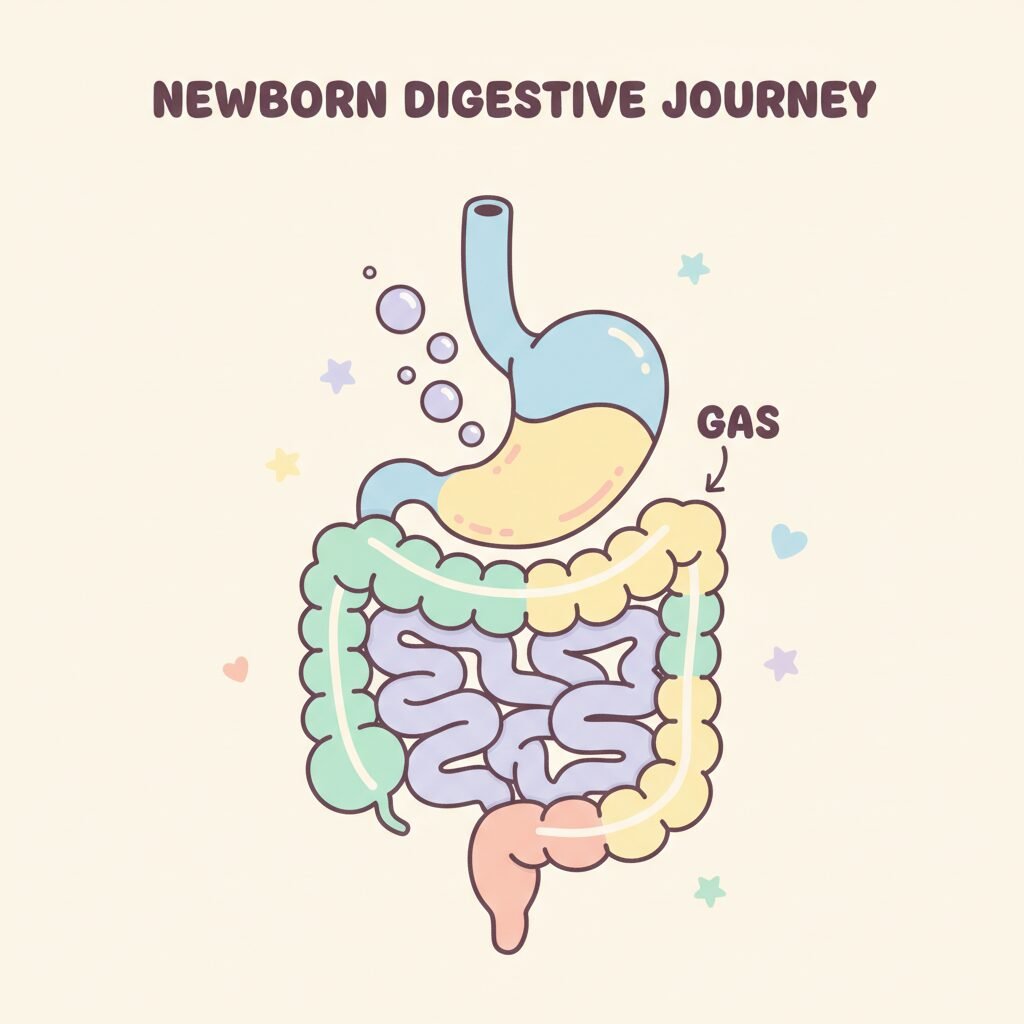
Before we jump into the solutions, it’s helpful to understand why your tiny baby seems to be a little gas-making machine. I promise, it’s not something you’re doing wrong! A newborn’s digestive system is a brand-new, beautiful work in progress. It’s like a factory that has just opened; the machinery is all there, but the workers are still learning their jobs and the conveyor belts are still a bit jerky. This immaturity is the primary reason gas becomes a frequent, and often loud, visitor.
Think about everything their little tummy is learning to do: digest milk (which is a complex substance!), coordinate the muscles for moving food along, and process waste. It’s a tall order! Here are some of the most common reasons gas builds up:
- Swallowing Air: This is the number one cause. Babies swallow air when they’re crying, and especially during feedings. For bottle-fed babies, a poor latch on the nipple or the wrong flow speed can cause them to gulp air. For breastfed babies, a shallow latch or a fast milk let-down can have the same effect.
- An Immature Digestive System: As we mentioned, their intestines are still developing the coordinated muscle contractions (called peristalsis) needed to move food and gas through efficiently. Sometimes, things just get a little backed up.
- Food Sensitivities: While less common, some babies can be sensitive to proteins in formula or something in a breastfeeding mother’s diet. Dairy is a frequent culprit. This can cause excess gas and discomfort. If you suspect this, it’s a conversation to have with your pediatrician.
- Normal Digestion: The very process of breaking down lactose (the sugar in milk) naturally produces gas in the intestines. For a tiny system, even this normal amount can feel like a lot.
Recognizing the signs of gas pain can also help you feel more in control. Look for squirming, pulling their legs up to their chest, a hard or bloated-looking tummy, lots of fussing (especially after a feed), and, of course, passing gas. Understanding these root causes helps us see that gas is a normal part of being a baby, and our job isn’t to eliminate it entirely, but to help them feel more comfortable as their body learns the ropes.
Finding and Using the ‘Magic Button’: Your Step-by-Step Guide

Alright, let’s get to the main event! This technique is all about applying gentle, targeted pressure to help stimulate your baby’s lower intestine, encouraging trapped gas to continue its journey out. The key is to be calm, gentle, and patient. Your baby can sense your stress, so create a peaceful environment first.
Here is your step-by-step guide to finding and using the ‘magic button’ for gas relief:
-
Prepare Your Space and Your Baby
Choose a time when your baby is calm but fussy, not in a full-blown scream (if possible). Waiting about 30 minutes after a feed is ideal. Lay them down on a comfortable, flat surface like their changing mat or your bed. Dim the lights, maybe play some soft music. Rub your hands together to warm them up. You can use a small amount of a baby-safe coconut or olive oil on your fingertips to reduce friction, but it’s not necessary.
-
Locate the ‘Magic Button’
The ‘magic button’ isn’t one single point, but rather a key area. The most effective spot is an acupressure point known as ‘Conception Vessel 6’ or the ‘Sea of Qi’. Don’t worry about the fancy name! To find it, measure about two or three of your finger-widths directly below your baby’s navel. It’s right there in the center of their lower belly. This area corresponds with the lower intestines, where gas often gets stuck before making its final exit.
-
Apply Gentle, Rhythmic Pressure
Using the pads of your index and middle fingers, or your thumb, press down gently on this spot. How gentle? Imagine the pressure you could comfortably apply to your own closed eyelid. It’s very light. You are not trying to push deep into their belly. Once you’ve applied this gentle pressure, begin moving your fingers in a slow, clockwise circular motion. The clockwise direction is important because it follows the natural path of digestion in the large intestine.
A Quick Safety Note: Always use gentle pressure. You should be able to comfortably press on your own closed eyelid with the same amount of force. If your baby seems distressed, cries harder, or tenses up, stop immediately. This should be a soothing, not a stressful, experience.
-
Continue and Observe
Continue this gentle, circular massage for one to three minutes. Hum, sing, or talk soothingly to your baby during the process. You are letting them know they are safe and you are there to help. You may hear some gurgling in their tummy—that’s a great sign! You might even be rewarded with a toot or two. If so, success! You can stop or continue for a few more moments if they seem to be enjoying it.
You can repeat this technique a few times a day as needed, but avoid doing it right after a feed when their tummy is full. It’s a wonderful way to connect with your baby while providing tangible relief.
Beyond the Button: A Toolkit of Proven Gas-Relief Techniques

While the ‘magic button’ is a fantastic tool, it’s always good to have a few other tricks up your sleeve. Every baby is different, and what works one day might not work the next. Building a full gas-busting toolkit will make you feel prepared for anything. Here are some other tried-and-true methods that pediatric nurses have recommended for decades.
Bicycle Legs & Tummy-to-Chest
These simple movements use gentle compression to physically move gas bubbles along. While your baby is on their back, gently grasp their ankles and move their legs in a bicycling motion. Go slowly and rhythmically. After about 10-15 ‘pedals,’ gently press both of their knees up toward their tummy and hold for about 10 seconds. This can provide an immediate release of gas. Repeat this sequence a few times.
The ‘Colic Carry’ or ‘Gas Hold’
This is a magical hold for many gassy babies. Drape your baby, tummy-down, over your forearm, with their head nestled in the crook of your elbow and their legs straddling your hand. The gentle pressure of your arm against their belly can feel incredibly soothing and help release gas. You can walk around and gently sway while holding them this way.
Burping Like a Pro
Sometimes we need to go back to basics. Effective burping is your first line of defense! Don’t just give a few pats and call it a day. Try different positions. The classic ‘over-the-shoulder’ is great, but also try sitting your baby upright on your lap, supporting their chin and chest with one hand, while patting their back with the other. Make sure to burp not just after a feed, but also during, especially if they are gulping. For bottle-fed babies, try burping after every ounce or two.
Considering Gas Drops and Gripe Water
You’ll see these on every pharmacy shelf, but what are they? Gas drops typically contain simethicone, a medication that breaks up large gas bubbles into smaller, easier-to-pass ones. It’s not absorbed into the bloodstream and is generally considered safe. Gripe water is an herbal remedy, and its ingredients can vary widely (dill, ginger, fennel). Its effectiveness is more anecdotal than scientifically proven.
Talk to Your Doctor First! Before giving your baby any drops, supplements, or gripe water, it is absolutely essential to have a conversation with your pediatrician. They can advise you on proper dosage and ensure there isn’t another underlying issue causing your baby’s discomfort.
| Technique | Best For | How It Works |
|---|---|---|
| Bicycle Legs | Active relief when baby is fussy | Physical movement and compression to expel gas. |
| Colic Carry | Soothing a very fussy baby while moving around | Gentle, constant pressure on the abdomen. |
| Proactive Burping | Preventing gas buildup during feeds | Releases swallowed air before it travels to the intestines. |
| Gas Drops (Simethicone) | Breaking down existing, painful gas bubbles | Chemical action that reduces the surface tension of bubbles. |
When to Worry: Recognizing Signs That It’s More Than Just Gas

As new parents, it’s easy to worry that every cry is a sign of something serious. Let me reassure you: in the vast majority of cases, fussiness and gas are just a normal part of the newborn phase. However, it’s also crucial to trust your parental intuition. You know your baby better than anyone. If it feels like something is ‘off’ or their discomfort seems extreme, it’s never wrong to seek medical advice. Peace of mind is priceless.
Your job is to comfort your baby, not to diagnose them. That’s what your pediatrician is for. Call your doctor’s office if your baby’s gas and fussiness are accompanied by any of the following red flags:
- Fever: A rectal temperature of 100.4°F (38°C) or higher in a newborn is always a reason to call the doctor immediately.
- Changes in Stool: Any sign of blood in the stool, mucus, or severe, watery diarrhea warrants a call.
- Vomiting: We’re not talking about a little spit-up. If your baby is projectile vomiting (forcefully shooting milk across the room) or the vomit is green or yellow, call your pediatrician.
- Poor Weight Gain: If your baby isn’t gaining weight appropriately, it could indicate they’re having trouble digesting and absorbing nutrients, and their fussiness may be related to hunger or an underlying issue.
- Extreme Irritability: All babies are fussy, but if your baby is truly inconsolable for hours on end, and none of the soothing techniques work even a little, it’s worth getting them checked out to rule out other problems.
- Refusal to Eat: If your gassy baby is also starting to refuse the breast or bottle, it’s time to call the doctor.
- Lethargy or Weakness: If your baby seems unusually sleepy, weak, or floppy, seek medical attention.
Trust Your Gut: This list is a guide, not an exhaustive encyclopedia. If you are worried, for any reason at all, please pick up the phone. Your pediatrician’s office is there to support you and answer your questions. There is no such thing as a ‘silly question’ when it comes to your baby’s health.
Navigating these challenges is part of the journey. By learning to differentiate between normal gassiness and potential warning signs, you empower yourself to care for your baby with confidence and love.
Conclusion
Navigating the world of newborn cues and cries can feel like learning a new language in the dark. But every gurgle, squirm, and toot you interpret correctly is a small victory. The ‘magic button’ technique is more than just a trick for gas; it’s a moment of connection, a way for you to actively soothe and communicate your love to your baby through touch. It’s one of many tools you now have in your toolkit, alongside bicycle legs, different burping positions, and the ever-reliable colic carry.
Remember to be patient—with your baby and, most importantly, with yourself. You are in the midst of one of the most demanding and beautiful phases of life. Some days will be filled with peaceful coos, and others will be filled with gassy cries. Both are okay. This intense period of digestive discovery is temporary. Before you know it, their little system will mature, and the gassy struggles will become a distant memory.
You are your baby’s expert. Trust your instincts, lean on your support system, and never hesitate to reach out to your pediatrician for guidance. You have the strength, the love, and now, a few more techniques to see you both through. You’ve got this.