10 Cheap DIY Hacks to Soundproof Your Nursery for Better Sleep
Hey there, new parent. Let’s talk about something we both know is as precious as gold: sleep. When you finally get your little one down, the last thing you want is the dog barking, a car horn, or even the dishwasher’s rumble to jolt them awake. It can feel like you’re living in a library, tiptoeing around and shushing everyone. But what if you could create a peaceful little bubble for your baby without spending a fortune?
As a pediatric nurse, I’ve seen countless exhausted parents who believe soundproofing is a massive, expensive renovation project. The great news is, it doesn’t have to be! You can make a huge difference with a few clever, inexpensive, and do-it-yourself tricks. We’re not aiming for a recording studio here; we’re just trying to muffle those sudden, sharp noises that disrupt that precious sleep. Ready to reclaim some quiet? Here are 10 of my favorite cheap and easy DIY hacks to soundproof your nursery.
Hack #1: Lay Down a Plush Rug (and Pad!)
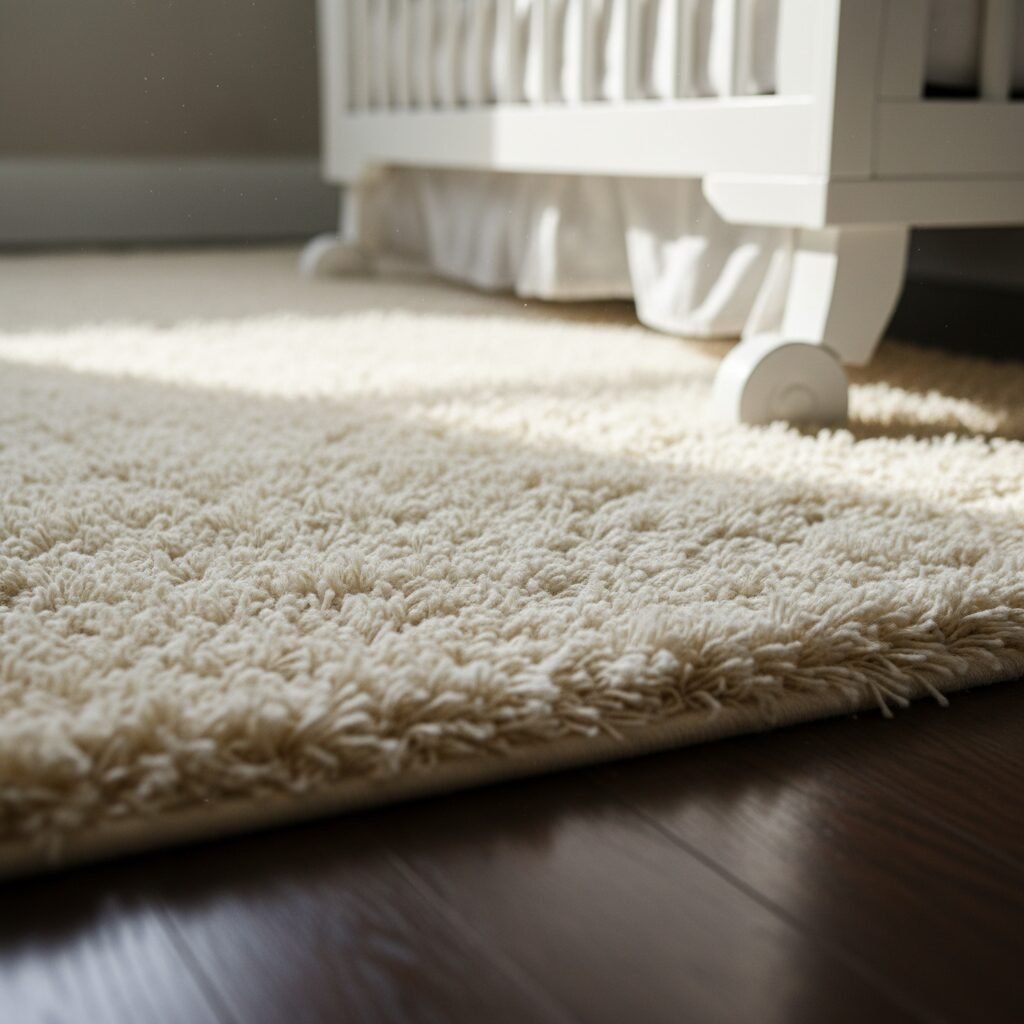
Hardwood, laminate, or tile floors are beautiful, but they’re also giant echo chambers. Sound bounces right off them, amplifying every little noise. The simplest and most effective first step is to soften the floor.
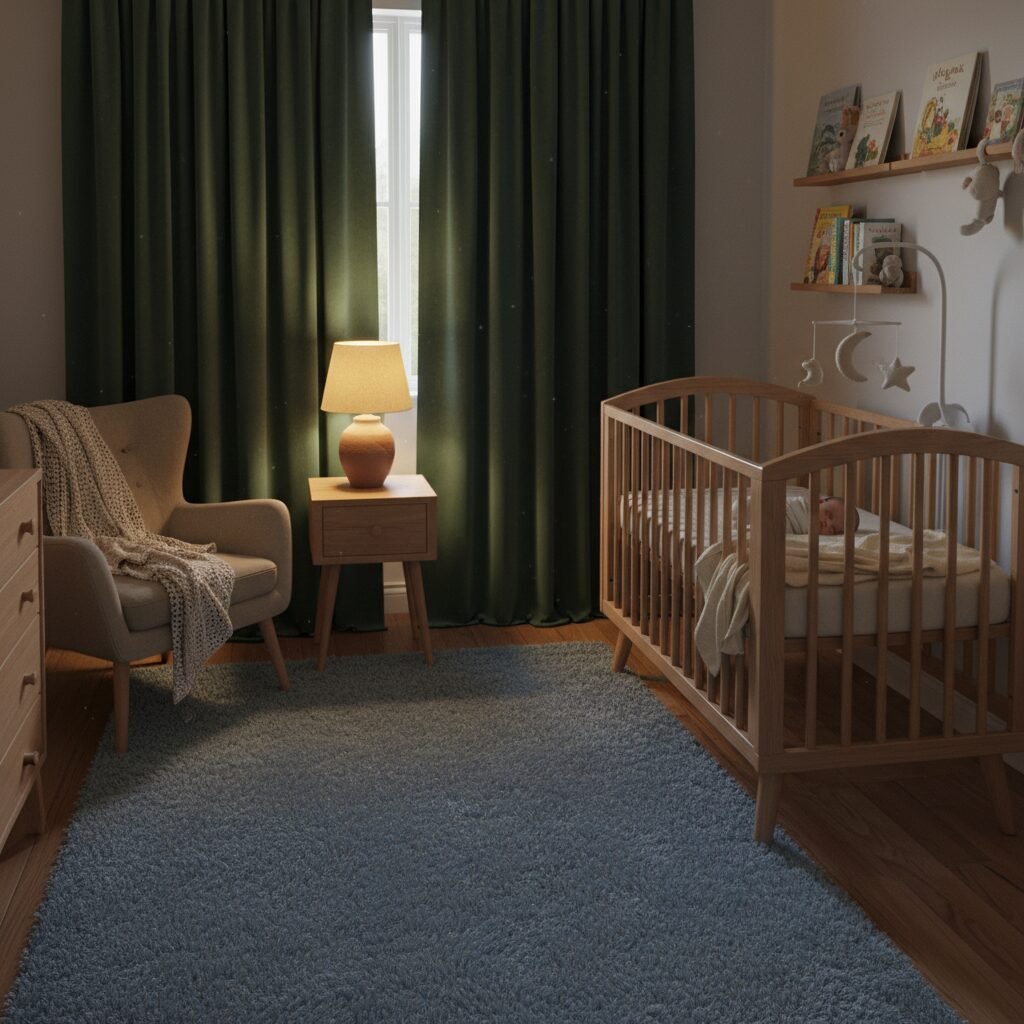
A large, plush area rug can work wonders. Think high-pile or shag — the thicker and denser, the better it will be at absorbing sound. But here’s the pro tip: don’t skip the rug pad. A thick felt or memory foam rug pad underneath adds an extra layer of sound-dampening insulation. It’s like giving your floor a cozy sweater that soaks up noise. Plus, it makes the floor softer and safer for when your little one starts to crawl!
- What to look for: Wool or dense synthetic fiber rugs.
- Budget Tip: Look for remnants at carpet stores or check online marketplaces for gently used, high-quality rugs. Always clean them thoroughly before use in the nursery.
Hack #2: Hang Heavy, Layered Curtains
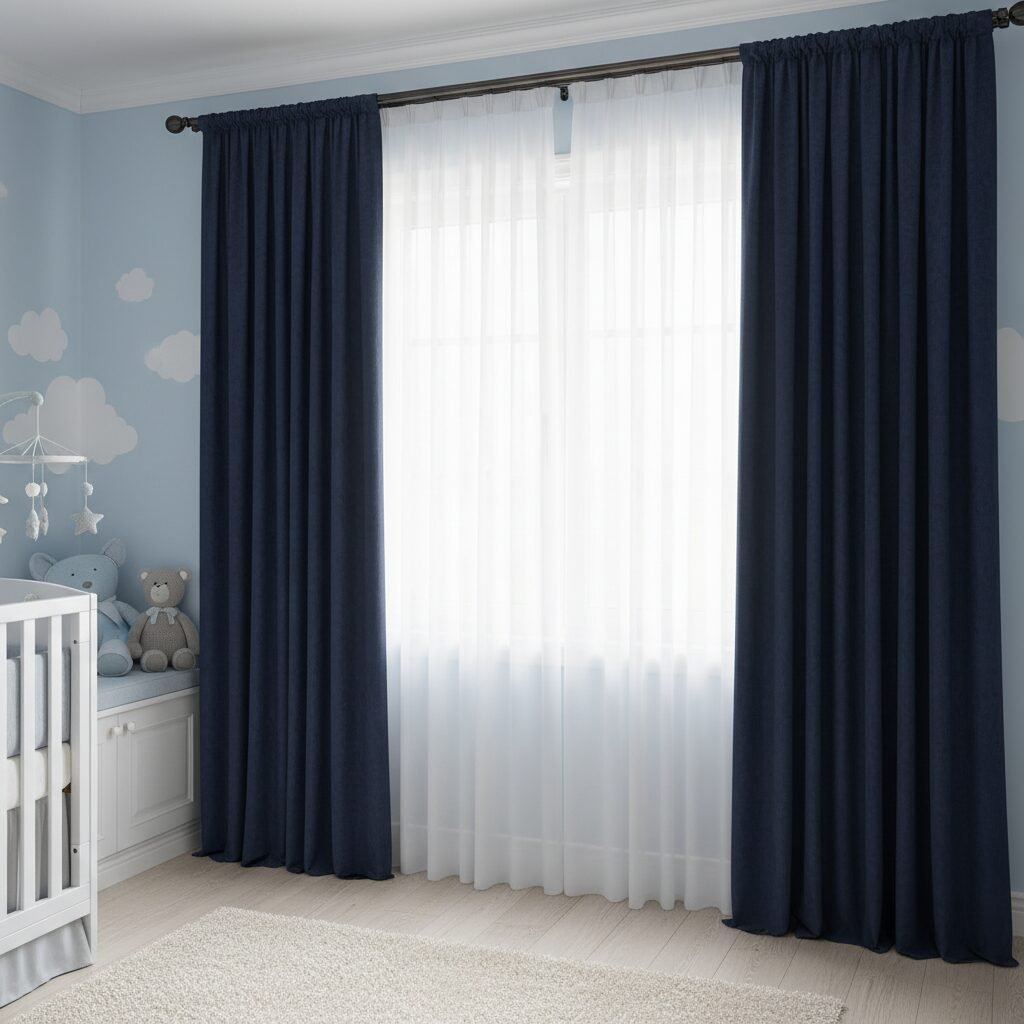
Windows are another major culprit for letting in outside noise. Thin blinds or sheer curtains do very little to block sounds from traffic, neighbors, or weather. The solution is to add mass and layers.
Invest in a good set of thermal-insulated blackout curtains. They are designed with multiple layers of dense fabric to block light and, as a happy side effect, they are fantastic at muffling sound. To take it a step further, use a double curtain rod. Hang a layer of sheer curtains on the inner rod for daytime privacy and the heavy blackout curtains on the outer rod to block sound and light during naps and at night. Make sure the curtains are wider and longer than the window frame to cover as much area as possible, preventing sound from seeping around the edges.
Safety First: Always ensure curtain cords are tied up high and completely out of your baby’s reach to prevent any entanglement hazards. Cordless blinds and curtains are the safest option for a child’s room.
Hack #3: Decorate with Soft Wall Art
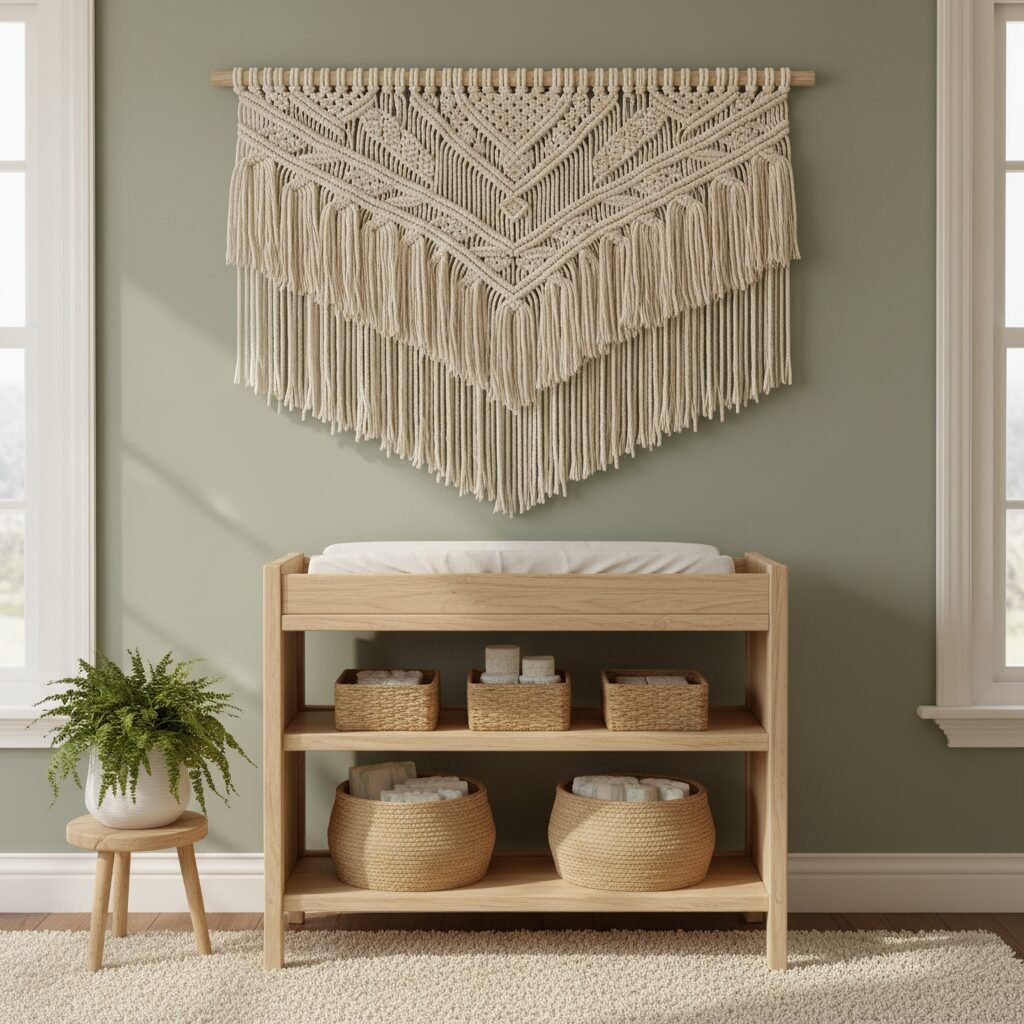
Those big, empty walls in the nursery? They’re like trampolines for sound waves. Instead of just paint and a few framed pictures, think soft. Your nursery decor can double as sound absorption!
Instead of a large painting behind glass, consider a large piece of canvas art. Even better, create or buy a fabric wall hanging or a decorative quilt to hang on the wall. These materials are much better at soaking up sound than a hard, reflective surface. You could even create your own sound-absorbing panels by wrapping acoustic foam (available online or at hardware stores) in pretty fabric and hanging them up as art. It’s a functional and beautiful solution!
Hack #4: Block Under-Door Gaps with a Draft Stopper
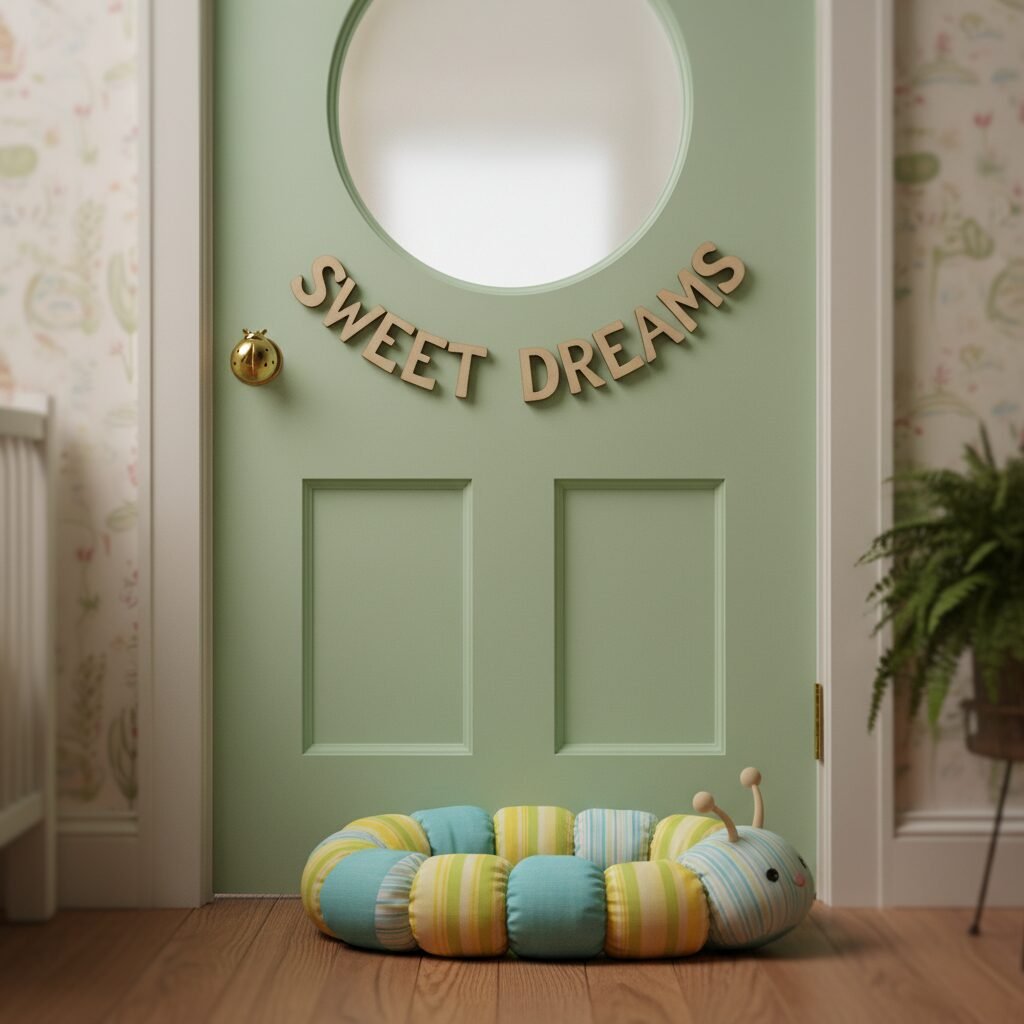
You’d be shocked at how much sound from the rest of the house funnels right through that little gap at the bottom of the nursery door. Conversations, the TV, kitchen noises — they all sneak in. Luckily, this is one of the easiest fixes on the list.
A simple door draft stopper (sometimes called a ‘door snake’) placed at the base of the door can significantly reduce noise transmission. You can buy cute, kid-friendly ones shaped like animals, or you can easily make one yourself. Just sew a tube of fabric and fill it with rice, beans, or quilt batting. It’s a cheap, effective, and non-permanent solution that makes a real difference.
Hack #5: Seal the Door Frame with Weatherstripping
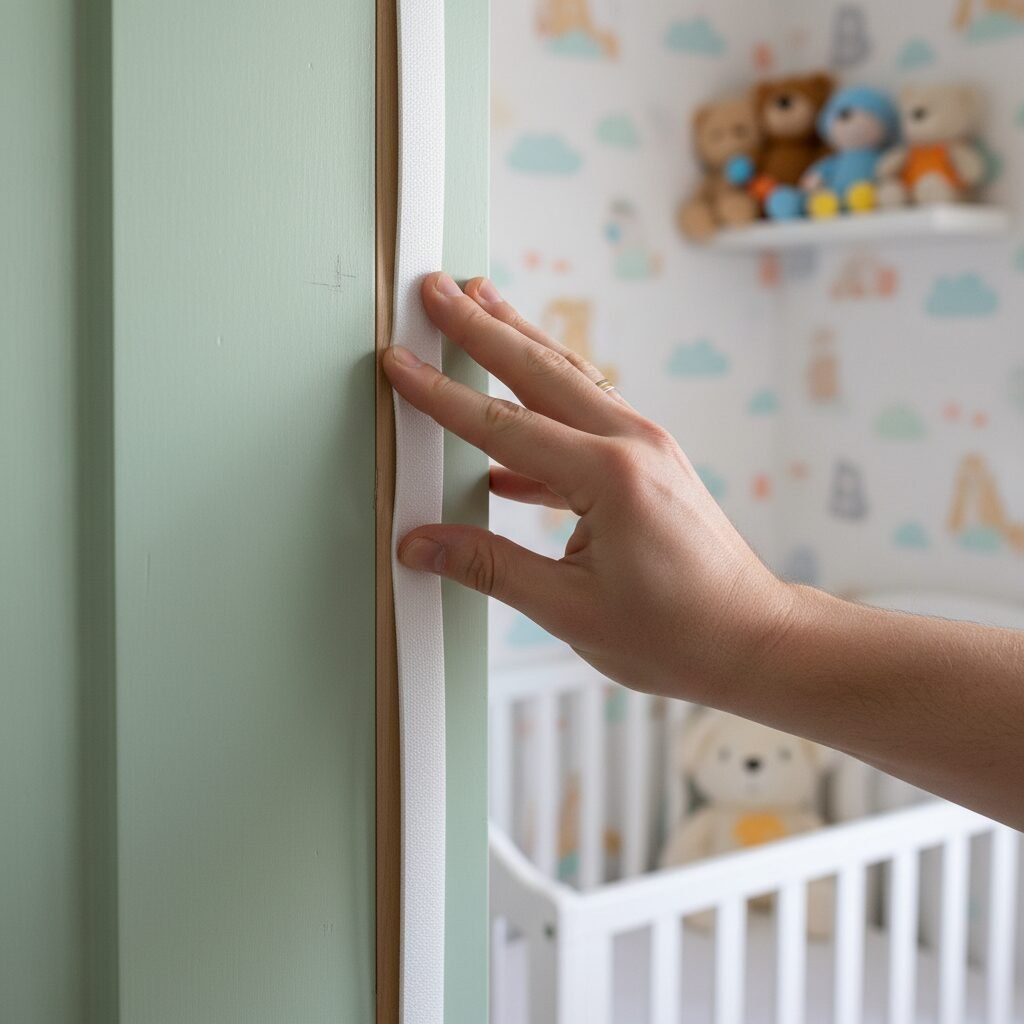
While you’re focused on the bottom of the door, don’t forget the sides and top! Gaps around the door frame are another sneaky entry point for noise. The solution is found in the hardware aisle: adhesive foam weatherstripping.
This stuff is inexpensive, comes in a roll, and is incredibly easy to install. You simply cut it to size and stick it along the inside of the door jamb where the door rests when closed. When you shut the door, the foam compresses to create a much tighter seal, dampening vibrations and blocking airborne sound. It’s an invisible hack that works wonders to isolate the room from hallway chatter.
Hack #6: Use a Bookshelf as a Sound Buffer
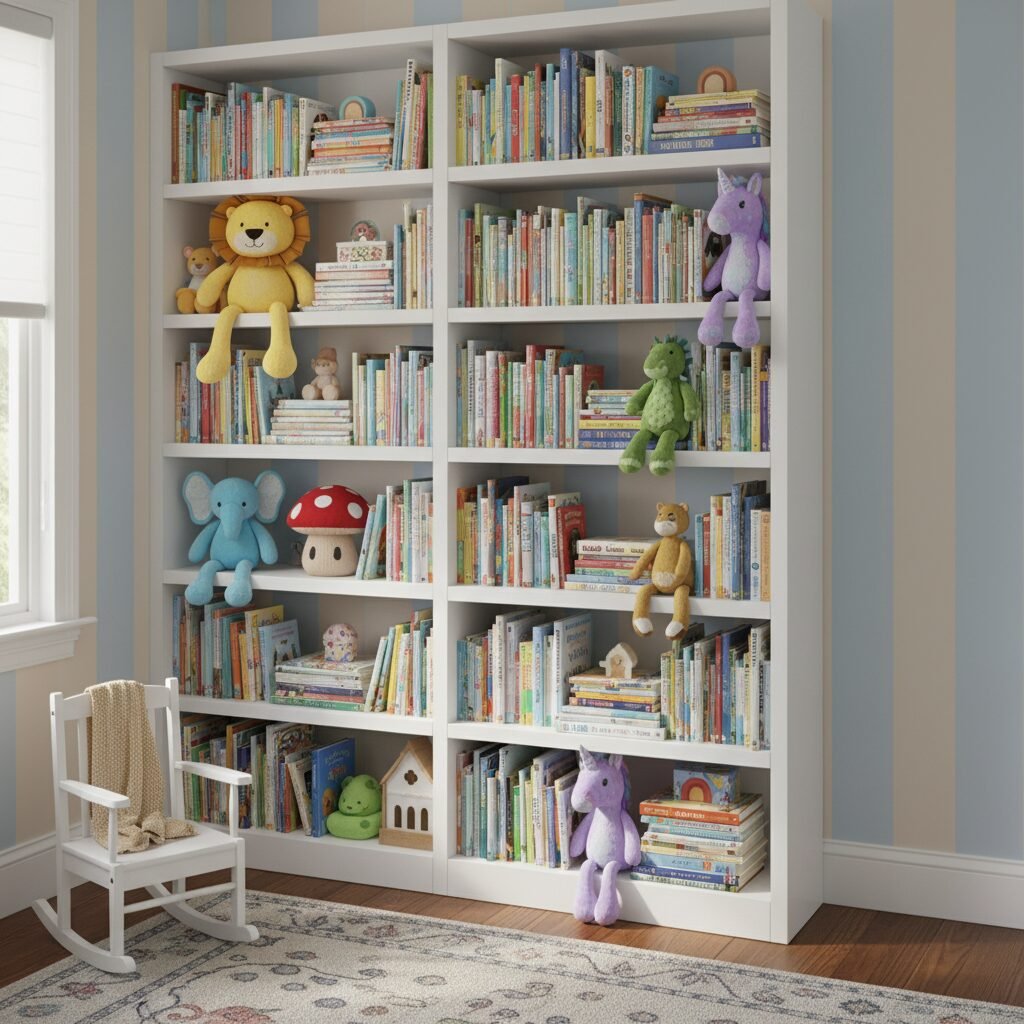
Strategic furniture placement can be a game-changer. If the nursery shares a wall with a noisy area like the living room or a sibling’s playroom, you can use furniture to create a sound buffer.
A large, solid piece of furniture like a bookshelf or a dresser works best. Place it against the shared wall and, for maximum effect, fill it up! A bookshelf packed with books is fantastic for soundproofing. The books themselves have different shapes and densities, which is great for scattering and absorbing sound waves. This adds storage and style to the nursery while secretly serving a very practical purpose.
Hack #7: Embrace Upholstered Furniture
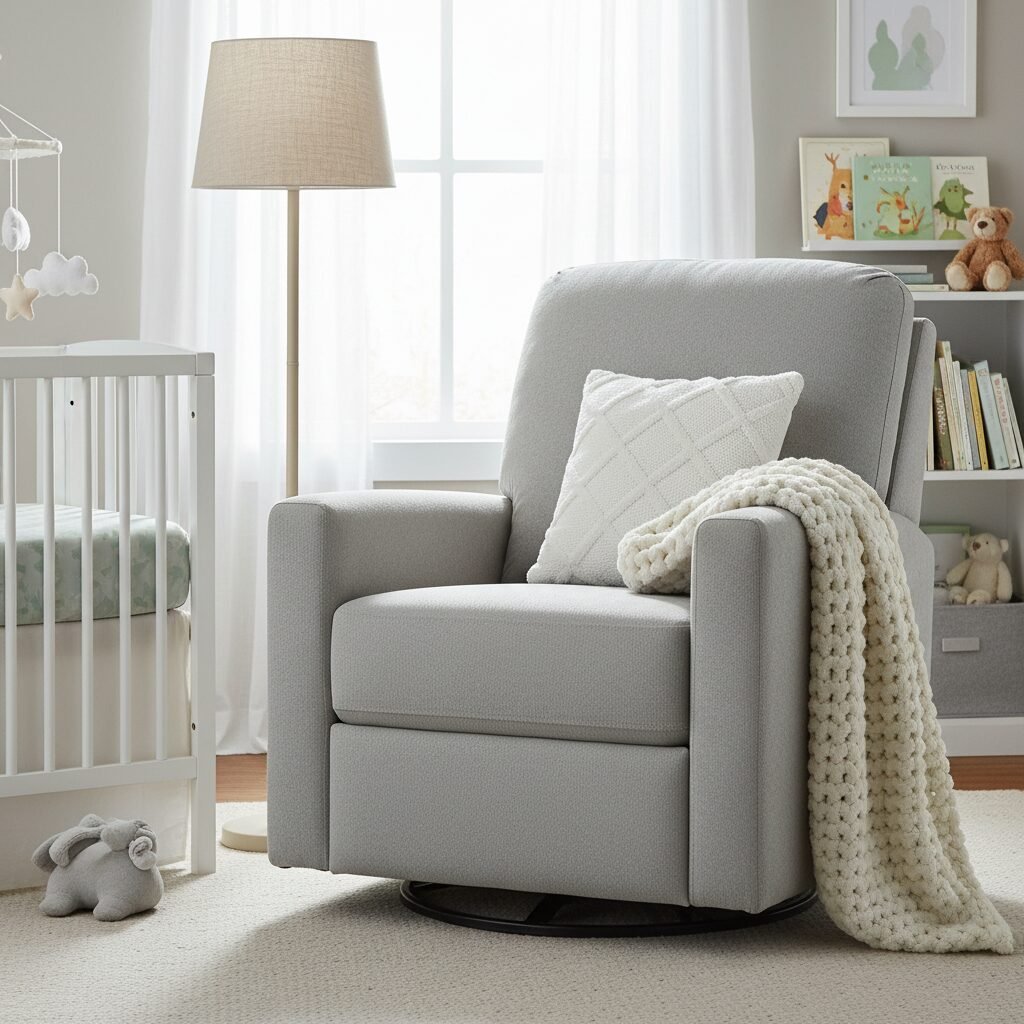
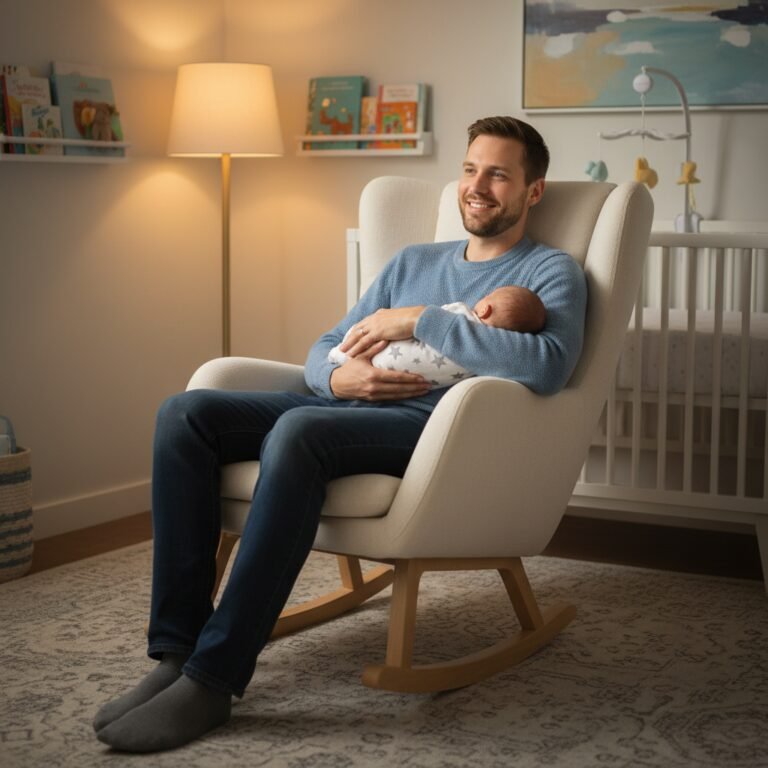
Just like with floors and walls, soft surfaces are your best friend. When choosing furniture, lean towards pieces that are upholstered. A comfy, fabric-covered glider or armchair will absorb far more sound than a wooden or plastic one.
If you already have a wooden rocking chair that you love, you don’t need to replace it. Just soften it up! Add thick, comfortable cushions to the seat and back. Drape a soft, chunky-knit blanket over it. Every soft item you add to the room helps to reduce echo and create a calmer, quieter atmosphere for those late-night feedings.
Hack #8: Introduce Continuous White Noise
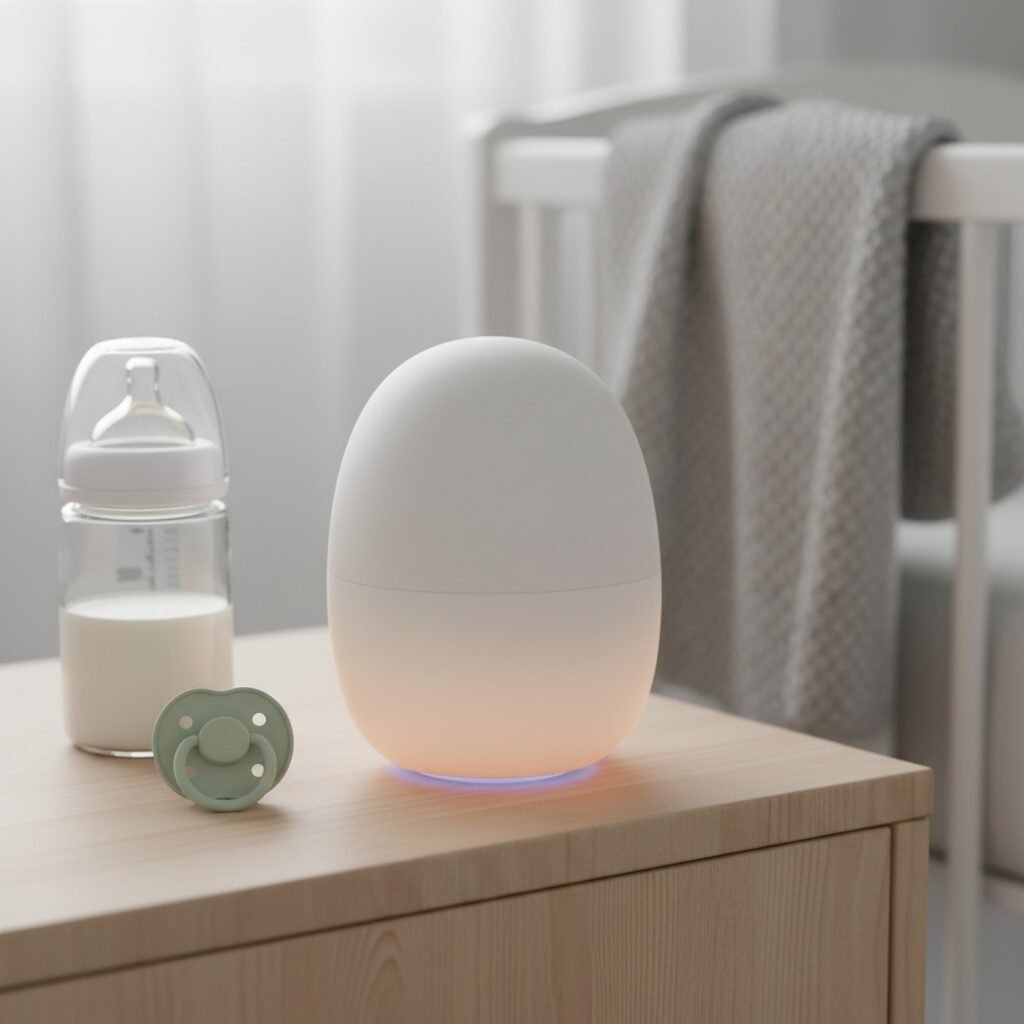
This might sound counterintuitive — adding sound to make a room quieter? But it works! The problem with a totally silent room is that any sudden noise, like a cough from the next room or a dog’s bark, sounds incredibly loud and jarring.
A white noise machine creates a constant, soothing blanket of sound (like a ‘shushing’ noise or gentle rain). This consistent sound masks those sudden noises, so they are less likely to startle your baby awake. You don’t need a fancy, expensive machine. A simple one will do, or you can even use a dedicated app on an old phone (in airplane mode) or a simple box fan on a low setting. The key is a continuous, boring sound that helps your baby’s brain ignore distractions.
Hack #9: Fix Squeaks in Doors and Floors
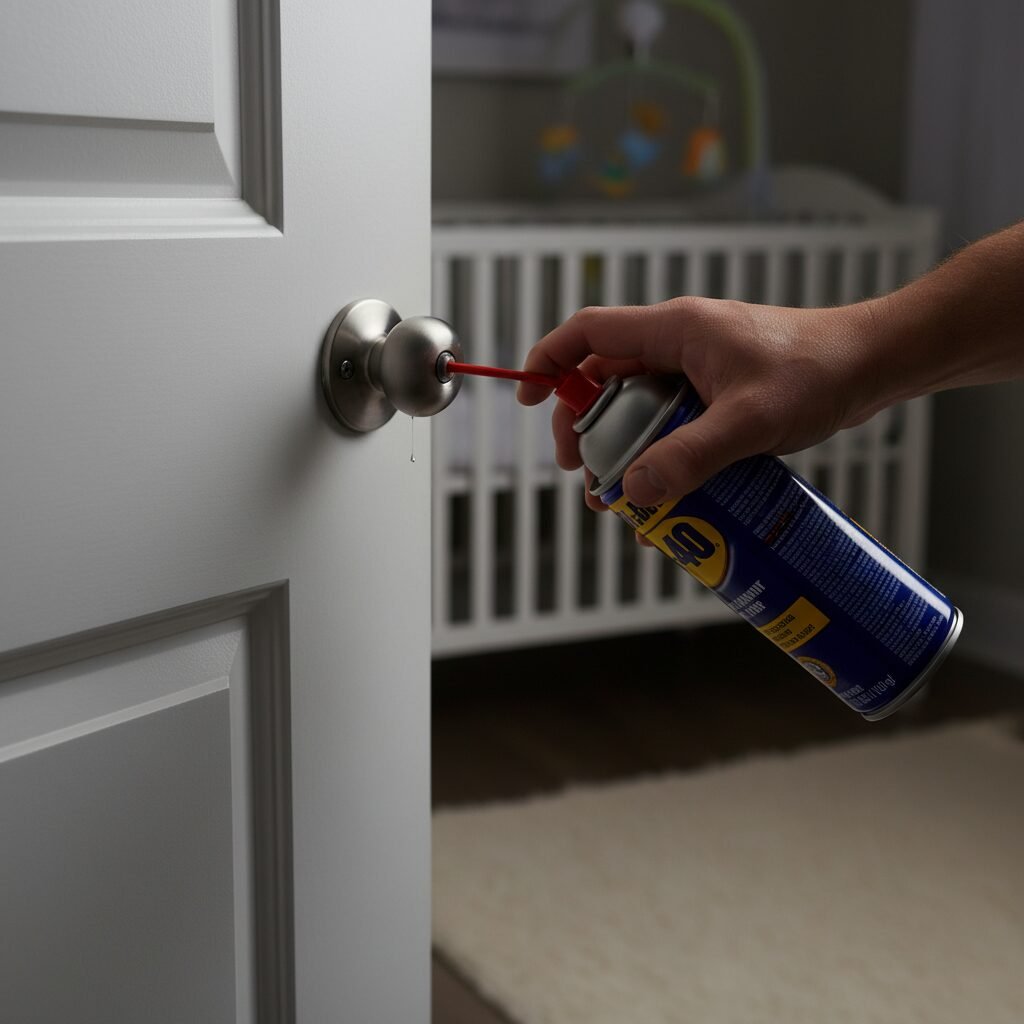
You’ve done it. You’ve rocked, shushed, and fed your baby to sleep. You gently place them in the crib, and as you sneak out, the door lets out a loud, high-pitched SCREEEAK. Baby’s eyes pop open. It’s the worst!
This is a five-minute fix that can save your sanity. A little lubricant like WD-40 or even household olive oil on the door hinges will silence that squeak for good. If you have a squeaky floorboard on your escape route, try sprinkling some talcum powder or baking soda into the cracks and sweeping it in. This can often stop the wood pieces from rubbing together and making noise. It’s the little details that count!
Hack #10: Strategically Position the Crib
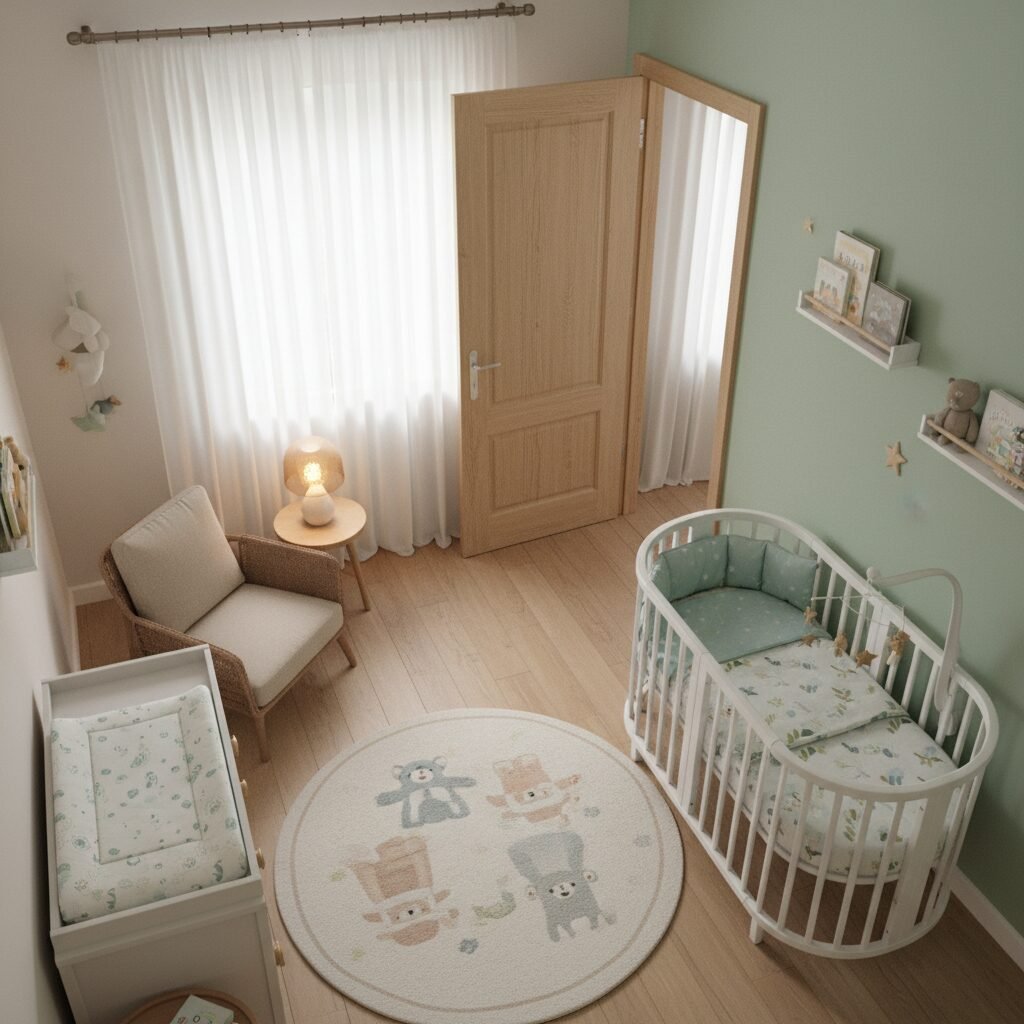
Our final hack doesn’t cost a penny. It’s all about location, location, location. Where you place the crib within the nursery can impact how much noise your baby is exposed to.
Try to position the crib in the quietest part of the room. This usually means:
- Away from the door where hallway noise comes in.
- Away from the window where outside noise is loudest.
- If possible, against an interior wall that doesn’t back onto a high-traffic area of the house.
Sometimes just moving the crib a few feet can place your baby out of the direct path of sound waves, giving them a more peaceful spot to dream.
Conclusion
See? Creating a more peaceful sleep environment for your little one doesn’t require a construction crew or a big budget. By layering soft textures, sealing up sneaky gaps, and being clever with your decor and layout, you can significantly reduce the jarring noises that interrupt sleep.
Remember, the goal isn’t total silence — a little ambient noise is perfectly normal. It’s about muffling the sudden, sharp sounds that startle them awake. Try one or two of these hacks this weekend and see what a difference it makes. You’ve got this! Wishing you and your baby many nights of sweet, uninterrupted dreams.