Sleeping in a Swing? The Dangers of Inclined Sleep for Reflux Babies
It’s 3 AM. You’ve been up for what feels like an eternity, bouncing, shushing, and walking a tiny, unhappy baby around the house. Your little one has reflux, and every time you lay them down flat in their crib, the crying starts all over again. In a moment of sheer desperation, you try the baby swing. And then… silence. Sweet, blissful silence as your baby finally drifts off to sleep, cradled at a gentle incline. It feels like a miracle. You’re not a bad parent for feeling that relief; you’re a human being who needs sleep.
I’ve been in the rooms with countless parents just like you. I’ve seen the exhaustion and the worry etched on their faces. The baby swing, the bouncer, or the car seat can seem like the only solution that works. But as a pediatric nurse and lactation consultant, I need to have a gentle but very serious conversation with you. While these devices are fantastic for supervised, awake time, they are not safe for sleep. This isn’t about judgment; it’s about empowerment. Let’s talk about why inclined sleep is so risky, especially for our reflux babies, and explore some truly safe and effective ways to manage those tough nights together.
The Allure of the Angle: Why Swings Seem to Help Reflux
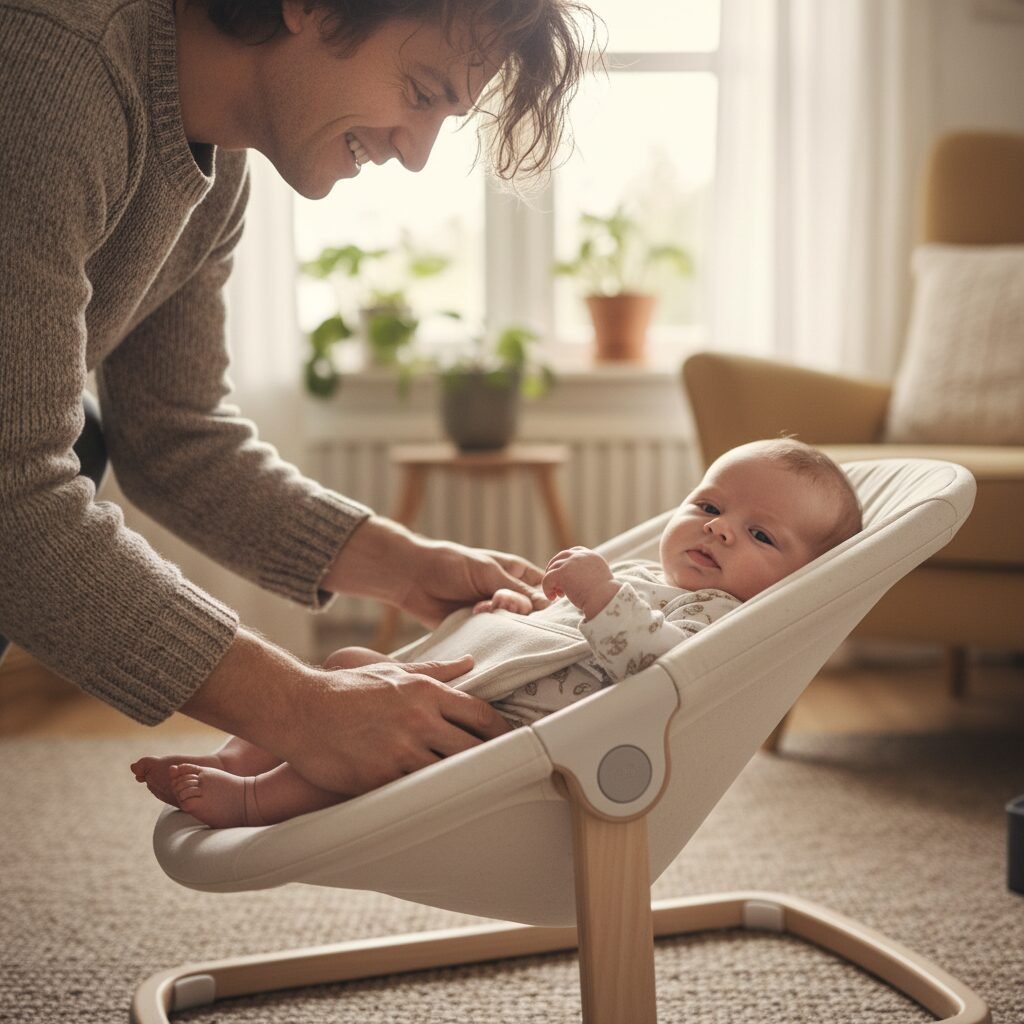
If you’ve discovered that your baby settles better in a swing, you’re not imagining things. There are a couple of very logical reasons why that incline seems like a magic bullet for a fussy, reflux-prone baby.
First and foremost, there’s gravity. When your baby is upright, gravity helps keep their stomach contents—milk and acid—down where they belong. For a baby with an immature esophageal sphincter (the little muscle that’s supposed to keep things from coming back up), lying flat can make it much easier for spit-up and discomfort to occur. The angle of the swing provides some relief from that immediate pressure and burning sensation.
Second, there’s the motion. The rhythmic, gentle rocking of a swing mimics the feeling of being in the womb. It’s incredibly soothing for a baby’s nervous system. When a baby is uncomfortable from reflux, this constant, predictable motion can be just the thing to distract them from their discomfort and lull them into a state of calm. For an exhausted parent, the combination of the incline and the motion is a powerful one-two punch against fussiness. It offers a desperately needed hands-free moment to catch your breath, make a cup of tea, or just sit down for five minutes. It’s completely understandable why it becomes the go-to tool in your parenting arsenal. The problem is that these short-term benefits come with a serious, hidden risk when a baby is left to sleep there unsupervised.
The Unseen Risk: The Science Behind Positional Asphyxia
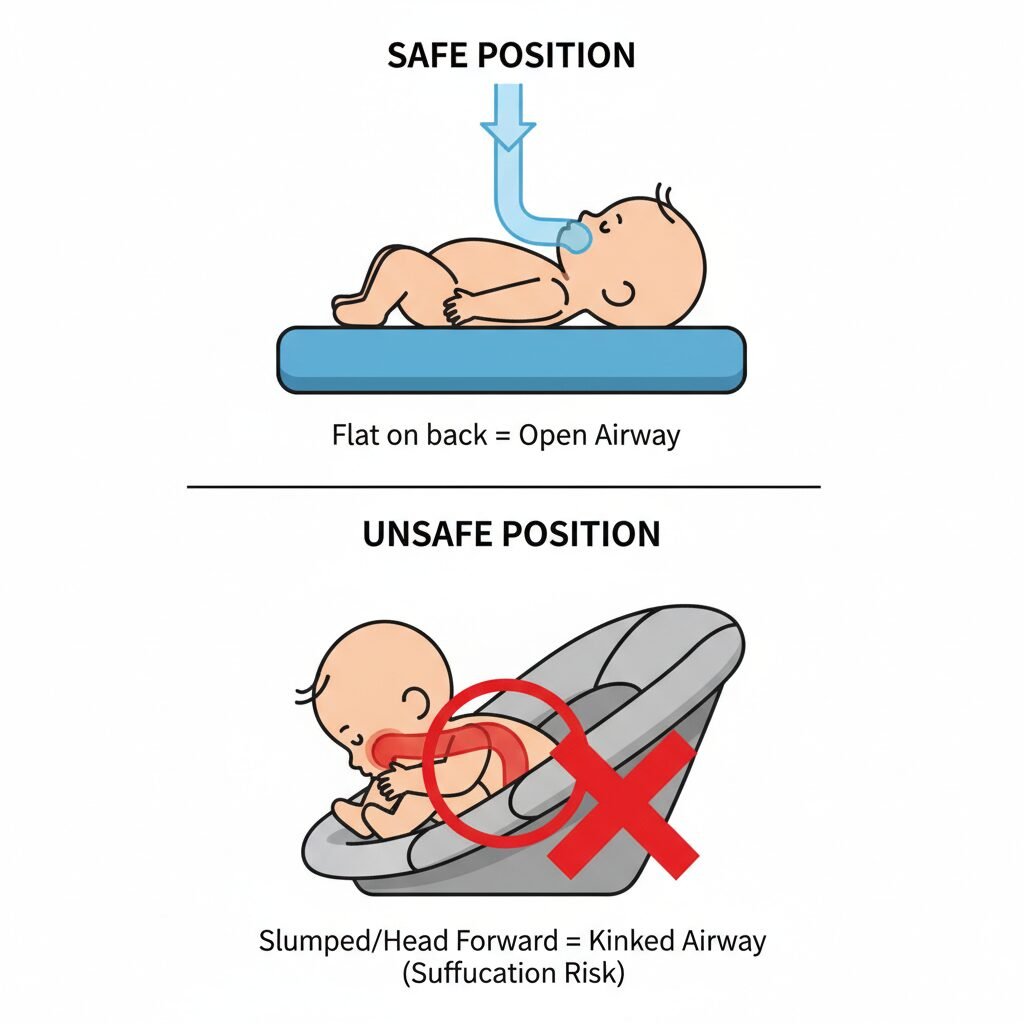
This is the most important part of our conversation, and it can be scary to hear, but knowledge is power. The primary danger of sleeping in a swing or any inclined device is a risk called positional asphyxia.
Here’s what that means in simple terms: Newborns and young infants have heavy heads and very little neck strength. When they are placed on an incline, their head can easily slump forward, causing their chin to press down on their chest. Think of it like kinking a garden hose. This position can partially or completely block their tiny, delicate airway, making it difficult or impossible to breathe. Because they lack the motor skills and strength to lift their head and reposition themselves, they can’t fix the problem on their own. Tragically, this can happen silently, without any crying or struggle.
The American Academy of Pediatrics (AAP) is unequivocal on this: babies should not sleep in inclined products. Flat is best. This warning came after numerous infant deaths were linked to inclined sleepers, leading to massive recalls of popular products. A swing is no different when used for sleep.
The straps and harnesses on a swing are designed to keep a baby from falling out, not to maintain a safe sleeping position. They can’t prevent a baby’s head from slumping forward. This is why swings, bouncers, and car seats always come with the warning: “For supervised use only. Not intended for sleep.” It’s not just a suggestion; it’s a critical safety directive based on heartbreaking evidence.
Back to Basics: A Refresher on the ABCs of Safe Sleep

In the fog of new parenthood, it’s easy to forget the basics, so let’s quickly refresh the gold standard for infant sleep safety. These guidelines from the AAP are designed to drastically reduce the risk of Sudden Infant Death Syndrome (SIDS) and other sleep-related deaths. They apply to every single sleep, whether it’s a 20-minute nap or a full night’s rest.
The ABCs of Safe Sleep
- A is for ALONE: Your baby should sleep alone in their own dedicated sleep space. This means no pillows, no loose blankets, no stuffed animals, no bumpers, and no parents or siblings sharing the surface. Wearable blankets or sleep sacks are a fantastic and safe way to keep your baby warm.
- B is for BACK: Always, always, always place your baby on their back to sleep. Even if they have reflux. Studies have shown that babies are better able to protect their own airway from spit-up when they are on their backs. Once your baby can roll consistently from back to front on their own, you don’t need to roll them back over, but you should continue to place them on their back at the start of sleep.
- C is for CRIB: Your baby should sleep in a crib, bassinet, or play yard that meets current safety standards. The key is that the surface must be firm and flat. A soft or inclined surface is not safe. Check to make sure there are no gaps between the mattress and the sides of the crib.
It can be tempting to think, “Just this one nap won’t hurt,” but consistency is key. Adhering to these rules for every sleep creates the safest possible environment for your precious little one.
Soothing the Sizzle: Safe & Effective Reflux Management Strategies

Okay, so we know the swing is out for sleep. That’s great for safety, but what are you supposed to do with a baby who is genuinely miserable from reflux? Don’t worry, you are not out of options! Here are some safe and effective strategies to help manage reflux and make flat sleep more comfortable.
During and After Feedings
- Hold Baby Upright: After every feeding (breast or bottle), hold your baby in an upright position for at least 20-30 minutes. Let gravity be your friend! You can hold them over your shoulder, sit them on your lap, or wear them in a carrier. This simple step can make a huge difference.
- Burp Frequently: Don’t wait until the end of a feeding to burp. If bottle-feeding, burp after every ounce or two. If breastfeeding, burp when you switch sides. Removing trapped air bubbles reduces pressure in their tummy.
- Consider Smaller, More Frequent Feeds: Instead of large, spaced-out feedings, try offering smaller amounts more often. This prevents their little stomach from getting too full, which can trigger more reflux.
Lifestyle and Environmental Adjustments
- Paced Bottle Feeding: If you’re bottle-feeding, use a slow-flow nipple and practice paced bottle feeding. This technique allows the baby to control the flow of milk, preventing them from gulping too much air.
- Talk to Your Pediatrician: This is crucial. Your pediatrician is your partner. If your baby is extremely uncomfortable, not gaining weight, or has other concerning symptoms, there may be medical options to explore. This could include a trial of specialized hypoallergenic formula for formula-fed babies, or a discussion about potential dietary changes for breastfeeding moms (like temporarily eliminating dairy). Never give your baby medication without a doctor’s guidance.
A quick note on an old piece of advice: You may have heard about elevating the head of the crib mattress. Please know that the AAP no longer recommends this practice. It has not been shown to be effective for reflux and can cause the baby to slide down into an unsafe position at the bottom of the crib.
The Great Escape: How to Transition Your Baby from Swing to Crib

If your baby has already become accustomed to sleeping in the swing, making the change can feel daunting. I hear you. It’s going to take some patience and consistency, but you can absolutely do it. Here is a gentle, step-by-step approach to making the transition.
- Start with the First Nap: Begin the transition with the first nap of the day, when both you and your baby are likely to be the most rested and patient. Don’t try to tackle all sleep at once.
- Separate Soothing from Sleeping: It’s okay to still use the swing as a tool to calm a fussy baby. Let the motion soothe them until they are drowsy and relaxed, but before they fall fully asleep.
- Make the Transfer: Once your baby is calm and drowsy, turn the swing off. Gently pick them up and move them to their crib or bassinet. Place them on their back.
- Recreate the Comfort: Try to replicate the soothing elements of the swing in the safe sleep space. Use a firm swaddle (if your baby isn’t rolling yet) to provide that snug, secure feeling. Turn on a white noise machine to mimic the gentle hum of the swing’s motor.
- Offer Physical Comfort: Stay with your baby for a few minutes after you lay them down. Place a firm, steady hand on their chest or gently pat their back. Your presence is incredibly reassuring.
- Be Patient and Consistent: Your baby will likely protest at first. This is normal! They’re learning a new skill. Try to be as consistent as possible. If they become very upset, it’s okay to pick them up and calm them, but the goal is to lay them back down in the crib to fall asleep. It may take several days, or even a week or two, but they will adjust.
Remember to give yourself and your baby so much grace during this process. It’s a change, and change can be hard, but you’re doing it for their safety, which is the ultimate act of love.
Conclusion
My dear new parent, if you’ve been using a swing for sleep, please don’t let this information fill you with guilt. Let it fill you with power. You were doing what you thought was best to survive an incredibly challenging situation. Now you have new information, and you can make a different choice moving forward. Managing a baby with reflux is a marathon, not a sprint. There will be tough days and even tougher nights. But your baby’s safety is non-negotiable, and a flat, empty crib is the only place where that can be guaranteed for sleep.
Lean on your support system, talk to your pediatrician, and remember to take care of yourself. You are your baby’s everything, and making the switch to a safe sleep space is one of the most profound and loving things you can do for them. You’ve got this.