

Why Your Baby Wakes Up 45 Minutes After Bedtime (And How to Stop False Starts)
You did it. You went through the entire bedtime routine—the warm bath, the cozy pajamas, the soothing story, the final cuddles. You gently placed your precious baby in their crib, tiptoed out of the room like a ninja, and finally collapsed onto the sofa, ready for a few moments of peace. And then, like clockwork, it happens. Forty-five minutes later, the baby monitor lights up with that all-too-familiar cry. It’s the dreaded ‘false start,’ and it can be one of the most frustrating parts of a new parent’s day.
If this sounds like your evening, please hear me: you are not alone, and you are not doing anything wrong. As a pediatric nurse and lactation consultant, I’ve sat with countless tired parents who are baffled by this exact scenario. It’s incredibly common! The good news is that false starts are usually a solvable puzzle. It’s your baby’s way of telling you that something in their routine or environment needs a tiny tweak. Together, we’re going to become sleep detectives, uncover the clues your baby is giving you, and find the gentle solutions that will lead to longer, more peaceful stretches of sleep for everyone.
What Exactly is a ‘False Start’ in Baby Sleep?
First, let’s put a name to what you’re experiencing.
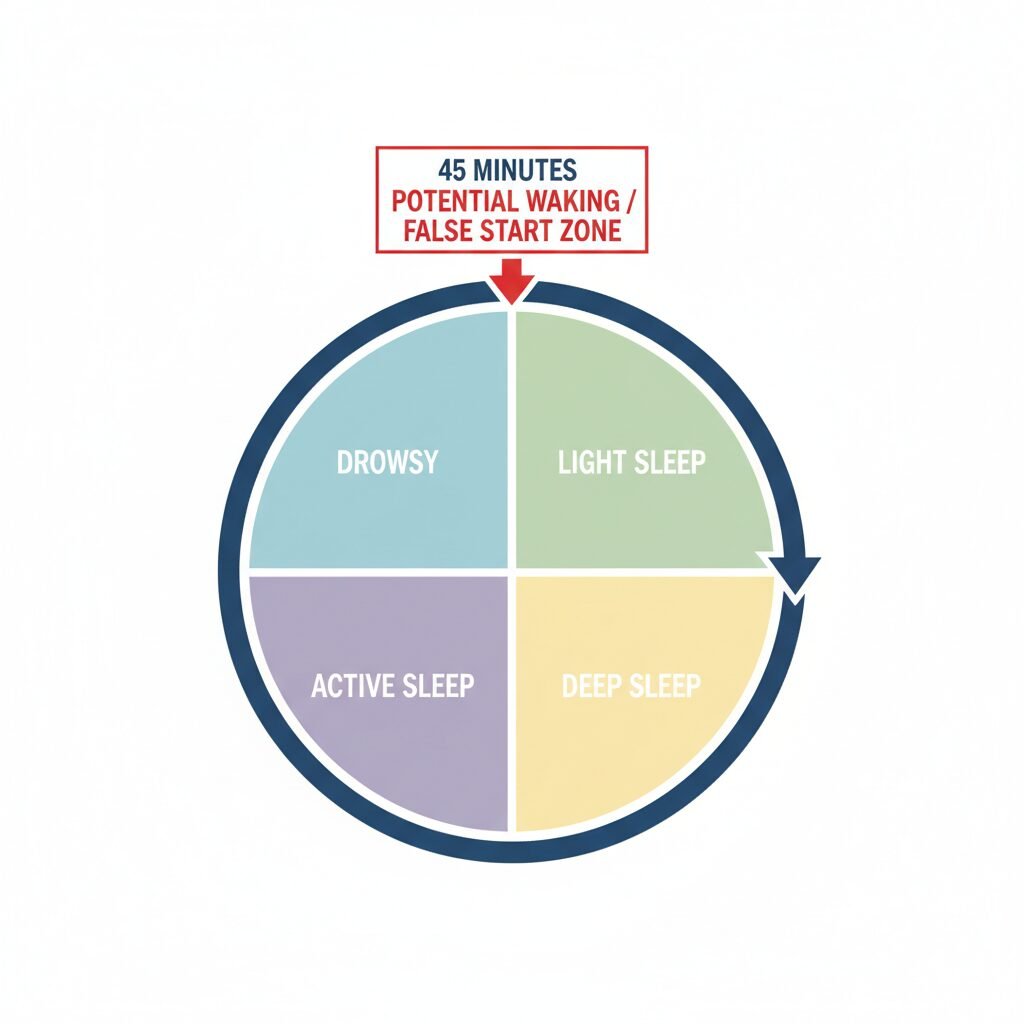
A ‘false start’ is when a baby wakes up fully, usually crying, less than an hour after being put down for the night. That 45-minute mark is classic because it perfectly aligns with the length of one infant sleep cycle. It feels like a nap, not the beginning of a long night’s sleep.
Understanding the 45-Minute Sleep Cycle
Unlike adults who cycle through different sleep stages over about 90 minutes, babies have much shorter sleep cycles, lasting around 45-50 minutes. Here’s a quick breakdown:
- Stage 1 & 2: Drowsiness & Light Sleep. This is when you’re tiptoeing out of the room. They look asleep, but they’re not in a deep sleep yet.
- Stage 3 & 4: Deep Sleep. This is the good stuff! It’s restorative and they are much harder to wake.
- REM (Active) Sleep. Their brains are busy! You might see them twitch, flutter their eyelids, or even smile.
At the end of that 45-minute cycle, your baby briefly surfaces into a very light stage of sleep before trying to connect to the next cycle. If everything is just right, they’ll drift seamlessly into the next 45-minute block. But if something is ‘off’—if they are overtired, hungry, or uncomfortable—they will wake up fully instead. That wake-up call is the false start. It’s not a sign of a ‘bad’ sleeper; it’s a signal that they need a little help connecting their sleep cycles at the beginning of the night.
A Reassuring Thought: Think of a false start as a ‘check-in’ from your baby. They’re just making sure everything is okay before they settle in for the long haul. Our job is to make that check-in as smooth and sleepy as possible.
The Top 5 Culprits Behind Bedtime False Starts
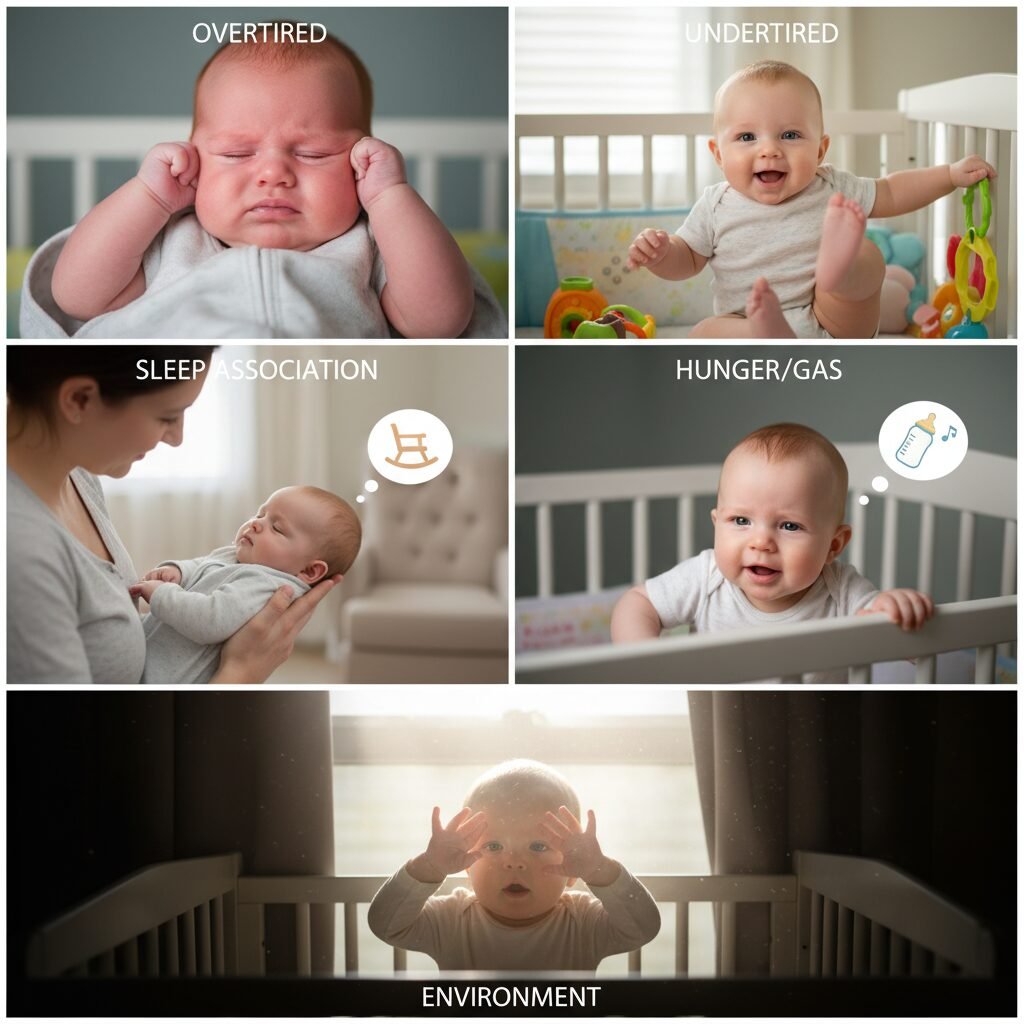
Let’s play detective! Most false starts can be traced back to one of these five common causes.
As you read through these, see which one resonates most with your baby and your daily routine. Often, a small adjustment in one of these areas can make a world of difference.
1. The Overtired Baby
This is, by far, the most common reason for a false start. We think an exhausted baby will sleep better, but the opposite is true. When a baby is awake for too long, their body produces cortisol, a stress hormone. Trying to fall asleep when you’re swimming in cortisol is like trying to nap after drinking three espressos. They may crash initially out of sheer exhaustion but will have trouble staying asleep, causing them to jolt awake at the end of that first sleep cycle.
2. The Undertired Baby
This is the sneaky opposite of being overtired. If your baby hasn’t had enough awake time during the day or their last nap was too late or too long, they simply won’t have enough ‘sleep pressure’ built up to stay asleep for a long stretch. They treat bedtime like another nap because, biologically, that’s all they’re ready for.
3. Sleep Onset Associations
A ‘sleep association’ is anything your baby needs to fall asleep. This could be rocking, feeding, a pacifier, or being held. If your baby falls asleep in your arms and is then transferred to their crib, they complete their first sleep cycle and briefly wake up in a totally different environment. It’s jarring! Imagine falling asleep in your cozy bed and waking up on the kitchen floor. You’d be fully awake and alarmed, right? Your baby feels the same way and cries out for the person or thing (you!) that helped them fall asleep in the first place.
4. Lingering Hunger or Gas
A bedtime feeding that was too small or too long ago can lead to a tummy that rumbles just as they’re trying to settle in. Similarly, trapped gas bubbles or reflux can cause significant discomfort when a baby is laid flat on their back. That discomfort might be just enough to turn a brief, sleepy arousal into a full-blown, wide-awake cry.
5. The Sleep Environment Isn’t Quite Right
Is the room too hot, too cold, or too bright? Was there a sudden loud noise from the living room TV or a barking dog? Babies, especially in that light stage of sleep, are very sensitive to their surroundings. A stimulus that you might not even notice can be enough to pull them out of sleep completely.
Your Action Plan: How to Stop False Starts for Good

Ready for some solutions? Let’s build a routine that sets your baby up for success.
The goal here isn’t about rigid schedules, but about creating predictable, sleep-friendly rhythms for your baby. These are gentle strategies that honor your baby’s needs while guiding them toward better sleep.
Tactic 1: Master the Wake Window
A ‘wake window’ is the amount of time your baby can comfortably stay awake between sleeps. Getting this right is the key to preventing both overtiredness and undertiredness. Here are some general guidelines, but remember to always watch your baby for their unique sleepy cues (like yawning, rubbing eyes, or getting fussy).
| Baby’s Age | Typical Wake Window | Signs It’s Time for Sleep |
|---|---|---|
| 0-8 Weeks | 45-60 minutes | Staring into space, yawning, jerky movements |
| 2-4 Months | 1.5 – 2 hours | Rubbing eyes, getting fussy, losing interest in play |
| 4-6 Months | 2 – 2.5 hours | Yawning, pulling at ears, looking worried or glazed over |
| 6-9 Months | 2.5 – 3 hours | Becoming clumsy, less engaged, crying easily |
Tactic 2: Create a Consistent, Calming Bedtime Routine
A bedtime routine is a powerful signal to your baby’s brain that sleep is coming. It doesn’t need to be long or complicated. Just 15-20 minutes of the same sequence of events each night works wonders. A great routine might look like:
- A warm bath or wipe-down.
- A gentle baby massage with lotion.
- Putting on pajamas and a fresh diaper.
- A full feeding in a dimly lit room.
- Reading one or two short, quiet books or singing a lullaby.
- A final cuddle with some reassuring words, like “I love you, it’s time for sleep.”
Tactic 3: Practice ‘Drowsy But Awake’
This is the secret sauce to breaking negative sleep associations. The goal is to put your baby down in their crib when they are calm and drowsy, but not fully asleep. This gives them the opportunity to learn the vital skill of falling asleep on their own. It can be tricky at first! Start small. If they’re used to being rocked to sleep, try rocking until they are 90% asleep, then place them in the crib. Over a few nights, gradually reduce the amount of rocking. This is a gentle process, not a cry-it-out method.
Tactic 4: Ensure a Full Tummy and a Comfy Body
Make the bedtime feeding a priority. Ensure it’s a full, focused feed in a quiet environment, so they aren’t distracted. After the feed, hold your baby upright for 10-15 minutes to help with any potential reflux and to get out any stubborn burps. This simple step can make a huge difference in their comfort level once they’re laid down.
Safety First! Always place your baby on their back to sleep in an empty crib with a firm mattress and a fitted sheet. No blankets, pillows, bumpers, or toys. A sleep sack is a great, safe way to keep them warm.
In the Moment: What to Do When a False Start Happens
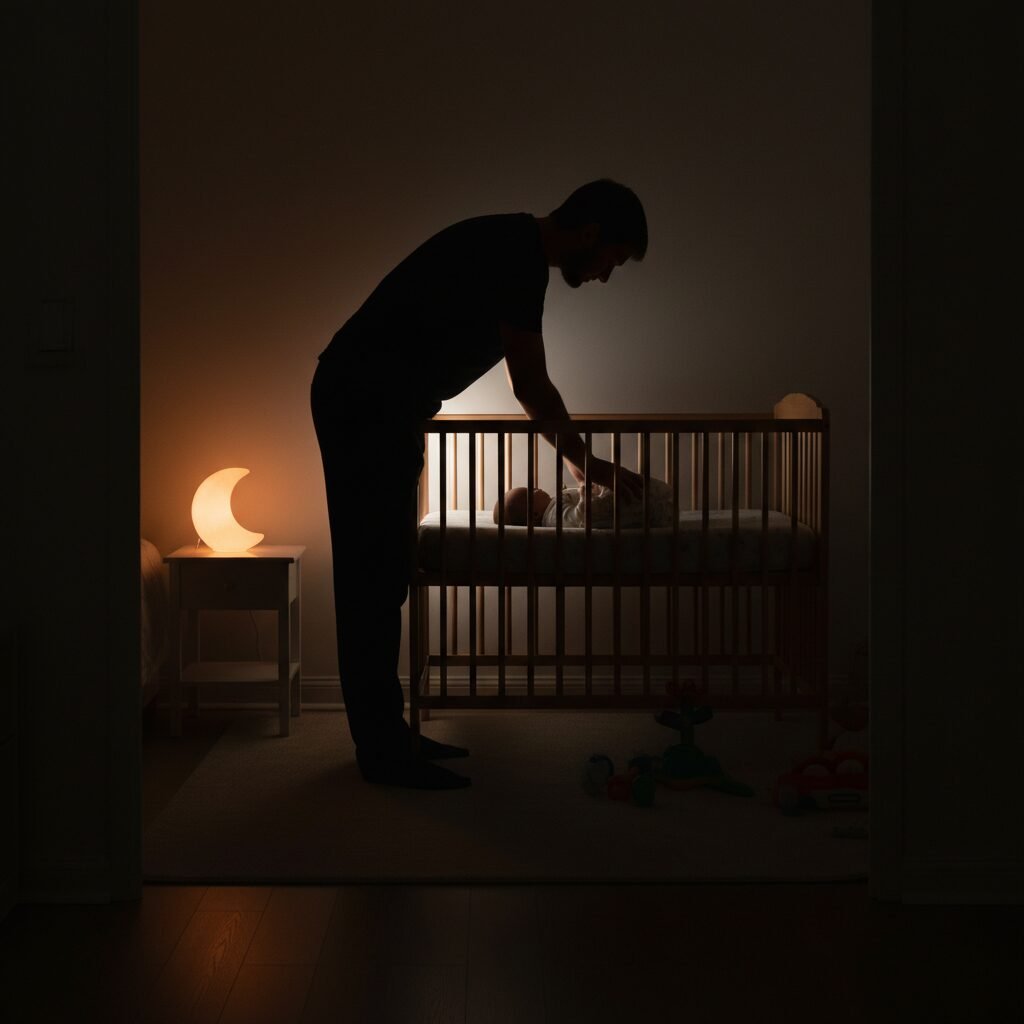
Okay, so despite your best efforts, your baby is up. What now?
How you respond can make the difference between a quick reset and a full-blown party in the crib. The key is to be calm, boring, and brief.
First, pause. Don’t rush in at the first peep. Babies can be noisy in their sleep and sometimes they will fuss for a minute or two and fall back asleep on their own. Give them a 5-minute window to see if they can resettle.
If they are truly awake and crying, go to them, but keep the intervention as minimal as possible to get them back to sleep. Try these steps in order:
- Level 1: Presence & Touch. Enter the room, keep the lights off, and place a gentle hand on their chest. Make a soft ‘shushing’ sound. See if your calm presence is enough.
- Level 2: Patting or Jiggling. If touch isn’t enough, try gently patting their back or bum in a rhythmic way. If they’re in a bassinet, you can try a gentle jiggle.
- Level 3: The Quick Pick-Up. If they are escalating, pick them up just until they calm down, but try to put them back in the crib before they are fully asleep again. Repeat the ‘drowsy but awake’ mantra in your head.
- Level 4: The Reset (Feeding/Changing). Only offer a feed if you genuinely believe they are hungry (e.g., it’s been 3+ hours since the last feed) or if nothing else is working. If you do feed, keep it brief, quiet, and unstimulating. Do a quick diaper check to rule out discomfort.
The goal is to be reassuring without being overly stimulating. You’re sending the message: “I’m here for you, but it’s still sleepy time.”
When to Seek Help: Is It More Than Just a False Start?

While most false starts are developmental and behavioral, there are times when an underlying medical issue could be the cause.
You know your baby best. If you’ve been consistent with the strategies above for a week or two and are seeing zero improvement, or if your parental intuition is telling you something more is going on, it’s never wrong to check in with your pediatrician. Be sure to call your doctor if you notice any of the following:
- Extreme fussiness or signs of pain. If your baby seems to be in pain when lying down, arches their back, or spits up frequently and forcefully, it could be a sign of significant reflux.
- Signs of a food allergy or intolerance. This can include things like a rash, mucousy or bloody stools, or severe gassiness that doesn’t resolve.
- Poor weight gain. If you’re concerned your baby isn’t getting enough to eat, this could be contributing to sleep issues and needs to be addressed with a professional.
- Breathing issues. Any concerns about your baby’s breathing, like snoring or pauses in breathing, should be discussed with your doctor immediately.
Trust Your Gut: Advocating for your child is one of your most important jobs as a parent. If you feel something isn’t right, please don’t hesitate to make that call. It’s always better to be reassured than to worry alone.
Conclusion
Navigating your baby’s sleep can feel like a roller coaster, and false starts are one of the bumpiest parts of the ride. Please remember that this phase is temporary. By understanding the ‘why’ behind that 45-minute wakeup and consistently applying these gentle strategies, you are giving your baby the tools they need to become a great little sleeper.
Be patient with your baby, but most importantly, be patient with yourself. You are learning and growing right alongside them. Some nights will be better than others, and that’s perfectly okay. You are doing an incredible job. Keep cuddling, keep soothing, and know that peaceful evenings are just around the corner. You’ve got this!