

Is Your Baby Awake? The Truth About Newborn Active Sleep
You did it. After feeding, burping, and rocking, you’ve successfully placed your precious newborn into their bassinet. You tiptoe away, holding your breath, and glance at the baby monitor with a sigh of relief. But wait. What’s that? Their little eyelids are fluttering. Their hands twitch. A tiny grimace, then a full-blown smile, flashes across their face, followed by a soft grunt. Your heart sinks. Are they waking up already?
Welcome to one of the most confusing, and frankly, anxiety-inducing, puzzles of new parenthood: newborn sleep. Before you rush in to scoop them up, take a deep breath. What you’re likely witnessing isn’t your baby waking up, but rather a completely normal and incredibly important phase called Active Sleep.
Understanding the difference between active sleep, quiet sleep, and genuine wakefulness is a game-changer. It can mean the difference between accidentally waking a sleeping baby and confidently letting them connect their sleep cycles. As a pediatric nurse, I’ve reassured thousands of new parents about this exact phenomenon. So, let’s pull back the curtain on your baby’s sleep world and discover the truth about this wiggly, noisy, and wonderful stage.
What Exactly IS Active Sleep? (And Why It’s a Brain-Building Superhero)

In the world of grown-up sleep, we talk about REM (Rapid Eye Movement) and non-REM sleep. For newborns, it’s a bit simpler: they have Active Sleep and Quiet Sleep. Active sleep is the newborn equivalent of REM sleep, and it’s where some serious magic happens.
Newborns spend a whopping 50% of their total sleep time in this active stage. That’s far more than adults, who only spend about 20% of their night in REM. Why so much? Because your baby’s brain is undergoing the most rapid development of their entire life, and active sleep is its prime-time construction zone.
What does active sleep look like?
- Fluttering Eyelids: Even when closed, you might see their eyes moving around underneath. They might even open their eyes briefly and glaze over before closing them again.
- Twitching and Jerking: Tiny twitches in their fingers, toes, arms, or legs are classic signs. This is part of their nervous system maturing.
- Facial Expressions: This is the fun part! You’ll see smiles, frowns, grimaces, and little sucking motions. They aren’t necessarily happy or sad; it’s just their brain firing off signals.
- Irregular Breathing: Their breathing might be fast for a few seconds, then slow, with short pauses (less than 10 seconds). This can be alarming, but it’s a normal part of active sleep as their respiratory control center develops.
- Noises: Grunts, whimpers, sighs, and little cries are all common sounds. They’re not necessarily in distress; they’re just… sleeping actively!
Think of active sleep as your baby’s personal movie theater and gym. Their brain is busy processing the day’s experiences, consolidating memories (like the smell of their parent or the feeling of being held), and building critical neural pathways. Those little twitches are helping them map out their limbs and develop motor control. It’s not just normal; it’s essential work.
The Ultimate Newborn State Guide: Asleep, Awake, or In-Between?
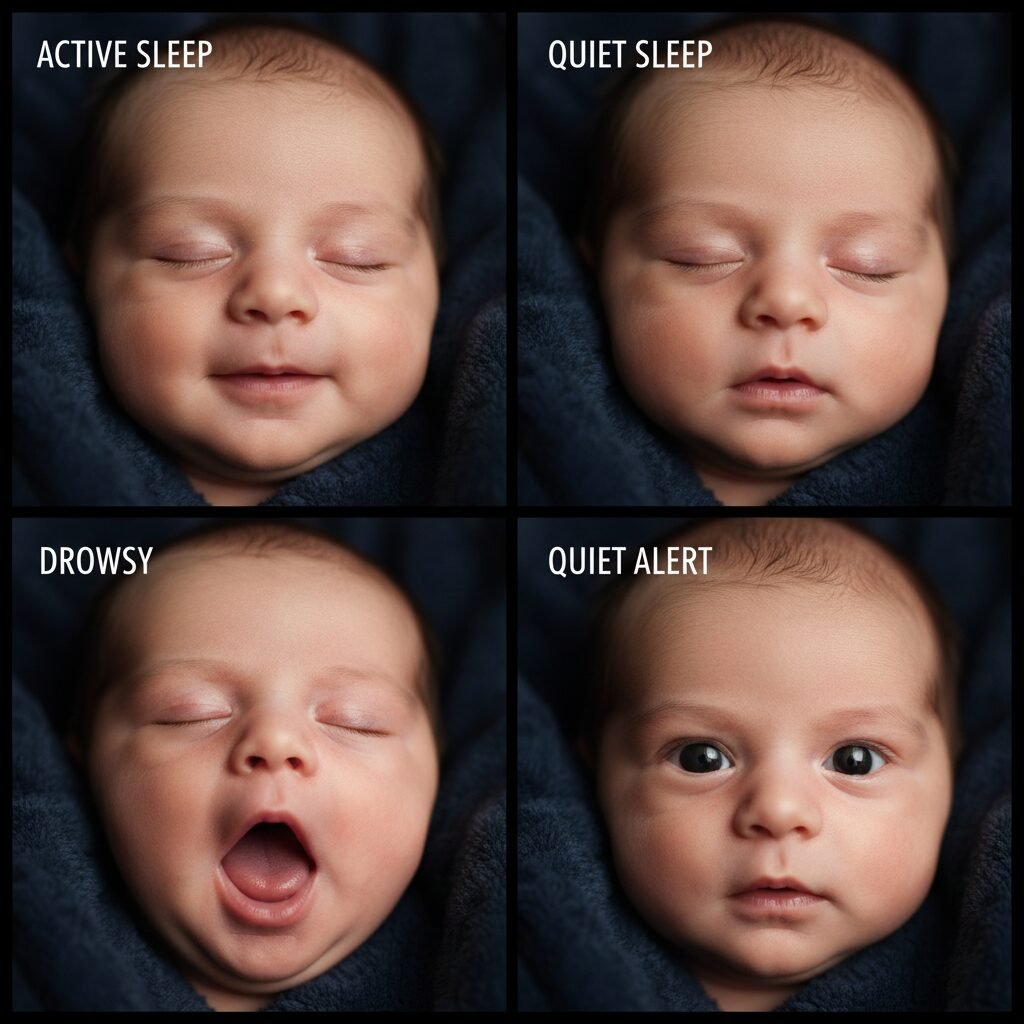
Okay, so you know the ‘what’ and ‘why,’ but the ‘how’ is the big question. How do you tell the difference in the moment, at 3 AM, when you’re exhausted? This is where observation is key. Learning your baby’s cues for each state will empower you to respond appropriately. Let’s break it down.
| State of Being | Eyes | Breathing | Body Movements | Sounds |
|---|---|---|---|---|
| Active Sleep | Closed but fluttering; may open briefly and look glassy. | Irregular; may be fast, then slow, with short pauses. | Lots of twitches, jerks, wiggles, and facial expressions (smiles, frowns). | Grunts, whimpers, sighs, occasional small cries. |
| Quiet Sleep | Firmly closed, no movement. | Deep, regular, and rhythmic. | Very still, with only occasional, sudden startles (Moro reflex). | Mostly silent, except for soft breathing sounds. |
| Drowsiness | Eyes may be opening and closing slowly; look heavy-lidded or unfocused. | Fairly regular, but may still have some sighs. | Smoother, less jerky movements than active sleep; may stretch. | Can be quiet or may have some fussing as they fight sleep. |
| Quiet Alert (Awake) | Open, bright, and focused. Engaged with surroundings. | Regular and steady. | Smooth, intentional movements. Wiggling with purpose. | Generally quiet and content, maybe cooing. This is prime time for interaction! |
| Active Alert (Awake) | Open, but may seem overwhelmed or unfocused due to overstimulation. | Can become irregular if fussy. | Lots of movement, flailing arms and legs, arching back. | Fussing that escalates to crying. This is often a sign they are hungry, uncomfortable, or tired. |
By using this table as a guide, you can become a detective of your baby’s needs. If you see fluttering eyes and twitching fingers but their breathing is rhythmic (in its own irregular way), chances are they’re deep in a developmental dream state. But if those eyes pop open, look right at you, and the movements become more purposeful, they’re likely starting to wake up for real.
The Golden Rule for Active Sleepers: Pause Before You Pounce

Here it is, the single most important piece of advice I can give you for navigating active sleep: wait and watch. Your instinct is to rush in at the first whimper or twitch to comfort your baby. It comes from a place of love, but intervening too quickly is the #1 way to accidentally wake a baby who was perfectly happy in dreamland.
Before you pick them up, give them a moment. Pause for 30-60 seconds and just observe. You will be amazed at how often they settle themselves right back into a deeper, quieter sleep without any help from you.
When you swoop in and pick them up during this phase, you’re interrupting that crucial brain-building work. You’re also potentially teaching them that they always need your help to transition between sleep cycles, which can create challenges down the road. Giving them that moment of space is a gift—it allows them to learn the vital skill of self-settling.
Practical Tips for Managing a Wiggly Sleeper:
- The Safe Swaddle: For many newborns, a snug swaddle can be a lifesaver. It helps to contain their Moro (startle) reflex, which can be strong enough during active sleep to jolt them awake. Ensure the swaddle is snug around the arms but loose around the hips for healthy hip development, and always place your baby on their back to sleep. Stop swaddling once your baby shows signs of trying to roll over.
- Embrace White Noise: A continuous, low-rumbling sound from a white noise machine can work wonders. It mimics the constant sounds of the womb and helps mask household noises that might otherwise startle your baby during the lighter, active sleep stage. It provides a consistent audio environment that helps them link their sleep cycles together.
- The Gentle Touch: If your baby seems to be struggling to settle after a minute of observation, try a gentle, firm hand placed on their chest or a bit of shushing near their ear without picking them up. Sometimes, that simple, reassuring touch is all they need to transition back to quiet sleep.
When Should You Be Concerned? Differentiating Normal Twitches from Red Flags

It’s completely understandable that these jerky movements can sometimes feel worrying. The good news is that the vast majority of the twitches, grunts, and funny faces you see are 100% normal and healthy. However, it’s also important to trust your parental instincts. While rare, there are a few signs that could indicate something more is going on and warrant a call to your pediatrician.
Normal active sleep movements are typically:
- Brief and non-rhythmic.
- Random, affecting different parts of the body at different times.
- Easily stopped by a gentle touch or by repositioning your baby’s limb.
Here are a few red flags to keep in mind:
Signs That Warrant a Check-In:
- Rhythmic, Repetitive Jerking: If the movements are rhythmic and involve the same muscle group over and over (like a consistent beat), and they do not stop when you gently hold the limb, this is worth discussing with your doctor.
- Changes in Breathing: While irregular breathing is normal in active sleep, look out for signs of respiratory distress. This includes consistent flaring of the nostrils, pulling in of the skin at the neck or ribs with each breath (retractions), or pauses in breathing (apnea) that last longer than 15-20 seconds.
- Color Changes: If your baby’s skin, lips, or tongue ever appear dusky or blue during these episodes, seek medical attention immediately.
- Extreme Irritability: If the noises and movements are paired with inconsolable crying and your baby seems to be in pain, it could be a sign of discomfort from something like reflux or gas.
A Reassuring Reminder: These scenarios are very uncommon. The purpose of this list is not to make you anxious, but to empower you. Your job is to love and observe your baby, and when in doubt, your pediatrician is your best partner. Never hesitate to call them for peace of mind.
Conclusion
Navigating the world of newborn sleep can feel like trying to read a map in a foreign language. But every grunt, twitch, and fluttery-eyed smile is just a part of your baby’s unique dialect. Active sleep isn’t a sign of trouble or a failed nap—it’s a beautiful, visible sign of a brain that is growing, learning, and developing at an incredible rate.
So, the next time you find yourself staring at the monitor, questioning if your baby is truly asleep, remember to pause. Take a breath. Watch for a minute. More often than not, you’ll see them drift from that busy, active state into a still, quiet slumber all on their own. By understanding their sleep cycles, you’re not just getting more rest yourself; you’re giving them the space they need to do the important work of growing. You’re learning their language, and soon, you’ll be a fluent and confident expert on your very own baby. You’ve got this.