

Sticky Eyes? The 30-Second Tear Duct Massage That Works Like Magic
You lean over the bassinet to gaze at your perfect, sleeping newborn. You notice their tiny chest rising and falling, their little hands curled into fists, and… wait, what’s that? A little bit of yellowish gunk crusted in the corner of their eye. Your heart does a little flip-flop. Is it an infection? Did you do something wrong? Take a deep, calming breath, new parent. You’re in the right place, and I’m here to tell you that what you’re seeing is incredibly common and usually nothing to worry about.
As a pediatric nurse and lactation consultant, I’ve seen thousands of new babies, and ‘sticky eyes’ are one of the top concerns I hear from parents. The culprit is almost always a harmless and temporary plumbing issue known as a blocked tear duct. And the best news? There’s a wonderfully simple, gentle, and effective technique you can use right at home to help resolve it. In this guide, we’ll walk through exactly what’s happening with your baby’s eyes and learn the 30-second tear duct massage that truly can work like magic.
What’s Causing My Baby’s Goopy Eyes? Understanding Blocked Tear Ducts

What’s Causing My Baby’s Goopy Eyes? Understanding Blocked Tear Ducts
Before you can fix a problem, it helps to understand what’s going on. Think of your baby’s tear system as tiny, internal plumbing. Tears are produced in a gland under the upper eyelid, wash over the eye to keep it clean and moist, and then drain out through two tiny openings (puncta) in the inner corner of the eye. From there, they travel down a small canal called the nasolacrimal duct and empty into the back of the nose. (This is why your nose runs when you cry!)
In many newborns, the very end of this duct has a tiny membrane or valve that hasn’t quite popped open yet. It’s like a little door that’s still stuck shut after birth. When this happens, the tears have nowhere to go. They back up and spill over onto the eyelashes and cheeks, making the eye look constantly watery. The ‘gunk’ or ‘goop’ you see is a mix of these stagnant tears, normal eye mucus, and skin cells that can accumulate. It’s not usually a sign of infection, but rather a sign of a traffic jam in the tear duct.
Signs of a Simple Blocked Tear Duct:
- Watery Eyes: One of the most common signs is a single eye that always seems to be tearing up, even when your baby isn’t crying.
- White or Yellowish Discharge: You may notice a small amount of mucus-like discharge collecting in the corner of the eye.
- Crusty Eyelashes: This discharge can dry and form a crust on the eyelashes, especially after a nap or a night’s sleep.
- It Can Affect One or Both Eyes: While it often happens in just one eye, it’s not uncommon for both to be affected.
Rest assured, this is one of the most common newborn hiccups, affecting up to 20% of babies. It almost always resolves on its own within the first year, and a little gentle help from you can speed up the process!
The Gentle Art of Tear Duct Massage: A Step-by-Step Guide

The Gentle Art of Tear Duct Massage: A Step-by-Step Guide
This simple massage, known as the Crigler massage, helps apply gentle pressure to the tear sac, which can encourage that little membrane at the end of the duct to pop open. It sounds technical, but it’s incredibly easy. Think of it as your little magic trick to get the plumbing working!
Before You Begin: The Golden Rules
- Wash your hands! This is non-negotiable. Always wash your hands thoroughly with soap and water before touching your baby’s face.
- Keep fingernails short and clean. You want to avoid any accidental scratches.
The 30-Second Technique:
- Find a Calm Moment: Choose a time when your baby is calm and relaxed, like during a diaper change, after a warm bath, or while they are feeding peacefully.
- Get in Position: Using the pad of your clean index or pinky finger, find the firm little area on the side of your baby’s nose, right between the inner corner of their eye and the bridge of their nose. This is where the tear sac is located.
- Apply Gentle Pressure: Place your finger on this spot and apply firm, but very gentle, pressure. How gentle? Imagine the pressure you’d use to check if an avocado is ripe, or the pressure you could comfortably apply to your own closed eyelid.
- The Magic Stroke: While maintaining this gentle pressure, firmly stroke your finger downwards, along the side of the nose. This single, smooth stroke helps push the trapped tears down the duct, applying hydraulic pressure on that stubborn little membrane.
- Repeat and Clean: Repeat this downward stroke 5 to 10 times. You might see a little gush of tears or discharge from the eye’s inner corner—that’s a great sign it’s working! Gently wipe it away with a clean, warm, damp cloth, always wiping from the inside corner outwards.
How Often Should I Do This?
Consistency is your best friend here. Aim to perform this massage two to four times a day. Tying it to a routine you already have, like every morning and evening diaper change, makes it easy to remember.
Don’t be discouraged if it doesn’t clear up overnight! It can take a few days or even a couple of weeks of consistent, gentle massage to encourage the duct to open. You’ve got this!
Simple Home Care Tips for Happy, Healthy Eyes
Simple Home Care Tips for Happy, Healthy Eyes
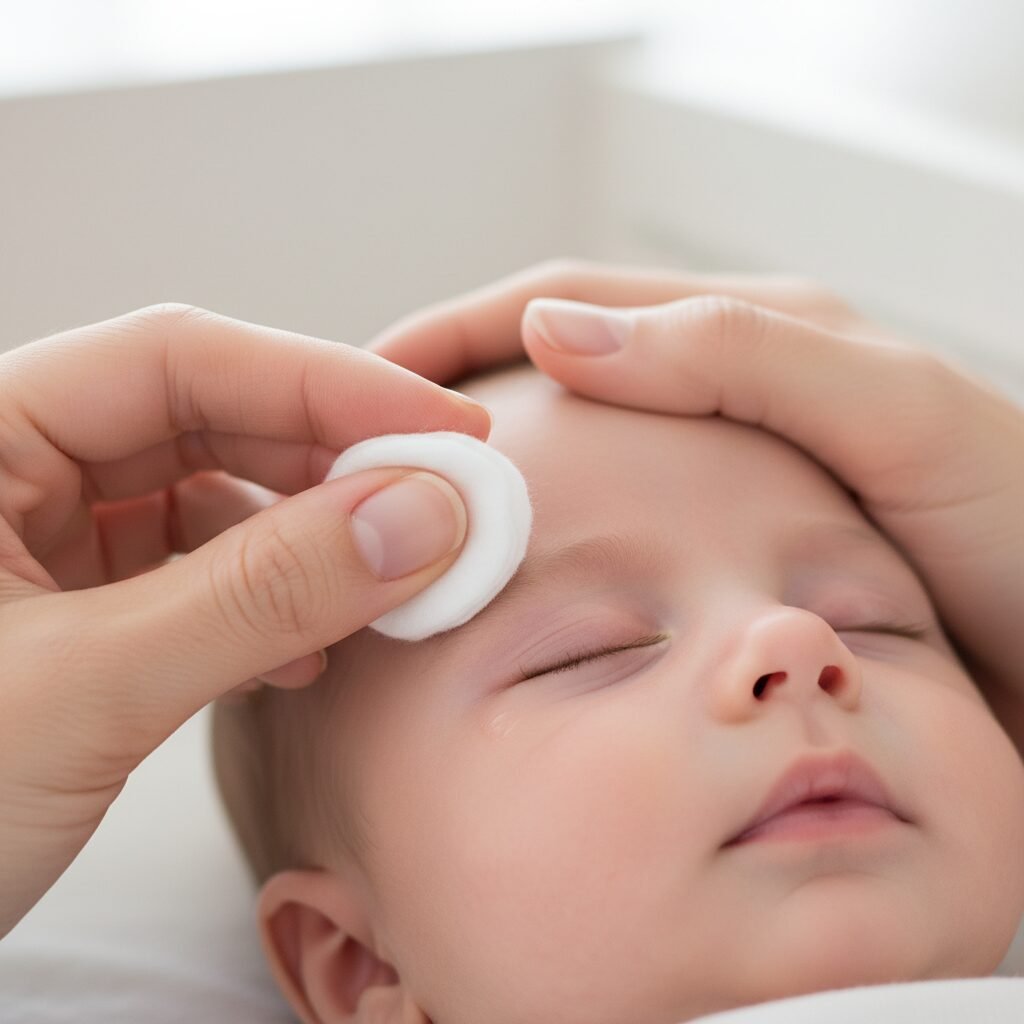
Alongside the massage, keeping the area clean is crucial to prevent any irritation or potential for infection. Here’s how to do it safely and effectively.
Keeping it Clean and Comfortable
The goal is to gently remove the discharge without introducing any new bacteria or irritating your baby’s delicate skin.
- Warm Water is Best: Moisten a clean, soft washcloth or a fresh cotton ball with warm (not hot!) water. Squeeze out any excess.
- Wipe From Inside Out: Always start at the inner corner of the eye (near the nose) and gently wipe outwards. This motion pulls the gunk away from the tear duct.
- One and Done: Use a fresh part of the washcloth or a new cotton ball for each and every wipe. Never double-dip or wipe back and forth, as this can reintroduce debris into the eye.
The Breast Milk Myth: What’s the Deal?
You may have heard from a well-meaning relative or a forum online that putting a few drops of breast milk into your baby’s eye can help. It’s a piece of advice that has been passed down for generations. While it comes from a place of love—and it’s true that breast milk contains amazing antibodies and antimicrobial properties—it’s not recommended by pediatricians for a blocked tear duct.
The issue is that a blocked tear duct is a physical blockage, not an infection. While breast milk isn’t likely to cause harm, it’s not a sterile solution and there’s no scientific evidence that it can open the duct. Sticking to simple, clean water is the safest and most effective way to clean the area.
Let’s save that liquid gold for feeding time! For cleaning your baby’s delicate eyes, pure, warm water is all you need to get the job done safely.
Red Flags: When to Call Your Pediatrician

Red Flags: When to Call Your Pediatrician
While the vast majority of sticky eye cases are simple blocked tear ducts, it’s vital to know the signs that might point to something more serious, like an infection. Your parental intuition is your greatest tool, and you should never hesitate to reach out to your doctor if you’re concerned. That’s what we are here for!
Call your pediatrician or seek medical advice if you notice any of the following:
- Thick, Green, or Copious Yellow Discharge: A small amount of whitish-yellow gunk is normal for a blocked duct. However, if the discharge becomes thick, green, or there’s a lot of it, it could signal a bacterial infection.
- Redness of the White Part of the Eye: If the sclera (the white part) of your baby’s eye appears pink or red, it could be conjunctivitis (pinkeye), which requires treatment.
- Swelling, Redness, or Tenderness of the Eyelids: A simple blocked duct shouldn’t cause the eyelids themselves to become puffy, red, or tender to the touch.
- A Red, Swollen, Painful Bump Near the Inner Corner of the Eye: This can be a sign of dacryocystitis, an infection of the tear sac itself, which requires prompt medical attention and antibiotics.
- Your Baby Seems to be in Pain: If your baby is unusually fussy, seems bothered by light, or cries when you touch the area near their eye, it’s time to call the doctor.
- No Improvement or Worsening Symptoms: If you’ve been diligently massaging and cleaning for a week with no improvement, or if the symptoms are getting worse, check in with your pediatrician.
- The Issue Persists Past 12 Months: If your little one is still struggling with a blocked tear duct as they approach their first birthday, your doctor may refer you to a pediatric ophthalmologist for a simple procedure to open the duct.
Remember, you know your baby best. If your gut tells you something isn’t right, a phone call to your pediatrician’s office is always the right move. It provides peace of mind and ensures your baby gets the care they need, when they need it.
Conclusion
Navigating the world of newborn care is full of little mysteries, and a goopy eye is one of the first many parents encounter. Now you know that it’s rarely a cause for alarm and is most often just a sign of a tiny tear duct waiting to finish its development. By using the gentle, 30-second massage technique and keeping the area clean, you are actively helping your baby’s body work things out.
Be patient, be consistent, and be gentle. You are doing an amazing job learning your baby’s unique needs. Before you know it, this little hiccup will be a distant memory, and you’ll be gazing into those beautiful, bright, and perfectly clear eyes. Keep up the amazing work!