

Why Smart Moms Are Switching to Low EMF Baby Monitors in 2026
Welcome to parenthood! If you’re currently navigating a sea of baby products, feeling both excited and a little overwhelmed, take a deep breath. You are in the right place. One of the most common items on every new parent’s checklist is a baby monitor. It’s our little window into the nursery, offering reassurance while our baby sleeps. But as technology evolves, so do the questions we ask about the products we bring into our homes.
You may have seen the term ‘low EMF’ popping up and wondered what it’s all about. It sounds technical, and frankly, a little intimidating. But don’t worry! As a pediatric nurse and lactation consultant, my goal is to cut through the noise and give you clear, practical information. We’re seeing a huge shift in 2026, with more and more parents consciously choosing low EMF baby monitors. This isn’t about fear; it’s about being informed. In this guide, we’ll explore what EMF is in simple terms, why it’s a conversation worth having, and how you can choose a monitor that helps everyone in the family rest a little easier.
What Exactly is EMF and Why is it a Buzzword in the Nursery?
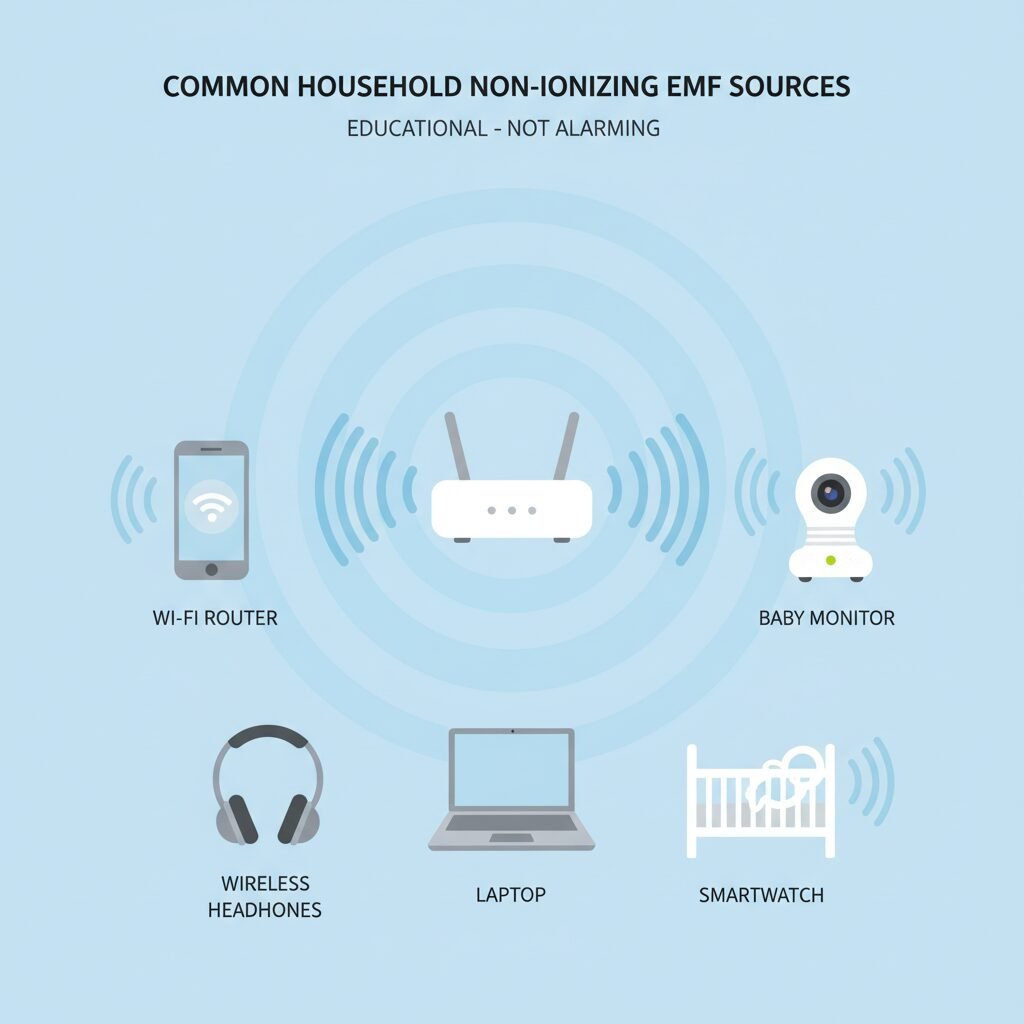
Let’s start by demystifying this three-letter acronym. EMF stands for Electromagnetic Fields. Think of them as invisible waves of energy. They’re all around us, and they’re not new. The earth has natural EMFs, but the ones we’re talking about here are man-made, coming from the electronic devices that make our lives easier, like our Wi-Fi routers, cell phones, microwaves, and yes, baby monitors.
There are two main types of EMF radiation:
- Ionizing radiation: This is high-frequency, high-energy radiation, like X-rays and gamma rays. We know this type can be harmful in high doses, which is why we wear lead aprons at the dentist!
- Non-ionizing radiation: This is low-frequency, low-energy radiation. This is the type emitted by our everyday household gadgets, including baby monitors.
The current scientific consensus is that the low levels of non-ionizing radiation from home devices are not harmful. However, the conversation is shifting. The concern isn’t about a single, brief exposure, but rather the constant, cumulative exposure, especially for tiny, developing babies who are more vulnerable. A baby monitor is often placed just a few feet from a baby’s head and runs for hours every single day and night. This close proximity and long duration are why parents are starting to look for lower-emission alternatives.
It’s not about eliminating all technology from the nursery. It’s about making smarter, more conscious choices to reduce unnecessary exposure where we can. Think of it as choosing an organic apple—it’s one small, proactive step towards creating the healthiest environment possible for your child.
The Old Guard vs. The New: How Traditional Monitors Differ from Low EMF Models
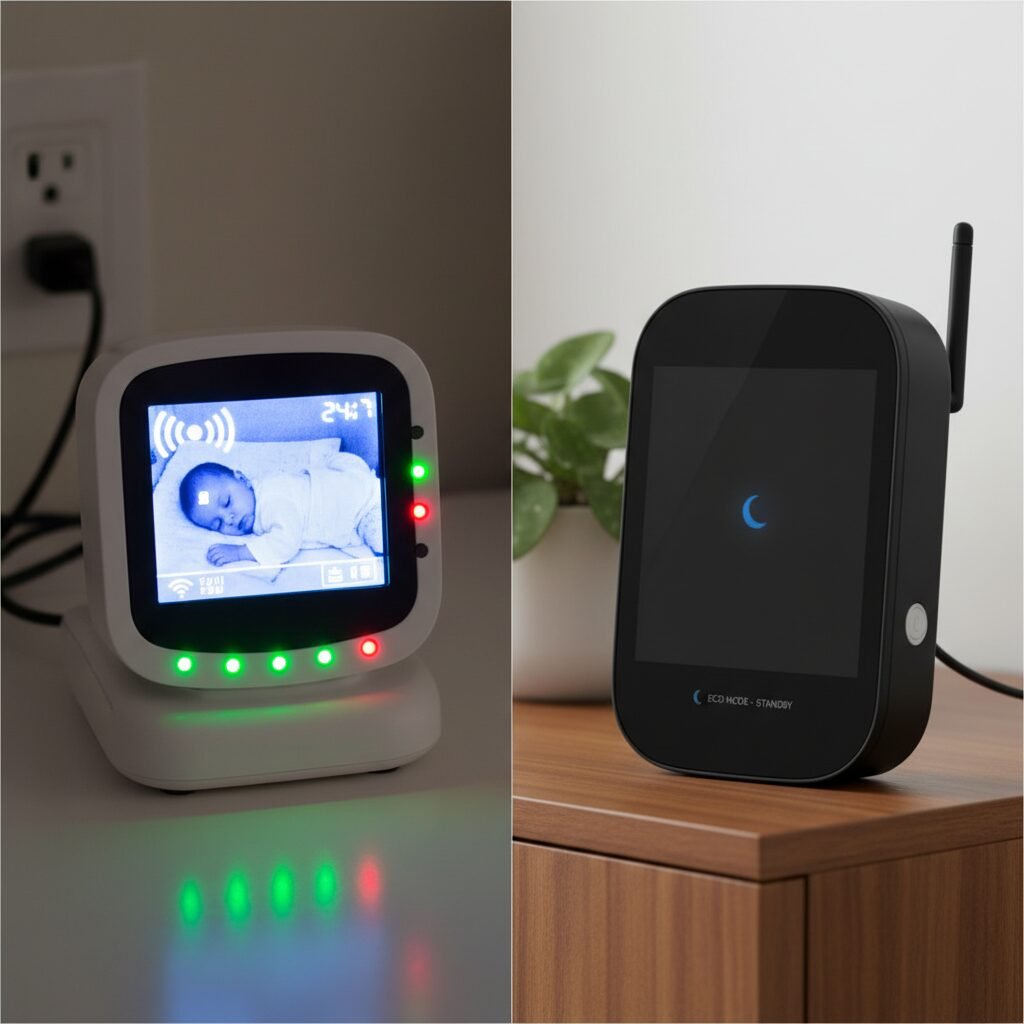
When you start shopping, you’ll see a few main types of monitors. Understanding how they work is the key to understanding their EMF output. Standard digital (DECT) and Wi-Fi monitors are incredibly popular for their clear signals and fancy features, but they work by constantly transmitting a signal—like a tiny cell tower in your nursery.
Low EMF monitors, on the other hand, are designed to minimize this transmission. They operate on a simple principle: only transmit when necessary. Here’s a breakdown of the key differences:
| Feature | Traditional Wi-Fi / DECT Monitor | Low EMF Monitor |
|---|---|---|
| How it Transmits | Constantly sends a signal (like a Wi-Fi router) to stay connected, 24/7. | Transmits only when sound is detected (Voice Activated). Otherwise, it’s in a passive/standby mode. |
| EMF Emission Level | Higher due to the continuous ‘always-on’ signal, which is often pulsed at a high frequency. | Significantly lower (up to 95% less) because it’s not transmitting most of the time. |
| Key Technology | Often uses DECT 6.0 or connects via your home Wi-Fi network. | Relies on Voice-Activation (VOX/ECO Mode). Some models use older, reliable Analog technology. |
| Main Benefit | Crystal-clear audio, video streaming to your phone, and extra features like temperature sensors. | Peace of mind from dramatically reduced EMF exposure in the baby’s sleep space. |
| Potential Drawback | Continuous radiation exposure, even when the baby is sleeping silently. | May have a shorter range than DECT or fewer ‘smart’ features than Wi-Fi models. |
The biggest takeaway here is the introduction of VOX (Voice Operated Exchange) or ECO Mode. This is the game-changing feature in low EMF monitors. The monitor essentially ‘sleeps’ until your baby makes a noise, at which point it activates and sends a signal to your parent unit. No sound? No signal. It’s that simple, and it makes a world of difference.
Your Low EMF Baby Monitor Shopping Checklist: Features That Matter Most
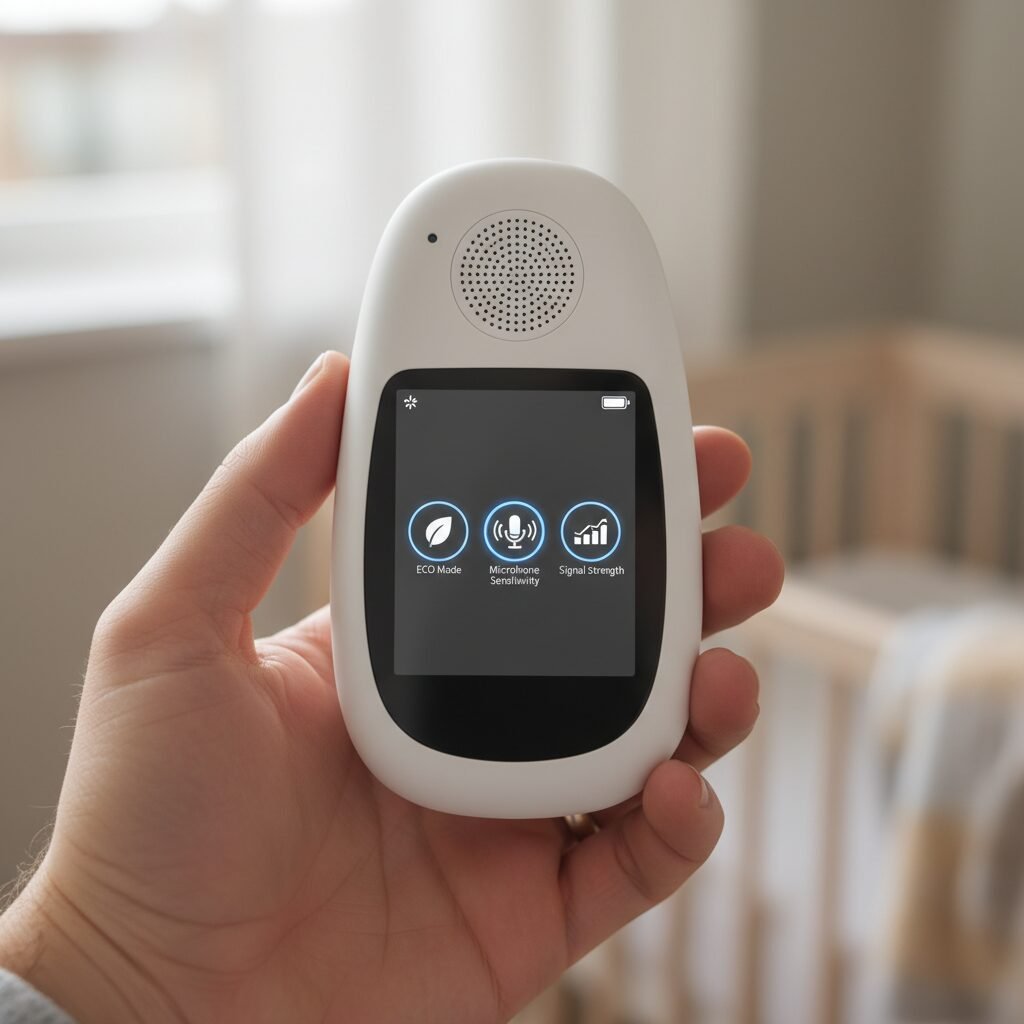
Ready to shop smart? When you’re comparing models, don’t just look at the camera resolution or whether it plays lullabies. Keep this checklist handy to find a truly low-EMF option that puts safety first.
Must-Have Features:
- VOX or ECO Mode with Zero-Emission Standby: This is non-negotiable. Look for a monitor that explicitly states it stops transmitting completely when in standby. Some monitors just lower the power, but the best ones shut off the signal entirely until sound is detected.
- Analog Technology: While most monitors are digital, true analog monitors are making a comeback. They transmit a continuous, non-pulsed signal (like a radio station) and have zero latency. While there’s still a signal, many experts consider it less biologically disruptive than the pulsed microwave signals of digital and Wi-Fi units.
- Adjustable Microphone Sensitivity: This feature allows you to control how much noise is needed to activate the monitor. You can set it so it doesn’t turn on for every little sigh or rustle, further reducing transmission time.
Nice-to-Have Features:
- Wired Connection Option: Some top-tier video monitors offer the ability to connect the parent unit and camera via an Ethernet cable. This creates a completely wired, zero-wireless-emission system—the gold standard for concerned parents.
- Range and Power Control: A monitor that lets you adjust the transmission power can be a great way to minimize EMF. If your bedroom is right next to the nursery, you don’t need a monitor blasting a signal powerful enough to reach the backyard.
- Clear Labeling and SAR Values: Look for brands that are transparent about their technology. Some may even publish their SAR (Specific Absorption Rate) values, which measure the rate of radiofrequency energy absorbed by the body. Lower is better!
Smart Nursery Setup: Practical Tips for Minimizing EMF Exposure
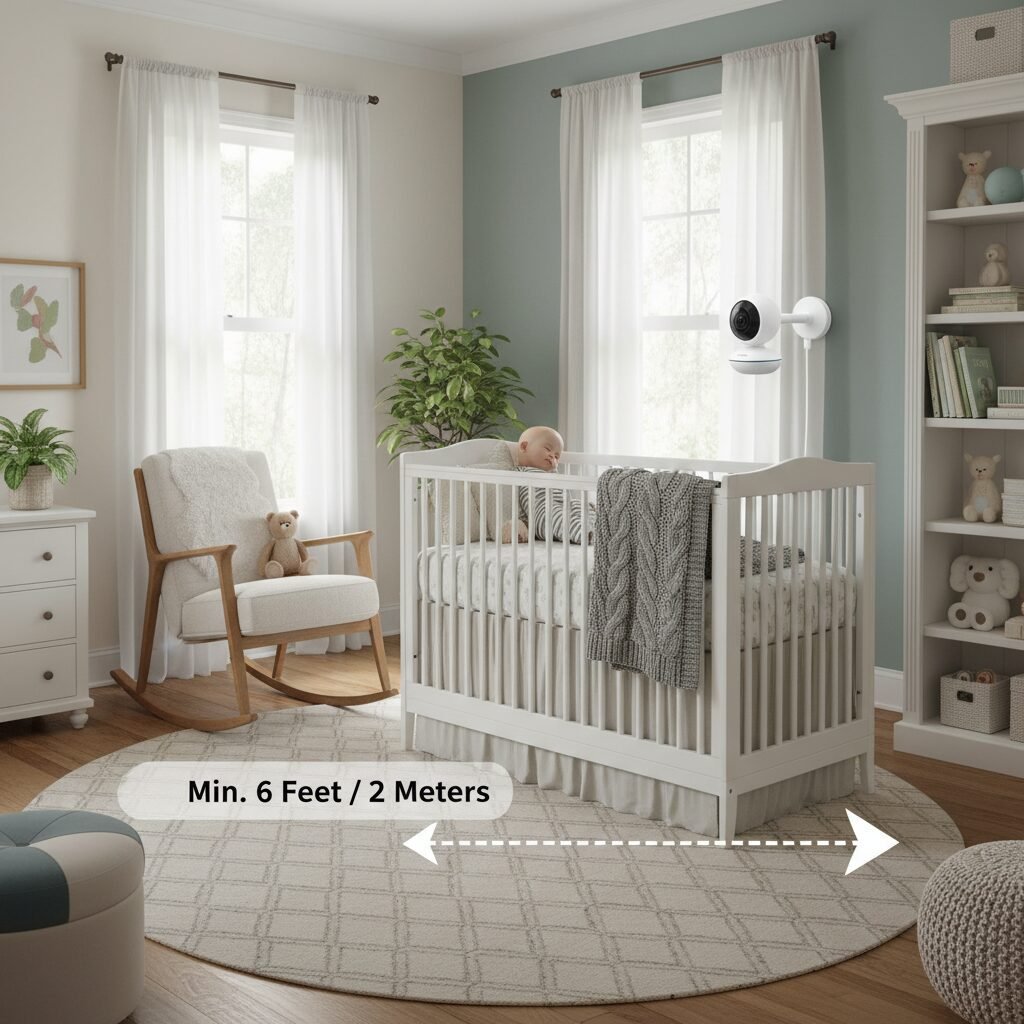
Buying the right monitor is a huge step, but how you set up your nursery can also make a big difference. These are simple, actionable steps you can take today to create a lower-EMF environment for your little one, regardless of the monitor you choose.
- Embrace the Distance Rule: This is the most important tip. The strength of an electromagnetic field drops off dramatically with distance. Never place the baby monitor’s camera or transmitter inside the crib. Aim for a distance of at least 6 feet from your baby’s head. Place it on a bookshelf or mount it on a wall across the room.
- Position Other Electronics Wisely: Think about what’s on the other side of the nursery wall. Is it your entertainment center or Wi-Fi router? If possible, try to arrange furniture so the crib isn’t directly against a wall with major electronics on the other side.
- Turn Off Your Wi-Fi at Night: If you’re not using it, why leave it running? Getting a simple outlet timer for your Wi-Fi router can be an easy way to reduce the ambient EMF in your home for 8-10 hours every night.
- Charge Devices Outside the Nursery: Keep cell phones, tablets, and cordless phone bases out of the baby’s room. Use the nursery as a peaceful, tech-free sanctuary for sleep.
Safety First: When mounting a monitor or any device on the wall, ensure that all cords are completely out of your baby’s reach. Secure them tightly to the wall to prevent any risk of entanglement as your baby grows and becomes more mobile.
Conclusion
Navigating the world of baby gear can feel like a full-time job, but you’re already doing an amazing job by asking these thoughtful questions. Choosing a low EMF baby monitor isn’t about adding one more thing to your worry list; it’s about taking one thing off. It’s a simple, proactive choice that allows you to leverage modern technology for peace of mind while consciously reducing your baby’s exposure to unnecessary electromagnetic fields.
Remember, the goal is not perfection, but balance. By focusing on features like voice activation and prioritizing distance in your nursery setup, you are creating a safer, healthier sleep environment for the newest member of your family. You’ve got this, and every considered decision you make is a beautiful reflection of your love and care.