
Is This Normal? The Ultimate Newborn Poop Guide Every Mom Needs Saved
Hey there, new mama. Let’s talk about something you’ve probably spent more time thinking about in the last few weeks than you ever thought possible: baby poop. It’s okay, you can admit it! From the moment that first diaper appears, we become obsessed. Is it the right color? The right texture? Is that too much? Is that not enough? Welcome to the club! As a pediatric nurse and lactation consultant, I’ve spent decades reassuring parents that this obsession is completely normal. Your baby’s diapers are one of the best windows you have into their health and development. But it can be confusing! That’s why I’ve created this ultimate guide. We’re going to break it all down—from that first tarry surprise to the rainbow of ‘normal’ that follows. So take a deep breath, grab your coffee, and let’s decode those diapers together. Consider this your official permission to stop worrying and start understanding.
What in the World is Meconium? Your Baby’s First Poops Explained
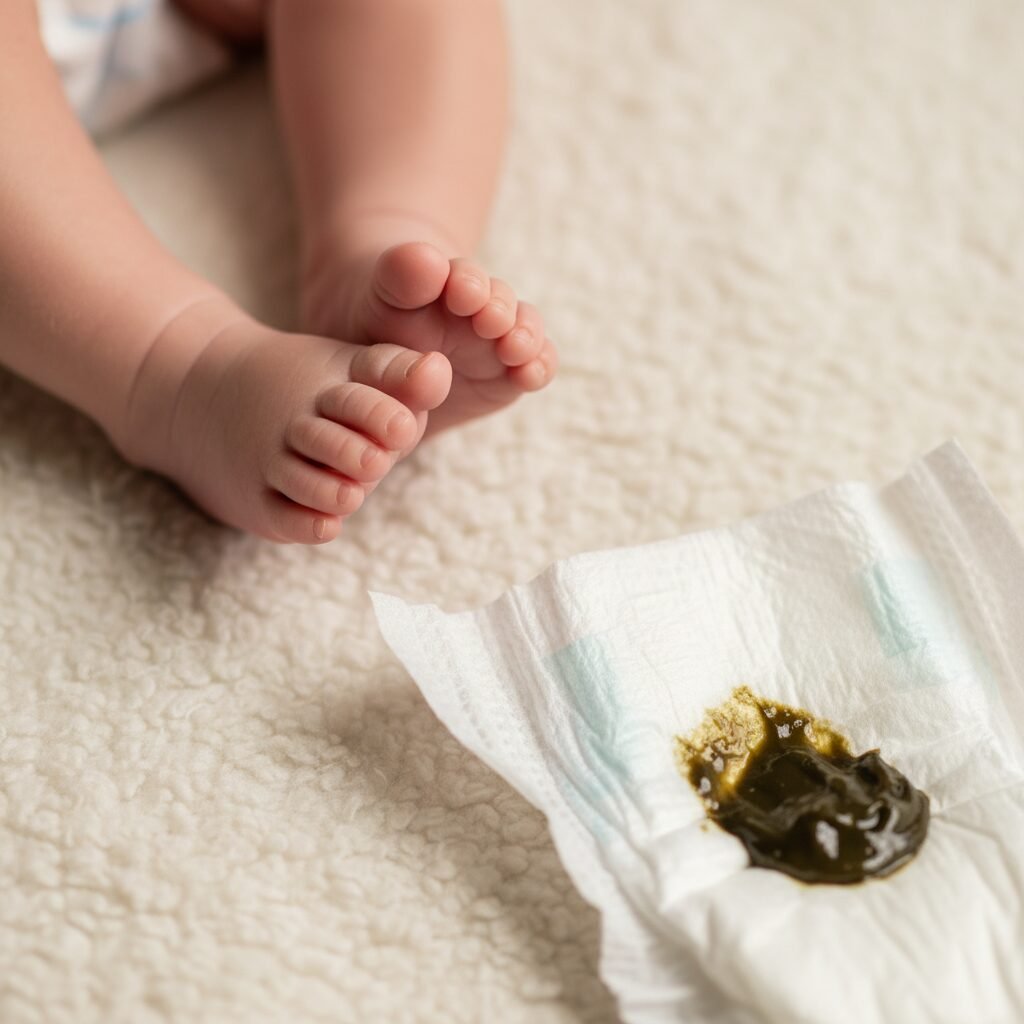
Before you get to the classic baby poops, you have to get through the first kind: meconium. If you’ve never seen it, it can be a bit of a shock! But I promise, it’s a wonderful sign that your baby’s digestive system is kicking into gear.
What is Meconium?
Meconium is your baby’s very first bowel movement. It’s not poop in the traditional sense, as it’s not the result of digesting milk. Instead, it’s made up of all the things your baby ingested while hanging out in the womb for nine months. This includes amniotic fluid, lanugo (the fine hair that covers their body), mucus, and skin cells. It’s a sterile, tar-like substance that has been building up in their intestines.
What Does It Look Like?
Imagine a thick, sticky, dark greenish-black tar. That’s meconium. It’s notoriously difficult to wipe off your baby’s delicate skin. Pro Tip: Applying a thin layer of a petroleum-free ointment to your baby’s bottom before that first poop can make cleanup much easier! It creates a barrier that the sticky meconium can’t cling to as tightly.
How Long Does It Last?
You can expect to see meconium for the first 24 to 48 hours of your baby’s life. As your baby starts drinking colostrum (your first milk) or formula, their system will start flushing the meconium out. You’ll then see ‘transitional stools,’ which are a mix of meconium and digested milk. They often look greenish-brown and are less sticky. Seeing these transitional poops is a great sign that your baby is feeding well and their digestive tract is maturing. By day three or four, the meconium should be completely gone, making way for the next phase of newborn poop.
Don’t be alarmed by the appearance of meconium! Its passage is a critical milestone, showing that your baby’s bowels are working correctly. If you do not see a meconium stool within the first 24-48 hours, it’s important to let your pediatrician know.
The Newborn Poop Color Chart: What’s Normal for Breastfed and Formula-Fed Babies
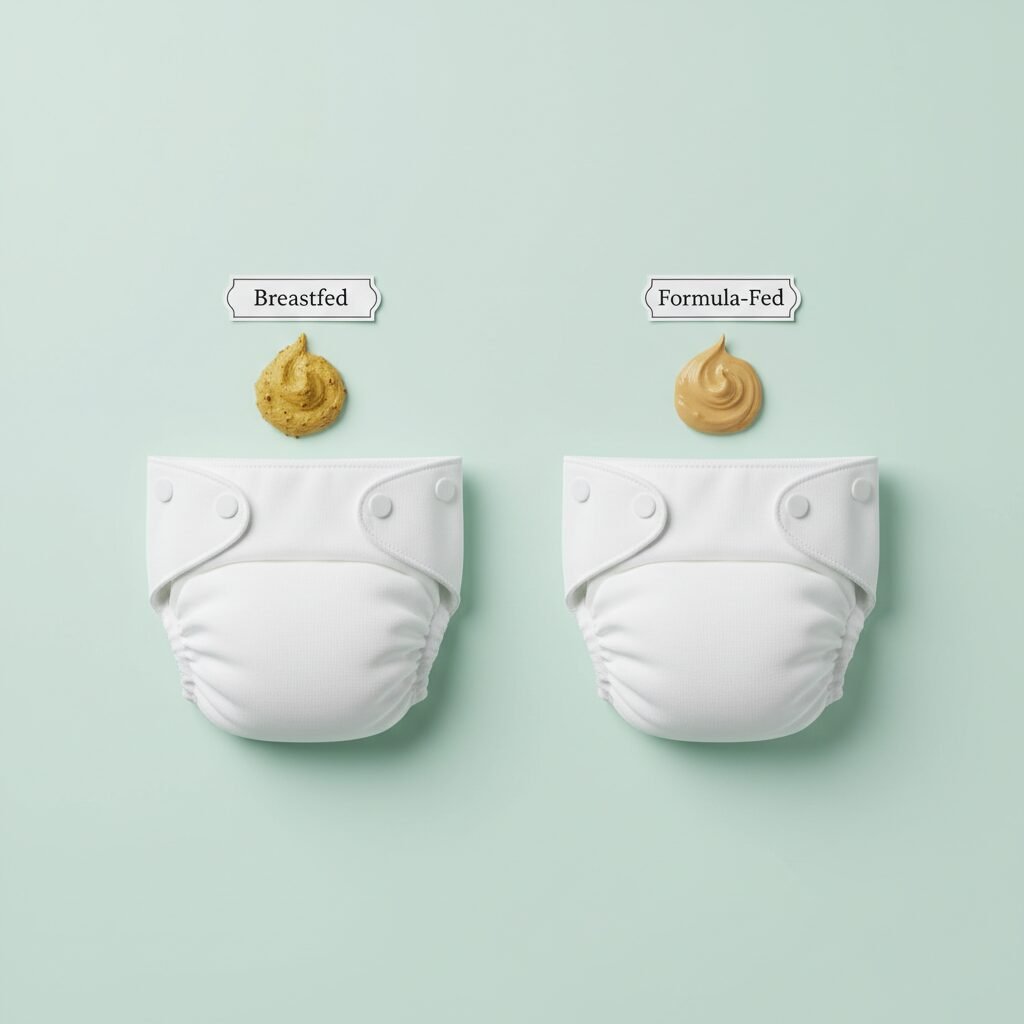
Once the meconium has passed, you’ll settle into a new normal. But that ‘normal’ looks very different depending on how your baby is fed. It’s not a case of one being ‘better’ than the other—it’s just different! Think of it like this: what you put in directly affects what comes out. Let’s break down the key differences in a way that’s easy to see.
Here is a handy cheat sheet to help you quickly identify what’s likely going on in that diaper:
| Characteristic | Exclusively Breastfed Baby Poop | Formula-Fed Baby Poop |
|---|---|---|
| Color | Mustard yellow, golden, or bright yellow. Can sometimes have a greenish tint, which is also normal. | Tan, yellow-brown, or light brown. It’s a bit darker and more varied than breastfed poop. |
| Consistency | Loose, creamy, or even watery. It often has little white specks that look like seeds—these are undigested milk fats and totally normal! | Thicker, with a consistency similar to peanut butter, hummus, or paste. |
| Smell | Surprisingly mild and almost sweet-smelling. It doesn’t typically have a strong, offensive odor. | More pungent and closer to the smell of adult poop. You’ll definitely know when a poop has happened! |
| Frequency | Very frequent in the early weeks, often after every single feeding (8-12 times a day). After 4-6 weeks, it can slow down dramatically to once a day or even once every 7-10 days. This is normal! | Typically less frequent than breastfed babies, usually 1-4 times per day. They tend to be more regular and predictable. |
What About Green Poop?
Seeing a green diaper can be startling, but it’s often perfectly normal. Here are a few common reasons for green poop:
- Foremilk/Hindmilk Imbalance: In breastfed babies, sometimes a frothy green poop can mean they’re getting too much of the watery, sugary foremilk and not enough of the fatty, rich hindmilk. Trying to empty one breast completely before offering the other can help.
- Mom’s Diet: If you’re breastfeeding, something you ate (like lots of green veggies or iron supplements) can sometimes affect the color.
- Iron in Formula: Formulas fortified with iron can often cause dark green or almost blackish-green stools. This is normal and just means your baby’s body is processing the iron.
- A Minor Bug: Sometimes a little tummy bug can cause green, watery stools for a day or two. As long as your baby is happy and hydrated, it’s usually nothing to worry about.
The key is to look at the whole picture. Is your baby happy, feeding well, and gaining weight? If so, a little color variation is usually just part of the newborn journey.
How Often Should a Newborn Poop? Unraveling Frequency & Consistency
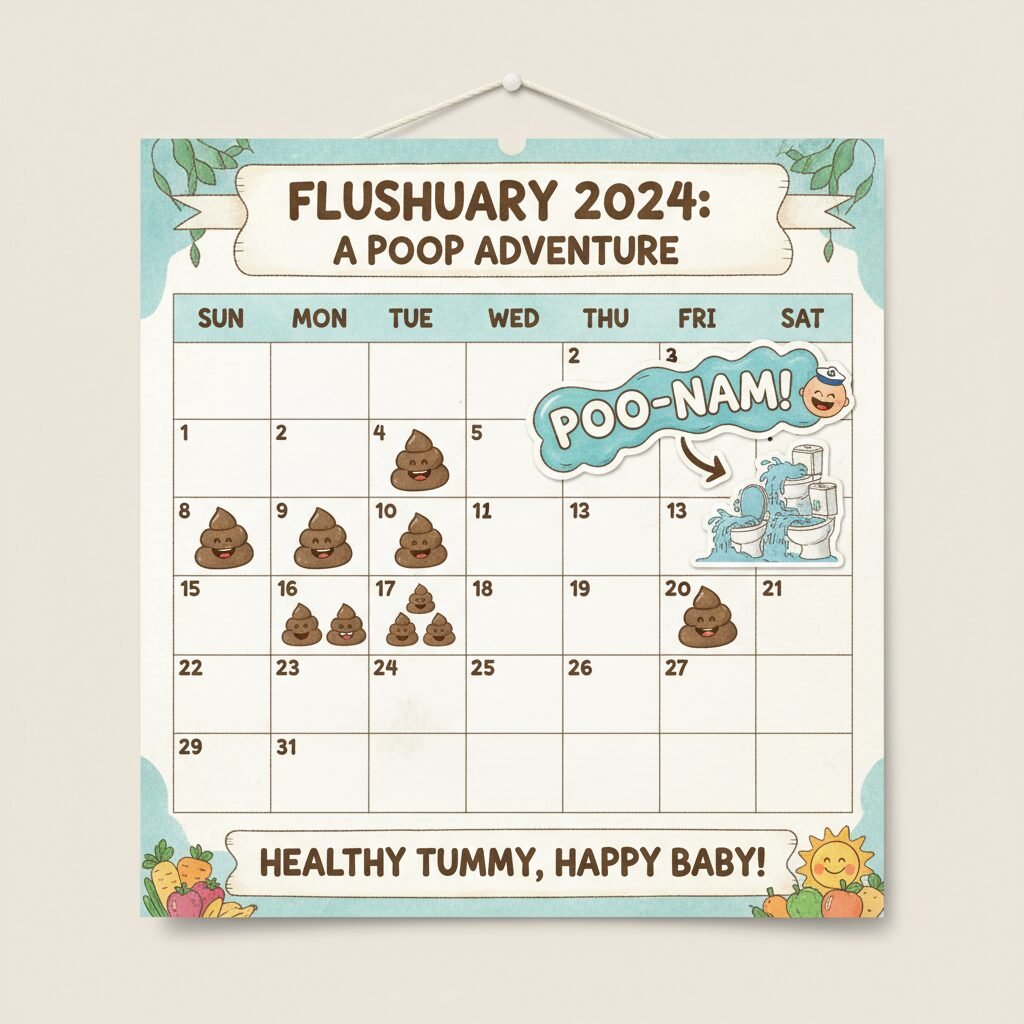
Along with color, frequency is the other big question that keeps parents up at night. Is my baby pooping too much? Not enough? The answer, like most things with babies, is: it depends! The range of normal is incredibly wide.
The First Six Weeks: A Poop Factory
In the first month and a half, expect a lot of diapers. A lot. For a breastfed baby, it’s common to have a bowel movement after nearly every feeding. This can be anywhere from 5 to 12 times a day! It’s a sign that they’re getting plenty of milk and their system is working beautifully. Formula-fed newborns tend to go a bit less often, maybe 3-5 times a day, but it can still be quite frequent.
After Six Weeks: The Great Slowdown
Right around the 6-week mark, something amazing (and sometimes terrifying for parents) can happen, particularly with exclusively breastfed babies. Their digestive systems mature, and human milk is so perfectly designed for them that there’s very little waste product. Suddenly, your baby who pooped 10 times a day might go a full day… then two… then five… then maybe even a week or longer without a single poopy diaper! As long as their tummy is soft, they aren’t in pain, and the eventual poop is soft and massive (the ‘poo-nami’ is real!), this is 100% normal. Formula-fed babies tend to stay more regular, but their frequency might also decrease to once a day or once every other day.
What’s the Difference Between Normal Straining and Constipation?
Babies are still learning how to coordinate their muscles. It’s very common to see them grunt, groan, turn red, and push with all their might to pass a perfectly soft stool. This is called infant dyschezia, and it’s not constipation. They are learning to relax their pelvic floor while pushing with their abdominal muscles—it’s a tricky skill!
True constipation is not about frequency; it’s about consistency. A constipated baby will pass hard, dry, pellet-like stools. It will likely be painful for them, and you might even see a little streak of blood on the outside of the poop from a tiny tear.
If you see hard, pebble-like poops, it’s time to call your pediatrician. Do not give your newborn water, juice, or any kind of laxative without direct medical advice.
The ‘Call Your Pediatrician’ Cheat Sheet: Poop Colors and Signs to Watch For

Okay, we’ve covered the huge spectrum of normal. Now, let’s talk about the important part: the warning signs. While most diaper changes are nothing to worry about, there are a few red flags that should always prompt a call to your pediatrician. Your intuition as a parent is powerful, so if something feels off, it’s always better to get it checked out.
Here are the specific poop characteristics that warrant a phone call:
- Red Poop: Bright red streaks could be from a small anal fissure (a tiny tear) due to straining, which is usually not a big deal. However, significant amounts of red blood or poop that looks like red currant jelly could signal a more serious issue, like an infection or allergy. Always call your doctor about red in the diaper.
- Black Poop: After the first few days of meconium, poop should not be black. Black stools can indicate digested blood coming from higher up in the digestive tract. The only exception is if your doctor has prescribed an iron supplement, which can sometimes darken stools.
- White, Chalky, or Pale Gray Poop: This is a major red flag. Acholic (pale) stools can be a sign of a serious liver or gallbladder problem. This needs to be evaluated immediately. Think of the color of pale clay or chalk.
- Consistently Watery Stools: One or two watery diapers isn’t a concern. But if your baby has frequent, watery stools that seem to soak right into the diaper (diarrhea), it could lead to dehydration. Call your doctor if it lasts for more than 24 hours or is accompanied by a fever or lack of wet diapers.
- Mucus in Poop: A little bit of mucus can be normal, especially if your baby is drooling a lot. However, large amounts of stringy, slimy mucus, especially if accompanied by green poop and fussiness, can be a sign of an infection or a food allergy/intolerance (like to cow’s milk protein).
- Hard, Pellet-Like Poop: As we discussed, this is true constipation. While often manageable, it’s important to get guidance from your pediatrician on how to help your little one get comfortable again.
Your Peace of Mind Matters Most. Never hesitate to call your pediatrician’s office. That’s what they are there for! It is always better to call and be told everything is fine than to wait and worry. There is no such thing as a ‘silly question’ when it comes to your baby’s health.
Conclusion
Congratulations, you’ve made it through Newborn Poop 101! If you take away anything from this guide, let it be this: the range of ‘normal’ is massive. Your baby’s poop will change color, consistency, and frequency countless times in these first few months, and most of those changes are just a sign of their tiny body growing and adapting. You’ll quickly become the world’s leading expert on your own child’s digestive habits. Trust those instincts. You know your baby better than anyone. When you’re armed with a little knowledge and a lot of love, you can handle whatever that next diaper throws at you. So, take a breath, enjoy the snuggles, and know that you are doing an amazing job. You’ve got this.