
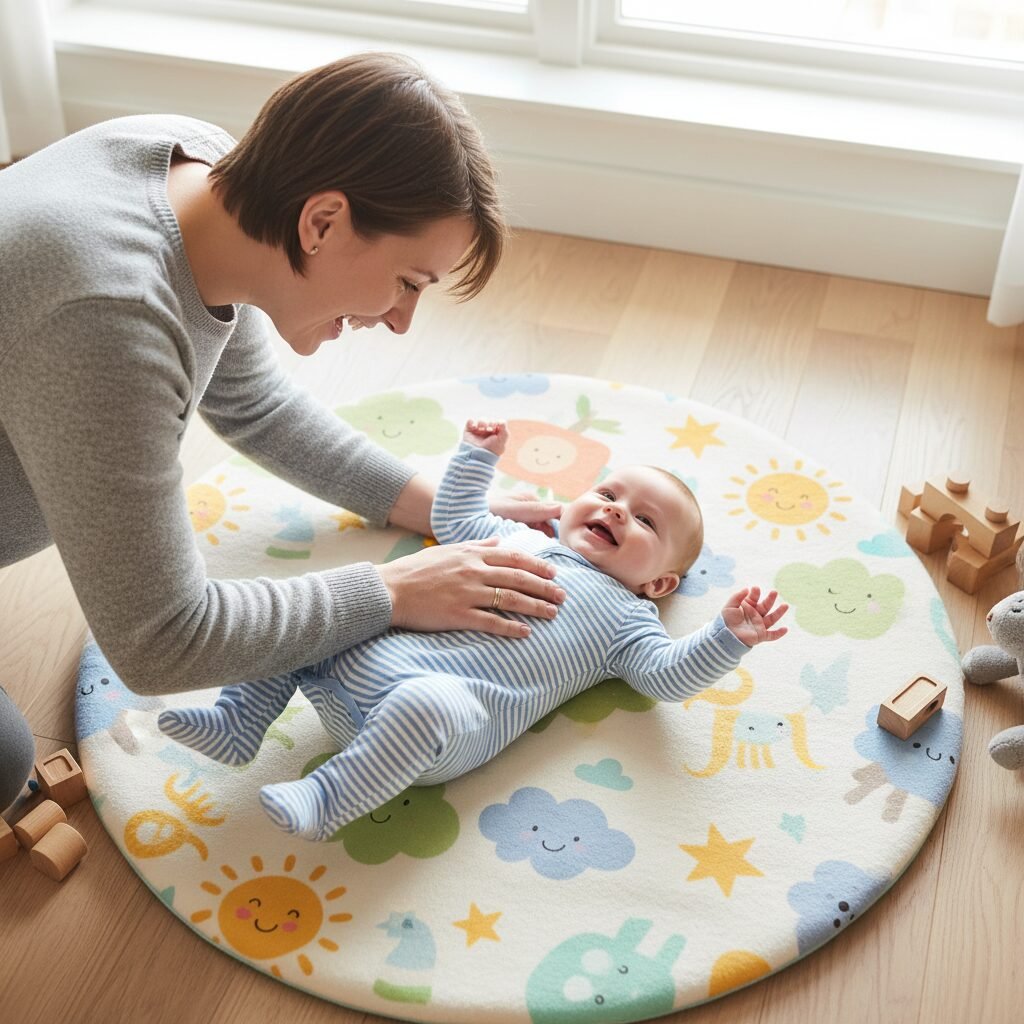
Flat Head Warning: Are You Using “Containers” Too Much?
Hello, new parent! Welcome to this wonderful, whirlwind journey. I know your world is now filled with tiny socks, endless love, and… a surprising amount of gear. Car seats, swings, bouncers, rockers—these “containers” can be absolute lifesavers, giving you a safe place to put your baby down so you can finally drink your coffee or take a much-needed shower. They are tools of modern parenting, and there is zero shame in using them.
But as a pediatric nurse who has seen it all, I want to chat with you, friend to friend, about finding a healthy balance. We’ve started seeing more and more babies with flattened areas on their heads, a condition called positional plagiocephaly, or more commonly, “flat head syndrome.” It’s often linked to all the time our little ones spend on their backs, both for safe sleep (which is non-negotiable!) and in these convenient containers.
This isn’t a lecture or a reason to feel guilty. This is a warm, reassuring guide to help you understand the ‘why’ behind the warning, spot the early signs, and empower you with simple, effective strategies to keep your baby’s head beautifully round while still enjoying the sanity-saving benefits of your gear. Let’s dive in together.
What Exactly Is Flat Head Syndrome (and Why Is It So Common Now)?
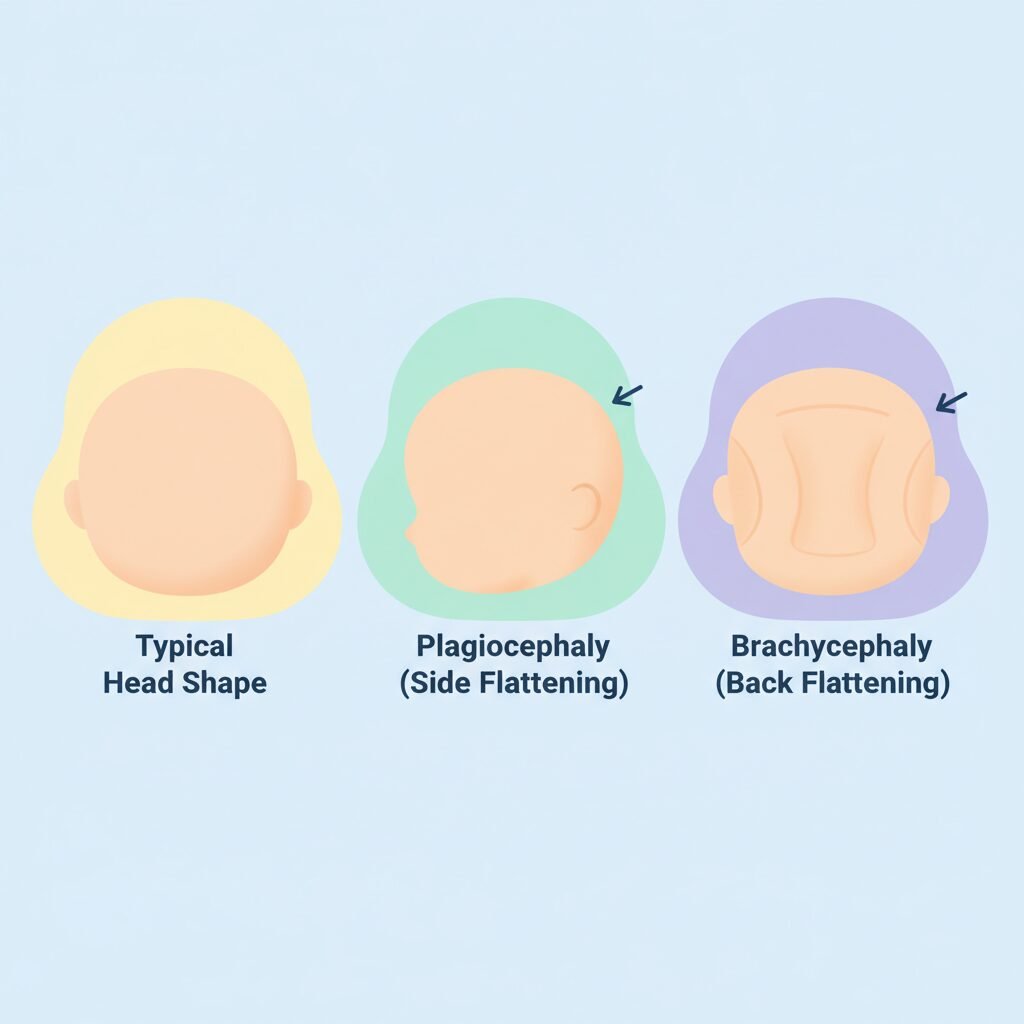
First things first, let’s demystify this condition. Seeing a flat spot can be alarming, but understanding it is the first step to managing it. A baby’s skull isn’t one solid bone like ours; it’s made of soft, pliable plates that can move and mold. This is brilliant by design—it helps the baby pass through the birth canal and allows for the incredible brain growth that happens in the first year.
The downside to this softness is that if a baby spends too much time in one position, with pressure on the same part of their skull, that area can flatten out. That’s all positional plagiocephaly is. If the flattening is on one side, it’s plagiocephaly. If it’s uniformly across the back of the head, it’s often called brachycephaly.
The ‘Back to Sleep’ Effect
You might be wondering why this seems like a new phenomenon. A huge reason is the incredible success of the “Back to Sleep” (now called “Safe to Sleep”) campaign that began in the 1990s. It has drastically reduced the rate of Sudden Infant Death Syndrome (SIDS), and it is the single most important piece of safe sleep advice. We always place babies on their backs to sleep. An unavoidable side effect, however, is constant pressure on the back of the head during their long stretches of sleep. This, combined with our modern lifestyle, created the perfect storm for flat heads to become more common.
Remember: The risk of SIDS far outweighs the cosmetic issue of a flat spot. Always, always, always place your baby on their back for every sleep, for naps and at night. Our goal is to counteract that time with varied positions when they are awake.
The other major factor? Our lives are busy, and baby gear is more sophisticated than ever. The cumulative time spent in a car seat during errands, a swing for a nap, and a bouncer for playtime can add up quickly, keeping the baby in a fixed, back-lying position even when they’re awake.
The ‘Container’ Conundrum: Identifying Overuse in Your Day
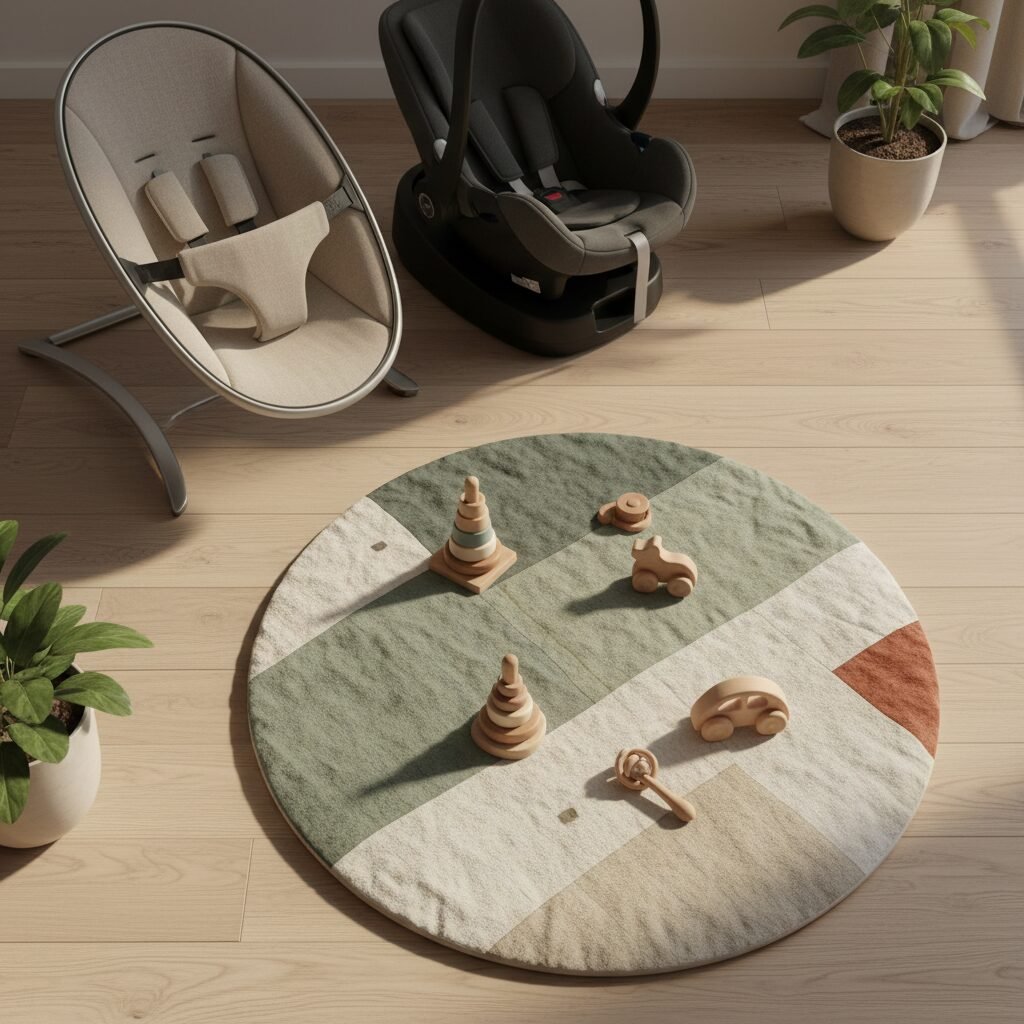
Let’s call them what they are: sanity savers. But a “baby container” is any device that holds a baby in a fixed position. The list is long: car seats, strollers, swings, bouncy seats, rockers, and even items like the Dock-a-Tot or nursing pillows when used to prop a baby up for long periods. The issue isn’t using them; it’s the cumulative time spent in them throughout the day.
A crucial safety reminder: Car seats are for travel, not for sleep or lounging at home. Their semi-reclined position can be dangerous for a baby’s airway if used for extended periods outside of a moving vehicle.
So, how do you know if it’s ‘too much’? It’s less about a magic number and more about awareness. Try a simple “Container Audit” for a day. Think about your routine and be honest. It’s not about judgment, it’s about information!
| Baby Container | Primary Purpose (Necessary Use) | Convenience Use (Where I Can Make a Change) | Alternative Idea |
|---|---|---|---|
| Car Seat | Travel in a vehicle | Bringing it inside for baby to finish a nap; clicking it into the stroller for a walk. | Transfer baby to a bassinet or crib to finish the nap; use the stroller’s bassinet attachment or wear the baby for the walk. |
| Swing/Bouncer | Soothing a fussy baby for 15-20 mins; keeping baby safe while I shower. | Letting baby hang out for an hour or more at a time. | Rotate to tummy time on a play mat, sit with baby on the floor with toys, or use a baby carrier. |
| Activity Saucer | Brief, supervised playtime (for older infants with head control). | Using it as the primary ‘play space’ for long stretches. | Create a ‘yes’ space on the floor with age-appropriate toys where baby can move freely. |
| Lounger/Pillow | Supervised, awake lounging for a few minutes. | Propping baby up for extended periods or for naps. | Hold baby, practice tummy time, or place them on their back on a firm, flat play mat. |
Seeing it written down can be a real eye-opener! The goal isn’t to get to zero ‘convenience use’—that’s unrealistic. The goal is to find one or two spots in your day where you can swap container time for floor time or cuddle time.
Spotting the Signs: A Gentle Guide to Checking Your Baby’s Head

Okay, let’s become gentle detectives. You don’t need any special tools, just your loving eyes. The best time to check your baby’s head shape is during bath time when their hair is wet and slicked down, making the skull’s shape much clearer.
Here’s what to look for from a “bird’s-eye view” (looking down at the top of their head):
- Asymmetry: Does one side of the back of the head look flatter than the other? Imagine a balloon that’s been resting on a table—that’s the kind of gentle flattening you might see.
- Ear Alignment: Look at your baby’s ears. On the flattened side, the ear might be pushed slightly forward compared to the other ear.
- Forehead Bulge: Sometimes, with significant flattening on one side of the back, the forehead on that same side might bulge out a tiny bit.
- General Back Flattening: In cases of brachycephaly, the entire back of the head may look wide and flat, and the head might seem unusually high at the back.
Meet Plagiocephaly’s Best Friend: Torticollis
Very often, a flat spot is accompanied by torticollis, which is a fancy word for tight neck muscles on one side. A baby with torticollis will have a strong preference for turning their head to one side. It’s a bit of a chicken-and-egg situation: does the tight muscle cause the flat spot because they can’t turn their head the other way, or does the flat spot make it more comfortable to rest on that side, causing the muscle to tighten? Often, it’s a mix of both.
You can check for this by laying your baby on their back and gently trying to turn their head from side to side. Do they resist turning one way? Do they almost always look in the same direction when in their car seat or crib? That’s a sign worth paying attention to.
The Ultimate Fix: Proactive Tips to Prevent and Improve Flat Spots

This is the fun part! These strategies are not only effective for managing head shape, but they are also fantastic for your baby’s overall development. Think of it as a ‘two-for-one’ deal for their brain and body.
1. Tummy Time is Your Superpower
If you take only one thing away from this article, let it be this: Tummy time is the antidote. It takes all the pressure off the back of the head while strengthening the neck, shoulder, and back muscles your baby needs for rolling, sitting, and crawling. The goal is to work up to about 60-90 minutes of total tummy time spread throughout the day by the time they are 3-4 months old.
But what if your baby hates it? Most do at first! Try these hacks:
- Start Small: Aim for just 1-2 minutes at a time, several times a day. After every diaper change is a great routine to build.
- Get on Their Level: Lie on the floor with them, face to face. Sing songs, make funny faces. You are their favorite toy!
- Use Your Body: Lie back on a sofa or bed and place the baby on your chest. They’ll be doing tummy time while cuddling.
- The Burrito Roll: Roll up a small receiving blanket and place it under their chest and armpits for a little support.
- Use a Mirror: Place an unbreakable baby mirror in front of them. Babies love looking at themselves.
2. Variety is the Spice of Life (and Head Shape)
Think about your baby’s environment and how you can naturally encourage them to look in different directions.
- Alternate Crib Position: One night, place their head at one end of the crib. The next night, switch to the other end. Babies are naturally drawn to look out into the room or towards the light from a door, so this will encourage them to turn their head the opposite way.
- Switch Feeding Sides: Even if you are bottle-feeding, switch which arm you hold your baby in for each feeding.
- Change the Scenery: Move the bouncer or play mat to a different part of the room so the most interesting things to look at (like a window or you!) are on their non-preferred side.
3. Embrace Babywearing
Using a wrap, sling, or soft-structured carrier is a fantastic way to keep your baby upright and completely off the back of their head. They get the closeness they crave, you get your hands back, and their head stays nice and round. It’s a win-win-win.
When to Call the Doctor: Seeking Professional Guidance

Please hear me when I say that the vast majority of mild to moderate cases of positional plagiocephaly can be greatly improved, or even fully resolved, using the repositioning and tummy time techniques we’ve talked about. It’s a cosmetic issue that does not affect brain development.
However, it’s always wise to keep your pediatrician in the loop. You should schedule an appointment if:
- You’ve been diligently trying these techniques for a few weeks and see no improvement or feel the flattening is getting worse.
- You notice significant facial asymmetry (one eye looks smaller, one cheek looks fuller).
- You are concerned about torticollis. If your baby has a very strong head-turning preference and seems unable or unwilling to turn their head the other way, they may benefit from physical therapy.
- You are simply worried. Your intuition as a parent is powerful. A check-up can provide professional assessment and, most importantly, peace of mind.
Your doctor will be able to assess the severity and determine the best course of action. For torticollis, they may refer you to a pediatric physical therapist who can teach you gentle stretches and exercises. In more severe or persistent cases of plagiocephaly, they might discuss the option of a cranial orthotic, commonly known as a helmet or band. While the thought of a helmet can be stressful for parents, please know that they are incredibly effective, babies adapt to them very quickly, and it’s a short-term tool for a long-term benefit.
Conclusion
My dear new parent, navigating this journey is all about balance. Baby containers are not the enemy; they are helpful tools in your parenting toolkit. The key is to think of them as temporary parking spots, not all-day destinations. The floor is your baby’s playground, gym, and classroom. By consciously building more floor time, tummy time, and cuddle time into your day, you are doing wonders for your baby’s development and helping to ensure their head grows into a beautiful, round shape.
Please, let go of any guilt. We are all just doing our best with the tools we have. You are observant, you are caring, and now you are equipped with the knowledge to make small changes that will have a big impact. You’ve got this.