

Banish Gas Pain: The Secret Bottle Feeding Hack That Changes Everything
That heart-wrenching cry. The tiny legs pulled up tight to a stiff tummy. The frantic squirming after a feed. If this scene is all too familiar, please know you are not alone. As a pediatric nurse, I’ve sat with countless new parents, their faces etched with worry, asking, ‘What am I doing wrong?’ when their little one is miserable with gas pain. Let me tell you a secret right from the start: you are not doing anything wrong. Baby gas is incredibly common, but that doesn’t make it any easier to witness.
We spend so much time researching the ‘what’—which formula, which bottle—that we often forget to focus on the ‘how.’ But what if I told you that a simple change in your feeding technique could dramatically reduce the air your baby swallows, soothe their digestive system, and transform feeding time from a stressful ordeal into a peaceful bonding experience? It’s true. This isn’t about buying a magical new product; it’s about a mindful, baby-led approach called Paced Bottle Feeding. Get ready to learn the secret hack that can change everything for you and your gassy baby.
Decoding the Cries: Why Gas Happens to Bottle-Fed Babies

Before we dive into the solution, it helps to understand the problem. Why does this tiny person, who does little more than eat and sleep, produce so much gas? It comes down to a few key factors, and most of them are completely normal parts of being a new human.
First, a newborn’s digestive system is a brand-new piece of equipment. It’s still learning how to process milk, coordinate muscle contractions, and move things along efficiently. This immaturity alone can lead to gas bubbles getting trapped. Second, and this is the big one for our purposes, is swallowing air. When a baby drinks from a standard bottle held at a steep angle, gravity takes over. Milk flows quickly and constantly, forcing the baby to gulp, gulp, gulp just to keep up. With every gulp of milk, they are also swallowing pockets of air. This air gets trapped in their stomach and intestines, leading to painful pressure and bloating.
Common Signs of Gas Pain
Not sure if it’s gas or something else? Here are the classic tell-tale signs to watch for:
- Crying and Fussiness: This isn’t just a little whimper. A gassy cry is often intense, high-pitched, and can seem to come out of nowhere, especially during or right after a feeding.
- Body Language: A gassy baby is a squirmy baby. They might arch their back, pull their knees up to their chest, and clench their little fists.
- A Hard Tummy: Gently feel your baby’s belly. If it feels tight or bloated (like a little drum), it’s likely due to trapped gas.
- Spitting Up: While some spit-up is normal, excessive amounts can sometimes be linked to the air swallowed during feeds.
While sensitivities to certain formula ingredients can sometimes be a factor, the vast majority of the time, the issue is mechanical—it’s about too much air getting in during the feed. And that’s fantastic news, because it’s something we can fix right now.
The ‘Secret’ Hack Revealed: A Step-by-Step Guide to Paced Bottle Feeding

Welcome to the main event! Paced Bottle Feeding is a method designed to mimic the natural rhythm and flow of breastfeeding. It puts your baby in complete control of the feeding, allowing them to eat at their own pace, take breaks when needed, and, most importantly, swallow a lot less air. Think of it as turning off a firehose and turning on a gentle drinking fountain. Here’s how you do it:
- Positioning is Key: Forget cradling your baby in a reclined position. Instead, hold them in a more upright, seated position on your lap. Their head should be higher than their stomach. This uses gravity to your advantage, keeping the milk from rushing out.
- Tickle the Lips: Don’t just shove the nipple in their mouth. Gently tickle their upper lip with the bottle nipple. This encourages them to open their mouth wide for a deep, proper latch on the nipple base, similar to how they would at the breast.
- Keep the Bottle Horizontal: This is the most critical step. Hold the bottle parallel to the floor, just tilted enough to fill the tip of the nipple with milk. The rest of the nipple should be empty. This simple change stops the free-flow of milk and forces your baby to actively suck to get milk, just like in breastfeeding. They can’t just lie there and have milk pour in.
- Watch for Cues & Take Breaks: A baby’s natural feeding rhythm is ‘suck-suck-suck-swallow-breathe-pause.’ Paced feeding honors this. After about 20-30 seconds of active drinking, gently tilt the bottle down (or remove it completely) to give them a 10-second break. This lets them catch their breath and register if they are feeling full. Watch for their cues—if they turn their head or stop sucking, they’re telling you they need a pause or are finished.
- Switch Sides: Just as you would switch breasts during nursing, switch your baby to your other arm halfway through the bottle. This helps with their eye development and prevents them from developing a side preference.
Remember this: The goal is not to get them to finish the bottle. The goal is to feed them until they are full. Paced feeding helps them send clear ‘I’m full!’ signals, which can also prevent overfeeding.
Gearing Up for Success: Bottles, Nipples, and Burping Techniques
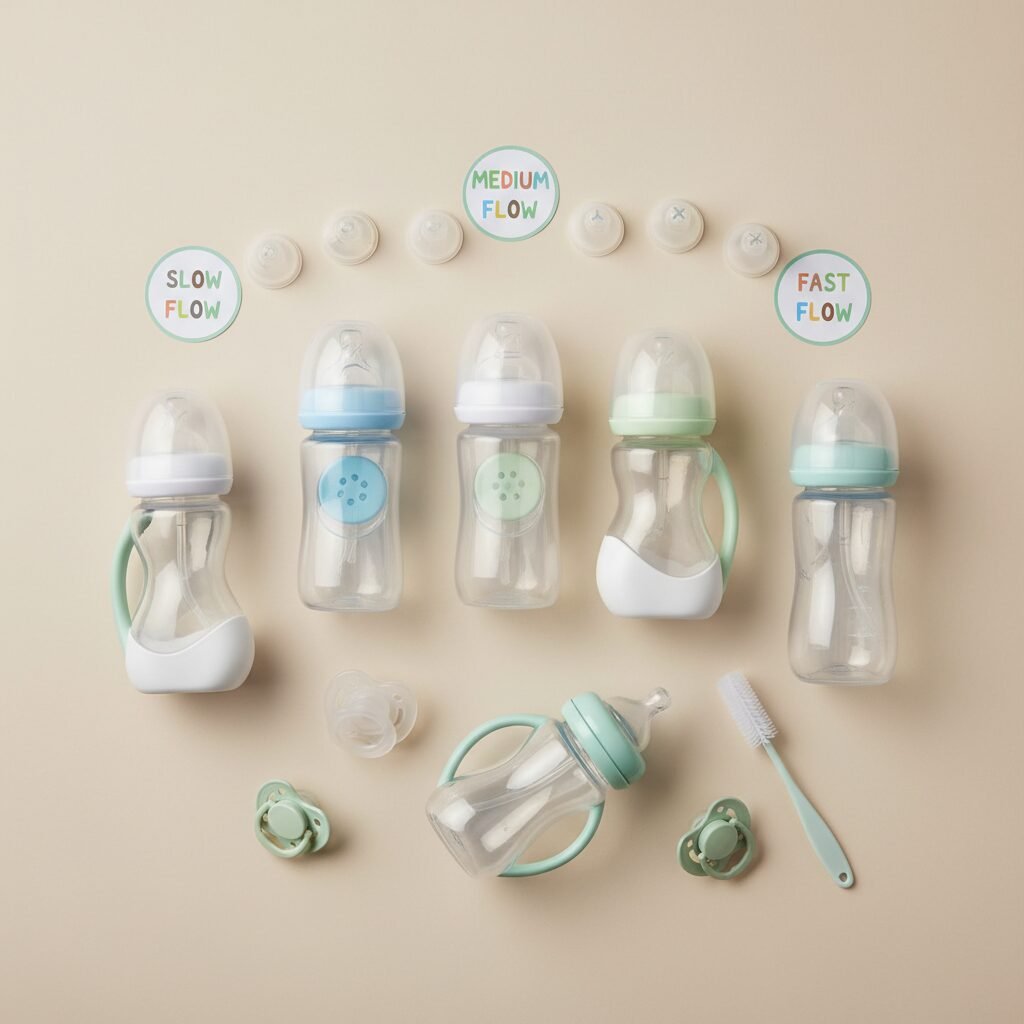
While the paced feeding technique is more important than any specific product, having the right tools can certainly make your job easier. Let’s talk about setting you and your baby up for a gas-free success story.
Choosing Your Bottle and Nipple
The bottle aisle can be overwhelming! But your primary goal is simple: find a nipple that delivers milk slowly. Always start with the slowest flow nipple available, usually labeled ‘newborn,’ ‘preemie,’ or ‘level 1.’ A nipple that’s too fast will defeat the purpose of paced feeding. If milk is dripping or pouring from the nipple when you turn it upside down, it’s too fast.
Many brands market ‘anti-colic’ bottles. These work by incorporating vents or liners designed to reduce the number of air bubbles that get mixed into the milk. They can be a helpful addition to your strategy, but they aren’t a magic bullet without proper technique.
| Bottle Type | How It Works | Best For |
|---|---|---|
| Vented Bottles | These have a built-in tube or valve system that allows air to enter the back of the bottle as the baby drinks, preventing a vacuum from forming and reducing air bubbles in the milk. | Parents who want a reusable system that’s proven to reduce air ingestion. |
| Angled-Neck Bottles | The bent shape helps keep the nipple filled with milk when the bottle is held more horizontally, making paced feeding a bit easier to manage. | Babies who need to be fed in a very upright position due to reflux or other issues. |
| Bottles with Disposable Liners | These feature a soft, collapsible bag inside a hard plastic shell. The bag collapses as the baby eats, which prevents air from getting into the system. | Convenience-focused parents, as there are fewer parts to clean, though liners are an ongoing cost. |
Mastering the Art of Burping
Even with perfect paced feeding and an anti-colic bottle, your baby will still swallow some air. That’s why effective burping is non-negotiable! Don’t wait until the end of the feed when they’re already full and uncomfortable. Try burping after every 1-2 ounces of milk, or during the natural pauses you’re creating with paced feeding. There’s no one ‘right’ way to burp, so try a few positions to see what works best for your little one:
- Over the Shoulder: The classic. Hold your baby high on your shoulder so their tummy rests gently against you. Pat or rub their back firmly.
- Sitting Up: Sit your baby on your lap, facing away from you. Use one hand to support their chest and head (placing your palm on their chest and your fingers gently supporting their chin—not their throat). Lean them slightly forward and pat their back with your other hand.
- Tummy Down: Lay your baby tummy-down across your lap. Make sure their head is turned to the side and is higher than their chest. Gently rub or pat their back.
More Tools for Your Comfort Kit: Soothing a Gassy Baby

Paced bottle feeding is your number one weapon against gas, but it’s always good to have a few extra tricks up your sleeve for those especially fussy days. Think of these as your go-to comfort measures when your baby needs a little extra help moving those stubborn bubbles along.
- Bicycle Legs: Lay your baby on their back and gently move their legs in a bicycling motion. This movement can help mechanically push trapped gas through their intestines. Follow it up by gently pressing their knees toward their tummy for 10 seconds.
- Tummy Time: When your baby is awake and you are supervising, supervised tummy time is fantastic. The gentle pressure on their abdomen can help relieve gas. Even a few minutes at a time can make a difference.
- The ‘I Love U’ Tummy Massage: This is a specific, gentle massage technique that follows the path of the colon. Using a lotion or baby oil, trace the letter ‘I’ down your baby’s left side. Then trace an ‘L’ shape, going across their belly from right to left and then down the left side. Finally, trace an upside-down ‘U’, starting at their lower right side, moving up and across the belly, and down the left side. Always move in a clockwise direction.
- A Warm Bath: The warmth of the water can be incredibly relaxing for a baby’s tense tummy muscles, often providing instant relief and helping them relax enough to pass gas.
- Gas Drops or Gripe Water: You’ll see many over-the-counter options like simethicone gas drops or gripe water. While many parents swear by them, the scientific evidence is mixed.
Safety First: Always talk to your pediatrician before giving your baby any supplements, including gas drops or gripe water, to ensure they are safe and appropriate for your little one.
These techniques not only help with gas but are also wonderful ways to bond with your baby and respond to their needs with gentle, loving touch.
Conclusion
Being a new parent is a journey of learning a whole new person, and that includes deciphering their every cry and squirm. Gas pain can feel overwhelming, but remember, it’s a temporary phase. By embracing paced bottle feeding, you are giving your baby a powerful gift: control over their own body and a more comfortable, peaceful feeding experience. You are learning their cues and responding with patience and love.
Combine this technique with the right bottle, effective burping, and a few soothing tricks, and you’ll be well-equipped to conquer gas pain. Be patient with yourself and with your baby as you both learn this new feeding dance. You’ve got this. And if you ever feel that the crying is excessive or you’re concerned something more is going on, never hesitate to trust your gut and call your pediatrician. They are your best partner on this incredible parenting adventure.