

Coconut Oil vs. Baby Lotion: Which is Safer for Peeling Newborn Skin?
Welcome to parenthood! You’ve probably spent countless hours staring at your perfect new baby, memorizing every tiny feature. And then, you notice it: their delicate skin is starting to peel, especially on their hands and feet. Your first instinct might be to worry, but please take a deep breath and let me reassure you—this is completely normal! As a pediatric nurse, it’s one of the most common concerns I hear from new parents.
Your baby has spent nine months in a cozy, fluid-filled home (the amniotic sac), and now their skin is adjusting to the dry air of the outside world. This peeling is simply the top layer of skin shedding as they acclimate. The big question is, what should you do about it? The two most popular choices in the nursery are classic baby lotion and all-natural coconut oil. But which one is better? More importantly, which one is safer? Let’s walk through this together, step-by-step, so you can feel confident in how you care for your little one’s skin.
The Great Unveiling: Understanding Normal Newborn Skin Peeling
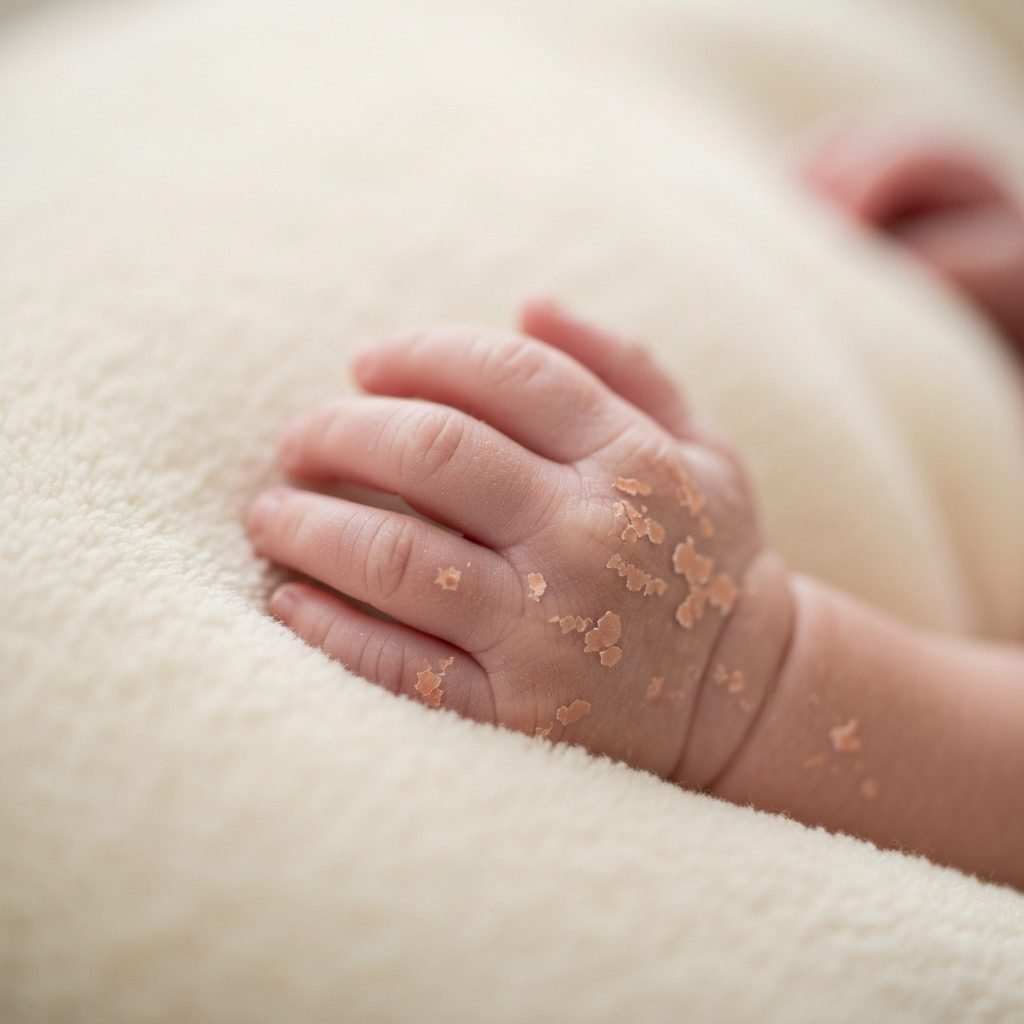
Before we compare moisturizers, it’s essential to understand what’s happening with your baby’s skin. Think of it as their first-ever exfoliation! For their entire existence, they’ve been protected by amniotic fluid and a waxy, cheese-like coating called vernix caseosa. This incredible substance moisturized and protected their skin in the womb.
Once they’re born and exposed to air, the vernix is washed away or absorbed, and the top layer of skin begins to dry out and shed. This is the peeling you’re seeing. It’s most common in the first one to three weeks of life. Babies who are born a little past their due date often peel more, as they had less vernix at birth.
Key things to remember about newborn peeling:
- It’s painless: This process doesn’t bother your baby at all. The skin underneath is healthy and soft.
- It’s temporary: The peeling usually resolves on its own within a few weeks without any intervention.
- Less is more: Your baby’s skin is incredibly sensitive and has a natural barrier that’s still developing. Over-treating normal peeling can sometimes cause more harm than good.
A Nurse’s Tip: Resist the urge to ‘help’ the skin peel by rubbing or picking at it. This can cause irritation and create openings for infection. Just let nature take its course.
So, while treatment isn’t usually necessary, many parents want to apply something to help moisturize the new skin. This is where the coconut oil vs. baby lotion debate begins.
The Natural Route: The Pros and Cons of Coconut Oil
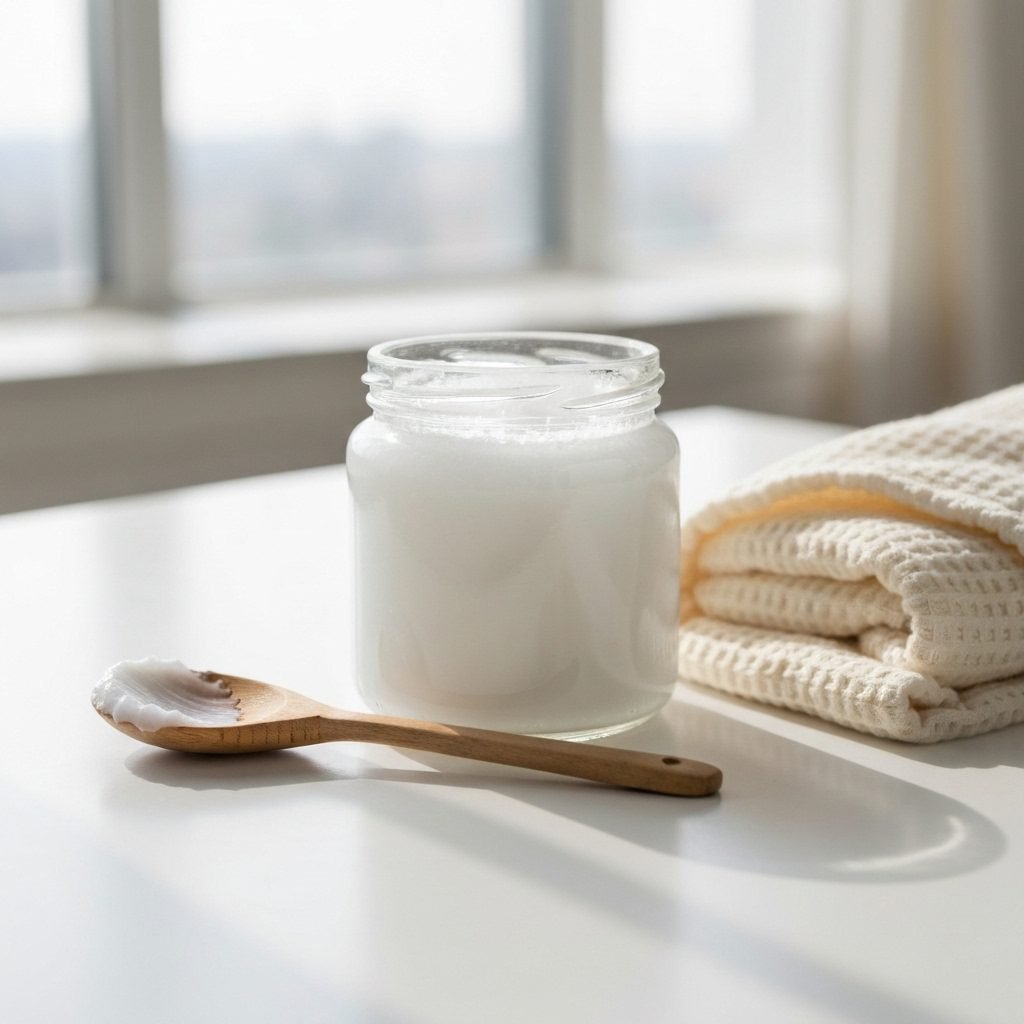
Coconut oil has become incredibly popular for everything from cooking to skincare, and baby care is no exception. Parents are often drawn to it because it’s a single-ingredient, natural product. But is it the right choice for your newborn?
The Potential Benefits of Coconut Oil
- Deeply Moisturizing: Coconut oil is rich in fatty acids, particularly lauric acid, which is known for its moisturizing and hydrating properties. It can help soften the skin and reduce the appearance of flakiness.
- Antimicrobial Properties: Some studies suggest that lauric acid has antimicrobial and anti-inflammatory properties, which could theoretically help protect the skin’s barrier.
- Simplicity: When you use 100% pure coconut oil, you know exactly what you’re putting on your baby’s skin. There are no hidden chemicals, fragrances, or dyes.
Cautions and Considerations with Coconut Oil
While it sounds perfect, there are a few important things to keep in mind:
- Choose the Right Kind: Not all coconut oil is created equal. For your baby, you should only use virgin, cold-pressed, organic coconut oil. Refined or processed versions can contain chemicals from the extraction process that could irritate sensitive skin.
- Potential for Clogged Pores: Coconut oil is comedogenic, meaning it can clog pores. While this is more of a concern for acne-prone skin, it’s something to be aware of. Use it sparingly.
- Allergy Risk: While coconut allergies are not as common as other nut allergies, they do exist. It’s crucial to perform a patch test before applying it all over your baby.
Safety First! How to Patch Test: Apply a tiny amount of the coconut oil to a small, discreet area of your baby’s skin, like behind the ear or on the inner arm. Wait 24 hours to see if any redness, rash, or irritation develops. If the skin looks clear, it’s likely safe to use.
The Classic Solution: Navigating the World of Baby Lotions
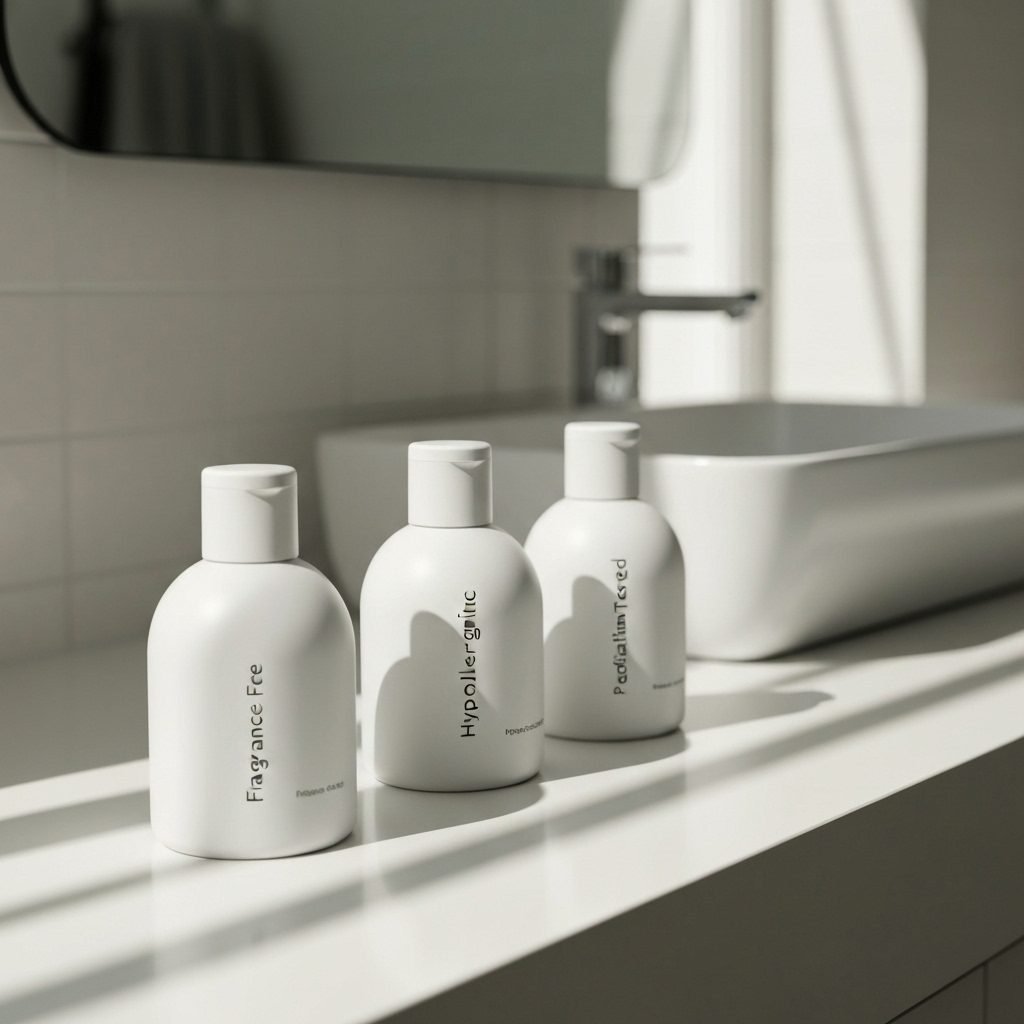
Walk down any baby aisle, and you’ll be met with a wall of baby lotions, all promising to be gentle and safe. These products are the traditional go-to, and for good reason—when you choose the right one.
The Potential Benefits of Baby Lotion
- Formulated for Babies: High-quality baby lotions are specifically designed and dermatologically tested for the unique needs of an infant’s skin. They are often pH-balanced to support the skin’s natural protective barrier.
- Non-Comedogenic: Most baby lotions are formulated to be non-comedogenic, so you don’t have to worry about them clogging pores.
- Absorbs Easily: Lotions are emulsions of oil and water, so they tend to feel less greasy and absorb more quickly into the skin than pure oil.
Cautions and How to Read the Label
The biggest challenge with baby lotion is the ingredient list. What you don’t want is just as important as what you do want.
Ingredients to Avoid in Baby Lotions:
- Fragrances/Parfum: ‘Fragrance’ is a catch-all term that can hide hundreds of chemicals, many of which are common allergens and irritants. Always choose ‘fragrance-free’ over ‘unscented’ (which can use masking fragrances).
- Dyes: Your baby’s lotion doesn’t need to be a pretty color. Dyes are unnecessary chemicals that can cause skin reactions.
- Parabens & Phthalates: These are preservatives and plasticizers that have raised health concerns about disrupting hormones. Look for products explicitly labeled ‘paraben-free’ and ‘phthalate-free’.
- Harsh Alcohols: Some alcohols (like ethanol or isopropyl alcohol) can be very drying and irritating to the skin.
Read the Label, Every Time: Your best defense is to become a label detective. Look for lotions with short, simple ingredient lists that you can mostly pronounce. Brands that are certified by organizations like the National Eczema Association can also be a good starting point.
The Verdict: A Side-by-Side Comparison for Your Baby’s Skin

So, how do you choose? Both options can be safe and effective if you’re careful. Let’s break it down in a simple chart to help you decide what feels right for your family.
| Feature | Coconut Oil | Baby Lotion |
|---|---|---|
| Ingredients | Single ingredient (if 100% pure). Very simple. | Multiple ingredients. Can be complex and may contain potential irritants. |
| Moisturizing Properties | Excellent. Creates a protective barrier to lock in moisture. Can feel greasy. | Good. Formulated to hydrate and absorb quickly. Less greasy feel. |
| Potential for Irritation | Low, but risk of allergy exists. Can clog pores if used too heavily. | Higher risk if it contains fragrances, dyes, or harsh chemicals. Low risk if a high-quality, hypoallergenic formula is chosen. |
| What to Look For | Must be: Organic, virgin, cold-pressed. Perform a patch test. | Must be: Fragrance-free, dye-free, paraben-free, and phthalate-free. Short ingredient list is a plus. |
| Ease of Use | Solid at room temperature, needs to be warmed in hands. Can stain clothing. | Ready to use from the bottle, absorbs quickly. |
Ultimately, there is no single ‘best’ answer. A high-quality, fragrance-free baby lotion and pure, organic coconut oil are both reasonable choices. The decision often comes down to your personal philosophy on skincare and how your individual baby’s skin responds.
Best Practices and When to Call the Doctor

Whichever product you choose, the ‘how’ is just as important as the ‘what’. And it’s crucial to know the difference between normal peeling and a potential skin issue that needs a doctor’s attention.
How to Safely Moisturize Your Newborn
- Timing is Everything: The best time to apply any moisturizer is right after a short, lukewarm bath. Pat your baby’s skin mostly dry, but leave it slightly damp. This helps lock in hydration.
- A Little Goes a Long Way: You only need a pea-sized amount. Warm it in your hands and then gently massage it into your baby’s skin. This is also a wonderful opportunity for bonding!
- Be Gentle: Use soft, circular motions. Never rub vigorously on peeling areas.
- Limit Baths: Newborns don’t need a bath every day. Two to three times a week is plenty. Over-bathing can strip their skin of its natural, protective oils.
When Peeling Isn’t Normal: Red Flags
While standard peeling is harmless, contact your pediatrician if you notice any of the following signs, as they could indicate something more serious like eczema, an infection, or another skin condition:
- The skin is cracked, bleeding, or oozing.
- The area is bright red, swollen, or warm to the touch.
- There are yellow crusts or small, fluid-filled bumps (pustules).
- The peeling is part of a wider rash that spreads across the body.
- Your baby seems to be in pain or is extremely fussy when the area is touched.
- The peeling doesn’t improve or gets worse after a few weeks.
Conclusion
Navigating the world of baby care can feel overwhelming, but you’re doing a great job. When it comes to that normal, flaky newborn skin, the best approach is often the simplest. Both pure coconut oil and carefully-selected, fragrance-free baby lotion can be safe choices. The key is to choose a product with minimal ingredients, always perform a patch test, and apply it gently and sparingly.
Remember, this peeling phase is short-lived. Soon enough, it will be replaced by the soft, smooth baby skin you were expecting. Trust your instincts, enjoy the quiet moments of massaging lotion or oil into your baby’s skin, and never hesitate to reach out to your pediatrician. You’ve got this!