

Coconut vs. Almond: Which Oil Is Actually Safe For Newborn Skin?
Welcome to parenthood! It’s a world filled with incredible joy, tiny socks, and a surprising number of questions about… well, everything. One question I hear all the time from new parents in my practice is about skincare. You stroll through the baby aisle and see countless lotions and creams, but you’re drawn to the idea of something simple, pure, and natural. That’s when you hear the buzz about coconut oil and almond oil.
It feels like a great choice, right? Using something straight from nature on your baby’s perfect, delicate skin. But then the worries creep in. Is one better than the other? Are there hidden risks? Could it cause an allergic reaction? Your instinct to protect your little one is powerful, and you’re right to ask these questions.
As a pediatric nurse and lactation consultant, I’ve spent decades helping families navigate these very concerns. My goal isn’t to tell you which one to buy, but to give you the clear, evidence-based information you need to make the best and safest choice for your baby. So, let’s take a deep breath together and gently unpack the great oil debate. We’ll look at the science, the safety, and the practical tips to help you feel confident in how you care for that precious skin.
Why Your Newborn’s Skin Needs Such Special Care

It’s Not Just ‘Little Adult’ Skin
Before we even compare the oils, it’s so important to understand what we’re working with. Your newborn’s skin is a modern marvel, but it’s also a work in progress. For the first year of life, their skin is fundamentally different from ours. It’s:
- Thinner: The outermost layer of a baby’s skin, the stratum corneum, is up to 30% thinner than an adult’s. This makes it incredibly soft, but also much more fragile and susceptible to damage.
- More Permeable: Because it’s thinner, it’s also more porous. This means it absorbs substances much more readily. While this can be good for absorbing moisture, it also means it can absorb potential irritants or allergens more easily.
- Still Developing its Acid Mantle: The acid mantle is a very fine, slightly acidic film on the surface of the skin that acts as a barrier against bacteria and viruses. In newborns, this protective barrier is still forming and has a higher pH, making it less effective at fending off germs.
- Prone to Losing Moisture: A baby’s skin loses water at a much faster rate than ours, which is why dryness, flakiness, and conditions like baby eczema are so common.
Thinking about these factors helps us understand why we can’t just grab any product off the shelf. Whatever we apply has a much bigger impact. The goal isn’t just to moisturize; it’s to support and protect this delicate, developing barrier without disrupting its natural balance. This is the lens through which we need to examine every potential product, including natural oils.
Spotlight on Coconut Oil: The Good, The Bad, and The Greasy
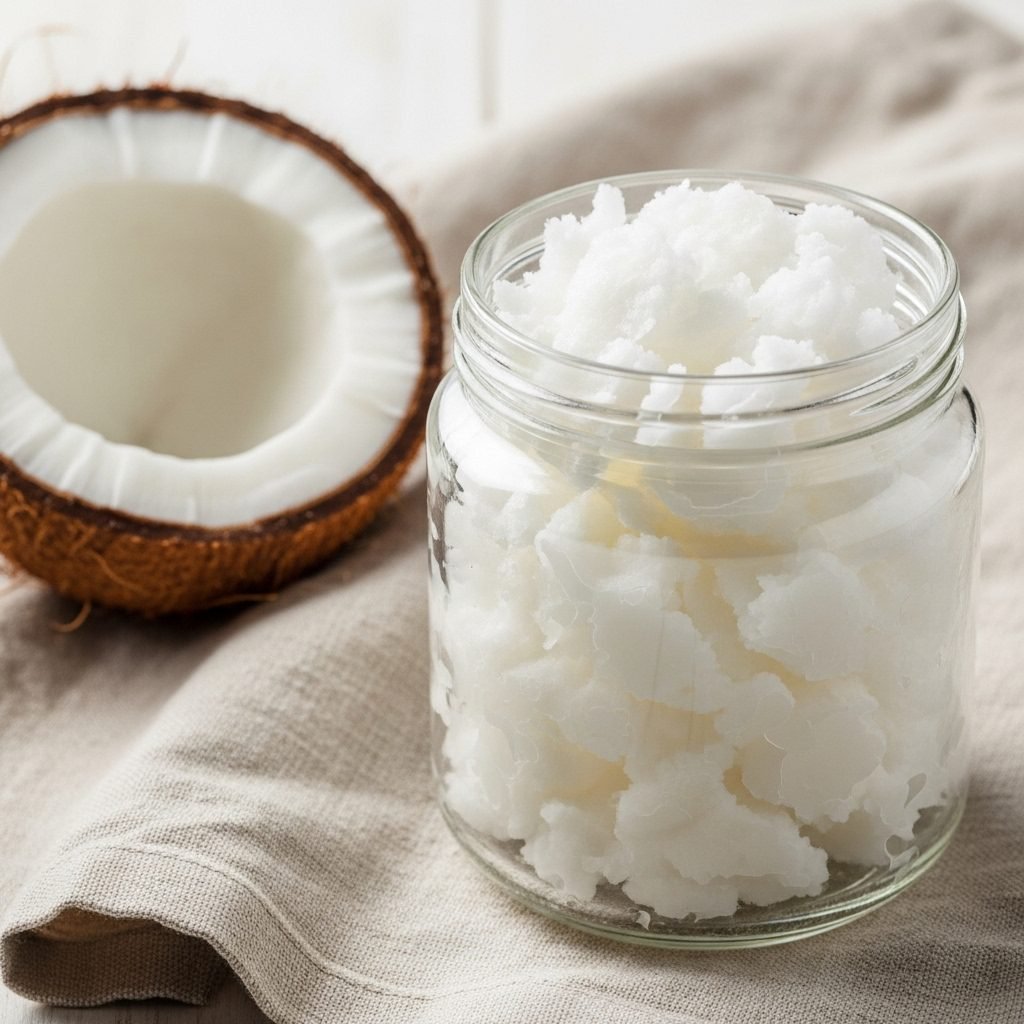
What Kind of Coconut Oil Are We Talking About?
First things first: not all coconut oil is created equal. When we talk about using it for skin, we are only referring to 100% pure, virgin (or extra-virgin), cold-pressed, organic coconut oil. This type is unrefined and retains its natural compounds. Avoid refined or processed versions, which may contain chemicals from the extraction process.
The Potential Benefits for Baby Skin
Coconut oil has become a superstar in the natural wellness world for a few good reasons. Its unique composition offers some real advantages:
- Excellent Moisturization: It’s rich in saturated fats, which are fantastic at preventing water loss from the skin. When applied to damp skin after a bath, it creates a protective barrier that locks in hydration.
- Antimicrobial Properties: About 50% of the fatty acid in coconut oil is lauric acid. Studies have shown that lauric acid has antimicrobial, antifungal, and anti-inflammatory properties. This could potentially help protect that developing skin barrier from unwanted germs.
- Soothing Sensation: For general dryness or as a massage oil, its smooth texture can be very soothing for a baby.
Potential Risks and Concerns
While it has its perks, it’s not a perfect solution for every baby. Here’s where we need to be cautious:
- It Can Clog Pores: Coconut oil is considered comedogenic, which means it can clog pores. For babies prone to baby acne or heat rash (milia), applying a heavy layer of coconut oil could potentially make things worse.
- Potential for Skin Barrier Disruption: Some dermatological research suggests that for babies with a compromised skin barrier, such as in eczema, the oleic acid in some natural oils (coconut oil has a small amount) could potentially worsen the condition. This is still debated, but it’s a reason to be cautious with eczema-prone skin.
- Allergy Risk: While rare, coconut allergies do exist. If there is a family history of coconut allergy, it’s best to avoid it.
A Gentle Warning: If your baby has very dry skin or has been diagnosed with eczema, it’s crucial to talk to your pediatrician or a pediatric dermatologist before trying coconut oil. Sometimes, what seems like a simple, natural solution can interfere with the skin’s ability to repair itself.
Exploring Almond Oil: A Nutrient-Rich Alternative
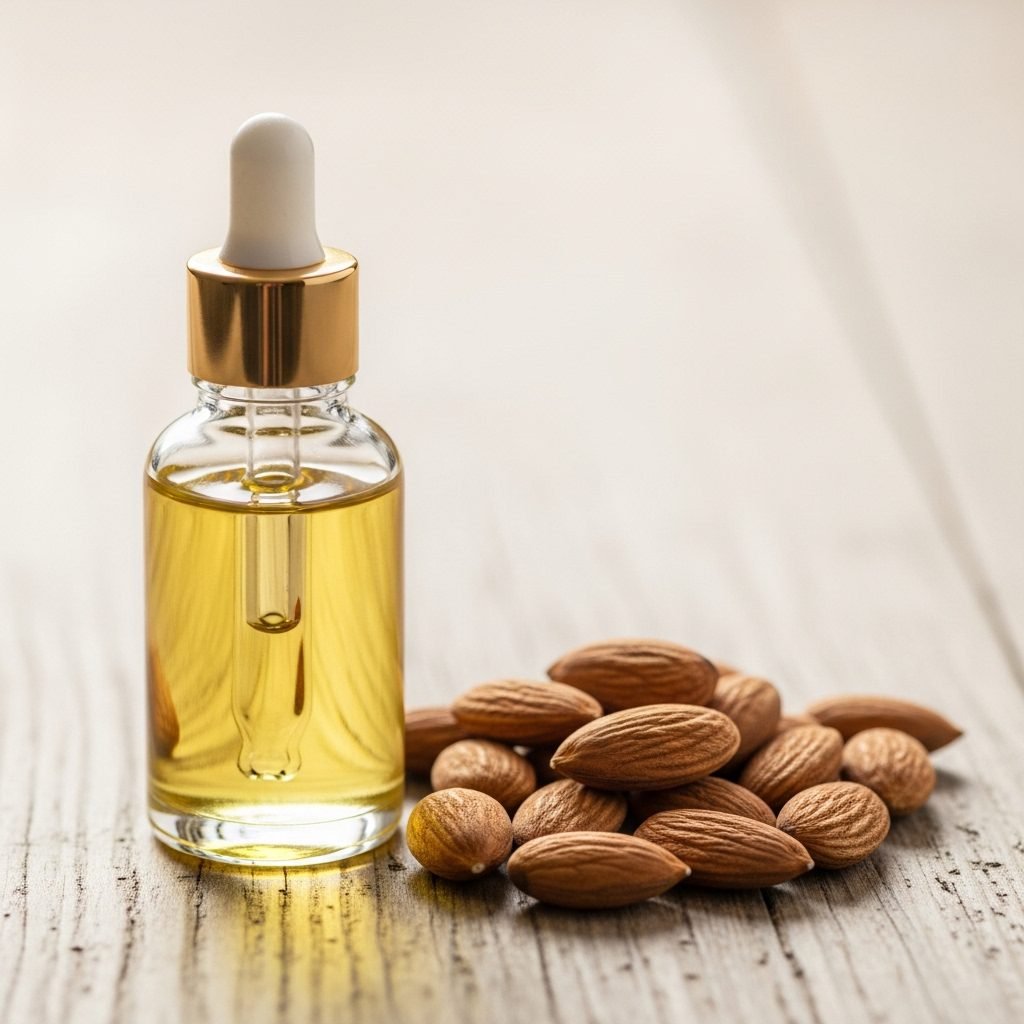
Choosing the Right Type of Almond Oil
Just like with coconut oil, the type matters immensely. You must only use 100% pure, cold-pressed, sweet almond oil. Never, ever use bitter almond oil, as it contains toxic compounds and is not safe for skin application, especially for a baby.
The Potential Benefits for Baby Skin
Sweet almond oil has a long history of use in skincare and is prized for its gentle, nourishing properties:
- Rich in Vitamin E: Sweet almond oil is a fantastic source of Vitamin E, a powerful antioxidant that helps protect skin cells from damage.
- Excellent Emollient: It is rich in oleic and linoleic acids, which are excellent for softening and nourishing the skin. It helps to soothe dry, flaky patches and improve skin texture.
- Less Greasy Feel: Many parents find that almond oil absorbs into the skin more readily than coconut oil, leaving a less greasy finish, which can be more comfortable for baby (and less messy for their clothes!).
- Anti-Inflammatory: Its properties can help calm irritated skin, making it a popular choice for baby massage to soothe and relax a fussy infant.
The Major Risk: Nut Allergies
This is the single most important consideration with almond oil, and it cannot be overstated.
CRITICAL SAFETY WARNING: If there is any history of nut allergies (peanuts or tree nuts) in your immediate family (parents, siblings), you should avoid using almond oil on your baby’s skin. Some studies suggest that applying food allergens to compromised skin (like dry or eczema-prone skin) can lead to sensitization and the development of a food allergy. The risk is simply not worth it.
Even without a known family history, the potential for a tree nut allergy is the biggest drawback of almond oil. This is why patch testing is not just a suggestion—it’s an absolute necessity if you choose to consider this oil.
Coconut vs. Almond Oil: A Side-by-Side Showdown
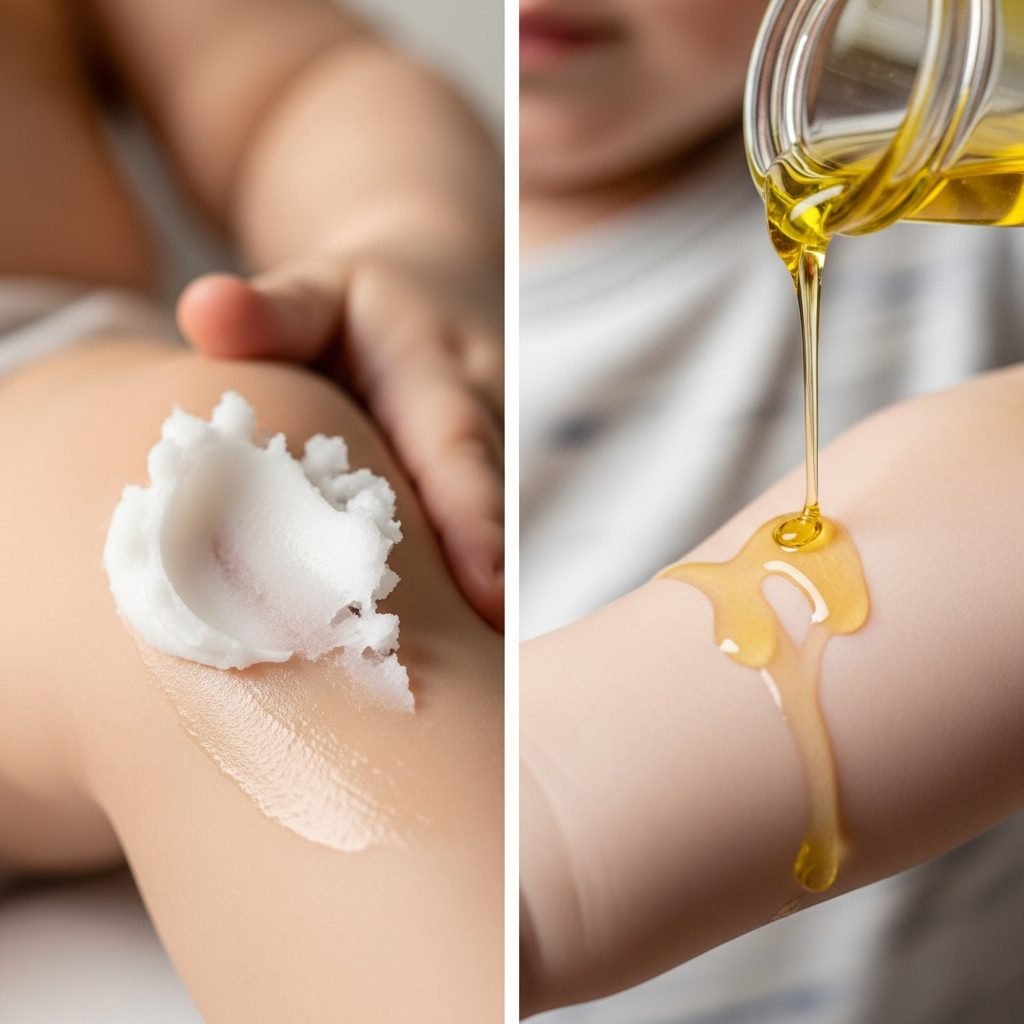
Okay, let’s put everything we’ve discussed into a simple, clear format. Sometimes seeing it all laid out makes the decision-making process a little less overwhelming. Here’s how these two popular oils stack up against each other for newborn skin.
| Feature | Coconut Oil (Virgin, Cold-Pressed) | Almond Oil (Sweet, Cold-Pressed) |
|---|---|---|
| Main Components | High in saturated fats, especially Lauric Acid. | High in monounsaturated fats, Vitamin E, Oleic Acid, and Linoleic Acid. |
| Skin Feel | Can feel heavier and greasier; slower to absorb. | Lighter and less greasy; tends to absorb more quickly. |
| Key Benefits | Highly moisturizing, antimicrobial, and anti-inflammatory. | Very nourishing, softening, and rich in antioxidants (Vitamin E). |
| MAJOR ALLERGY RISK | Low. Coconut is botanically a fruit, not a nut. Allergies are rare but possible. | High. It is a tree nut product. Poses a significant risk for babies with a family history of nut allergies and a potential risk for sensitization in all babies. |
| Best For… | Baby massage, general moisturizing on healthy, non-sensitive skin. | Baby massage, soothing general dryness on skin with no known allergy risks. |
| Avoid If… | Your baby has very sensitive or eczema-prone skin (consult a doctor first), is prone to baby acne, or if there’s a family history of coconut allergy. | There is ANY family history of tree nut or peanut allergies. Also avoid on broken or severely irritated skin without a doctor’s approval. |
Safety First: Your Essential Checklist Before Using Any Oil
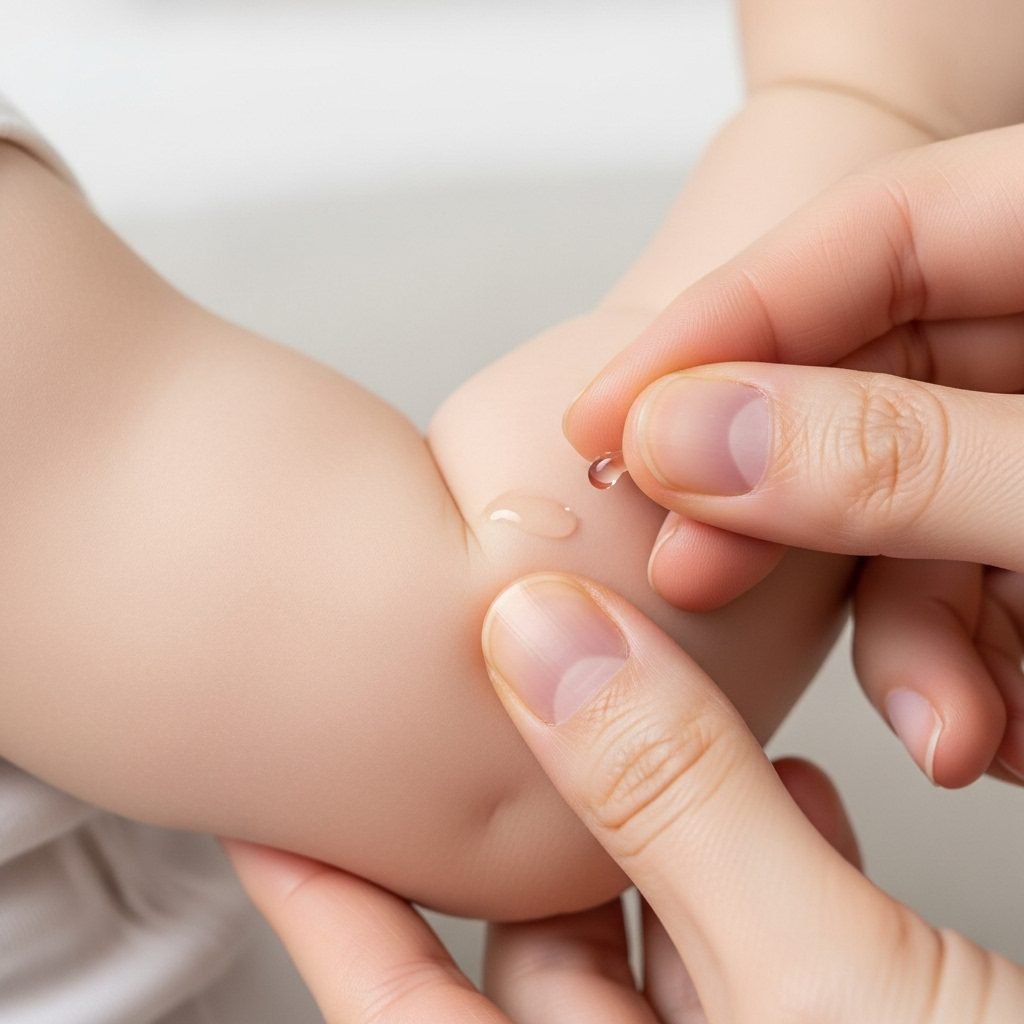
You’ve done the research, you’ve weighed the pros and cons, and you’re thinking of trying an oil. Fantastic! Your diligence is what makes you a great parent. But before that first drop touches your baby’s skin, let’s walk through a non-negotiable safety checklist. This is my ‘golden rules’ list that I share with all new parents in my practice.
- Consult Your Pediatrician First. Always. Before introducing anything new to your baby’s routine, a quick chat with your pediatrician or family doctor is the best first step. They know your baby’s health history and can provide personalized advice, especially if your little one has sensitive skin, eczema, or other conditions.
- Choose Purity Above All Else. Read the label carefully. You are looking for just one ingredient: ‘100% Cold-Pressed, Organic, Virgin Coconut Oil’ or ‘100% Cold-Pressed, Sweet Almond Oil’. There should be no added perfumes, dyes, preservatives, or chemicals. The simpler, the better.
- Perform the All-Important Patch Test. This is the most crucial step to check for a reaction. Here’s how:
- Apply a tiny amount of the oil to a small, discreet patch of skin, like the inner arm or behind the knee.
- Leave it on. Do not wash the area.
- Wait for at least 24 hours (48 hours is even better) and watch for any signs of irritation, such as redness, bumps, rash, or itchiness.
- If you see any reaction at all, wash the area gently and do not use the oil again. No reaction? You can likely proceed with caution.
- Less is Always More. You only need a few drops. Warm a tiny amount between your hands and then gently massage it onto your baby’s skin. A thick, greasy layer isn’t more effective and can lead to clogged pores or overheating.
- Timing is Everything. The best time to apply an oil is right after a bath, while their skin is still slightly damp. This helps to trap the moisture from the water, making the oil far more effective at hydrating the skin.
- Watch and Wait. Even after a successful patch test, keep an eye on your baby’s skin. If you notice any irritation developing after a few days of use, stop using it. Every baby’s skin is unique and can change over time.
Conclusion
So, What’s the Verdict for Your Baby?
After exploring all the details, you can see there isn’t a simple winner in the coconut oil vs. almond oil debate. The truth is, the ‘safest’ oil is the one that is safest for your individual child. For a baby with no family history of allergies and robust skin, either oil could be a wonderful, natural choice for a bonding massage. For a baby from a family with nut allergies, almond oil is off the table entirely. For a little one with very sensitive or eczema-prone skin, a specially formulated, fragrance-free baby emollient recommended by your doctor might be a much safer bet than either natural oil.
Please, release yourself from the pressure to find one ‘perfect’ product. Your love, your attention, and your caution are the most important ingredients in your baby’s care. By reading this, you’ve already shown how deeply you care. Trust that instinct. Start with your pediatrician, do a patch test, and listen to what your baby’s skin tells you. You’ve got this.