
5 Signs Your Baby’s Jaundice Needs Attention (And Natural Home Care Tips)
Welcome to the whirlwind of new parenthood! It’s a time filled with incredible love, tiny baby socks, and, let’s be honest, a fair bit of worry. One of the first things that can throw new parents for a loop is seeing their perfect little one’s skin take on a yellowish hue. This is called jaundice, and my first message to you is: breathe. Newborn jaundice is extremely common and, in most cases, completely harmless.
As a pediatric nurse and lactation consultant for over two decades, I’ve held countless tiny hands and reassured just as many new parents about this very topic. Your baby’s body is just making a huge transition from the womb to the outside world, and their liver is playing catch-up. That’s usually all jaundice is.
However, your job as a parent is to be your baby’s best advocate, and that means being informed. This guide is here to empower you. We’ll walk through the five key signs that tell you your baby’s jaundice might need a doctor’s attention. We’ll also cover the safest, most effective ‘natural’ home care tips (spoiler: it’s all about the food!) to help your baby’s system along. You’ve got this, and I’m here to help.
What Exactly Is Newborn Jaundice? (A Gentle Explanation)
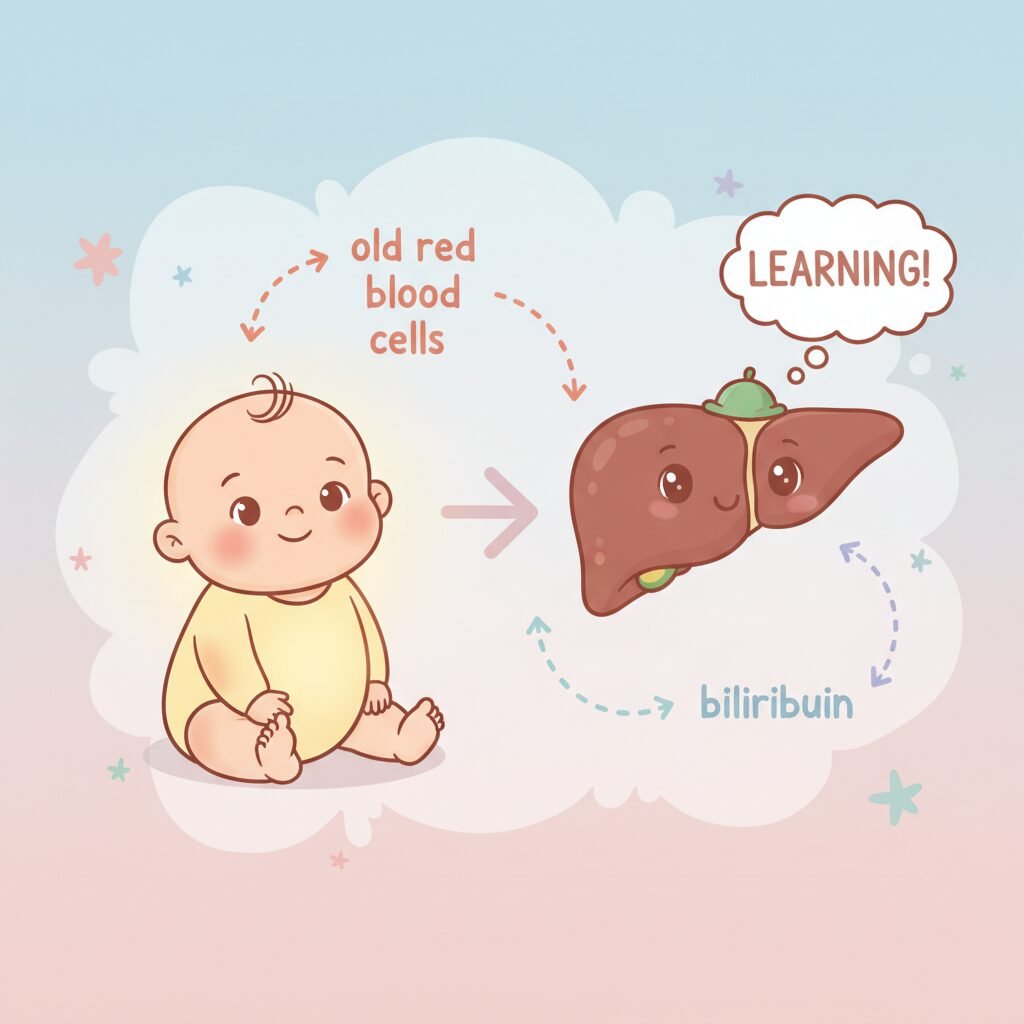
Before we dive into the signs, let’s quickly demystify what’s happening in your baby’s body. It’s actually a pretty clever process that just needs a little time to get up to speed.
Imagine your body is constantly recycling old red blood cells. When these cells break down, they produce a yellow substance called bilirubin. For adults and older children, our mature livers are pros at grabbing this bilirubin from the blood, processing it, and sending it out of the body through our stool.
A newborn’s liver, however, is like a new employee on their first day—it’s brand new and still learning the ropes. It can’t process the bilirubin as quickly as it’s being made. So, the extra bilirubin builds up in the blood, which gives the skin and the whites of the eyes that yellowish tint. This is called physiological jaundice, and it’s the standard, run-of-the-mill type we see in over 60% of full-term babies.
It typically appears around day two or three of life, peaks by day five, and then gradually fades over a week or two as that little liver gets stronger and more efficient. Think of it as a temporary traffic jam on the bilirubin highway. Our goal is simply to keep the traffic moving smoothly.
The 5 Critical Signs Jaundice May Need Medical Attention

Okay, now for the important part. While most jaundice is no big deal, we need to be vigilant watchers. Your eyes are the best tool you have. Here are the five signs that indicate bilirubin levels might be getting too high and that it’s time to check in with your pediatrician.
-
The Yellowing Spreads or Deepens
Jaundice typically starts on the face and head and slowly moves down the body. A little yellow on the nose is one thing, but if you notice it progressing down to the chest, stomach, and especially to the legs and feet, it’s a sign that bilirubin levels are rising. Also, pay attention to the color’s intensity. Does it seem to be changing from a pale yellow to a deeper, more intense yellow or even an orange hue? A simple way to check is the ‘press test’: in good natural light, gently press your finger on your baby’s forehead or nose for a second. When you lift your finger, if the skin looks yellow, jaundice is present. If this yellow color is obvious and spreading, make the call.
-
Extreme Sleepiness or Difficulty Waking
Newborns sleep a lot, we all know that! But there’s a difference between a sleepy baby and a lethargic one. A baby with normal jaundice might be a bit sleepy but will still wake up for feedings, be alert for at least short periods, and have a strong cry. A baby whose bilirubin levels are getting too high may be extremely difficult to wake up, even for feedings. They might fall asleep mid-feed repeatedly or seem too tired to even try. This level of sleepiness is a significant red flag because it interferes with the #1 way to get rid of jaundice: eating.
-
Poor Feeding (Breast or Bottle)
This goes hand-in-hand with lethargy. Feeding is the engine that drives bilirubin out of the body. When a baby eats well, they produce more wet and dirty diapers, which is exactly how bilirubin is excreted. If your baby is suddenly not interested in the breast, has a weak latch, isn’t sucking effectively, or is taking much less formula than usual, it’s a problem. A baby who is too jaundiced to eat can get into a vicious cycle: they don’t eat, so the bilirubin level rises, which makes them even sleepier and less interested in eating. We need to break that cycle, and that requires a doctor’s help.
-
Changes in Urine or Stool
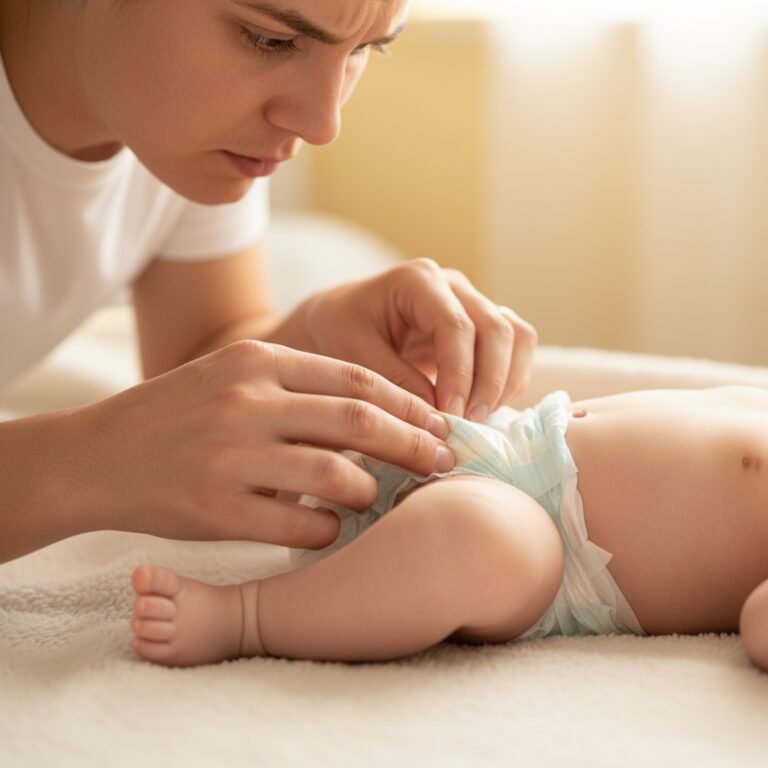
Your baby’s diapers are a goldmine of information! After the first few days of life, a well-hydrated baby’s urine should be pale yellow or clear (you might just see a wet spot in the diaper). Their stool should be transitioning from the black, tarry meconium to a green and then a mustard-yellow, seedy stool for breastfed babies, or a yellow/tan paste for formula-fed babies.
Safety Warning: Pay close attention to diaper output. Dark, tea-colored, or brownish urine is a sign of dehydration and that the body is not clearing bilirubin properly. Likewise, if your baby’s stools are very pale, chalky-white, or beige after the first week, it could signal a liver problem.
Diaper Watchlist What’s Normal (After Day 4) What’s a Warning Sign Urine Pale yellow or clear; 6+ wet diapers a day. Dark yellow, brownish, or ‘tea-colored’. Stool Mustard yellow (breastfed) or tan/yellow (formula). Pale, beige, or chalky-white. -
High-Pitched Crying or Unusual Fussiness
You are quickly becoming an expert on your baby’s cries. You know the ‘I’m hungry’ cry, the ‘I’m tired’ cry, and the ‘My diaper is full’ cry. A cry that can be associated with very high bilirubin levels is different. It’s often described as a high-pitched, shrill cry. The baby may be inconsolable, irritable, and may even arch their back or seem stiff. This is a sign that the bilirubin might be irritating their nervous system, and it warrants an immediate call to your doctor.
Safe & Effective Home Care: Boosting Your Baby’s Health Naturally

If your baby has a mild case of jaundice and your doctor has given you the green light for home care, there are absolutely things you can do to help. The word ‘natural’ here doesn’t mean unproven herbal remedies; it means supporting your baby’s natural biological processes to clear the bilirubin. And it all comes down to one thing: food.
Focus on Feeding, Feeding, Feeding!
This is your number one tool. Think of milk as the vehicle that carries bilirubin out of the body. The more your baby eats, the more they poop and pee, and the faster the yellow leaves their system.
- For Breastfeeding Moms: Aim to nurse at least 8 to 12 times in 24 hours. This might mean waking your sleepy baby up every 2-3 hours to encourage a feed. Ensure a deep latch so your baby is transferring milk effectively. If you’re struggling with latching or are worried about your supply, please reach out to a lactation consultant right away. We can be a game-changer!
- For Formula-Feeding Parents: Stick to a regular feeding schedule, typically every 3 to 4 hours. Make sure your baby is taking the full amount recommended by your pediatrician for their age and weight. Don’t be tempted to add water to the formula; this can be dangerous and won’t help with jaundice.
Sunlight: The Old Advice vs. Modern Safety
Your parents or grandparents might tell you to put the baby in a sunny window. While it’s true that UV light breaks down bilirubin, this advice comes with a major safety warning.
Important Safety Note: Never place your newborn in direct sunlight. Their skin is incredibly delicate and can burn in just a few minutes. Direct sun exposure is not a safe or recommended treatment for jaundice.
So, what’s the safe alternative? Placing your baby in a bassinet in a well-lit room with indirect sunlight is perfectly fine and can offer a tiny bit of help. However, it is not a substitute for frequent feeding or for the medical-grade phototherapy a doctor would prescribe if levels are high. The filtered, specific light used in hospitals is much more powerful and safer than the sun. Focus your energy on feeding—it makes a much bigger impact.
Track Diapers and Feedings
When you’re tired and overwhelmed, it’s easy to lose track of how many times you’ve fed or changed the baby. Keeping a simple log can be incredibly helpful. It gives you peace of mind and provides concrete data to share with your pediatrician if you need to call.
| Time | Feeding (Breast/Formula) | Notes (Duration/Amount) | Wet Diaper? | Dirty Diaper? |
|---|---|---|---|---|
| 8:00 AM | Breast | Right side, 15 mins | Yes | Yes |
| 10:30 AM | Breast | Left side, 20 mins | Yes | No |
| 1:00 PM | Formula | 2 ounces | Yes | Yes |
When to Stop Home Care and Call Your Pediatrician Immediately

Trust your instincts. You know your baby better than anyone. If you feel that something is ‘off,’ it is always, always the right decision to call your pediatrician’s office or the on-call nurse. It is never a bother. We are here to help.
To make it crystal clear, here is a checklist of scenarios where you should stop what you’re doing and call the doctor right away. Don’t wait for the next scheduled appointment.
- Your baby’s skin or the whites of their eyes look more yellow.
- The yellow color has spread below the knees.
- Your baby is very difficult to wake up or seems limp like a rag doll.
- Your baby is not feeding well (poor latch, weak suck, refusing bottles).
- Your baby has had fewer than 4-5 wet diapers in a 24-hour period.
- Your baby develops a fever (a rectal temperature of 100.4°F or 38°C or higher).
- Your baby seems unusually fussy, is crying in a high-pitched way, or is arching their back.
- You have any concerns at all about your baby’s behavior or appearance.
When you call, the doctor will listen to your concerns, and they may ask you to come in. They will examine your baby and may order a simple blood test (usually from a small heel prick) to get an exact bilirubin level. Based on that number, your baby’s age, and other factors, they will decide on the best course of action. This might just be continuing to feed at home, or it could involve phototherapy—special lights that help your baby’s body break down the bilirubin. It’s a safe, common, and very effective treatment.
Conclusion
A Final Word of Reassurance: You’ve Got This!
Navigating these first few weeks with a new baby is a journey of learning and love. Seeing your baby with jaundice can be scary, but remember that you are not alone in this experience. The vast majority of babies who have it sail through it with nothing more than a little extra feeding and monitoring. By reading this, you’ve already taken the most important step: educating yourself to be a watchful, informed, and proactive parent.
You are your baby’s protector and advocate. Trust your gut, don’t hesitate to ask for help, and give yourself grace. Focus on those precious feedings, enjoy the newborn snuggles, and know that the yellow will fade. You’re doing a fantastic job.