
5 Nursing Positions That Will Save Your Back From Agonizing Pain
Hello, dear new parent. If you’re reading this, chances are you’ve experienced that all-too-familiar, deep, aching pain in your back, neck, or shoulders that can come with breastfeeding. First, let me reassure you: you are not alone, and it’s not something you just have to ‘power through.’ As a pediatric nurse and lactation consultant, one of the most common complaints I hear from new mothers is about the physical discomfort of nursing. You spend hours each day nurturing your little one, and that repetitive strain, often in a hunched-over position, can take a serious toll on your body.
But here’s the good news: agonizing pain is not a prerequisite for breastfeeding. The secret often lies not in expensive gadgets or complicated routines, but in your positioning. By making a few simple adjustments and learning how to use your body and your environment for support, you can transform feeding time from a painful chore into the beautiful, bonding experience it’s meant to be. The golden rule we’ll come back to again and again is this: bring your baby to your breast, not your breast to your baby. In this guide, we’ll walk through five game-changing nursing positions designed to protect your posture and save your back. Let’s get you comfortable, mama.
The Foundation: Why Your Posture is Everything
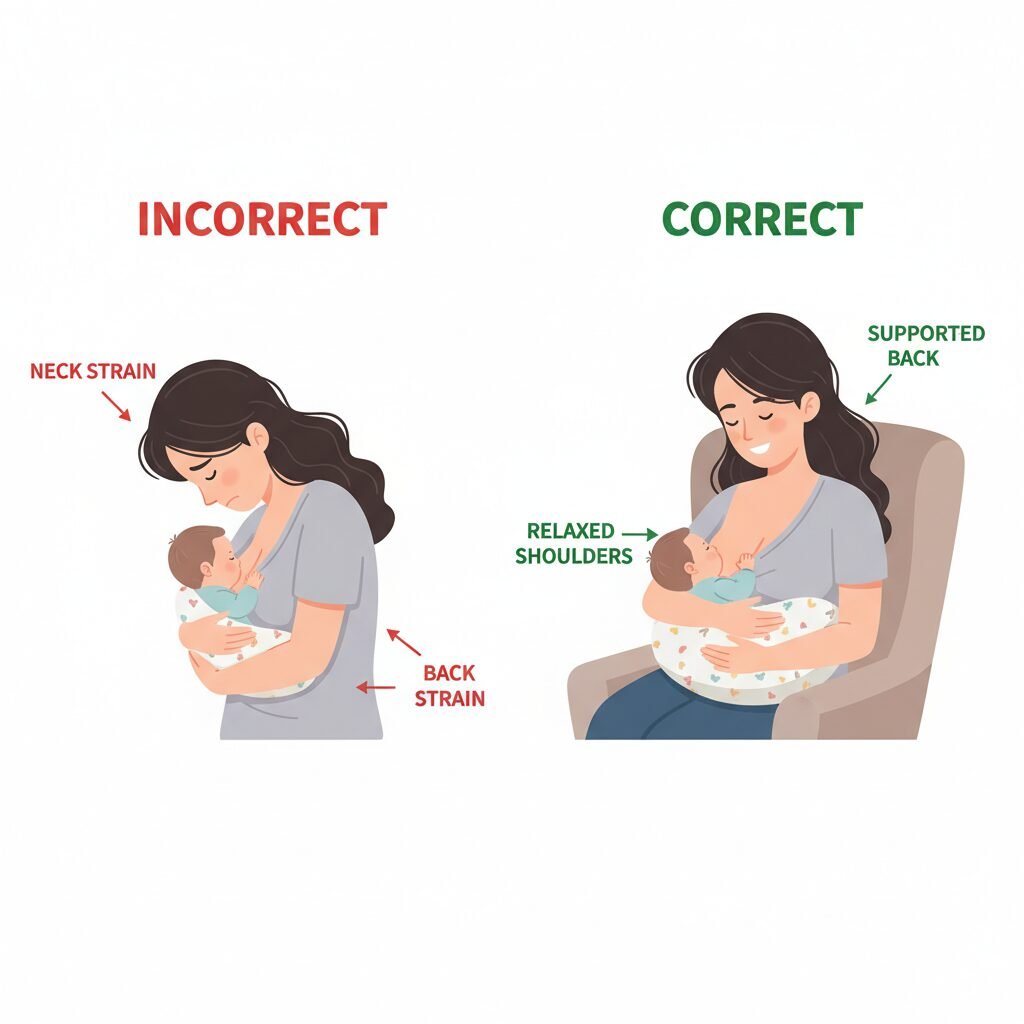
Before we dive into the specific positions, let’s talk about the fundamentals. Think of this as your pre-flight check for every single feeding session. Getting these basics right will make every position a hundred times more effective and comfortable. Without a solid foundation, even the ‘best’ position can still lead to strain.
Core Principles of Pain-Free Nursing:
- Support, Support, Support: Pillows are your best friends! This isn’t the time to be a minimalist. Use a dedicated nursing pillow, or stack regular bed pillows, rolled-up towels, or blankets. The goal is to create a ‘shelf’ that brings your baby right up to the level of your breast. Your arms shouldn’t be holding your baby’s full weight; they should simply be guiding and supporting.
- Sit Back and Relax: Find a comfortable chair or a spot on the couch where you can lean back and feel fully supported from your lower back to your head. Avoid perching on the edge of your seat. Let the furniture do the work of holding you up.
- Feet on the Floor: Keep both feet flat on the floor or, if you’re on the shorter side, use a stool or a stack of books. This stabilizes your pelvis and prevents you from unknowingly tensing your lower back and legs. Dangling feet are a recipe for back pain.
- Shoulders Down: Take a deep breath in, and as you exhale, consciously drop your shoulders away from your ears. We tend to carry a lot of tension in our neck and shoulders, especially when concentrating on a good latch. Regularly check in with yourself and release that tension.
- Bring Baby to Breast: This is the most important rule. Instead of hunching over your baby, use your pillow stack to lift your baby up to you. Your back should be straight and your posture relaxed. Once your baby is in position, then you can help them latch. This single shift in thinking can eliminate the root cause of most nursing-related back pain.
Mastering these foundational elements first will make learning the following positions a breeze and ensure you’re truly comfortable and supported every time you nurse.
Position #1: The Laid-Back (Biological Nurturing) Position

If I could recommend just one position for new parents to master, it would be this one. The laid-back position, also known as biological nurturing, is incredibly intuitive and takes almost all the strain off your body. It uses gravity to your advantage, allowing your baby to rest securely on your body while they find the breast themselves.
How to Do It:
- Get Comfy and Recline: Find a couch, recliner, or bed where you can lean back at a comfortable semi-reclined angle (around 45 degrees is often perfect). You shouldn’t be flat on your back, but comfortably slouched. Prop yourself up with plenty of pillows behind your back, neck, and even under your arms for extra support.
- Position Your Baby: Lay your baby tummy-to-tummy on your chest and abdomen. Their whole front should be against your front. You can position them vertically, diagonally, or however feels natural.
- Let Instincts Take Over: In this position, your baby’s innate feeding reflexes often kick in. They may bob their head, use their hands and feet to shuffle into position, and find the nipple on their own. Your role is simply to support their back and bottom, ensuring they don’t roll away. You are a ‘home base’ they can relax on.
Why It Saves Your Back:
The beauty of the laid-back position is that your body, not your arms, is supporting the baby’s weight. There is no hunching, no straining, and no tension in your shoulders or back. It’s also fantastic for mothers recovering from a C-section, as the baby’s weight is distributed across your chest, well away from your incision. It can also help babies who struggle with a forceful let-down, as nursing against gravity can slow the flow of milk.
Position #2: The Classic Cradle & Cross-Cradle Holds
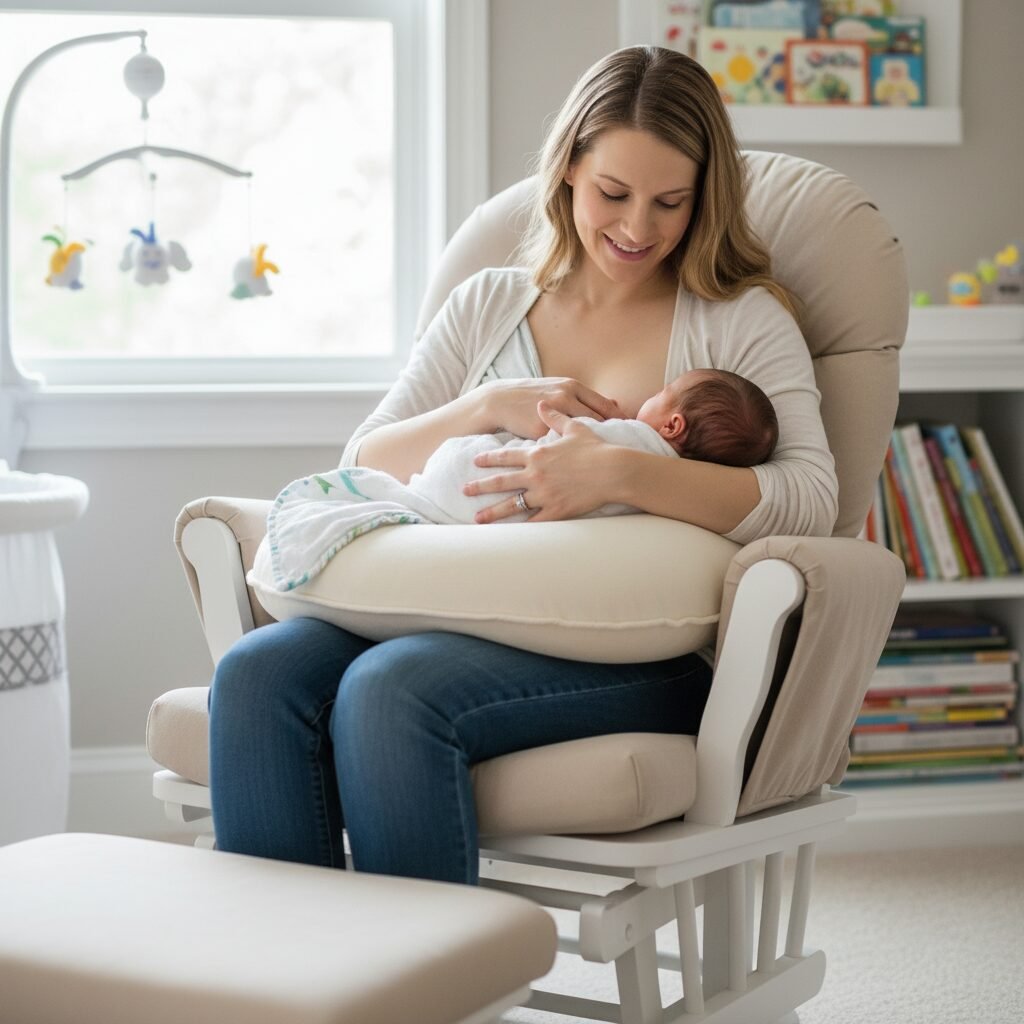
When people picture breastfeeding, the cradle hold is usually what comes to mind. It’s a classic for a reason, but it’s also the biggest culprit for back pain when done without proper support. The cross-cradle is a slight variation that gives you more control, making it perfect for the early days when you’re still mastering the latch.
How to Do the Cross-Cradle (Recommended for Beginners):
- Build Your Pillow Shelf: Sit upright in a comfortable chair with your feet flat on the floor. Stack pillows on your lap until they are high enough that, when your baby is lying on them, their mouth is level with your nipple.
- Position Your Baby: Lay your baby across your lap, tummy-to-tummy with you. If you are nursing on the left breast, hold your baby with your right arm. Your right hand should support their neck and shoulders, with your thumb and forefinger behind their ears. Your forearm will support their spine.
- Latch the Baby: Use your free hand (your left hand in this case) to support your breast. Bring your baby to the breast, leading with their chin. This hold gives you excellent control over their head to guide them into a deep latch.
How to Do the Cradle Hold:
The cradle hold is a natural progression from the cross-cradle once you and your baby are more confident. The setup is the same, but you support the baby with the arm on the same side as the nursing breast. So, if nursing on the left breast, you’ll hold your baby in the crook of your left arm. This offers less head control but can feel more natural and allows you a free hand.
Remember the golden rule: The pillows do the heavy lifting! If you feel your arm taking your baby’s weight or you’re leaning forward even an inch, you need to add another pillow. Your back should remain straight and relaxed against the chair.
Position #3: The Football (or Clutch) Hold

This position is a fantastic tool to have in your toolkit, especially if you’re recovering from a C-section, have larger breasts, are nursing twins, or have a baby who struggles with latching. It gives you a wonderful view of your baby’s mouth and keeps all pressure off your abdomen.
How to Do It:
- Set Up Your Station: Sit in a wide chair or on a couch. Place a firm pillow (a dedicated nursing pillow works best here) right next to you, on the side you plan to nurse from.
- Tuck Your Baby: Position your baby on the pillow, tucking them under your arm like you would hold a football or a clutch purse. Their body should be wrapped along your side, with their feet pointing toward the back of the chair.
- Support and Latch: Support your baby’s neck and shoulders with your hand on that same side. Their nose should be level with your nipple. Use your other hand to support your breast if needed. Then, gently guide them toward your breast to latch.
Why It’s a Game-Changer:
By placing the baby at your side, the football hold completely avoids any contact with a sensitive C-section incision. It also allows you to see your baby’s latch very clearly, which is a huge help when you’re troubleshooting. For mothers with a forceful let-down, this position can also be helpful as the baby is positioned to handle a faster flow more easily. And for your back? It encourages you to sit up straight and lean back into your chair, taking all the pressure off your spine.
Position #4: The Side-Lying Position

Oh, the side-lying position! This will become your absolute favorite for middle-of-the-night feedings or for when you’re just feeling touched-out and need to rest your body. It allows both you and your baby to relax completely while nursing.
How to Do It:
- Get Aligned: Lie on your side on a firm, flat surface (like your bed), facing your baby. You can place a pillow under your head, but ensure there are no other pillows, loose blankets, or soft bedding near your baby’s face.
- Position Your Baby: Lay your baby on their side facing you, tummy-to-tummy. Their mouth should be aligned with your lower breast’s nipple. You can use your top arm to draw them in close.
- Find Your Comfort: To keep yourself from rolling forward or backward and to relieve pressure on your hips, try placing a pillow behind your back for support and another one between your bent knees. This will keep your spine in a neutral, comfortable alignment.
- Latch and Relax: Encourage your baby to latch. Once they are nursing, you can truly just lie there and rest. To switch sides, you can either carefully move the baby to your other side or simply turn over yourself and reposition them.
A Note on Safety: The side-lying position is wonderful, but it’s crucial to follow safe sleep guidelines. Always place your baby on their back to sleep after the feeding is over. Ensure your mattress is firm and there is no loose bedding, pillows, or stuffed animals near the baby that could pose a suffocation risk. Never practice this position on a couch or soft armchair.
Conclusion
There you have it—five powerful tools to add to your breastfeeding toolkit. Remember, there is no single ‘best’ position; the best one is whatever feels comfortable and sustainable for you and your baby at that moment. Don’t be afraid to experiment! You might use the laid-back position in the afternoon, the side-lying position for night feeds, and the football hold when you’re out and about.
The most important thing you can do is listen to your body. If you feel a twinge of pain, don’t ignore it. Pause, reassess, and add another pillow or shift your weight. Your comfort is not a luxury—it’s essential for a positive and long-lasting nursing relationship. Breastfeeding is a skill that you and your baby learn together. Be patient, be kind to yourself, and never, ever hesitate to reach out to a certified lactation consultant if you need more hands-on help. You’re doing an amazing job.