

10 Terrifying Newborn Symptoms That Are Actually Completely Normal
Take a deep breath, new parent. You’ve brought this tiny, perfect human into the world, and now you’re tasked with keeping them safe. It’s a role that can feel both magical and utterly terrifying. Every little gurgle, sneeze, or strange poop color can send your mind racing. Is this normal? Should I call the doctor? Am I doing this right? First off, let me tell you: you are doing a great job. Second, your baby is a brand-new being, and their little body is still figuring things out. Many of the things that seem alarming are just signs of them adjusting to life outside the womb.
As a pediatric nurse and lactation consultant, I’ve seen it all. I’ve held the hands of thousands of new parents, reassuring them that the flaky skin, the startling jumps in their sleep, and the weird breathing sounds are often just part of the beautiful, messy, and sometimes bizarre newborn package. This guide is meant to be that reassuring hand for you. We’re going to walk through ten of the most common things that make new parents panic, explain why they happen, and—most importantly—tell you when it’s actually time to pick up the phone and call your pediatrician. Let’s get you some peace of mind.
Symptom #1: Non-Stop Sneezing and Hiccups

What You’re Seeing
Your tiny baby, who seems too small to have such forceful bodily functions, is sneezing constantly. Not just once or twice, but in little bursts throughout the day. And the hiccups! They seem to get them after every feeding, sometimes lasting for what feels like an eternity. It’s easy to jump to conclusions: Do they have a cold? Are they allergic to something? Is the cat bothering them?
Why It’s (Usually) Normal
A newborn’s respiratory system is a work in progress. Their nasal passages are incredibly tiny, so even the smallest bit of dust, lint from their blanket, or a little leftover amniotic fluid can irritate them and trigger a sneeze. It’s their body’s brilliant way of clearing things out! Sneezing is a protective reflex. Similarly, hiccups are caused by sudden, involuntary contractions of the diaphragm muscle. A baby’s immature nervous system is still learning to regulate the diaphragm, and things like feeding too quickly, swallowing air, or even a sudden drop in temperature can set off a bout of hiccups. They are almost always more bothersome to you than they are to your baby.
When to Call Your Pediatrician
While frequent sneezing and hiccups are standard, keep an eye out for other symptoms. Call your doctor if the sneezing is accompanied by a fever (100.4°F or 38°C rectally for a newborn), thick yellow or green nasal discharge, coughing, or any signs of labored breathing (like flaring nostrils or pulling in at the chest). If hiccups are causing significant distress or interfering with feeding and sleep, it’s worth a mention at your next check-up.
Symptom #2: Weird Poop Colors and Textures

What You’re Seeing
You open the diaper with anticipation and a little bit of dread, only to find something you did not expect. It might be black and tarry, bright yellow and seedy like mustard, or even a swampy green. It can be alarming to see a rainbow of colors in your baby’s diaper when you’re used to, well, just one color.
Why It’s (Usually) Normal
A baby’s poop is a fantastic indicator of what’s going on inside their tiny digestive system. Here’s a quick color guide:
- Black/Tarry: This is called meconium, and it’s your baby’s very first poop. It’s made up of everything they ingested in the womb (amniotic fluid, mucus, skin cells). It should pass within the first 24-48 hours.
- Mustard Yellow & Seedy: This is the classic, hallmark poop of a healthy, breastfed baby. The ‘seeds’ are undigested milk fat—totally normal!
- Greenish or Frothy Green: This can happen for a few reasons. Sometimes it means a breastfed baby is getting more foremilk (the thinner, sugary milk at the beginning of a feed) than hindmilk (the richer, fattier milk). It can also be a sensitivity to something in mom’s diet or a sign of a minor tummy bug. Often, it’s just a normal variation.
- Tan/Yellow/Brown (Peanut Butter Texture): This is typical for formula-fed babies.
When to Call Your Pediatrician
While most colors are fine, there are a few red flags. Call your doctor immediately if you see poop that is white or chalky gray (could indicate a liver problem), red or bloody (unless you’re sure it’s from a small tear), or black (after the meconium stage has passed). Consistently watery stools (diarrhea) or hard, pellet-like stools (constipation) also warrant a call.
Symptom #3: The Pulsating Soft Spot (Fontanelle)

What You’re Seeing
You’re gently stroking your baby’s head and you notice it—a soft, diamond-shaped area on top that seems to be… pulsing. It’s moving in rhythm with their heartbeat, and it can look incredibly fragile and a little bit sci-fi. It’s natural to feel a surge of fear that something is wrong with their brain or skull.
Why It’s (Usually) Normal
Those soft spots are called fontanelles, and they are a masterpiece of biological engineering! They are gaps between the bones of your baby’s skull that serve two crucial purposes. First, they allowed the skull plates to shift and overlap so your baby could fit through the birth canal. Second, they allow for the incredible brain growth that happens in the first year of life. The pulsing you see is completely normal; it’s just the blood flow through the major vessels in the brain, visible because there’s no bone covering them yet. The fontanelles will gradually close and harden over the first 18-24 months.
When to Call Your Pediatrician
You should be gentle with the fontanelle, but you don’t have to be terrified of it. You can wash and touch your baby’s head normally. However, you should call your doctor if the soft spot appears to be significantly sunken (which can be a sign of dehydration) or if it is bulging and tense (which can indicate increased pressure in the brain). A bulging fontanelle accompanied by a fever or extreme lethargy is a medical emergency.
Symptom #4: Swollen Genitals and Baby ‘Periods’

What You’re Seeing
You’re changing your newborn’s diaper and notice their genitals—whether they have a penis or a vulva—look surprisingly large and swollen. For baby girls, you might even see a small amount of whitish discharge or even a little blood in the diaper. It’s a shocking sight for any parent.
Why It’s (Usually) Normal
This is all thanks to your hormones! During pregnancy, your baby is exposed to high levels of your hormones, particularly estrogen. This exposure can cause temporary swelling in the labia for girls and the scrotum for boys. In baby girls, the sudden withdrawal from maternal hormones after birth can cause a ‘mini-period’ or pseudomenstruation. It’s a tiny bit of uterine lining shedding, just like a regular period, and it’s completely harmless. The swelling and discharge should resolve on their own within a few weeks.
When to Call Your Pediatrician
The initial swelling is normal. However, if the swelling in a boy’s scrotum seems to be increasing, is accompanied by significant redness, or if he seems to be in pain, it could be a sign of a hydrocele or hernia that needs to be checked. For girls, a small amount of blood is okay for the first week or so, but any significant amount of bleeding or bleeding that continues past that point warrants a call to the doctor.
Symptom #5: Jerky Movements and The Startle (Moro) Reflex

What You’re Seeing
Your baby is sleeping peacefully one moment, and the next, their arms and legs suddenly fling out, their back arches, and they might let out a cry before pulling their limbs back in. It can look like they’re having a seizure or are absolutely terrified. They might also have random, jerky movements of their chin, arms, or legs, even when awake.
Why It’s (Usually) Normal
This dramatic reflex is called the Moro reflex, or startle reflex. It’s an involuntary, primitive survival instinct that is present at birth. A sudden noise, a quick movement, or even the sensation of falling (like when you’re laying them down in their crib) can trigger it. It’s a sign of a healthy, developing nervous system! The smaller, random twitches and quivers are also due to their immature nervous system. Their brain is still learning to send smooth, controlled signals to their muscles. These movements should disappear as their nervous system matures over the first few months.
When to Call Your Pediatrician
The Moro reflex should be symmetrical—meaning both arms should fling out equally. If you notice the reflex is consistently one-sided, mention it to your pediatrician. While jerky movements are normal, true seizures look different. Seizures often involve rhythmic twitching and cannot be stopped by gently holding the limb. If you are ever concerned that your baby is having a seizure, try to record it on your phone and seek immediate medical attention.
Symptom #6: Peeling, Flaky Skin

What You’re Seeing
Your baby’s skin, which you expected to be perfectly smooth and soft, is peeling and flaking, especially on their hands and feet. They might look like a tiny snake shedding its skin. It can look dry, cracked, and uncomfortable.
Why It’s (Usually) Normal
Think about it: your baby has been living in a fluid-filled apartment (the amniotic sac) for nine months! The waxy, white coating they were born with, called vernix caseosa, protected their skin in that environment. Once they’re exposed to the dry air of the outside world, the top layer of their skin naturally dries out and sheds. This is especially common in babies who are born a little past their due date. It’s a completely normal process and isn’t bothering your baby at all.
When to Call Your Pediatrician
Resist the urge to slather your baby in lotions and oils, as this can sometimes cause irritation. It’s also best to avoid peeling the skin yourself. The process will resolve on its own. However, if you notice deep, painful-looking cracks, signs of infection (redness, pus, swelling), or a rash that spreads or seems itchy, it’s time to check in with your doctor. Otherwise, just stick to short, lukewarm baths and gentle, fragrance-free cleansers.
Symptom #7: Loud, Irregular Breathing Patterns

What You’re Seeing
You’re leaning over the bassinet, watching your precious baby sleep. You notice their breathing is… weird. They take a few quick, shallow breaths, then pause for several seconds—long enough to make your heart stop—before taking a deep breath and starting again. You might also hear snorting, whistling, and gurgling sounds.
Why It’s (Usually) Normal
This is called periodic breathing, and it is a hallmark of newborns. Their respiratory control center in the brain is still maturing, so this irregular pattern is common and typically resolves by the time they are a few months old. The pauses can last up to 10 seconds and still be considered normal. Babies are also ‘obligate nose breathers,’ meaning they breathe almost exclusively through their tiny noses. Any little bit of mucus or milk can cause all sorts of strange snorts and whistles as air passes through.
When to Call Your Pediatrician
While the pattern can be irregular, the baby should be comfortable and their color should be pink. True respiratory distress is a medical emergency. Go to the ER or call 911 if you see any of these signs: pauses in breathing longer than 15-20 seconds, a bluish tint around the lips or on the face (cyanosis), constant grunting with each breath, nostrils flaring, or retractions (the skin pulling in around the ribs and neck with each breath). These are signs your baby is working too hard to breathe.
Symptom #8: Crossed Eyes

What You’re Seeing
You’re gazing into your baby’s beautiful eyes, and you notice that they don’t always work together. One eye might drift towards their nose or wander outwards, making them look cross-eyed. It happens intermittently, but it’s enough to make you worry about their vision.
Why It’s (Usually) Normal
Just like the rest of their body, a newborn’s eye muscles and the nerves that control them are still developing. They are learning to focus and work together. For the first few months of life, it’s perfectly normal for their eyes to wander or appear crossed occasionally. They are strengthening those muscles and building the brain-eye coordination needed to track objects. This intermittent crossing, called transient strabismus, usually corrects itself by the time your baby is 4 to 6 months old.
When to Call Your Pediatrician
If you notice that your baby’s eyes are constantly crossed or if one eye is always turned in or out, you should bring it up with your pediatrician. Also, if the eye crossing persists past 6 months of age, it’s important to have it evaluated by a pediatric ophthalmologist. Early intervention is key for vision problems.
Symptom #9: Baby Acne (and Milia)
What You’re Seeing
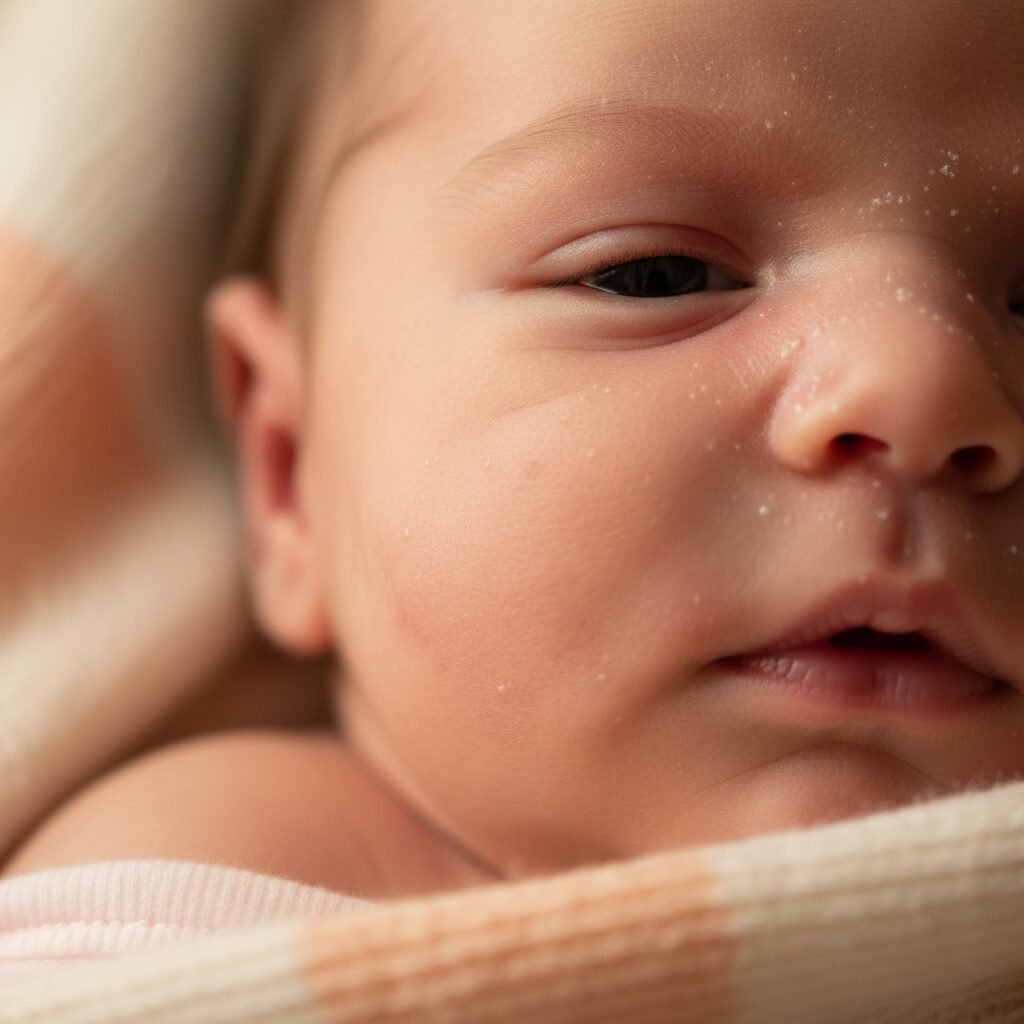
Your baby’s once-perfectly-clear skin is suddenly covered in little red pimples or tiny white bumps. The acne can appear on their cheeks, nose, and forehead, looking just like a teenager’s breakout. The white bumps, called milia, look like tiny whiteheads and often appear on the nose and chin.
Why It’s (Usually) Normal
This is another lovely parting gift from your hormones! Just like the swollen genitals, baby acne is thought to be caused by the exposure to maternal hormones in the womb, which stimulate the baby’s oil glands. Milia are even simpler: they are just dead skin cells that have gotten trapped in tiny pockets on the surface of the skin. Both conditions are harmless, not contagious, and not a sign of poor hygiene. They will clear up on their own, usually within a few weeks or months.
When to Call Your Pediatrician
The best course of action is to do nothing! Gently wash your baby’s face with warm water and a soft cloth, and pat it dry. Do not scrub, pick, or use any acne creams or lotions. If the rash looks more like blisters, is accompanied by a fever, or if your baby seems unwell, it could be something more serious like herpes or another infection, and you should seek medical care immediately. But for standard baby acne and milia, patience is the best medicine.
Symptom #10: Constant Spitting Up

What You’re Seeing
It feels like half of every feed comes right back up. A little trickle of milk dribbles out of your baby’s mouth after a burp, or sometimes a more significant amount comes up, soaking their onesie and your shirt. You’re worried they aren’t getting enough to eat and that something is wrong with their digestion.
Why It’s (Usually) Normal
This is classic gastroesophageal reflux (GER), and it’s incredibly common in babies. The muscular valve between the esophagus and the stomach (the lower esophageal sphincter) is still immature and weak. This allows stomach contents to easily flow back up. As long as your baby is generally happy, comfortable, and gaining weight well, this is considered ‘physiologic reflux’ or, as I like to call them, a ‘happy spitter.’ The amount that comes up almost always looks like more than it actually is. This usually improves dramatically as they get older, strengthen their core muscles, and start sitting up.
When to Call Your Pediatrician
There is a difference between spitting up and vomiting. Spitting up is typically a gentle flow, while vomiting is forceful and projectile. Call your doctor if the spit-up is green or yellow, contains blood, or if your baby is projectile vomiting. You should also call if your ‘happy spitter’ seems more like a ‘miserable spitter’—if they are fussy and seem to be in pain during or after feeds, arching their back, refusing to eat, or are not gaining weight appropriately. This could be a sign of a more severe condition called GERD (gastroesophageal reflux disease) that may require intervention.
Conclusion
Being a new parent is a journey of constant learning and deep, profound love. Your instincts are powerful, but they are often paired with a healthy dose of anxiety. It’s completely normal to worry about this tiny person who depends on you for everything. Hopefully, understanding the ‘why’ behind these ten terrifying-but-normal symptoms has eased some of your fears and empowered you with knowledge.
Remember the key takeaways: babies are weird and wonderful, their bodies are still under construction, and most of their strange quirks are just a normal part of the process. Your most important job is to love, feed, and cuddle your baby, and to be their advocate. Never, ever feel silly for calling your pediatrician. We are here to be your partner in this journey. We would much rather you call with a ‘normal’ question than have you sit at home worrying. You know your baby best. Trust your gut, but also give yourself grace. You’ve got this.