10 Air-Purifying Plants Safe For Your Nursery (Non-Toxic)
Hello, new parents! Welcome to one of the most exciting (and let’s be honest, a little overwhelming) parts of your journey: creating the perfect little haven for your baby. You’re probably deep in ‘nesting’ mode, carefully choosing every tiny detail, from the crib sheets to the color on the walls. Your goal is simple: to build a space that is safe, comforting, and healthy. That’s where something wonderfully simple and natural comes in: houseplants.
You might have heard about the benefits of air-purifying plants, but then a wave of worry hits you—are they safe for a baby? It’s a fantastic question, and you’ve come to the right place for a reassuring, evidence-based answer. As a pediatric nurse and lactation consultant, my world revolves around the well-being of little ones and the peace of mind of their parents. I’m here to help you bring the beauty and health benefits of nature indoors, without any of the risks. In this guide, we’ll explore 10 gorgeous, easy-to-care-for plants that are certified non-toxic and fantastic at cleaning the air your precious little one breathes. So, take a deep breath (soon to be a cleaner one!), and let’s get greening!
The Science Behind the Greenery: Why Plants Are More Than Just Pretty Decor
So, what’s the big deal with having plants indoors? Is it just about making the room look nice for those adorable baby photos? While they certainly do that, there’s some incredible science at play. Back in the 1980s, NASA conducted its famous Clean Air Study to find ways to purify the air in space stations. What they found was amazing: common houseplants are natural-born air scrubbers!
Our homes, especially brand-new nurseries filled with fresh paint, new carpets, and new furniture, can contain invisible airborne pollutants called Volatile Organic Compounds (VOCs). These sound scary, but they’re common chemicals like:
- Formaldehyde: Found in particleboard furniture, carpets, and some fabrics.
- Benzene: Can be present in paints, plastics, and detergents.
- Trichloroethylene: Used in adhesives and paint removers.
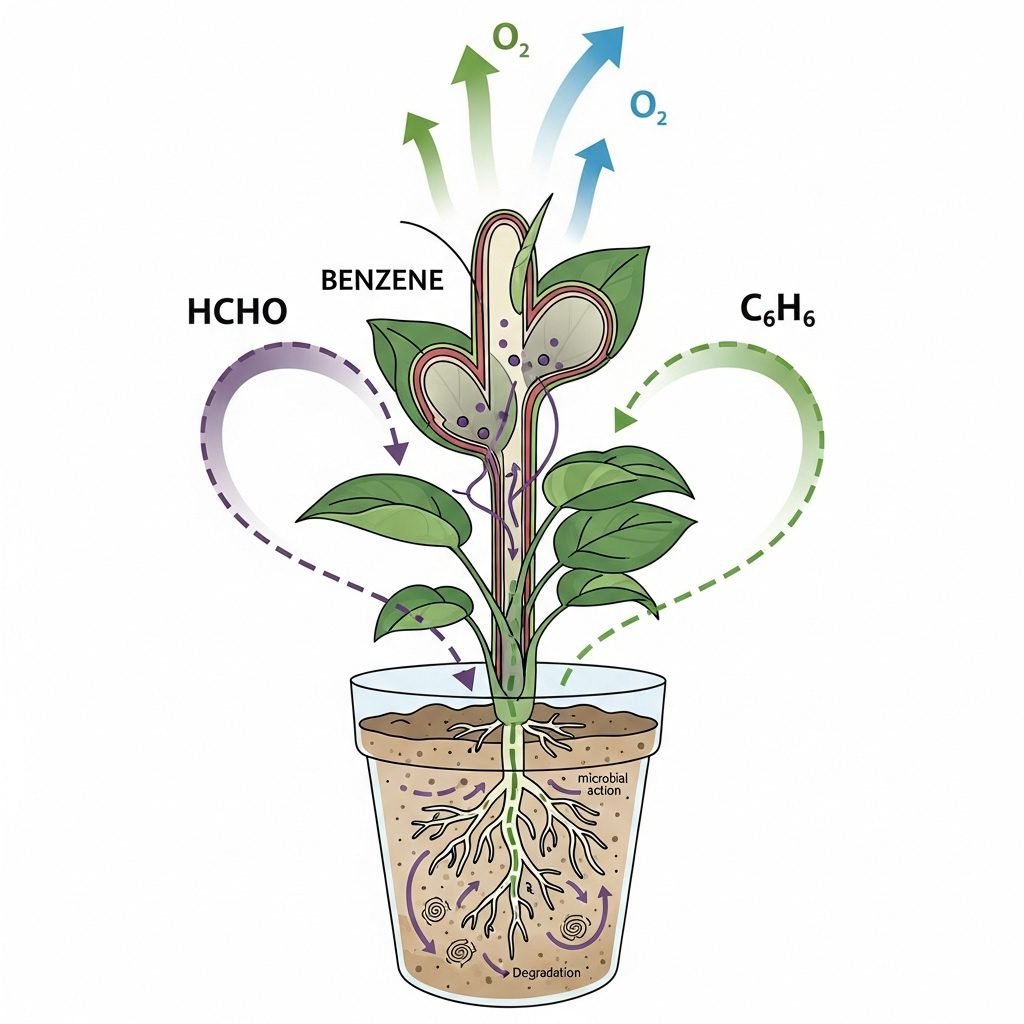
Plants work their magic through a process called phytoremediation. They absorb these pollutants through tiny pores in their leaves and transport them down to their roots, where microbes in the soil break them down into harmless substances. Essentially, your little green friend is actively filtering the air, removing nasty stuff and releasing fresh, clean oxygen. It’s a quiet, beautiful, and natural way to create a healthier breathing environment for your baby’s developing lungs.
Our Top 10 Baby-Safe Beauties for a Breath of Fresh Air
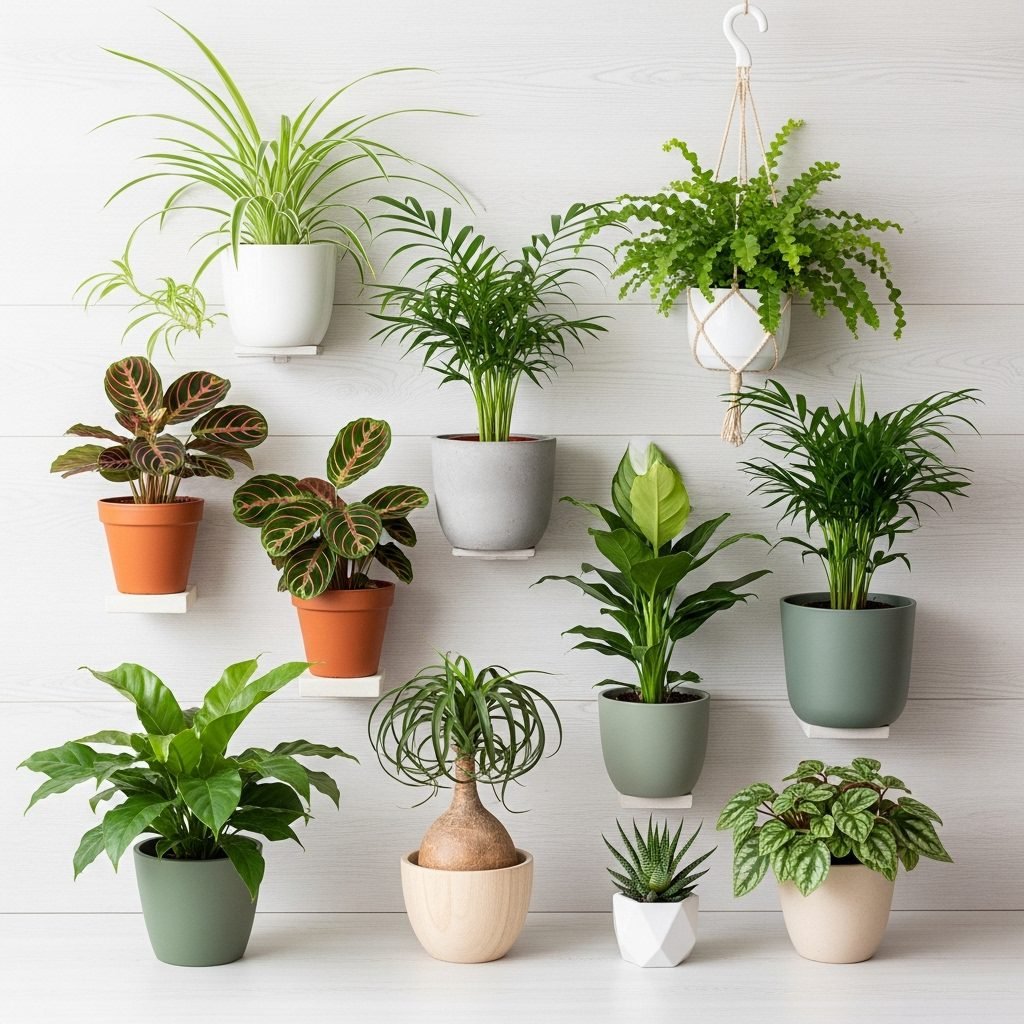
Ready to meet your new green roommates? I’ve handpicked these 10 plants not only for their air-purifying prowess but also for their non-toxic status (as confirmed by the ASPCA) and their forgiving nature. The last thing a new parent needs is a high-maintenance plant!
1. Spider Plant (Chlorophytum comosum)
This is the champion of easy-care, air-purifying plants. With its gracefully arching leaves and little baby plantlets (pups) that dangle down, it’s perfect for a hanging basket, well out of reach.
- Air-Purifying Powers: A master at removing formaldehyde and xylene.
- Care Guide: Thrives in bright, indirect light but is incredibly tolerant of lower light conditions. Water when the top inch of soil feels dry. It’s very resilient if you forget a watering!
2. Parlor Palm (Chamaedorea elegans)
Want a touch of the tropics? The Parlor Palm is your go-to. It has a classic, elegant look and is one of the most popular indoor palms for a reason—it’s incredibly low-maintenance.
- Air-Purifying Powers: Good at filtering benzene and trichloroethylene.
- Care Guide: Prefers medium to low indirect light. Avoid direct sun, which can scorch its leaves. Water when the soil is about 50% dry. It’s quite drought-tolerant.
3. Boston Fern (Nephrolepis exaltata)
Lush, feathery, and vibrant green, the Boston Fern is a powerhouse air purifier. It adds a wonderful softness to nursery decor.
- Air-Purifying Powers: One of the absolute best for removing formaldehyde from the air.
- Care Guide: This plant loves humidity! It’s perfect for a nursery where you might already be running a humidifier. Keep its soil consistently moist (but not soggy) and give it bright, indirect light.
4. Prayer Plant (Maranta leuconeura)
This plant is pure magic. Its stunning patterned leaves lie flat during the day and fold upwards at night, as if in prayer. It’s a captivating and completely safe choice.
- Air-Purifying Powers: Known for helping to clear the air of common household toxins.
- Care Guide: It likes bright, indirect light and high humidity. Use filtered or distilled water if you can, as it can be sensitive to minerals in tap water. Keep the soil evenly moist.
5. Areca Palm (Dypsis lutescens)
Also known as the Butterfly Palm, this plant features feathery, arching fronds that bring a sense of calm and nature indoors. It can grow quite large over time, making a beautiful statement piece in a corner.
- Air-Purifying Powers: An excellent overall air purifier, effectively removing a broad range of toxins.
- Care Guide: Give it plenty of bright, indirect sunlight. Water thoroughly when the soil is dry to the touch, but don’t let it sit in water.
6. Bird’s Nest Fern (Asplenium nidus)
With its wavy, crinkled fronds that grow from a central rosette, this fern looks like a vibrant green bird’s nest. It’s a unique and fun-looking plant that is totally safe for your little one’s room.
- Air-Purifying Powers: Helps to filter formaldehyde, xylene, and toluene.
- Care Guide: It prefers medium, indirect light and a humid environment. Its solid leaves are less messy than the frilly Boston Fern. Water the soil, not the center ‘nest,’ to prevent rot.
7. Ponytail Palm (Beaucarnea recurvata)
Don’t let the name fool you; this isn’t a true palm. It’s a type of succulent with a bulbous trunk that stores water, making it extremely drought-tolerant. Its long, curly leaves are playful and fun.
- Air-Purifying Powers: Great for removing benzene and formaldehyde.
- Care Guide: Loves bright light! Give it as much sun as you can. Water it sparingly, letting the soil dry out completely between waterings—perfect for the busy parent.
8. Cast Iron Plant (Aspidistra elatior)
This plant lives up to its name. It is nearly indestructible! If you’re worried about your ‘black thumb,’ this is the plant for you. Its deep green, glossy leaves add a touch of sophistication.
- Air-Purifying Powers: While not the top purifier on the list, it is still effective at cleaning the air.
- Care Guide: It can survive in very low light conditions where other plants wouldn’t. Water it only when the soil is completely dry. It truly thrives on neglect.
9. Haworthia (Haworthiopsis attenuata)
Often called the Zebra Plant, this small succulent has striking white stripes on its green leaves. It looks like a miniature aloe vera plant but is completely non-toxic, making it a much safer choice for a home with curious little ones.
- Air-Purifying Powers: Like other succulents, it releases oxygen at night, which can contribute to a better night’s sleep.
- Care Guide: Prefers bright, indirect light. As a succulent, it needs very little water. Let the soil dry out entirely before watering again. Perfect for a small shelf.
10. Friendship Plant (Pilea involucrata)
With its velvety, quilted leaves, the Friendship Plant is a delight to look at and touch (though we’ll keep it out of baby’s reach!). It’s a compact plant that adds wonderful texture to your nursery decor.
- Air-Purifying Powers: A good all-around air cleaner for its size.
- Care Guide: It enjoys medium to bright indirect light and high humidity. Keep the soil moist but not waterlogged. It’s a fast grower and easy to propagate, so you can share the friendship!
Plant Placement 101: A Guide to Smart & Safe Nursery Setup
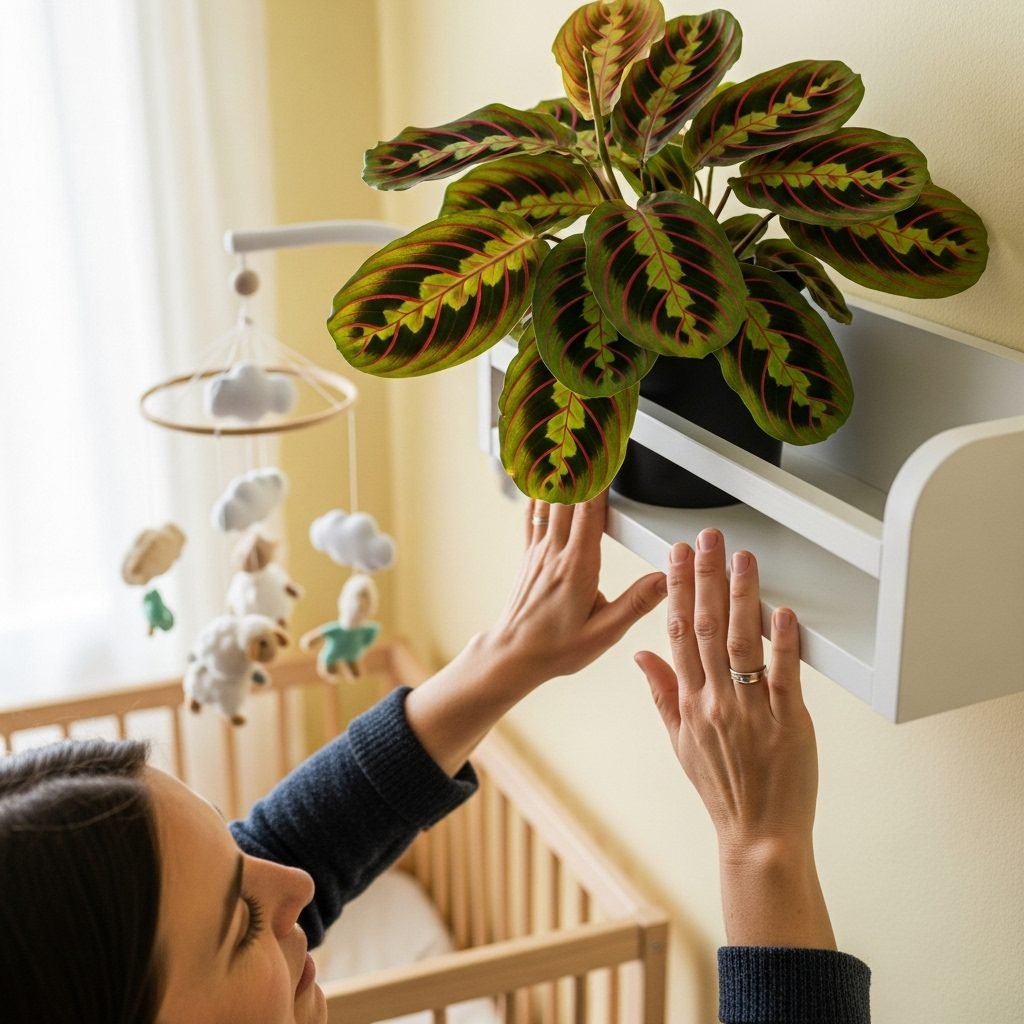
Okay, you’ve picked out your perfect, non-toxic plant. Now, where do you put it? Even though these plants won’t harm your baby if ingested, we still want to be extra cautious. A baby’s motto is ‘everything goes in the mouth,’ and that includes dirt, leaves, and small pebbles.
Think High, Not Low
The golden rule for plants in a nursery is to keep them out of reach. Your baby will be a master crawler and cruiser before you know it. The best options are:
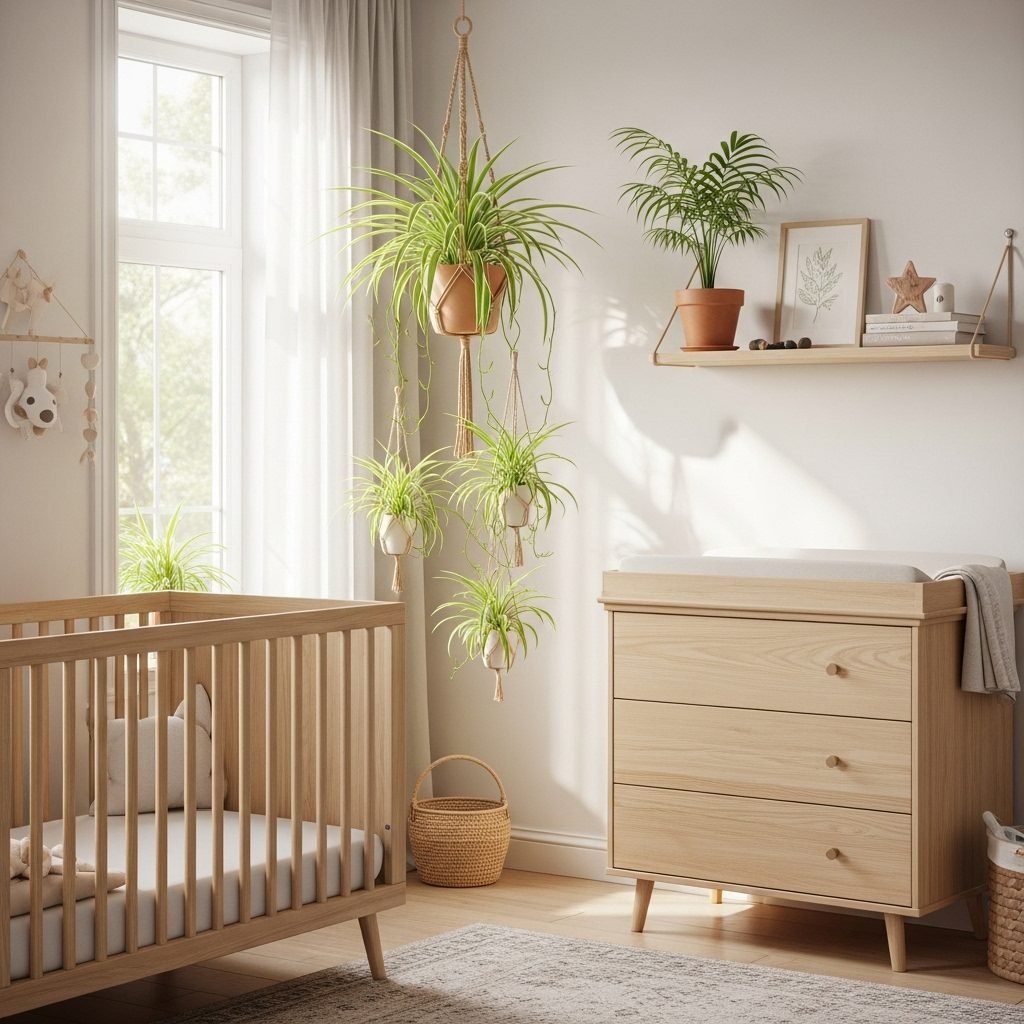
- Hanging Planters: Macrame or modern hanging pots are not only stylish but are the safest way to keep plants completely away from curious hands. Ensure they are securely fastened to the ceiling.
- High Shelves: A sturdy, well-anchored shelf is another fantastic option. Place the plant towards the back of the shelf. Again, double-check that the shelf is properly installed and can handle the weight.
Avoid the Floor and Low Furniture
A plant sitting on the floor or a low dresser is an open invitation for a baby to pull it over, make a mess with the soil, or try to taste-test a leaf (which could be a choking hazard). It’s best to avoid this kind of placement altogether until your child is much older.
A Gentle Safety Reminder: Non-toxic means the plant is not poisonous if ingested. However, any plant part can still be a choking hazard for a small child. Always supervise your child and keep all plants, soil, and decorative pebbles securely out of reach.
Practical Tips for Plant Care
- Use a Saucer: Always place a saucer or tray under your pot to catch excess water. This protects your furniture and floors from water damage.
- Regular Check-ups: Once a week, take a quick look at your plants. Remove any yellowing or dead leaves to keep the plant healthy and to prevent them from falling where your baby could find them.
The ‘Thanks, But No Thanks’ List: Common but Toxic Plants to AVOID
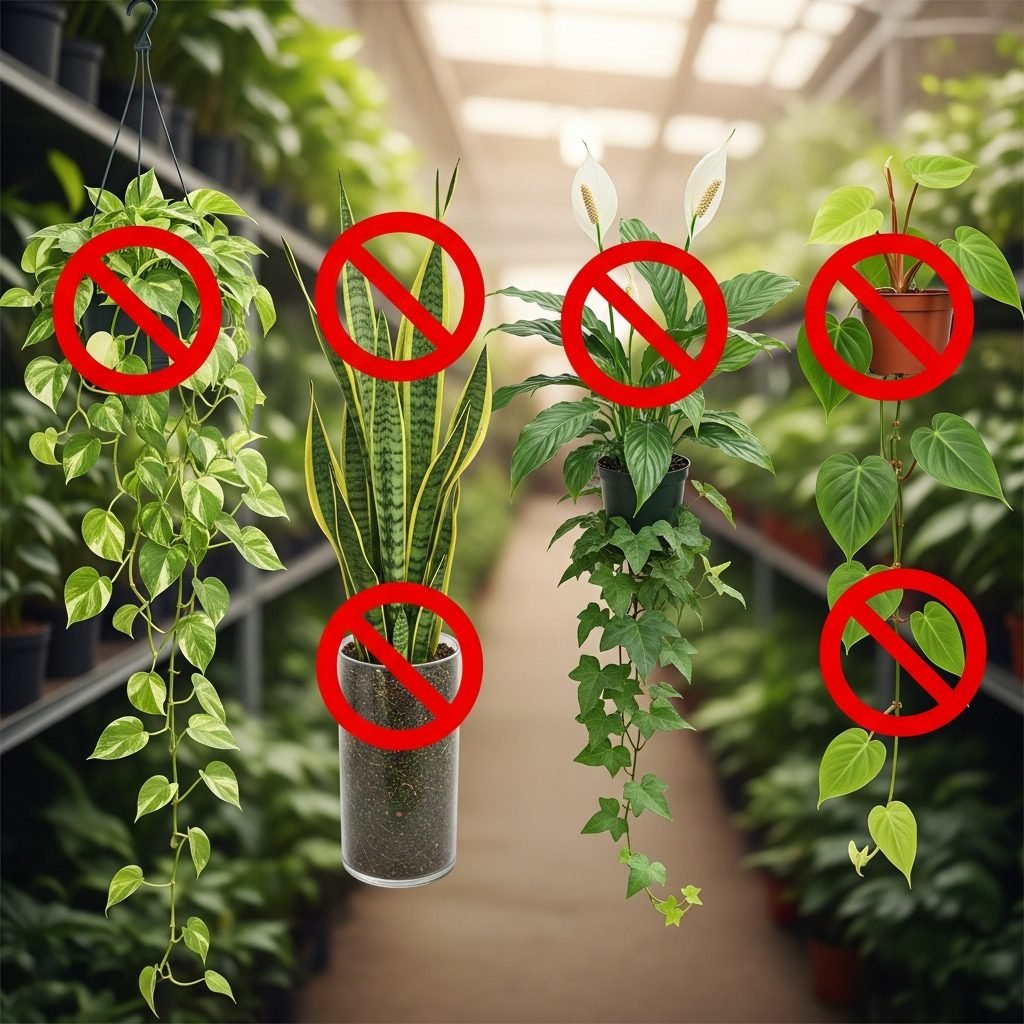
It’s just as important to know which plants not to bring into your home. Many popular and beautiful houseplants are unfortunately toxic to children and pets if ingested. Some of these are even marketed as ‘air-purifying,’ which can be confusing. Here is a clear list of common plants to keep out of the nursery and any rooms where your little one plays.
| Common Houseplant | Why It’s a No-Go | Potential Symptoms if Ingested |
|---|---|---|
| Pothos (Epipremnum aureum) | Contains calcium oxalate crystals. It’s one of the most common houseplants, so be aware! | Oral irritation, burning of the mouth, vomiting, difficulty swallowing. |
| Snake Plant (Dracaena trifasciata) | Mildly toxic if ingested. Often recommended for air purification, but not the safest for a nursery. | Nausea, vomiting, and diarrhea. |
| Peace Lily (Spathiphyllum) | Another plant with calcium oxalate crystals. It’s a NASA favorite but not a baby favorite. | Intense burning and irritation of the mouth, lips, and tongue; excessive drooling. |
| English Ivy (Hedera helix) | The foliage is more toxic than the berries. Can cause significant issues if eaten. | Skin irritation, burning in the mouth, convulsions, and fever. |
| Philodendron (All varieties) | A huge family of popular plants, all containing calcium oxalate crystals. | Similar to Pothos and Peace Lily: oral irritation, swelling, vomiting. |
This is not an exhaustive list, so if you are ever unsure about a plant, a quick search on the ASPCA’s toxic plant database is a fantastic resource. When in doubt, it’s always better to be safe and choose a plant from our confirmed non-toxic list above.
Conclusion
There you have it! You are now fully equipped to bring the wonderful world of plants into your baby’s nursery with confidence and peace of mind. Choosing a beautiful Spider Plant to hang from the ceiling or a sturdy Cast Iron Plant for that shady corner is more than just decorating. It’s a small, lovely step towards creating a healthier, more natural, and more serene environment for your family to grow in.
Remember, this journey of parenthood is all about learning and growing—just like your new green friends. Trust your instincts, prioritize safety, and enjoy every precious moment in the beautiful sanctuary you’ve created. You’re doing an amazing job!